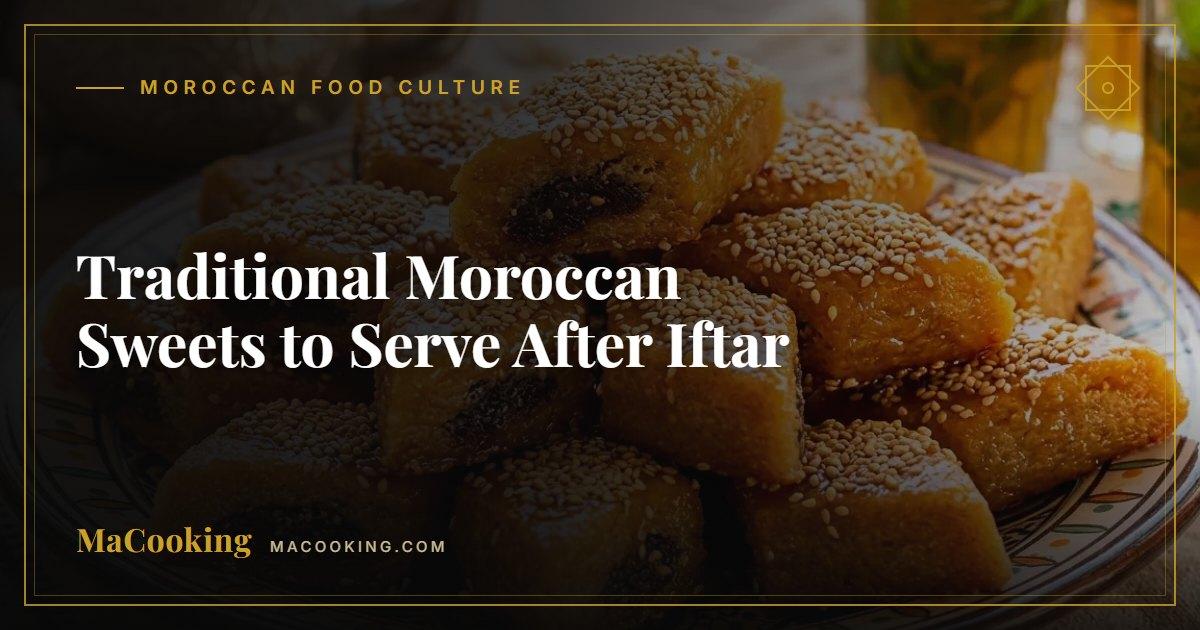
The most popular Moroccan desserts to serve after iftar are chebakia, sellou, makrout, m'hancha, ghriba and fekkas, alongside simple fruit and rice pudding. They are rich in almonds, sesame, honey and dates, which makes them satisfying after a long day of fasting, and they pair naturally with mint tea.
Key Takeaways
- Moroccan Ramadan sweets lean on almonds, sesame, honey, semolina and dates, flavoured with cinnamon, anise and orange blossom water.
- Chebakia and sellou are the two signature Ramadan sweets, but many other pastries and cookies share the table.
- Balance matters: pair one honeyed pastry with something fresh, such as orange slices or a milky pudding.
- Many sweets can be made days ahead, which is ideal for hosting an iftar or dinner party.
- Mint tea is the traditional companion and helps cut through the sweetness.
What Are the Most Popular Moroccan Desserts After Iftar?
Moroccan sweets fall into a few families: fried and honey-dipped pastries, almond-based pastries, semolina and date cookies, twice-baked biscuits, and lighter milk or fruit finishes. At Ramadan, a table typically shows several of these at once, in small portions, rather than one large plated dessert. The table below sums up the most common choices.
| Sweet | Main ingredients | Texture and flavour | Best served |
|---|---|---|---|
| Chebakia | Flour, sesame, saffron, spices, honey | Crisp-chewy, sticky, aromatic | With harira at iftar |
| Sellou (sfouf) | Toasted flour, almonds, sesame, honey or butter, spices | Crumbly, nutty, dense | With tea, or at suhoor |
| Makrout | Semolina, date paste, honey | Soft, sticky, date-rich | After dinner with tea |
| M'hancha | Warqa pastry, almond paste, cinnamon | Flaky outside, fragrant almond inside | Centrepiece for guests |
| Ghriba | Almonds, semolina or flour, sugar | Crackled top, tender centre | Anytime, easy make-ahead |
| Fekkas | Flour, almonds, raisins, anise | Crunchy, dunkable biscotti style | With tea or coffee |
| Rice pudding | Rice, milk, orange blossom water | Creamy, light, floral | Cooling finish |
You can browse more of these in our Desserts & Sweets recipes, which collects the cookies, pastries and puddings in one place.
Why Does the Moroccan Iftar Table Start With Dates and Sweets?
Breaking the fast with dates follows a widely observed Ramadan tradition, and in Moroccan homes they are served with milk, water or tea. Sweets arrive early partly because sugar is welcome after fasting, and partly because Moroccan hospitality means the table should look generous from the first moment. Dates, a bowl of boiled eggs, a plate of sweets and harira often share the table.
The sequence is gentle. Dates and a warm soup come first, followed by savoury pastries and the main dish, and the richer sweets tend to be savoured slowly afterward with tea. If you are planning the whole evening, our guide to Ramadan iftar menu ideas with classic Moroccan dishes shows where desserts naturally fit. For cultural context on the cuisine, Wikipedia's overview of Moroccan cuisine is a useful starting point.
Which Moroccan Desserts for Ramadan Are the Most Traditional?
Two sweets define the season for most Moroccan families: chebakia and sellou.
Chebakia: the honey-soaked flower
Chebakia is made from a spiced dough, often with saffron, anise, cinnamon and sesame, which is cut, folded into a rosette shape, fried, then dipped in warm honey and sprinkled with toasted sesame. The result is crisp at the edges, chewy within and deeply fragrant. The work is the shaping and frying, so many families make large batches ahead of the month. Our guide to Moroccan sweets, chebakia and sellou basics walks through the fundamentals.
Sellou (sfouf): the energy sweet
Sellou is a crumbly mixture of toasted flour, ground almonds, sesame, spices and a binder such as honey or butter. It is dense and nutty, often served by the spoonful or pressed into a mound, and it is popular with tea and at suhoor. For the full method and the tradition behind it, see our step-by-step sellou (sfouf) preparation guide.
Briouats: sweet parcels
Sweet briouats are small fried or baked pastry parcels, often filled with almond paste and finished in honey. They are less central than chebakia but appear on many festive tables, and they are a good option if you enjoy working with thin pastry sheets. Readers who want to go deeper will find the chapter "Briouats — The Art of the Sweet Parcel" inside the full ebook The Royal Moroccan Table — Part 5: Sweet Morocco.
What Are the Best Moroccan Desserts With Dates?
Dates are the heart of the Ramadan table, and they work in sweets as well as on their own. The simplest approach is the most traditional: a bowl of good dates, perhaps with almonds or walnuts on the side. For something more elaborate, there are two main routes.
- Makrout: a semolina dough wrapped around spiced date paste, cut into diamonds, then fried or baked and soaked in honey. Try our makrout with dates and sesame for a recipe with a nutty finish.
- Stuffed dates: pitted dates filled with almond paste, nuts or a touch of butter and spice. They need no baking and make a lovely last bite with tea.
If you want more ways to use the fruit, from sweet to savoury, read our roundup of Moroccan date recipes, from stuffed dates to date-infused tagines.
Choosing dates for dessert
Soft, plump varieties such as Medjool work best for stuffing, since they hold a filling and taste caramel-like. For making date paste for pastry, softer dates are also easier to blend, and you can soften drier ones in a little warm water first. Taste your dates before you start; a bland date will make a bland makrout.
How Do Almonds Shape Moroccan Pastries and Cookies?
Almonds are the backbone of Moroccan pastry. Ground into paste, scattered whole, or folded into dough, they give richness, a gently sweet flavour and structure. If the topic fascinates you, our piece on Moroccan almond culture, from souks to sweet pastries explains why they matter so much.
M'hancha: the almond snake
M'hancha is a coiled pastry of thin warqa sheets wrapped around a scented almond filling, usually flavoured with cinnamon and orange blossom water. Once baked and sprinkled with sugar and cinnamon, it makes a dramatic centrepiece to cut into wedges. Here is our recipe for m'hancha, the Moroccan almond snake pastry. If you cannot find warqa, filo pastry is the usual Western substitute, although the texture is a little different.
Ghriba and fekkas: the tea-time cookies
Ghriba cookies are known for their cracked tops and tender interiors, and they come in many versions across Morocco. Our almond ghriba cookies are a good place to begin. Fekkas are crunchy, twice-baked biscuits similar to biscotti, studded with almonds and raisins, and they keep well. You can find the method in our Moroccan fekkas with almonds and raisins recipe.
What Are Lighter Moroccan Dessert Ideas for After Iftar?
Honey, fried dough and nuts can feel heavy after a full meal, so many Moroccan hosts offer something cooling too. Good Moroccan dessert ideas that stay light include:
- Orange slices with cinnamon: peeled oranges sliced thin, dusted with cinnamon and sometimes a drop of orange blossom water. It is simple, refreshing and very Moroccan.
- Rice pudding with orange blossom water: creamy and fragrant, served chilled or warm.
- Fresh seasonal fruit: melon, strawberries, pomegranate or grapes, depending on the time of year.
- Milk with dates or almonds: a very traditional, gentle option.
- Seffa-style sweet dishes: fine vermicelli or couscous topped with cinnamon, sugar and almonds, served as a warm, comforting finish.
A single honeyed pastry plus one of these gives guests choice without overwhelming them.
How Do I Serve Moroccan Desserts at a Dinner Party?
If you are looking for Moroccan desserts for a dinner party, think in terms of a platter rather than a single dish. A mixed plate with two or three small sweets, fresh fruit and hot mint tea feels generous and authentically Moroccan. It also removes pressure from the cook, because most items can be made ahead.
Build a balanced platter
- Choose one sticky or honeyed item (chebakia or makrout).
- Add one crunchy item (fekkas or ghriba).
- Add something fresh (oranges with cinnamon, or seasonal fruit).
- Offer a centrepiece if you want drama, such as m'hancha.
- Finish with mint tea in small glasses, and dates on the side.
Pantry swaps for Western kitchens
| If you cannot find... | Try... | Note |
|---|---|---|
| Warqa pastry | Filo (phyllo) sheets | Brush with butter and bake until golden |
| Orange blossom water | Small amount of rose water, or orange zest | Add gradually; rose water is stronger |
| Smen (aged butter) | Ghee or clarified butter | Flavour will be milder |
| Fine semolina | Fine durum semolina from a specialty store | Avoid coarse grades for cookies |
| Ground almonds | Blanched almonds ground in a food processor | Pulse so they don't turn oily |
Hosting for guests who are new to Ramadan? Our guide to hosting a Moroccan iftar for non-Muslim hosts covers timing, etiquette and how to present the table respectfully.
What Mistakes Should I Avoid When Making Moroccan Sweets?
- Over-sweetening the honey bath. Warm honey, not boiling, keeps pastries from turning hard or syrupy.
- Frying at the wrong temperature. Oil that is too hot browns the outside before the dough cooks; oil that is too cool makes greasy pastry.
- Skipping the toast. Toasted almonds, sesame and flour give sellou and ghriba their depth.
- Overbaking cookies. Ghriba should stay tender inside; it will firm up as it cools.
- Storing sweets while warm. Let everything cool fully before using an airtight container to preserve texture.
As a rule, drier cookies such as fekkas and ghriba keep for several days in an airtight container, while honey-soaked and cream-based sweets are best eaten sooner. Keep anything milk-based, such as rice pudding, refrigerated.
Frequently Asked Questions
What is the most traditional Moroccan sweet for Ramadan?
Chebakia is the sweet most closely tied to Ramadan in Morocco. These sesame-topped, honey-soaked fried dough flowers are usually served alongside harira at iftar. Sellou (sfouf), a toasted flour, almond and sesame mix, is the other classic, often eaten at suhoor or with tea.
Do Moroccans eat dessert right after breaking the fast?
Usually not straight away. The fast is traditionally broken with dates and milk or water, followed by harira and light savoury items. Sweets such as chebakia often appear on the table early, but heavier desserts and pastries are typically enjoyed later in the evening with mint tea.
Which Moroccan desserts use dates?
Makrout is the best-known: fried or baked semolina pastry filled with spiced date paste and often soaked in honey. Dates are also eaten plain, stuffed with almond paste or nuts, and blended into milk or sweet pastries. They are central to iftar because they are the traditional first bite.
Can I make Moroccan desserts ahead for a dinner party?
Yes, many keep well. Ghriba, fekkas and makrout are good make-ahead options stored airtight, and chebakia is usually made in batches before Ramadan. Fresh orange slices, rice pudding and flaky warqa pastries are best finished closer to serving time.
What can I use instead of orange blossom water?
Orange blossom water has a distinctive floral flavour, so use it if you can find it in Middle Eastern shops or online. In a pinch, a smaller amount of rose water works, or use a little finely grated orange zest. Start with less, then taste, as substitutes can taste stronger.
What drink goes with Moroccan sweets?
Moroccan mint tea is the classic partner, because its freshness balances honey and fried pastries. Serve it hot, in small glasses, ideally poured from a height. Strong black coffee, or a light spiced coffee, is another good match for almond pastries.
Conclusion: Building Your Own Sweet Table
The most popular Moroccan desserts are as much about generosity as flavour: a plate of dates, a few honeyed pastries, something crunchy and something fresh, all shared over tea. Start with one or two recipes, such as makrout or ghriba, then add chebakia or m'hancha as your confidence grows. A small, well-chosen platter will always feel more Moroccan than an overloaded one.