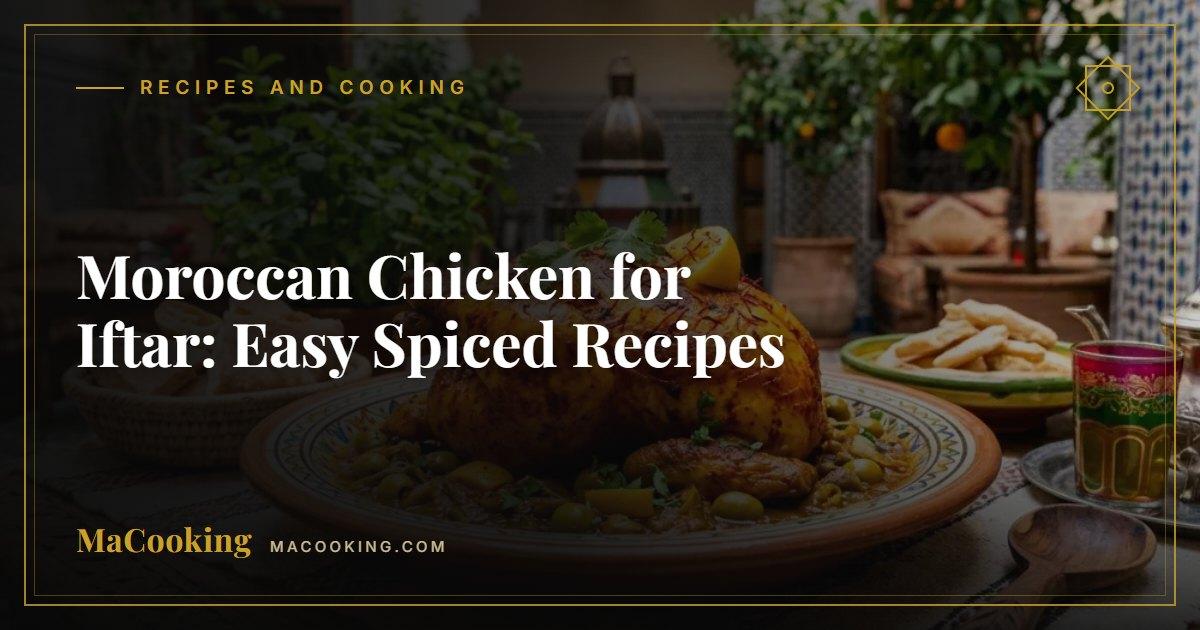
The easiest Moroccan chicken for iftar is a one-pot stew of bone-in thighs simmered with onion, ginger, turmeric, saffron and ras el hanout until the sauce turns glossy. Marinate it in the afternoon, cook it for about an hour, and it will wait patiently on the stove until the call to prayer.
Key Takeaways
- Bone-in, skin-on chicken thighs are the most forgiving cut for Moroccan stews and roasts, and they reheat well.
- A simple base of grated onion, garlic, ginger, turmeric, black pepper and ras el hanout does most of the flavour work.
- Marinating for one hour (or overnight) and reducing the sauce at the end are the two steps that matter most.
- Most Moroccan chicken dishes can be made ahead, so you are not cooking at the moment you are hungriest.
- Serve it after the traditional opening of dates, milk or soup, with bread, couscous or rice for scooping.
Why Is Chicken So Common on the Moroccan Iftar Table?
At iftar, the fast is traditionally broken lightly: dates, milk or water, often followed by a bowl of soup such as harira, with sweets like chebakia and some eggs or bread alongside. A larger main dish tends to come after that first gentle round. Chicken suits this rhythm for practical reasons. It cooks faster than lamb or beef, it is affordable, and it takes well to the slow, aromatic sauces that Moroccan cooking is known for.
It also scales easily. A pot of stewed chicken can feed a family of four or a table of twelve, and the sauce is built to be mopped up with bread. That makes it ideal when relatives are visiting or you are cooking for neighbours. This article is part of our wider Ramadan coverage, in the guide to Moroccan Ramadan food for iftar and suhoor, and it focuses on the chicken dishes that are realistic for a home cook on a weekday.
Moroccan chicken is not one dish. Across the country, the same bird shows up with preserved lemon and olives, with caramelised onions and raisins, with saffron and ginger, or stuffed and roasted. What links them is technique: gentle heat, generous onion, a handful of well-chosen spices, and herbs added late.
What Spices Make Chicken Taste Moroccan?
You do not need a cupboard of 30 jars. A small core set gives you the classic profile, and one good blend can carry the rest. Ras el hanout, literally "head of the shop", is a blend whose recipe varies from one spice seller to the next, which is why two jars can taste quite different. If you want the full story, read our deep dive into Moroccan ras el hanout and what goes into it, or see the general overview on Wikipedia.
For chicken, the usual building blocks are ginger, turmeric, black pepper, cumin, paprika, cinnamon and saffron, with garlic, onion and fresh coriander or parsley for freshness. Preserved lemon and olives bring salt and tang. If you do not yet have these in your cupboard, our Moroccan pantry checklist for home cooks will help you stock up without overbuying.
Substitutions for a Western Pantry
| Traditional ingredient | Easy substitute | What changes |
|---|---|---|
| Ras el hanout | 1 tsp cumin, 1 tsp coriander, 1 tsp paprika, 1/2 tsp each cinnamon, ginger and pepper, pinch of nutmeg and clove | Less floral and complex, still warm and balanced |
| Saffron threads | Extra 1/4 tsp turmeric (colour only) | Loses the delicate aroma |
| Preserved lemon | Zest of 1 lemon plus 1/2 tsp extra salt; or a quick-cure lemon | Less depth and fermented mellowness |
| Fresh coriander and parsley | All parsley, or flat-leaf parsley with a little dill | Slightly less citrusy |
| Smen (aged butter) | Half butter, half olive oil | Less funk, still rich |
| Tagine pot | Heavy Dutch oven with a tight lid | Slightly more evaporation; check the liquid |
If you want to make your own lemons, the step-by-step guide on making Moroccan preserved lemons at home explains the method. Note that they need a few weeks to cure, so start well before Ramadan.
How to Make Moroccan Chicken Stew with Ras el Hanout
This is a flexible, everyday version of ras el hanout chicken. It is closer to a home-style stew than to a restaurant tagine, which makes it forgiving. The sauce is built on grated onion that melts into the liquid, so there is no need for thickeners or long reduction times.
Ingredients (serves 4 to 6)
- 8 bone-in, skin-on chicken thighs (about 1.5 kg / 3.3 lb)
- 2 large onions, grated (about 400 g / 14 oz)
- 4 garlic cloves, crushed
- 3 tbsp olive oil
- 2 tsp ras el hanout
- 1 tsp ground ginger
- 1 tsp ground turmeric
- 1 tsp fine salt, plus more to taste
- 1/2 tsp black pepper
- A generous pinch of saffron threads, crushed and steeped in 3 tbsp warm water
- 1 cinnamon stick
- 2 carrots, cut into thick batons
- 2 medium potatoes, peeled and quartered
- About 400 ml (1 2/3 cups) water or light chicken stock
- 1 small bunch of fresh coriander and parsley, tied together
- 100 g (3.5 oz) green olives, rinsed
- 1 tbsp honey (optional)
Method
- Marinate (1 hour to overnight). Pat the thighs dry. Mix the garlic, ras el hanout, ginger, turmeric, salt, pepper, 1 tbsp of the oil and the saffron water. Rub it all over the chicken, under the skin where you can. Cover and refrigerate. Even 60 minutes helps; overnight is better.
- Brown (8 to 10 minutes). Heat the remaining 2 tbsp of oil in a wide, heavy pot over medium-high heat. Brown the thighs skin-side down first, in two batches, until golden. Do not crowd the pot. Set the chicken aside.
- Build the base (8 minutes). Lower the heat to medium. Add the grated onion with a pinch of salt and cook, stirring, until soft and fragrant. Scrape up the browned bits. Add the cinnamon stick.
- Simmer (40 to 45 minutes). Return the chicken to the pot with any marinade left in the bowl. Add the carrots, potatoes, herb bundle and the water or stock. It should come about halfway up the chicken. Bring to a gentle simmer, cover, and cook on low for 40 to 45 minutes, turning the chicken once.
- Reduce and finish (10 minutes). Remove the herb bundle. Uncover, add the olives and honey if using, and simmer for 10 minutes until the sauce is thick enough to coat a spoon. Taste and adjust the salt. The chicken should be very tender and cooked through, well beyond the minimum safe temperature of 165°F / 74°C.
Serve straight from the pot with crusty bread, plain couscous or rice. A squeeze of lemon at the table lifts the whole dish.
Make It a Preserved Lemon Chicken Stew
Skip the carrots and potatoes. Add the rind of one preserved lemon (flesh rinsed away), 100 g of olives and a handful of extra herbs at the start of the simmer. For the full classic, our recipe for Djaj Mqualli, the preserved lemon chicken stew shows the traditional proportions and the golden saffron and ginger sauce.
How Do You Make Moroccan Chicken Thighs in the Oven?
When you want something quicker and drier, with crisp skin rather than a sauce, roast the thighs. This version keeps the same flavour logic but trades simmering for dry heat, and it needs almost no attention once it is in the oven.
Ingredients (serves 4)
- 8 bone-in, skin-on chicken thighs
- 3 tbsp olive oil
- Juice of 1 lemon
- 4 garlic cloves, grated
- 2 tsp ras el hanout
- 1 tsp sweet paprika
- 1 tsp ground cumin
- 1 tsp salt and 1/2 tsp black pepper
- 1 tbsp honey
- 2 tbsp chopped fresh coriander or parsley
- 2 red onions, cut into wedges
Method
- Whisk the oil, lemon juice, garlic, spices, salt, pepper and honey into a paste. Coat the thighs and marinate for at least 1 hour.
- Heat the oven to 220°C / 425°F (200°C fan). Scatter the onion wedges in a roasting tray and set the chicken on top, skin-side up, with space between pieces.
- Roast for 35 to 40 minutes, until the skin is deep golden and the juices run clear. A thermometer in the thickest part should read at least 74°C / 165°F.
- Rest for 5 minutes, spoon the tray juices over, and scatter with the fresh herbs.
For a more traditional treatment, see our Moroccan-style roasted chicken (Djej Mhammar), which is cooked until it is rich, browned and glossy. Readers who want the Fes-style technique in more depth will find the chapter "Djaj Mhammer — Roasted Chicken of Fes" inside the full ebook The Royal Moroccan Table — Part 4: The Royal Banquet.
Which Moroccan Chicken Dish Should You Cook for Iftar?
The right choice depends on how much time you have and how many people you are feeding. Here is a quick comparison of the options on MaCooking and in this article.
| Dish | Active time | Total time | Best for |
|---|---|---|---|
| Ras el hanout chicken stew (above) | 25 min | about 1 hr 30 min, plus marinating | Weeknight iftar, make-ahead |
| Oven-roasted Moroccan chicken thighs (above) | 10 min | about 50 min, plus marinating | Hands-off cooking, crispy skin |
| Chicken tagine with cumin and olives | 20 min | about 1 hr 15 min | Savoury, tangy and simple |
| Djaj Mqualli | 25 min | about 1 hr 15 min | Preserved lemon lovers |
| Chicken pastilla | 60+ min | 2 hr+ | Weekend feasts, special guests |
Times are approximate and depend on your pot, your stove and the size of the chicken pieces. If you enjoy tagine-style cooking, our tagines recipe collection has more ideas in the same family.
What Are the Common Mistakes, and How Do You Store Moroccan Chicken?
Mistakes to Avoid
- Skipping the dry-off. Wet chicken steams instead of browning. Pat the thighs dry before they hit the oil.
- Too much liquid. The chicken and onions release a lot of juice. Start with liquid halfway up the meat; you can always add more.
- Adding herbs too early. Tied herb bundles can simmer, but chopped fresh herbs lose their brightness. Add them at the end.
- Over-salting with olives and preserved lemon. Both are salty. Rinse them, then taste the sauce before adding the final pinch of salt.
- Burning the spices. Ground spices scorch quickly in hot oil. Add them as a marinade or after the onions have softened, never to a dry, smoking pan.
- Rushing the final reduction. A thin sauce tastes flat. Those last 10 uncovered minutes are where the flavour concentrates.
Make-Ahead, Storage and Reheating
- Fridge: cool within two hours, then store in a covered container for up to 3 days.
- Freezer: freeze stew in portions for up to 3 months. For best texture, freeze without potatoes and add fresh olives and herbs after reheating.
- Reheating: warm gently over low heat with a splash of water until steaming hot all the way through. Roasted thighs reheat best in a 180°C / 350°F oven for 15 to 20 minutes to bring back the crisp skin.
- Plan for the day: marinate after suhoor or at midday, brown and simmer in the late afternoon, and finish the sauce about 20 minutes before sunset.
For a meat-free night alongside the chicken, a pot of vegan Moroccan lentil stew keeps well and reheats easily.
Frequently Asked Questions
What is the easiest Moroccan chicken recipe for iftar?
A one-pot stew of bone-in chicken thighs with onion, garlic, ginger, turmeric and ras el hanout is the easiest. Marinate it earlier in the day, simmer for about 50 minutes, then reduce the sauce. It needs no special equipment and keeps warm on the stove until you break your fast.
Can I make Moroccan chicken without a tagine?
Yes. A heavy Dutch oven, a wide casserole or a deep lidded skillet works well. The goal is a tight lid and gentle heat so the chicken steams in its own juices. Use medium-low heat and avoid lifting the lid too often during the first 30 minutes.
What can I use instead of ras el hanout?
If you cannot find it, mix 1 teaspoon ground cumin, 1 teaspoon ground coriander, 1 teaspoon paprika, and 1/2 teaspoon each of cinnamon, ground ginger and black pepper, plus a pinch of nutmeg and cloves. It will taste simpler than a full blend, but it still gives a recognisably Moroccan result.
Can I prepare Moroccan chicken ahead of Ramadan?
Yes. Cook the stew, cool it quickly, and freeze it in portions for up to three months, leaving out delicate additions like fresh herbs and olives. Thaw it overnight in the fridge and reheat gently with a splash of water. Stewed chicken often tastes even better the next day.
Should I use chicken breast or thighs for Moroccan chicken?
Bone-in, skin-on thighs are the best choice for stews and roasting because they stay juicy and absorb the spices. Breast meat dries out easily over a long simmer. If you prefer breast, use bone-in pieces, cut them into large chunks, and shorten the simmer to about 30 minutes.
Bringing Moroccan Chicken to Your Iftar Table
Good Moroccan chicken does not demand complicated technique: well-seasoned thighs, a sweet base of onions, patient simmering and a sauce reduced until it clings. Start with the ras el hanout stew, try the oven version when time is short, and explore the preserved lemon and olive variations as you build confidence. For more spice-blend ideas to use across your Ramadan cooking, the complete guide to Moroccan spice blends is a good next read.