
Introduction
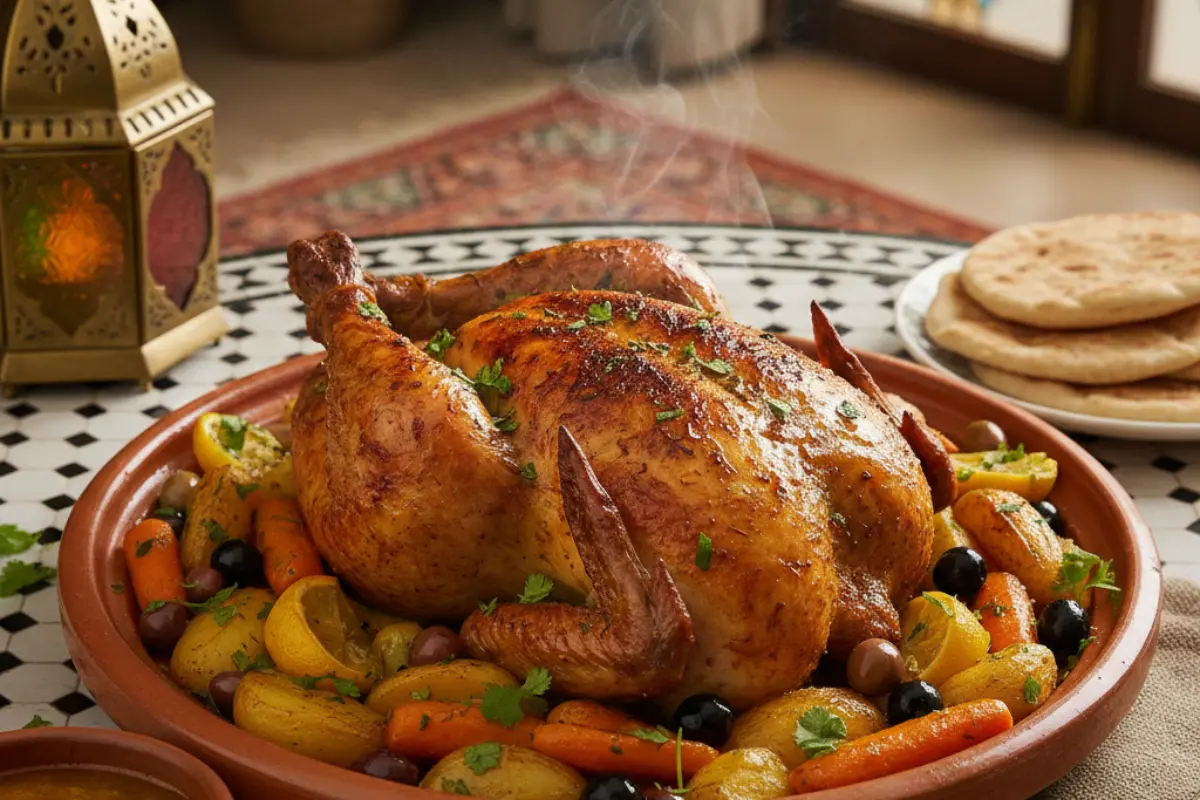
Moroccan-style roasted chicken, known as djej mhammar (literally 'reddened chicken' referring to its golden-reddish color from paprika and saffron), represents the perfect marriage of simple technique and complex flavors that characterizes the best of Moroccan home cooking. Unlike plain roasted chicken found in many cuisines, Moroccan roasted chicken is transformed by an aromatic marinade of warm spices, fresh herbs, garlic, preserved lemon, and olive oil that permeates every bite with the distinctive flavors of North Africa. The result is chicken that's incredibly juicy and tender inside with golden, crispy, flavor-packed skin outside - a dish that fills the home with intoxicating aromas as it roasts and brings family members rushing to the table in anticipation.
What sets Moroccan roasted chicken apart is the spice blend that forms the marinade's foundation. Cumin, paprika, ginger, turmeric, and saffron create layers of warmth and earthiness, while fresh cilantro, parsley, garlic, and the distinctive tang of preserved lemon add brightness and complexity. The chicken is traditionally marinated for several hours or overnight, allowing the spices to penetrate deeply and tenderize the meat. Some versions include onions that roast beneath the chicken, absorbing the flavorful drippings and creating a delicious accompaniment. Others add potatoes, carrots, or olives to the roasting pan for a complete one-pan meal. The beauty of this dish lies in its versatility - it works equally well for casual family dinners and impressive dinner parties, and the active preparation time is minimal while the oven does most of the work.
In Moroccan homes, roasted chicken appears regularly on family tables, especially for Friday lunch (the traditional family gathering meal) and for celebrations and special occasions. It's substantial enough to feed a crowd yet simple enough for weeknight cooking if you plan ahead with the marinade. The dish showcases the Moroccan philosophy of using bold, aromatic flavoring to elevate humble ingredients into something spectacular. Whether served alongside Moroccan salads, couscous, crusty bread, or roasted vegetables, this golden, aromatic chicken delivers authentic Moroccan flavor with techniques accessible to any home cook.
About This Recipe
Moroccan-style roasted chicken, known as djej mhammar, represents the beautiful intersection of home cooking traditions and Morocco's sophisticated spice culture. While roasting chicken is universal, the Moroccan approach transforms this simple technique through the distinctive use of aromatic spice blends, preserved lemons, fresh herbs, and the layering of flavors that characterizes North African cuisine. The tradition draws from multiple cultural influences - Berber, Arab, Andalusian, and Mediterranean - that shaped Moroccan cooking over centuries. The Berbers contributed indigenous techniques and the use of local herbs, while Arab influences brought sophisticated spice usage including cumin, coriander, and saffron from ancient trade routes. Andalusian refugees fleeing Spain in the fifteenth and sixteenth centuries introduced refined cooking methods and the extensive use of olive oil. The result is a roasted chicken that's distinctly Moroccan - aromatic, complex, and layered with flavors while remaining fundamentally simple and accessible. The preserved lemon, a signature Moroccan ingredient, adds the characteristic tangy, fermented citrus note that appears throughout Moroccan cuisine. Traditionally, Moroccan roasted chicken appears at Friday family lunches, the most important family meal of the week when extended families gather. It's also prepared for special occasions, celebrations, and whenever a substantial, impressive but uncomplicated meal is desired. The dish showcases the Moroccan philosophy of generous hospitality - using bold, aromatic seasoning to transform humble chicken into something special worthy of honored guests. Regional variations exist - some areas emphasize cumin, others favor saffron; some include potatoes and vegetables for one-pan meals, others serve chicken separately with couscous. Coastal versions might add olives and capers, while inland recipes emphasize warm spices. The cooking technique itself evolved as home ovens became common in Moroccan households in the twentieth century - before ovens, similar flavor profiles appeared in tagine-cooked chicken or grilled chicken. Today, Moroccan roasted chicken remains a staple of home cooking, appearing on family tables throughout Morocco and in Moroccan communities worldwide. It's equally at home as weeknight dinner and as centerpiece of festive celebrations, embodying the Moroccan gift for making everyday ingredients extraordinary through skillful seasoning and technique. Modern versions might incorporate new ingredients or techniques, but the core elements - warm spices, fresh herbs, preserved lemon, and generous garlic - remain constant, connecting contemporary cooks to generations of Moroccan culinary tradition.
Nutritional Info (per serving)
Recipe Tags
Understanding the Ingredients
Whole Chicken
A whole chicken (four to five pounds) is traditional and creates the most impressive presentation, though chicken pieces work equally well if preferred. The chicken should be good quality - free-range or organic chicken has better flavor and texture. If using a whole chicken, it can be left whole for dramatic presentation or spatchcocked (backbone removed and flattened) for more even cooking and easier carving. Chicken pieces - thighs, drumsticks, and breasts - are more convenient and allow for varying preferences (all dark meat lovers or all white meat lovers). Bone-in, skin-on pieces are essential for maximum flavor and moisture - boneless skinless chicken will be dry and less flavorful. The chicken should be at room temperature before roasting for even cooking.
Spice Blend
The aromatic spice blend is the soul of Moroccan roasted chicken and creates its distinctive flavor profile. Ground cumin (one and a half to two teaspoons) provides earthy, warm depth and is perhaps the most characteristic Moroccan spice. Paprika (one tablespoon) adds sweet, mild pepper flavor and the reddish color. Turmeric (one teaspoon) contributes golden color and earthy, slightly bitter notes. Ground ginger (one teaspoon) adds warming spice. Saffron threads (generous pinch, crushed and dissolved in warm water) provide the luxurious aroma and golden hue that elevate the dish - while optional, saffron makes it truly special. Cayenne pepper or hot paprika (quarter to half teaspoon, optional) adds heat for those who enjoy it. All spices should be fresh and aromatic for best results.
Fresh Herbs and Aromatics
Fresh herbs and aromatics provide brightness and complexity that balance the warm spices. Fresh cilantro (half a cup, finely chopped) is essential and provides the characteristic Moroccan flavor. Fresh parsley (half a cup, finely chopped) adds freshness and color. Garlic (six to eight cloves, minced or crushed to a paste) provides pungent depth - Moroccan cooking is generous with garlic. Fresh ginger (one tablespoon grated, optional) adds additional warmth and complexity beyond the ground ginger. These aromatics should be very finely chopped or crushed to create a paste-like marinade that clings to the chicken.
Preserved Lemon
Preserved lemon is a signature Moroccan ingredient that adds distinctive salty, fermented citrus flavor unlike anything else. You'll need one preserved lemon (or two if small), rinsed and chopped. Only the rind is used - scoop out and discard the pulp, then finely chop or mince the rind. Preserved lemons are available in Middle Eastern or specialty stores, or can be made at home (though they require one month of curing). If preserved lemon is unavailable, substitute with the zest of two fresh lemons plus a bit of extra salt, though the flavor will be different. The preserved lemon provides the characteristic tangy, complex citrus note that defines many Moroccan dishes.
Olive Oil and Lemon Juice
Good quality olive oil (quarter to half cup) carries the spices and aromatics, creates the marinade, and helps achieve crispy, golden skin during roasting. Use fruity extra virgin olive oil for best flavor. Fresh lemon juice (from one to two lemons, about quarter cup) provides acidity that tenderizes the chicken and brightens the flavors. The combination of olive oil and lemon juice creates an emulsified marinade that coats the chicken evenly.
Onions and Optional Vegetables
Onions (two to three large, sliced into thick wedges) are traditional and roast beneath the chicken, absorbing the flavorful drippings while caramelizing beautifully. They become sweet, soft, and delicious - an essential accompaniment. Optional additions include potatoes (four to five medium, cut into chunks), carrots (three to four, cut into chunks), and olives (one cup, preferably Moroccan green or purple olives) added to the roasting pan for a complete meal. These vegetables roast alongside the chicken, becoming tender and infused with the aromatic juices.
Step-by-Step Cooking Guide
Prepare the Chicken
Start with a four to five pound whole chicken or equivalent weight in chicken pieces (thighs, drumsticks, breasts - bone-in, skin-on). If using whole chicken, remove giblets from cavity and pat the entire chicken completely dry inside and out with paper towels - this is crucial for crispy skin. If desired, spatchcock the chicken by cutting along both sides of the backbone with kitchen shears, removing it, then flipping the chicken breast-side up and pressing down firmly on the breastbone to flatten. Spatchcocking creates more even cooking and better browning. Alternatively, leave whole for traditional presentation. If using chicken pieces, pat them dry thoroughly. Place chicken in a large dish or baking pan. Season generously all over with salt and black pepper - about one and a half to two teaspoons of salt total.
Tip: Dry chicken thoroughly - moisture prevents browning and crisping. Spatchcocking is highly recommended for even cooking. Season generously with salt - chicken needs bold seasoning. Room temperature chicken cooks more evenly.
Make the Marinade
In a medium bowl, combine your spice blend: one and a half to two teaspoons ground cumin, one tablespoon paprika, one teaspoon turmeric, one teaspoon ground ginger, quarter to half teaspoon cayenne (optional), and one teaspoon salt. If using saffron, crush a generous pinch of threads and dissolve in two tablespoons warm water, then add to the spice mixture. Add half a cup each of finely chopped fresh cilantro and parsley, six to eight cloves of minced or crushed garlic, and one tablespoon grated fresh ginger if using. Add the finely chopped preserved lemon rind (from one rinsed preserved lemon, pulp discarded). Pour in quarter to half cup of olive oil and quarter cup of fresh lemon juice. Mix everything together vigorously to create a thick, aromatic paste-like marinade. Taste and adjust seasoning - the marinade should be intensely flavored as it will season the entire chicken.
Tip: Crush saffron threads before adding for maximum flavor and color. Chop herbs and garlic very fine for paste-like consistency. Mix vigorously to combine - should be thick and aromatic. Taste and adjust - marinade should be boldly flavored.
Marinate the Chicken
Using your hands or a brush, rub the marinade all over the chicken, making sure to coat every surface thoroughly. For whole chicken, rub marinade under the skin wherever possible - gently loosen the skin over the breast and thighs by sliding your fingers between skin and meat, then spread marinade directly on the meat under the skin. This ensures maximum flavor penetration. Also rub marinade inside the cavity and all over the outside, including under the wings and legs. For chicken pieces, coat all surfaces generously, including under skin where possible. Place the marinated chicken in a large dish or zip-top bag. Cover tightly with plastic wrap or seal the bag. Refrigerate for at least four hours or preferably overnight (up to twenty-four hours). The longer marinating time allows spices to penetrate deeply and flavors to develop. Turn the chicken once or twice during marinating.
Tip: Rub marinade under skin for maximum flavor. Marinate at least 4 hours, overnight is ideal. Turn chicken during marinating for even coating. Remove from refrigerator 30 minutes before roasting for even cooking.
Prepare for Roasting
Remove the marinated chicken from refrigerator thirty minutes before roasting to bring to room temperature - this ensures even cooking. Preheat your oven to 425°F (220°C). While oven heats, prepare your roasting pan. Slice two to three large onions into thick wedges and scatter them across the bottom of a large roasting pan - the onions create a flavorful bed for the chicken and will caramelize during roasting. If adding potatoes, carrots, or other vegetables, toss them with a bit of olive oil, salt, and pepper and arrange around the onions. Drizzle any remaining marinade from the dish over the vegetables. Place the chicken on top of the onions - if whole, breast-side up; if spatchcocked, skin-side up; if pieces, skin-side up and not crowded. Pour quarter cup of water or chicken stock into the bottom of the pan to prevent burning and create steam for moisture.
Tip: Room temperature chicken cooks more evenly. Onions create flavorful base and prevent sticking. Don't crowd chicken pieces - needs space for browning. Water in pan prevents burning and adds moisture.
Roast the Chicken
Place the roasting pan in the preheated 425°F (220°C) oven. Roast for twenty minutes at this high temperature to start browning and crisping the skin. After twenty minutes, reduce oven temperature to 375°F (190°C) and continue roasting. For whole chicken, total roasting time is about sixty-five to seventy-five minutes; for spatchcocked chicken, fifty-five to sixty-five minutes; for chicken pieces, forty-five to fifty-five minutes depending on size. During roasting, baste the chicken with pan juices every twenty minutes - use a spoon or bulb baster to scoop up the juices and drizzle over the chicken. This keeps the meat moist and helps build flavorful, crispy skin. The chicken is done when an instant-read thermometer inserted into the thickest part of the thigh (not touching bone) reads 165°F (74°C), and juices run clear when thigh is pierced. The skin should be golden brown and crispy.
Tip: Start high heat for browning, reduce for cooking through. Baste every 20 minutes for moisture and flavor. Use thermometer for accuracy - 165°F in thigh. Don't overcook or chicken will be dry. Skin should be golden and crispy.
Rest and Serve
When the chicken is done, remove the roasting pan from the oven. If adding olives, scatter one cup of olives over the vegetables and return to oven for five minutes to warm through - adding olives earlier makes them too soft. Transfer the chicken to a cutting board and tent loosely with aluminum foil. Let rest for ten to fifteen minutes - this allows juices to redistribute throughout the meat, ensuring moist, tender chicken. While chicken rests, use a slotted spoon to transfer the roasted onions and vegetables to a serving platter, leaving behind excess fat. If desired, pour pan juices into a small saucepan, skim off excess fat, and simmer briefly to concentrate into a light sauce. Carve the chicken or serve pieces directly. Arrange on a platter with the roasted onions and vegetables surrounding it. Drizzle with pan juices. Garnish with fresh cilantro and parsley, and lemon wedges.
Tip: Rest chicken 10-15 minutes - crucial for juicy meat. Don't skip resting time. Skim excess fat from pan juices for lighter sauce. Garnish generously with fresh herbs and lemon for brightness and color.
Common Mistakes to Avoid
❌ Not Drying the Chicken
Solution: Moisture on the chicken's surface prevents browning and crisping. Always pat chicken completely dry with paper towels before seasoning and marinating. This single step makes enormous difference in achieving crispy, golden skin.
❌ Insufficient Marinating Time
Solution: Marinating for only one or two hours doesn't allow the spices and aromatics to penetrate deeply enough. Marinate for at least four hours, but overnight (up to twenty-four hours) is ideal for maximum flavor development and tender, well-seasoned meat.
❌ Overcrowding the Roasting Pan
Solution: If chicken pieces are crowded too closely together, they steam rather than roast, resulting in soggy skin and uneven cooking. Leave space between pieces for air circulation and proper browning. Use a larger pan if necessary or roast in batches.
❌ Not Using a Meat Thermometer
Solution: Guessing doneness by time alone often results in overcooked, dry chicken or undercooked, unsafe chicken. Always use an instant-read thermometer - chicken is done at 165°F in the thickest part of the thigh. This ensures perfectly cooked, juicy meat every time.
❌ Skipping the Resting Period
Solution: Cutting into chicken immediately after roasting causes all the juices to run out, leaving dry meat. Always rest chicken for ten to fifteen minutes after roasting - this allows juices to redistribute, ensuring every bite is moist and flavorful.
❌ Using Dried Herbs Instead of Fresh
Solution: While dried spices work well, using dried cilantro and parsley instead of fresh dramatically reduces flavor and changes the character of the dish. Fresh herbs are essential for authentic Moroccan flavor - their brightness balances the warm spices.
Ingredient Substitutions
Instead of: Whole Chicken
Use: Chicken pieces (thighs, drumsticks, breasts) work perfectly - adjust cooking time to 45-55 minutes. Bone-in, skin-on pieces are essential. For larger crowd, use two whole chickens or double the pieces.
Instead of: Preserved Lemon
Use: If unavailable, use zest of two fresh lemons plus extra quarter teaspoon salt. Some add thin slices of fresh lemon to roasting pan. Flavor will differ but still delicious. Preserved lemon is worth seeking out for authentic taste.
Instead of: Fresh Herbs
Use: While fresh cilantro and parsley are traditional and ideal, you can use all cilantro or all parsley if you dislike one. Dried herbs are not recommended as they lack the brightness. Fresh mint can replace some parsley for variation.
Instead of: Saffron
Use: While saffron adds luxury and distinctive flavor, it's expensive and optional. Omit entirely or use extra quarter teaspoon turmeric for color (though flavor differs significantly). Ground saffron can substitute threads.
Instead of: Whole Spices Ground Fresh
Use: Pre-ground spices work fine and are more convenient. However, toasting and grinding whole cumin seeds, coriander seeds creates more aromatic, complex flavor if you have time and a spice grinder.
Serving Suggestions
Serve Moroccan roasted chicken as centerpiece of Friday family lunch, the traditional Moroccan family gathering meal.
Accompany with fluffy couscous, either plain or with vegetables and raisins, for classic Moroccan pairing.
Serve alongside Moroccan salads - taktouka (pepper salad), zaalouk (eggplant salad), tomato and onion salad, and carrot salad.
Include crusty bread or traditional Moroccan khobz for soaking up the flavorful pan juices.
Pair with Moroccan-style roasted vegetables - potatoes, carrots, turnips, bell peppers tossed with olive oil and spices.
For complete meal, serve with harira soup as starter and fresh fruit or mint tea with pastries for dessert.
Present on large platter surrounded by roasted onions and vegetables, garnished with fresh herbs, olives, and lemon wedges.
Leftovers are excellent in sandwiches, on top of salads, shredded into couscous, or mixed into eggs for breakfast.
Storage & Reheating Guide
Storage
Moroccan roasted chicken stores well and makes excellent leftovers. Let cool to room temperature within two hours of cooking, then transfer chicken and any vegetables to airtight containers. Refrigerate for up to four days. Store pan juices separately in a small container - the fat will solidify on top and can be easily removed before reheating. Chicken can be left whole or carved before storing. For longer storage, chicken can be frozen for up to three months - wrap tightly in plastic wrap then aluminum foil, or use freezer bags with air removed. Thaw frozen chicken overnight in refrigerator before reheating.
Reheating
To reheat while maintaining moisture and crispy skin, preheat oven to 350°F (175°C). Place chicken pieces or whole chicken in a baking dish, add a few tablespoons of water or stock to the bottom, cover loosely with foil, and heat for twenty to twenty-five minutes until warmed through. Remove foil for last five minutes to re-crisp the skin. For chicken pieces, microwave reheating works but makes skin soggy - if using microwave, heat uncovered and finish under the broiler for one to two minutes to crisp. Carved chicken is excellent cold in salads or sandwiches. Pan juices can be reheated gently in a small saucepan, skimmed of fat, and served alongside.
Tips: Remove solidified fat from pan juices before reheating for lighter sauce. Add liquid when reheating to prevent drying. Remove foil at end of reheating to re-crisp skin. Cold chicken is delicious in sandwiches or salads. Leftover chicken makes excellent addition to couscous or grain bowls.
Frequently Asked Questions
Recipe by

Similar Recipes


Our Recipe Ebooks
Discover our collection of authentic Moroccan recipe ebooks. Learn traditional cooking methods and create delicious meals at home.
The Moroccan Vegen
The Royal Moroccan Table -Part1
The Royal Moroccan Table -Part2
YouTube Channel
Watch step-by-step cooking videos, learn professional techniques, and get inspired by traditional and modern recipes from around the world.
Latest Video
"Traditional Moroccan Tagine Masterclass"