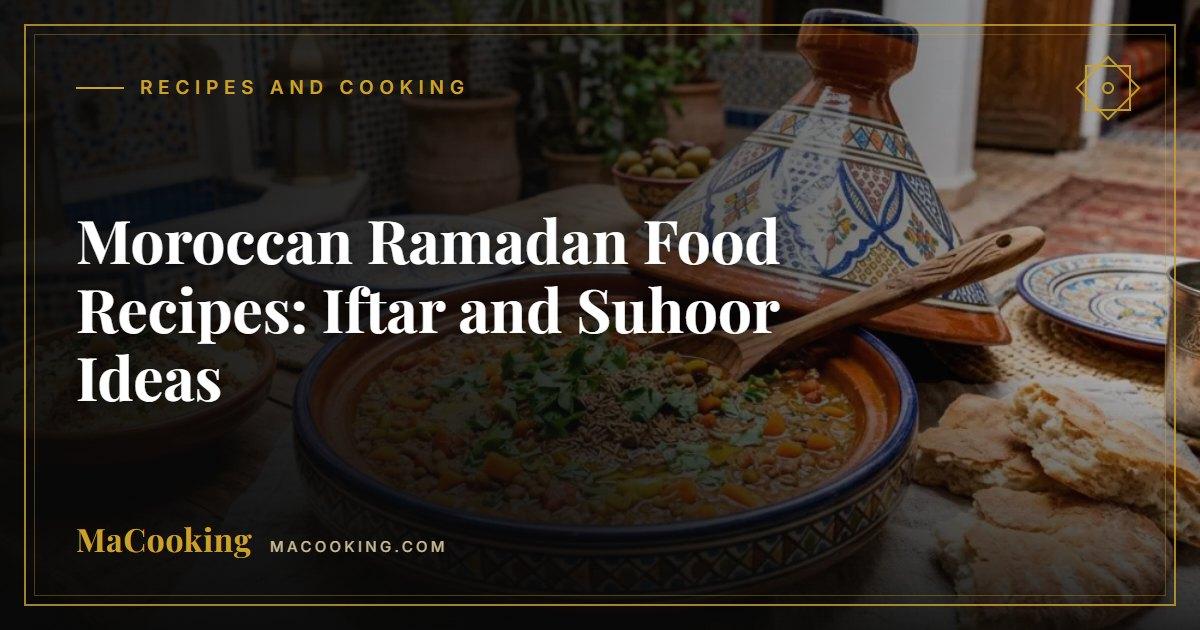
Moroccan Ramadan food recipes revolve around a simple rhythm: dates and milk to break the fast, a bowl of harira, savoury pastries and eggs, then sweets like chebakia with mint tea. Suhoor is lighter and slow-burning: msemen, eggs, oats or bessara, built to keep you full until sunset.
Key Takeaways
- The classic iftar order is dates and milk or water, then harira, then eggs, bread, pastries and sweets with mint tea.
- Harira is the anchor of the Moroccan Ramadan table, and it freezes beautifully, so you can cook it in bulk.
- Suhoor works best with slow-release foods such as eggs, whole grains, legumes, dates and yoghurt, plus plenty of water.
- A modest table is authentic: soup, dates, eggs, bread and one sweet is a complete Moroccan iftar.
- Most dishes can be prepped in advance, which makes a month of cooking far more manageable.
What Do Moroccans Eat During Ramadan?
Ask a Moroccan family what Ramadan tastes like and the answer is usually a sequence rather than a single dish. The day ends with the call to prayer, and the first moments are gentle: a date or two and a glass of milk or water. After that comes harira, the tomato, lentil and chickpea soup scented with ginger, cinnamon, cilantro and lemon. Around it sit hard-boiled eggs, bread, savoury pastries and a plate of honeyed sweets.
That is the heart of Moroccan Ramadan food. It is warm, hydrating, gently spiced and designed to wake the stomach up slowly after a long day. A heavier main dish, often a tagine, couscous or grilled meat, tends to appear later in the evening or when guests are coming. For a deeper cultural look at how the month is organised, the guide to preparing for Ramadan the Moroccan way covers the rituals and pantry stocking that happen before the first night.
| Part of the meal | Typical dishes | Role |
|---|---|---|
| Breaking the fast | Dates, milk or water, figs | Gentle sugar and hydration |
| Soup | Harira, sometimes bessara | Warm, protein and fibre rich, rehydrating |
| Savoury table | Hard-boiled eggs with cumin, briouats, batbout, msemen, olives | Salt, fat and starch to restore energy |
| Sweets | Chebakia, sellou, dates stuffed with almonds | Sweetness with mint tea or coffee |
| Later main | Tagine, couscous, roast chicken or lamb | Substantial dinner, often after prayers |
How Do You Make Authentic Harira?
Harira is the one recipe worth mastering before Ramadan begins. Every family has its own version, and the soup is also documented in general terms on Wikipedia, but the structure is consistent: an aromatic tomato base, legumes, fresh herbs, a little meat, and a thickener called tadouira (flour whisked into cold water) that gives the soup its silky body.
Ingredients (serves 6 to 8)
- 2 tbsp olive oil
- 250 g (9 oz) lamb or beef, cut into small cubes (optional)
- 1 large onion, grated
- 2 celery stalks with leaves, finely chopped
- 1 tsp ground ginger, 1 tsp turmeric, 1 tsp black pepper, ½ tsp cinnamon, a pinch of saffron threads
- 400 g (14 oz) can chopped tomatoes, plus 2 tbsp tomato paste
- 100 g (½ cup) brown or green lentils, rinsed
- 200 g (about 1 can) cooked chickpeas, drained
- 1.8 litres (7½ cups) water or light stock
- 1 large bunch each of flat-leaf parsley and cilantro, finely chopped
- 50 g (about ½ cup) broken vermicelli or angel hair pasta
- 3 tbsp plain flour whisked into 250 ml (1 cup) cold water, for the tadouira
- Salt to taste; lemon wedges to serve
Method
- Warm the olive oil in a large pot over medium heat. Add the meat, onion, celery and all the spices. Stir for 5 minutes until fragrant and the onion is soft.
- Add the tomatoes, tomato paste and the water. Bring to a boil, then lower the heat, cover and simmer for 40 to 45 minutes until the meat is tender.
- Add the lentils, chickpeas and half the herbs. Simmer for 20 minutes until the lentils are soft.
- Whisk the flour and cold water until completely smooth. Pour it slowly into the pot while stirring constantly, then simmer for 10 minutes. The soup should coat the back of a spoon.
- Stir in the vermicelli and the remaining herbs. Cook for 5 minutes, season with salt and serve with lemon.
Common harira mistakes
- Lumpy tadouira. Always whisk the flour into cold water, never hot, and pour it in a thin stream while stirring.
- Adding pasta too early. Vermicelli keeps absorbing liquid; if you plan to store the soup, add it only when reheating.
- Under-seasoning. Harira needs the lemon and the fresh herbs at the end; they lift the whole pot.
If you prefer a plant-based, make-ahead main for the same table, the vegan Moroccan lentil stew is a sturdy, freezer-friendly companion to soup and bread.
What Is a Typical Moroccan Ramadan Breakfast?
The phrase Moroccan Ramadan breakfast usually refers to iftar, the meal that literally breaks the fast. In Morocco it is often called ftour, and it is more of a spread than a single plate. A well-rounded version looks like this:
- Dates and milk or water. Medjool or any soft date works; some families add a few almonds.
- Harira, served hot in small bowls.
- Hard-boiled eggs with a small dish of salt and ground cumin for dipping.
- Bread or pancakes: batbout, msemen, baghrir or plain khobz, with olive oil, honey, jam or soft cheese.
- Briouats: small fried or baked pastry parcels, savoury with cheese, chicken or minced meat, or sweet with almonds.
- Chebakia, the sesame-and-honey fried pastry shaped like a flower, and sellou, a crumbly mix of toasted flour, almonds, sesame and spices.
- Mint tea, coffee or fresh juice.
The sweets and the tea are part of the ritual. If you want to serve tea properly, you can read the free chapter on the Moroccan tea ceremony for the full guide. It is free to read online.
Which Moroccan Ramadan Food Recipes Are Worth Learning First?
If you are cooking for a household every night for a month, start with dishes that are forgiving, scalable and freezer-friendly. The full walkthrough lives in our list of the top 10 easy Moroccan recipes for Ramadan iftar, but this is a practical shortlist of what to master first:
- Harira: the non-negotiable, recipe above.
- Hard-boiled eggs with cumin: no cooking skill needed, always welcome.
- Batbout or msemen: bake or fry in batches and freeze.
- Cheese or chicken briouats: assemble ahead, bake or fry on the day.
- Lentil stew: hearty and meat-free.
- Chicken tagine with olives and preserved lemon: one pot, gentle spice. Browse the tagine recipes for variations.
- Moroccan salads: zaalouk, carrot with cumin, tomato and cucumber with herbs.
- Stuffed dates: almond paste or walnut halves, five minutes.
- Sellou: made once, kept for weeks in a jar.
- Chebakia: a weekend project that rewards patience.
On evenings when you are exhausted, the quick 30-minute Moroccan iftar recipes help you keep the flavours of the tradition without a two-hour cook.
What Should You Eat for Suhoor?
Suhoor is the meal before dawn, and the goal changes completely: you want steady energy and good hydration, not a feast. Moroccan suhoor tables tend to be simple and often built from leftovers or pantry staples.
- Eggs: soft-boiled, scrambled with tomato and herbs, or fried with a little olive oil.
- Msemen or whole-grain bread with cheese, olive oil or a little honey.
- Oats or semolina porridge with milk, dates and nuts.
- Bessara: a smooth fava bean soup with olive oil and cumin, filling and affordable.
- Yoghurt, bananas, dates and water-rich fruit such as melon or oranges.
Keep salt moderate, as very salty foods can make the afternoon feel longer, and drink water steadily between suhoor and the dawn prayer. For a bigger collection of ideas, see 15 energizing Moroccan suhoor recipes.
How Can You Plan Moroccan Ramadan Meals for the Whole Month?
Good Moroccan Ramadan meals are decided long before sunset. Most home cooks work in three layers: a freezer layer (harira base, breads, briouats, sellou), a weekly layer (salads, stews, dough) and a daily layer (eggs, fresh herbs, a quick main). A written week helps, and our 7-day Ramadan meal plan with iftar and suhoor menus is a ready-made template you can adapt.
| Dish | Make ahead? | Storage |
|---|---|---|
| Harira (without vermicelli and tadouira) | Yes | 3 days in the fridge; up to 3 months frozen |
| Msemen, batbout, baghrir | Yes | Freeze with parchment between layers; reheat in a dry pan |
| Briouats (unfried, assembled) | Yes | Freeze flat on a tray, then bag; cook from frozen |
| Sellou | Yes | Airtight jar, cool place, a few weeks |
| Chebakia | Yes | Airtight tin, up to about 2 weeks |
| Lentil stew | Yes | 4 days chilled; 3 months frozen |
Pantry substitutions for Western kitchens
| If you cannot find | Use instead |
|---|---|
| Fresh, ripe grated tomatoes | Canned chopped tomatoes plus a spoonful of tomato paste |
| Warqa pastry for briouats | Filo pastry brushed with butter or oil |
| Vermicelli (chaaria) | Broken angel hair pasta |
| Preserved lemon | Zest of one lemon plus a pinch of salt (the flavour is milder) |
| Fresh cilantro and parsley in bulk | Chop and freeze in oil in an ice cube tray |
What About Special Occasions and Weekend Tables?
The nightly table is modest, but certain evenings call for more. The 27th night of Ramadan, family gatherings and the last days before Eid often bring larger meals, such as a chicken or lamb tagine, a couscous platter, or a roast. These are the evenings when you slow down, set the table and let the sweets and tea stretch the night out. The classic pairings are explored further in Moroccan Ramadan food: traditional dishes and a daily menu. Whichever you choose, the same principle holds: start light, build slowly and finish with something sweet.
Frequently Asked Questions
What is the traditional Moroccan food to break the fast?
Most Moroccan households break the fast with dates and milk or water, then a bowl of harira soup. The table usually also holds hard-boiled eggs seasoned with cumin and salt, a few savoury pastries, bread, and sweets such as chebakia, served with mint tea or coffee.
What do Moroccans eat for suhoor?
Suhoor is usually lighter and built to last: msemen or other flatbreads with cheese, olive oil or honey, eggs, oats or semolina porridge, bessara (fava bean soup), dates, yoghurt and fruit. Many people avoid very salty dishes so they are less thirsty during the day.
Can I make harira ahead of time?
Yes. Make the base of meat, lentils, chickpeas and tomatoes up to three days ahead and refrigerate it, or freeze it for up to three months. Add the tadouira (flour slurry) and vermicelli when you reheat, so the soup is silky rather than gluey.
Is harira vegetarian?
Traditional harira often includes small pieces of lamb or beef, but the soup works very well without meat. Use vegetable stock or water, add an extra handful of lentils and a spoonful more olive oil, and it stays hearty, fragrant and fully vegan.
How many dishes do Moroccans serve at iftar?
It varies by household. A typical everyday iftar is harira, dates, eggs, bread and a sweet, with a main dish added later in the evening or on weekends. Guests and festive nights call for more, but a modest table is perfectly authentic.
Bringing the Moroccan Ramadan Table Home
You do not need a huge spread to cook like a Moroccan family in Ramadan. Start with dates, a pot of well-made harira, eggs with cumin, warm bread and one sweet, then build outward as time and energy allow. Cook in batches, freeze what you can, keep suhoor simple and make space for the tea at the end. More dishes to explore are always waiting in the full Moroccan recipe collection.