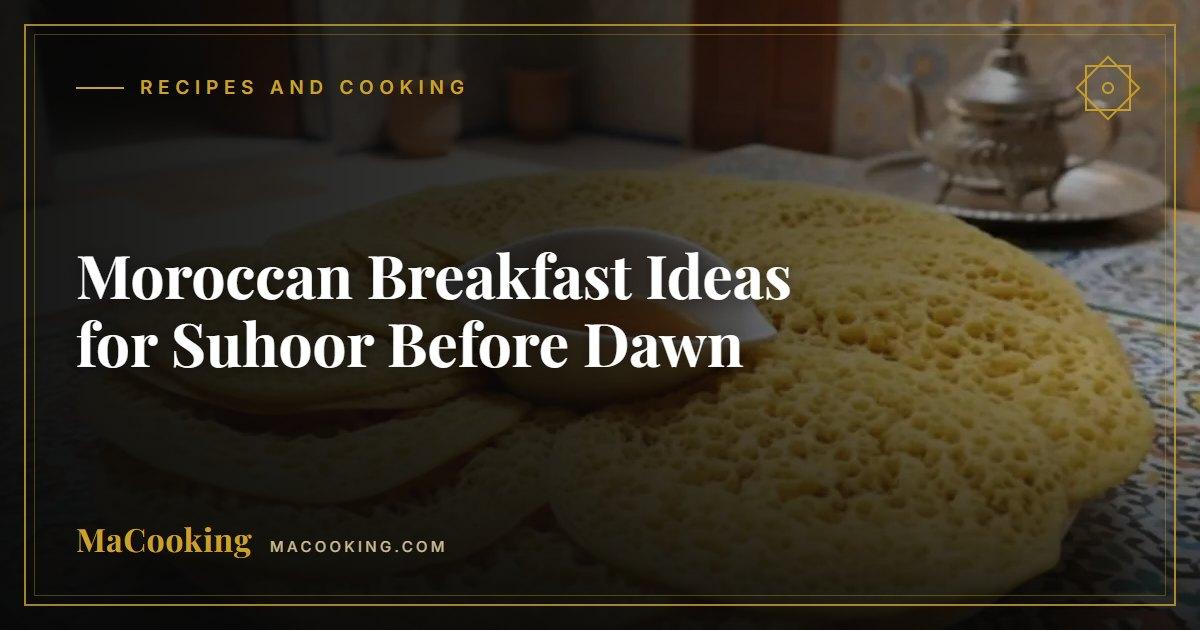
A Moroccan Ramadan breakfast before dawn is built around slow, satisfying foods: eggs cooked with tomatoes or kefta, msemen or baghrir with honey and olive oil, dates, milk or raib, and mint tea. Moroccans eat these at suhoor to stay full through the fasting day, and most dishes can be prepared ahead.
Key Takeaways
- Suhoor in Morocco is usually simple and homely: eggs, pancakes, bread with olive oil or amlou, dates, dairy and tea.
- Combine protein (eggs, kefta, dairy), slow carbohydrates (semolina pancakes, bread, oats) and fluids rather than relying on sugar alone.
- Msemen, harcha and amlou are easy to make ahead, so you can keep the pre-dawn kitchen quiet.
- Go easy on salt, deep-fried foods and very sweet tea if you want to feel comfortable later in the day.
- Plan a rotation of 4-5 suhoor dishes for the month so you are not deciding at 3 a.m.
What do Moroccans eat for breakfast during Ramadan?
If you have wondered what Moroccans eat for breakfast on an ordinary day, the answer is a table of semolina pancakes, flatbreads, olive oil, honey, soft cheese, olives, jam and plenty of mint tea or coffee with milk. Our guide to Moroccan breakfast traditions covers that everyday spread in depth.
During Ramadan the logic changes. The pre-dawn meal, often called shour or suhoor, has to carry you through a long day without food or water. In Moroccan Arabic, ftour is the word for breakfast, and in Ramadan it is also commonly used for the evening meal that breaks the fast. So when people say "Moroccan Ramadan breakfast" they may mean either meal. This article is about the pre-dawn one. Suhoor itself is a recommended practice in Islamic tradition; Wikipedia has a short overview if you want background.
The dishes themselves are not exotic; they are the familiar breakfast foods, shifted toward more protein and more staying power. Here is a snapshot of the most common choices.
| Suhoor idea | Main role | Active time | Make-ahead? |
|---|---|---|---|
| Egg tagine with tomatoes | Protein, vegetables | 15 min | Sauce base, yes |
| Kefta tagine with eggs | Protein, iron-rich meat | 30 min | Kefta balls, yes |
| Msemen with honey or cheese | Slow carbohydrates | 5 min (reheating) | Freezes well |
| Baghrir with butter and honey | Light carbohydrates | 20 min | Batter rests overnight |
| Bread with amlou | Healthy fats, energy | 2 min | Keeps for weeks |
| Dates, milk or raib | Quick energy, hydration | 0 min | No cooking needed |
| Bissara (fava bean soup) | Fibre, plant protein | 10 min (reheating) | Yes, reheats well |
How do you build a balanced Moroccan Ramadan breakfast before dawn?
Think in three parts: something with protein, something with slow-burning carbohydrate, and something to drink or hydrate with. Moroccan home cooking already does this instinctively. An egg tagine eaten with bread covers the first two; a glass of milk or raib and a few dates cover the third and add a touch of sweetness.
Protein
Eggs are the backbone of most Moroccan suhoor tables because they cook in minutes. Kefta (spiced minced beef or lamb), soft cheese such as jben, and dairy like raib or yoghurt are other common sources. Protein digests more slowly than refined sugar, which is why it tends to feel more satisfying through the morning.
Slow carbohydrates and fibre
Semolina and wholemeal flatbreads, oats, fava beans and lentils all work. If you are cooking Moroccan food outside Morocco, a mixture of wholemeal and plain flour in your pancakes is an easy way to add fibre without changing the character of the dish. Fruit, especially dates, figs, bananas and oranges, adds both fibre and natural sweetness.
Fluids and salt
Drink water steadily between iftar and bedtime and again at suhoor. Very salty foods (some cured meats, olives in large quantities, heavily seasoned sauces) can leave you thirsty during the day, so season suhoor dishes a little more lightly than you would at dinner. If you have a medical condition or take medication, follow your doctor's advice about fasting and meal composition.
Which Moroccan breakfast eggs work best for suhoor?
Moroccan breakfast eggs are rarely just fried and set on a plate. They are usually cooked in a shallow tagine or heavy pan with olive oil, tomato, garlic and gentle spices, then brought to the table in the pan with bread for scooping. This keeps the eggs soft, makes the meal feel generous, and lets everyone share.
Egg tagine with tomatoes
This is the dish to master first. Our full recipe for egg tagine with fresh tomatoes has all the detail; here is the quick version for four people:
- Warm 3 tablespoons of olive oil in a wide, shallow pan over medium heat.
- Add 2 crushed garlic cloves and cook for 30 seconds without browning.
- Stir in 4 ripe tomatoes, grated and skins discarded, with 1 teaspoon paprika, ½ teaspoon ground cumin, ½ teaspoon salt and a pinch of black pepper.
- Simmer for 10-12 minutes, until the sauce is thick and the oil begins to separate at the edges.
- Make 4-6 small wells with a spoon, crack an egg into each, cover and cook on low for 3-5 minutes, until the whites are set and the yolks are still slightly soft.
- Finish with chopped parsley or coriander and serve straight from the pan with bread.
If fresh tomatoes are out of season, use one 400 g tin of good chopped tomatoes and cook the sauce a few minutes longer so it reduces properly.
Kefta and eggs
For a heartier suhoor, add spiced meatballs. A kefta tagine with eggs gives you a full, protein-rich meal in one pan. Because the kefta can be shaped and even lightly browned the night before, the pre-dawn work is just warming the sauce, adding the meatballs and cracking in the eggs. Keep the pan covered so the yolks set gently and don't turn rubbery.
Quicker egg options
- Boiled eggs with cumin and salt: a very traditional accompaniment to bread and olive oil. Boil for 8-9 minutes for a firm but not chalky yolk.
- Eggs with khlii: khlii is preserved, spiced dried beef; where you cannot find it, a small amount of well-seasoned shredded beef or a light sprinkle of smoked paprika gives a nod to the flavour.
- Eggs with olive oil and cumin: fried gently in a small pan, finished with a sprinkle of cumin and served with bread.
What are the best Moroccan breakfast pancakes for suhoor?
Moroccan breakfast pancakes are less a single dish than a family of griddle breads. Three of them show up on suhoor tables again and again: msemen, baghrir and harcha. They behave quite differently, so it helps to know which suits the time you have.
Msemen: the make-ahead workhorse
Msemen is a layered, square flatbread made from a soft dough of plain flour and fine semolina, folded with oil and cooked on a hot griddle. It is crisp at the edges and flaky inside. Our msemen recipe shows the folding technique step by step.
The reason it works so well for Ramadan is that it freezes beautifully. Make a large batch on a weekend, cool each piece completely, separate with baking paper and freeze in a bag. At suhoor, reheat from frozen in a dry non-stick pan over medium heat for 1-2 minutes per side. Serve with honey, soft cheese, a smear of butter, or beside eggs.
Baghrir: light and spongy
Baghrir, the "thousand hole" pancake, is cooked on one side only, so the surface fills with tiny bubbles that soak up honey and melted butter. It is lighter than msemen. Our baghrir recipe includes the batter proportions. For suhoor, mix the batter before bed and keep it covered in the fridge; stir gently and cook it in the morning. Pair it with eggs or yoghurt rather than eating it with syrup alone, so the meal has more staying power.
Harcha: the semolina griddle cake
Harcha is a rustic semolina cake, thicker and crumblier than the other two, cooked slowly in a pan. It is good split and filled with cheese or spread with butter and jam. It also reheats well, which makes it useful for busy weeks. We do not have a harcha recipe on the site yet, but the same make-ahead logic applies.
Quick comparison
| Pancake | Texture | Best served with | Best way to prep ahead |
|---|---|---|---|
| Msemen | Flaky, layered, slightly crisp | Cheese, honey, eggs | Cook and freeze |
| Baghrir | Soft, spongy, full of holes | Butter, honey, yoghurt | Rest batter overnight in the fridge |
| Harcha | Crumbly outside, tender inside | Cheese, jam, olive oil | Bake the day before and reheat |
What quick, no-cook Moroccan suhoor ideas are there?
Not every night allows for a pan on the hob. These are the standbys many households fall back on when time or energy runs low.
Amlou with bread
Amlou is a thick spread of toasted almonds, argan oil and honey, traditionally from the Souss region. It is rich, so a little goes a long way. A simple home version: blend 1 cup (150 g) of toasted almonds until they form a paste, then add 2 tablespoons argan oil (or a mild olive oil if you cannot find argan), 2 tablespoons honey and a pinch of salt. Blend until smooth and spoon into a jar. It keeps for a few weeks in a cool cupboard. Spread it thinly on msemen or wholemeal bread.
Dates, milk and raib
Dates and a glass of milk are one of the simplest suhoor pairings. Raib is a Moroccan fermented milk, similar to a drinking yoghurt; plain kefir or thin natural yoghurt works as a substitute outside Morocco. Add a small handful of almonds or walnuts for more substance.
Sellou (sfouf)
Sellou is a crumbly mixture of toasted flour, ground almonds, sesame, spices and honey or butter, closely associated with Ramadan. It is energy-dense, so serve it in small portions with milk or tea. The premium chapter "Chebakia & Sellou — Ramadan Sweets" in the full ebook The Royal Moroccan Table — Part 5: Sweet Morocco is where you will find these Ramadan sweets treated in depth, alongside "The Moroccan Breakfast Table", a chapter devoted to the morning spread.
Bissara and oats
Bissara, a smooth fava bean soup finished with olive oil and cumin, is a warming option, especially in cooler months. It is high in fibre and easy to reheat. If you prefer something even simpler, oats cooked in milk with a spoonful of honey, cinnamon and chopped dates borrow Moroccan flavours without any special shopping.
How do you plan suhoor ahead so mornings stay calm?
The difference between a stressful suhoor and a peaceful one is almost always preparation. Moroccan families have long done much of their cooking in the evening or the day before; the pre-dawn meal is mostly assembly and reheating. For a wider set of ideas, our list of 15 Moroccan suhoor recipes gives plenty of variety, and the 7-day Ramadan meal plan shows how to pair suhoor with each evening's iftar.
A simple weekly rhythm
- Weekend: make and freeze a double batch of msemen. Shape and refrigerate kefta, or freeze it raw in portions.
- After iftar: make the tomato sauce for the egg tagine and refrigerate it. Mix baghrir batter if it is a baghrir night.
- Before bed: set out plates, bread, dates, glasses and the tea tray so you do not have to hunt for things in the dark.
- At suhoor: reheat the sauce, crack in the eggs, warm the msemen and pour the tea. Total hands-on time: about 10 minutes.
Substitutions for Western pantries
| If you cannot find... | Try this instead |
|---|---|
| Fine semolina | Fine polenta or cream of wheat, blitzed briefly in a blender for a finer texture |
| Raib | Plain kefir or thin natural yoghurt |
| Khlii | Well-seasoned shredded beef or good-quality pastrami in small amounts |
| Argan oil | Mild extra virgin olive oil, plus a few drops of toasted almond or walnut oil |
| Jben (fresh cheese) | Fresh ricotta or a mild fresh goat's cheese |
| Smen (preserved butter) | Good butter, lightly browned |
What mistakes should you avoid at a pre-dawn meal?
- Relying only on sugar. A pancake with syrup and tea is pleasant, but it will not carry you far. Add eggs, dairy or nuts.
- Overeating. A very large meal can leave you sluggish. Aim for a comfortable amount, not a feast.
- Too much salt. Heavily salted dishes can make the day feel longer. Taste before adding more.
- Skipping fluids. Drink water in small amounts through the evening and at suhoor, rather than gulping a lot at the last minute.
- Cooking new, complicated dishes. Suhoor is the wrong meal for experiments. Keep to reliable favourites.
- Letting eggs overcook. Cook them gently with a lid on; rubbery yolks are not appetising at 4 a.m.
For a broader view of what appears on Moroccan tables across the month, see our overview of traditional Ramadan dishes and a daily menu.
Frequently Asked Questions
What do Moroccans eat for suhoor?
Common Moroccan suhoor foods include eggs (often cooked with tomatoes or kefta), msemen, baghrir or harcha with honey and olive oil, dates, milk or raib, bissara in cooler months, and mint tea. Families choose according to taste, region and how much time they have before Fajr.
Is Moroccan breakfast the same as suhoor?
Not exactly, but they overlap. Everyday Moroccan breakfast uses the same pancakes, eggs, olive oil, honey and tea. During Ramadan families often choose heartier, slower-digesting versions before dawn, and may skip heavy fried or very sugary items. Note that in Morocco the word ftour can mean either breakfast or the meal that breaks the fast.
What are good Moroccan breakfast eggs for suhoor?
Egg tagine with tomatoes is the classic: eggs gently set in a spiced tomato sauce, eaten with bread. Kefta tagine with eggs adds protein from spiced meatballs. Boiled eggs with cumin and salt, or eggs fried in olive oil with khlii, are quicker options when time is short.
Can I make Moroccan pancakes ahead for suhoor?
Yes. Msemen freezes very well: cook it, cool it, layer it with baking paper and freeze, then reheat in a dry pan for a minute per side. Baghrir is best fresh but can be stored for a day and gently warmed or steamed. Harcha reheats well in a toaster oven.
What should I drink at suhoor?
Water is the priority; sip steadily from the end of iftar through to dawn rather than drinking a large amount at once. Milk, raib or buttermilk and mint tea are traditional choices. Keep tea light and not too sweet, since strong tea can make some people feel thirstier.
How long before dawn should I eat suhoor?
Suhoor is eaten any time before Fajr, and many people prefer to eat as late as is comfortable, while still leaving time to finish before the call to prayer. Check your local prayer timetable, because Fajr time shifts through the month and varies by city.
Conclusion
A good Moroccan Ramadan breakfast before dawn does not need to be elaborate. A pan of eggs in tomato sauce, a warm msemen from the freezer, a few dates and a glass of milk make a meal that is both deeply traditional and practical. Choose four or five dishes you enjoy, prepare what you can in the evening, and let the pre-dawn kitchen stay calm. For more recipes to build your rotation, browse all Moroccan recipes and start with the egg tagine and msemen.