
20
Prep (min)
15
Cook (min)
24
Servings
Easy
Level
Introduction
Ghriba (also spelled ghribiya or ghraybeh) represents one of Morocco's most beloved and iconic cookies - delicate, crumbly confections that grace every special occasion, wedding, and celebration throughout the kingdom. The name 'ghriba' comes from the Arabic word for 'strange' or 'foreign,' though the exact reason remains debated - some say it refers to the cookie's unique crackled appearance, others suggest it describes the unusual melt-in-your-mouth texture that seems almost magical. What is certain is that ghriba has been a cornerstone of Moroccan pastry-making for centuries, with each family guarding their own proportions and techniques passed down through generations of women.
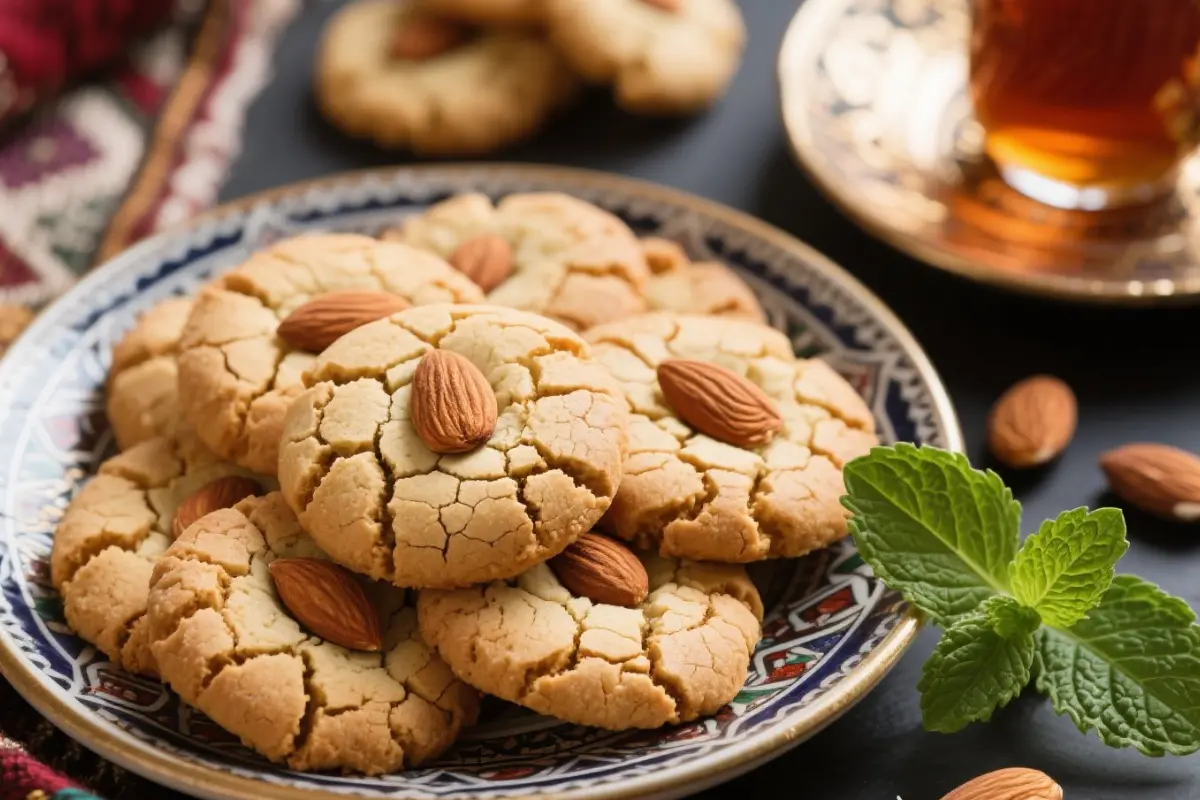
Almond ghriba stands as the most classic and refined version among the many ghriba varieties (including coconut, chocolate, and chickpea flour versions). These cookies are distinguished by their pale color, characteristic crackled surface that develops during baking, and their remarkably tender, almost sandy texture that literally dissolves on the tongue. The flavor is pure, intense almond - not overly sweet but perfectly balanced with a hint of orange blossom water and the warming notes of vanilla. When properly made, ghriba should be so delicate that it crumbles at the slightest pressure, yet holds together just enough to dip into a glass of sweet Moroccan mint tea.
What makes almond ghriba special is both the simplicity of ingredients and the precision required in technique. The cookies contain just ground almonds, powdered sugar, egg whites, and flavorings - no flour, no butter, making them naturally gluten-free. The preparation involves carefully folding ingredients together to create a paste that is neither too wet nor too dry, shaping into balls, and baking at precisely the right temperature to achieve that coveted crackled surface without browning. These are cookies of celebration and ceremony, prepared for Eid, weddings, births, and whenever guests deserve to be honored with the finest homemade sweets. The sight of a platter piled high with pale, crackled ghriba signals hospitality, tradition, and the continuation of culinary heritage.
About This Recipe
Ghriba represents one of the oldest and most beloved cookies in Moroccan culinary tradition, with roots stretching back centuries into the country's rich pastry-making heritage. The name 'ghriba' derives from the Arabic word meaning 'strange' or 'foreign,' though the exact etymology remains debated among food historians. Some suggest the name refers to the cookie's unusual crackled appearance, which seems almost otherworldly. Others believe it describes the strange, almost magical melt-in-your-mouth texture that dissolves instantly on the tongue. Still others theorize the name originally applied to cookies that were 'foreign' to Morocco, perhaps brought by Andalusian Muslims and Jews fleeing medieval Spain. Regardless of the name's origins, ghriba has become thoroughly Moroccan, beloved across all regions and communities. Almond ghriba specifically represents the most refined and elegant version among numerous ghriba varieties. The Moroccan Jewish community has particularly strong associations with ghriba, with the annual pilgrimage to the Ghriba synagogue in Djerba, Tunisia (one of the oldest synagogues in the world) featuring elaborate ghriba-baking traditions. In Morocco, both Muslim and Jewish families prepare almond ghriba for celebrations, though each community has subtle variations in technique and proportions passed down through generations. The cookies became essential to Moroccan celebration culture - no wedding, Eid, birth celebration, or important gathering is complete without platters of homemade ghriba alongside other traditional sweets. The preparation and presentation of ghriba demonstrates hospitality, culinary skill, and respect for tradition. Young women traditionally learned to make perfect ghriba as part of their preparation for marriage, with the ability to produce delicate, beautifully cracked cookies considered a mark of accomplished homemaking. The naturally gluten-free nature of almond ghriba (made without any flour) has given them renewed popularity in modern times, though they were always valued for their pure almond flavor and delicate texture. Today, Moroccan bakeries sell ghriba year-round, but homemade versions remain treasured, with each family's recipe guarded and perfected over generations. The sight of pale, crackled ghriba piled on silver platters continues to signal celebration, tradition, and the warm hospitality that defines Moroccan culture.
Nutrition / serving
Recipe Tags
Understanding the Ingredients
Blanched Almonds
The foundation of authentic almond ghriba requires approximately three cups (about 12 ounces) of blanched almonds - almonds with skins removed. The quality and freshness of almonds directly impacts the final cookie's flavor and texture. Look for whole blanched almonds that are plump, fresh, and aromatic. The almonds must be ground to a fine powder - not almond flour from the store, but freshly ground almonds that retain their natural oils and create the perfect texture. Using a food processor, the almonds are pulsed to a fine, flour-like consistency but not over-processed into paste or almond butter. The oils in the almonds provide richness and help bind the cookies without any added butter. Some families add a handful of raw, untoasted almonds for extra freshness, while others lightly toast the almonds first for deeper, nuttier flavor - though traditional ghriba uses raw almonds for their pale color.
Powdered Sugar
Powdered sugar (confectioners' sugar or icing sugar) is essential and cannot be substituted with granulated sugar. You need approximately two cups of powdered sugar. The ultra-fine texture of powdered sugar dissolves completely into the almond paste and contributes to the cookies' delicate, melt-in-your-mouth texture. Granulated sugar would create grainy cookies and wouldn't dissolve properly. The powdered sugar also contains a small amount of cornstarch, which helps stabilize the cookies and contributes to their tender crumb. Additional powdered sugar is used for coating the shaped cookies before baking, creating the characteristic white, crackled appearance. The amount of sugar can be adjusted slightly to taste, though traditional ghriba is quite sweet to balance the intense almond flavor.
Egg Whites
Egg whites provide the essential binding that holds these flourless cookies together. You need two to three large egg whites (about one-quarter cup). The egg whites should be at room temperature for easier incorporation into the almond mixture. Some recipes use whole eggs, but traditional almond ghriba uses only whites for a paler color and more delicate texture. The egg whites are beaten slightly before being folded into the ground almonds and sugar, creating a paste-like dough that can be shaped but remains tender and crumbly when baked. The exact amount may need slight adjustment based on the moisture content of your almonds and the size of your eggs - the dough should hold together when pressed but not be wet or sticky.
Orange Blossom Water
Orange blossom water is the traditional flavoring for Moroccan almond ghriba, providing distinctive floral notes that are signature to Moroccan pastries. You need about one to two tablespoons of food-grade orange blossom water. This fragrant distillation from bitter orange blossoms adds complexity and an unmistakably Moroccan character. The amount can be adjusted to taste - too much will be overpowering and soapy, too little will be unnoticeable. Orange blossom water is available at Middle Eastern markets, specialty stores, or online. If unavailable, rose water can substitute for different but pleasant floral notes, or pure vanilla extract can be used, though the flavor will be less authentically Moroccan.
Vanilla Extract or Vanilla Sugar
Vanilla provides warming, sweet aromatic notes that complement the almonds and orange blossom water. Use one teaspoon of pure vanilla extract, or substitute one packet (about one tablespoon) of vanilla sugar (sucre vanillé), which is common in Moroccan baking. Vanilla sugar is granulated sugar that has been infused with vanilla beans and is traditional in many Moroccan pastries. If using vanilla sugar, it can be mixed with the powdered sugar. The vanilla should enhance but not dominate - the almond flavor should remain primary.
Baking Powder
A small amount of baking powder (about one teaspoon) is sometimes added to help the cookies rise slightly and develop the characteristic crackled surface. This is optional and not used in all traditional recipes - some families achieve the cracks purely through technique and oven temperature. The baking powder should be aluminum-free for the cleanest flavor. Some modern recipes include it for more reliable cracking, while purists omit it entirely, relying on the natural expansion of the egg whites during baking.
Additional Flavorings (Optional)
Some regional variations include additional flavorings for complexity. A tiny pinch of ground cinnamon or cardamom adds warmth. Almond extract (just a few drops) intensifies the almond flavor. Lemon zest provides brightness. These are all optional - traditional ghriba keeps the flavor pure and simple, focusing on quality almonds and orange blossom water.
Step-by-Step Cooking Guide
Grind the Almonds
5 minPlace three cups of blanched whole almonds in a food processor. Pulse in short bursts, scraping down the sides occasionally, until the almonds are ground to a fine powder resembling flour. This typically takes about one to two minutes of pulsing. The texture should be fine and powdery but not so over-processed that the almonds turn into paste or release too much oil - you want ground almonds, not almond butter. Stop frequently to check the consistency. If a few slightly larger pieces remain, that is fine - they add pleasant texture. Transfer the ground almonds to a large bowl. If you prefer, you can use store-bought almond flour (almond meal), though freshly ground almonds provide superior flavor and the ideal texture.
Tip: Pulse in short bursts rather than continuous processing to prevent the almonds from turning into paste. The finer the grind, the smoother and more delicate the cookies will be.
Combine Dry Ingredients
3 minTo the bowl of ground almonds, add two cups of powdered sugar. If using vanilla sugar, add it now as well. Add one teaspoon of baking powder if using (this is optional - traditional recipes often omit it). Using a whisk or fork, mix the dry ingredients together thoroughly, breaking up any lumps in the powdered sugar and ensuring everything is evenly distributed. The mixture should be uniform in color and texture, with no streaks of unmixed sugar or pockets of almonds. This thorough mixing of dry ingredients ensures every cookie will have consistent flavor and texture.
Tip: Break up any lumps in the powdered sugar before mixing. Thorough mixing of dry ingredients is important for uniform cookies. Sift the powdered sugar if it's very lumpy.
Add Wet Ingredients and Form Dough
7 minIn a small bowl, lightly beat two to three egg whites (start with two, add the third if needed) with a fork until slightly frothy but not stiff. Add one tablespoon of orange blossom water and one teaspoon of vanilla extract to the egg whites and mix to combine. Make a well in the center of the almond-sugar mixture. Pour the egg white mixture into the well. Using a wooden spoon or your clean hands, begin folding the wet ingredients into the dry, working from the center outward. Mix gently but thoroughly until everything comes together into a cohesive, slightly sticky dough. The dough should hold together when pressed but not be wet or overly sticky. If the mixture seems too dry and crumbly, add the third egg white or a tiny bit more orange blossom water. If it's too wet and sticky, add a bit more ground almonds or powdered sugar. Let the dough rest for five to ten minutes - this allows the almonds to absorb moisture and makes shaping easier.
Tip: The dough consistency is crucial - it should be pliable but not sticky. If too dry, cookies will be crumbly and fall apart; if too wet, they won't hold shape. Resting the dough improves workability.
Shape the Cookies
10 minPreheat your oven to 325°F (160°C) - this relatively low temperature is important for pale cookies with crackled surfaces. Line two large baking sheets with parchment paper or silicone baking mats. Have a shallow bowl of powdered sugar ready for coating. Take about one tablespoon of dough and roll it between your palms into a smooth ball about one inch in diameter - the dough should be compact with no cracks on the surface when you roll it. Gently roll the ball in powdered sugar to coat completely, then place on the prepared baking sheet. Repeat with remaining dough, spacing the balls about two inches apart as they will spread slightly during baking. You should get about twenty-four cookies. Some families press the cookies slightly to flatten them into thick discs; others leave them as balls. Traditional ghriba are often left round, which allows for better cracking.
Tip: Roll the balls very smooth with no surface cracks - this helps achieve the beautiful crackled appearance during baking. The powdered sugar coating is essential for the white appearance and crackled surface.
Bake to Pale Perfection
15 minPlace the baking sheets in the preheated 325°F oven. Bake for twelve to fifteen minutes, rotating the pans halfway through for even baking. Watch carefully - the cookies should remain very pale with just barely golden bottoms. They should NOT brown on top - pale cookies are the goal. During baking, the characteristic cracks will form across the surface - this is what you want. The cookies will look slightly underdone when you remove them, which is correct. They will feel soft and delicate when hot. Remove from oven when the tops are set and crackled but still pale, and the bottoms are just barely beginning to turn golden. Let the cookies cool on the baking sheet for five minutes - they are extremely fragile when hot and will break if moved too soon. After five minutes, carefully transfer to a wire rack to cool completely. The cookies will firm up as they cool.
Tip: Low temperature and pale color are essential for authentic ghriba - don't over-bake. The cookies should be white or very pale cream, not golden. They're extremely delicate when hot, so don't rush cooling.
Cool and Store
30 minAllow the cookies to cool completely on a wire rack - this takes about thirty minutes. As they cool, they will become firmer but should remain very delicate and crumbly. Once completely cool, the cookies are ready to serve or store. Ghriba are best enjoyed within a few days of baking when they are at peak freshness and tenderness. Store in an airtight container at room temperature, placing parchment paper between layers to prevent sticking and breaking. Do not refrigerate, as moisture will make them soggy. Properly stored, ghriba will keep for about one week, though they are most delicate and delicious in the first few days. For longer storage, they can be frozen for up to one month - freeze in a single layer first, then pack carefully in airtight containers.
Tip: Complete cooling is essential before storage. Handle gently as these cookies are extremely delicate. Layer with parchment to prevent breakage. Never refrigerate - it makes them soggy.
Serve Traditionally
5 minArrange the cooled ghriba on a decorative platter or shallow bowl. Traditional presentation involves piling them in an attractive mound or arranging them in concentric circles. Ghriba are traditionally served with Moroccan mint tea, which provides the perfect complement - the cookies' sweetness and delicate almond flavor pair beautifully with the refreshing tea. To eat in traditional Moroccan fashion, take a small bite of ghriba, let it melt on your tongue, then sip the hot tea. The contrast of textures and temperatures is delightful. Ghriba are perfect for afternoon tea, as cookies to serve guests, or as part of a celebration cookie assortment alongside other Moroccan pastries. Their pale, crackled appearance is distinctive and beautiful on any dessert table.
Tip: Serve at room temperature for best texture and flavor. The cookies are delicate, so handle gently when arranging. Always serve with mint tea for the authentic experience.
Common Mistakes to Avoid
✗ Over-Processing the Almonds
Fix: If almonds are processed too long, they turn into almond butter or paste, releasing too much oil. Pulse in short bursts and stop when you have fine powder. The almonds should remain dry and powdery.
✗ Making Dough Too Wet or Too Dry
Fix: Dough consistency is crucial. Too wet means cookies spread too much and lose shape; too dry means they crumble and fall apart. The dough should hold together when pressed but not be sticky. Adjust with egg white or almond powder.
✗ Baking at Too High Temperature
Fix: High heat causes ghriba to brown and lose their characteristic pale appearance. Always bake at 325°F (160°C) maximum. The cookies should remain white or very pale cream, never golden brown.
✗ Over-Baking
Fix: Ghriba should look slightly underdone when removed from the oven - they firm up as they cool. If baked until firm in the oven, they will be dry and hard when cool. Remove when set but still soft.
✗ Not Coating in Powdered Sugar
Fix: The powdered sugar coating is essential for the white appearance and helps create the crackled surface. Don't skip this step. Roll each cookie thoroughly in sugar before baking.
✗ Moving Cookies While Hot
Fix: Ghriba are extremely fragile when hot and will break if moved too soon. Let them cool on the baking sheet for five minutes before transferring carefully to a wire rack.
✗ Using Granulated Sugar Instead of Powdered
Fix: Granulated sugar creates grainy, dense cookies. Only powdered sugar produces the characteristic melt-in-your-mouth texture. There is no substitute - use powdered sugar only.
Ingredient Substitutions
Instead of: Blanched Almonds
Use: Pre-ground almond flour works but freshly ground almonds provide superior flavor and texture. Hazelnuts can substitute for different flavor (hazelnut ghriba), or use pistachios for pistachio ghriba.
Instead of: Orange Blossom Water
Use: Rose water provides different but pleasant floral notes. Pure vanilla extract (2 tsp) creates vanilla almond ghriba. Almond extract intensifies almond flavor. All create different but delicious variations.
Instead of: Egg Whites
Use: For vegan version, use aquafaba (chickpea liquid) - 3 tablespoons replaces 2 egg whites. The texture will be slightly different but still delicious. Whole eggs can be used but will create darker cookies.
Serving Suggestions
Serve almond ghriba with Moroccan mint tea - the traditional and perfect pairing that balances sweetness and refreshes the palate.
Arrange on decorative platters for Eid celebrations, weddings, births, and special occasions - ghriba signals hospitality and celebration.
Include as part of a Moroccan cookie assortment alongside other varieties like coconut ghriba, chocolate ghriba, and kaab el ghazal.
Package individually or in small boxes as gifts for guests at weddings and celebrations - a traditional Moroccan gesture of generosity.
Serve as an elegant afternoon tea cookie or coffee accompaniment - their delicate nature suits refined gatherings.
Pair with fresh orange segments or other fruit for color contrast and to balance the sweetness.
Dust with extra powdered sugar just before serving for an elegant, snowy appearance.
Present in traditional Moroccan cookie jars or on ornate silver trays for authentic presentation.
These cookies are perfect for gifting during holidays - pack carefully between layers of parchment paper.
Storage & Reheating
Storage
Almond ghriba are best enjoyed within three to five days of baking when they are at peak freshness and maintain their delicate, melt-in-your-mouth texture. Store in an airtight container at room temperature, placing sheets of parchment paper between layers to prevent sticking and breaking. Never refrigerate ghriba, as moisture from the refrigerator will make them soggy and destroy their delicate texture. Keep away from humidity and moisture. For longer storage, ghriba can be frozen for up to one month. To freeze, arrange cookies in a single layer on a baking sheet and freeze until solid, then carefully pack in airtight containers or freezer bags with parchment between layers. Thaw at room temperature for thirty minutes before serving.
Reheating
Ghriba are never reheated as they are meant to be served at room temperature. If they have become slightly soft from humidity, you can crisp them by placing in a 300°F oven for three to five minutes, watching carefully. Let cool completely before serving. However, proper storage should prevent the need for this.
These cookies are extremely delicate and break easily - handle with care when storing. Never stack without parchment between layers. If they become too hard, place a slice of apple in the container overnight to soften slightly. The crackled surface is most dramatic on fresh cookies.
Frequently Asked Questions
Recipe by

Abdrahman Idrissi
عبد الرحمن الإدريسي
Pastry & Bread Chef
View all recipes by Abdrahman →
You May Also Like
Our Ebooks

The Moroccan Vegan
$12.56
The Royal Moroccan Table — Part 1
$9.99
The Royal Moroccan Table — Part 2
$9.99
YouTube
Watch step-by-step cooking videos and learn traditional Moroccan techniques.
450+
Subscribers
150+
Videos