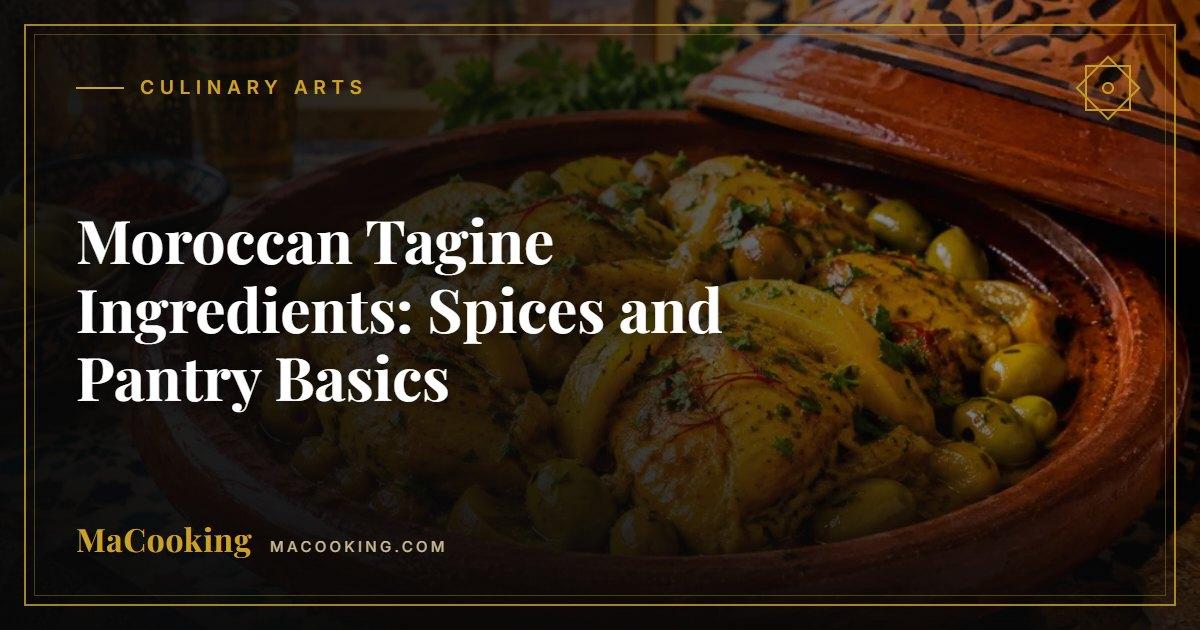
Moroccan tagine ingredients fall into a few simple groups: a protein, onions and garlic, a warm spice base (ginger, turmeric, pepper, cumin, paprika, cinnamon, saffron), fresh cilantro and parsley, olive oil, and one defining accent such as preserved lemon, olives or dried fruit. Get those right and the pot does the rest.
Key Takeaways
- A tagine is built from layers: aromatics, spices, a main ingredient and one signature accent, not from a long shopping list.
- Ginger, turmeric, black pepper, cumin, paprika, cinnamon and saffron cover the majority of classic tagines.
- Preserved lemons, olives and dried fruit give a tagine its identity; choose one or two per pot, not all of them.
- Ras el hanout is a useful shortcut, but a simple homemade tagine blend gives you more control.
- Fresh herbs, good olive oil and fresh spices matter more than any special equipment.
What Are the Essential Moroccan Tagine Ingredients?
The word "tagine" names both the conical clay cooking vessel and the slow-cooked stew made in it (Wikipedia has a good overview of the vessel and its history). What goes inside varies by region, season and household, but the structure is remarkably consistent. Almost every tagine uses five building blocks:
- The main ingredient: chicken, lamb, beef, fish, or a vegetable and egg combination.
- The aromatic base: onions, usually plenty of them, plus garlic.
- The fat: olive oil, sometimes butter or smen (Morocco's aged, fermented butter).
- The spices: a warm, rounded blend rather than a fiery one.
- The signature accent: preserved lemon and olives, prunes, apricots, raisins, quince, or fresh vegetables.
Fresh cilantro and flat-leaf parsley are usually tied in a bundle and cooked in the pot, or chopped and scattered over at the end. Water is used sparingly. The meat and onions release most of the liquid, which reduces into a glossy sauce rather than a broth.
Which Moroccan Spices for Tagine Do You Really Need?
You do not need thirty jars. A handful of well-chosen ground spices will cook most tagines convincingly. If you want to go deeper later, our guide to the 12 essential Moroccan spices covers the wider cupboard.
| Spice | What it does in a tagine | Typical amount (serves 4) |
|---|---|---|
| Ground ginger | Warm, peppery backbone; central to savoury chicken and lamb tagines | 1 to 2 tsp |
| Turmeric | Earthy flavour and golden colour | ½ to 1 tsp |
| Black pepper | Gentle heat and aroma | ½ to 1 tsp, freshly ground |
| Cumin | Smoky, savoury depth; stars in the cumin and olive chicken style | 1 tsp |
| Sweet paprika | Colour and mild sweetness | 1 to 2 tsp |
| Cinnamon | Sweet warmth for fruit and meat pairings | ½ to 1 tsp, or one small stick |
| Saffron | Floral aroma and colour; used sparingly | A generous pinch of threads (about 15 to 20) |
These are starting points, not rules. Moroccan home cooks usually measure by eye and by hand, so adjust to taste once you know how each spice behaves.
Yellow versus red: two classic tagine styles
Two sauce styles come up constantly in Moroccan cooking. A m'qalli (or mqualli) sauce is the pale golden one built on ginger, saffron or turmeric, onion and olive oil, and it is the natural partner for preserved lemons and olives. A m'hammer sauce is the deeper, redder style built on paprika and cumin, often with garlic and a little more oil. If you remember only one distinction, remember this one; it explains why two chicken tagines can taste so different.
What Are the Ras el Hanout Ingredients?
Ras el hanout is often translated as "head of the shop", meaning the best blend a spice seller could offer. There is no single official formula. Each spice merchant and household has its own, so the ras el hanout ingredients on one label may differ from another.
Commonly found components include:
- Cumin, coriander, ginger, turmeric and black pepper
- Cinnamon, cardamom, nutmeg, mace and cloves
- Paprika, cayenne or other mild-to-hot chilli
- Allspice, fennel seed and anise
- Aromatic or floral elements such as dried rose petals or lavender in more elaborate blends
Traditional blends can contain far more. If you are curious how long a classic formula can become, read the free chapter "Ras el Hanout — The Complete 30-Spice Formula", or our feature on ras el hanout and the idea of a spice blend that contains an entire kingdom.
When buying, check that the ingredient list is simply spices, with no fillers, and smell it. A good blend is fragrant, layered and slightly sweet rather than flat or dusty.
How Do You Make a Simple Moroccan Spices Blend for Tagine at Home?
This everyday Moroccan spices recipe makes a mild, versatile tagine blend. It is not a replica of any specific shop's mix; it is a practical house blend that works with chicken, lamb, beef and vegetables.
Everyday tagine spice blend
- 2 tbsp ground ginger
- 1 tbsp ground turmeric
- 1 tbsp sweet paprika
- 1 tbsp ground cumin
- 2 tsp freshly ground black pepper
- 2 tsp ground cinnamon
- ½ tsp ground coriander (optional)
- Combine all the spices in a small bowl and whisk until evenly mixed.
- Transfer to a clean, dry jar with a tight lid.
- Store away from light and heat. Use within about six months for the best aroma.
- For a tagine serving four, start with 2 to 3 teaspoons of the blend, then adjust at the end of cooking.
Add saffron separately: crumble a pinch of threads into two tablespoons of warm water and let it steep for ten minutes before adding it to the pot. Cooking saffron with the blend directly tends to waste its aroma.
Want the next level? Inside the full ebook The Moroccan Spice Bible — Part 2: The Blend Masters, you will find the premium chapter "The Golden Tagine Blend", along with "Tklilt — The Amazigh Blend" and "Coastal Spice Blends".
What Fresh and Pantry Ingredients Give a Tagine Its Character?
Spices are only half the story. The ingredients below decide whether your tagine tastes bright, sweet, salty or earthy.
| Ingredient | Role | Classic pairing | Substitution if unavailable |
|---|---|---|---|
| Preserved lemons | Salty, floral, citrus depth | Chicken with olives; fish | Fresh lemon zest plus extra salt, added late |
| Green or violet olives | Brine and bitterness that balance rich meat | Chicken, fish | Any good unpitted green olives, rinsed |
| Prunes | Dark, jammy sweetness | Beef, lamb | Dried figs or pitted dates |
| Dried apricots | Tart-sweet fruitiness | Lamb, with almonds | Dried peaches or extra prunes |
| Raisins | Gentle sweetness, often with caramelised onions | Chicken | Sultanas or currants |
| Blanched almonds | Crunch and richness | Lamb, chicken with fruit | Toasted slivered almonds |
| Smen | Funky, cheesy, aged-butter depth | Lamb, beef | Butter with a tiny pinch of blue cheese, or just butter |
| Fresh cilantro and parsley | Freshness and green aroma | Nearly everything | Parsley alone if you dislike cilantro |
Preserved lemons
These are lemons packed in salt (and their own juice) until the peel turns soft and fragrant. In most recipes you use mainly the rind, rinsed and sliced, and discard or use sparingly the pulp. They are the signature of a chicken tagine with preserved lemons, where they sit with olives in a pale, saffron-scented sauce.
Dried fruit and nuts
Sweet and savoury combinations are one of the defining features of Moroccan cooking. A lamb tagine with apricots and almonds shows the principle well: tender spiced meat, tart fruit and a crunch of nuts. The trick is restraint. The fruit should add contrast, not turn the dish into dessert.
Fresh herbs and chermoula
Cilantro and parsley are used generously. For fish, the herbs usually become part of chermoula, a marinade of herbs, garlic, spices, lemon and oil. See how that works in the fish tagine with chermoula and olives.
Which Cuts of Meat and Vegetables Work Best?
Tagines reward patience, so choose cuts that become tender with slow, moist heat.
- Chicken: bone-in thighs and drumsticks stay juicy. Breast meat dries out more easily.
- Lamb: shoulder, neck or shanks. The connective tissue melts into the sauce.
- Beef: chuck, shin or other braising cuts, cut into large chunks.
- Fish: firm white fish steaks or fillets that hold their shape, added late.
- Vegetables: carrots, potatoes, courgettes (zucchini), turnips, pumpkin, artichoke hearts, peas and tomatoes. Add tender ones late so they do not collapse.
For vegetarian tagines, chickpeas, sweet potato, peppers and eggs work well, and the same spice base applies.
How Should You Build the Flavours in the Pot?
Ingredients matter, but the order in which you add them matters nearly as much.
- Season the main ingredient. Toss meat with spices, garlic, oil and some herbs, ideally for at least an hour, or overnight in the fridge.
- Start with onions. Cook them in oil over low to medium heat until soft before the meat goes in, or spread them as a bed beneath it.
- Add a little liquid. Typically half a cup to a cup of water, depending on the dish and pot. You can always add more.
- Cook low and slow. Keep the heat gentle and the lid on. Lamb and beef usually need around two hours or more; chicken is often ready in about an hour.
- Add accents late. Olives, preserved lemon, delicate vegetables and fruit generally go in during the last 15 to 30 minutes so they keep their character.
- Reduce the sauce. Remove the lid at the end if it looks thin and let it thicken until it clings to the meat.
What Common Mistakes Should You Avoid?
- Using stale spices. If a jar has been open for years, replace it. Fresh spices make an obvious difference.
- Adding too much water. This produces a thin, soupy sauce and diluted flavour.
- Salting heavily before adding preserved lemons or olives. Both are salty. Season at the end.
- Cooking too hot. Fast boiling toughens meat. Look for the gentlest simmer.
- Overloading with spices. A tagine should taste aromatic and balanced, not like a spice cabinet.
- Adding all the vegetables at once. Potatoes and carrots take longer than courgettes or peas.
How Do You Stock a Tagine Pantry Without Overbuying?
Start small and build. A sensible first shopping list is ground ginger, turmeric, sweet paprika, cumin, cinnamon, black peppercorns, saffron, good olive oil, a jar of preserved lemons, olives and a bag of dried prunes or apricots. That alone covers a surprising range of recipes. For a broader plan, see our guide to stocking a Moroccan pantry with 20 essential ingredients.
Store spices in airtight containers in a cool, dark cupboard rather than above the stove. Keep saffron in a small sealed container away from light. Preserved lemons stay in their brine in the fridge once opened, and dried fruit keeps best sealed and cool.
Frequently Asked Questions
What spices are in a Moroccan tagine?
Most tagines use ginger, turmeric, black pepper, cumin, paprika, cinnamon and saffron, often combined with fresh cilantro and parsley. Ras el hanout is a common shortcut. Exact choices depend on the dish: savoury poultry tagines lean on ginger and saffron, while lamb and beef with fruit often add cinnamon.
Do I need a tagine pot to use these ingredients?
No. A tagine pot is traditional, but a heavy Dutch oven or a deep, lidded casserole gives very similar results. What matters is a tight lid, gentle heat and enough room for the meat to sit in a single layer, so the flavours of the ingredients can concentrate slowly.
Can I substitute preserved lemons in a tagine?
Not perfectly, but you can approximate them. Use thin strips of fresh lemon zest plus a pinch of extra salt, and add a little juice at the end. The result is brighter and less fermented-tasting, so taste before adding more salt. Preserved lemons are easy to make or buy, and they keep for months.
Is ras el hanout the same as a tagine spice mix?
Not exactly. Ras el hanout is a complex blend that can contain a dozen or more spices, while a basic tagine mix is simpler, usually ginger, turmeric, pepper, cumin, paprika and cinnamon. You can use ras el hanout in many tagines, but use less than you would of a simple mix.
How long do ground spices last for tagine cooking?
Ground spices are at their best for roughly six months to a year when stored airtight, away from light and heat. They rarely spoil, but they fade. If a spice smells dusty or faint when you rub a pinch between your fingers, it will add little to your tagine.
Conclusion: Start Simple, Then Layer
Great tagines come from a short list of well-chosen ingredients used with patience. Master one yellow-style and one red-style base, learn how preserved lemons, olives and dried fruit shift the mood of a dish, and keep your spices fresh. From there, every new tagine is a variation on a pattern you already understand. A good place to begin is a classic like the recipes in our Moroccan collection, starting with a simple chicken tagine, and building outward as your pantry grows.