To cook a Moroccan tagine, layer meat, onions, garlic and warm spices in a tagine pot or heavy casserole, add a little water, and simmer very gently, covered, until the meat is tender and the sauce is thick, about 1 hour for chicken and 2 to 2½ hours for lamb. Finish with herbs, olives or dried fruit.
Key Takeaways
- A tagine is both the cooking vessel and the dish. The method relies on low heat, a tight lid and very little added liquid.
- The flavor base is simple: onion, garlic, ginger, turmeric, pepper, saffron, cinnamon and fresh herbs. Fruit, preserved lemon and olives define the style.
- You can cook a tagine in clay, glazed ceramic, cast iron or even a Dutch oven. Heat management matters more than the pot.
- Cooking times range from about 30 minutes for fish or kefta to 2½–3 hours for lamb shanks.
- The most common mistakes are too much water, too high a flame and stirring constantly.
What Is a Moroccan Tagine Used For?
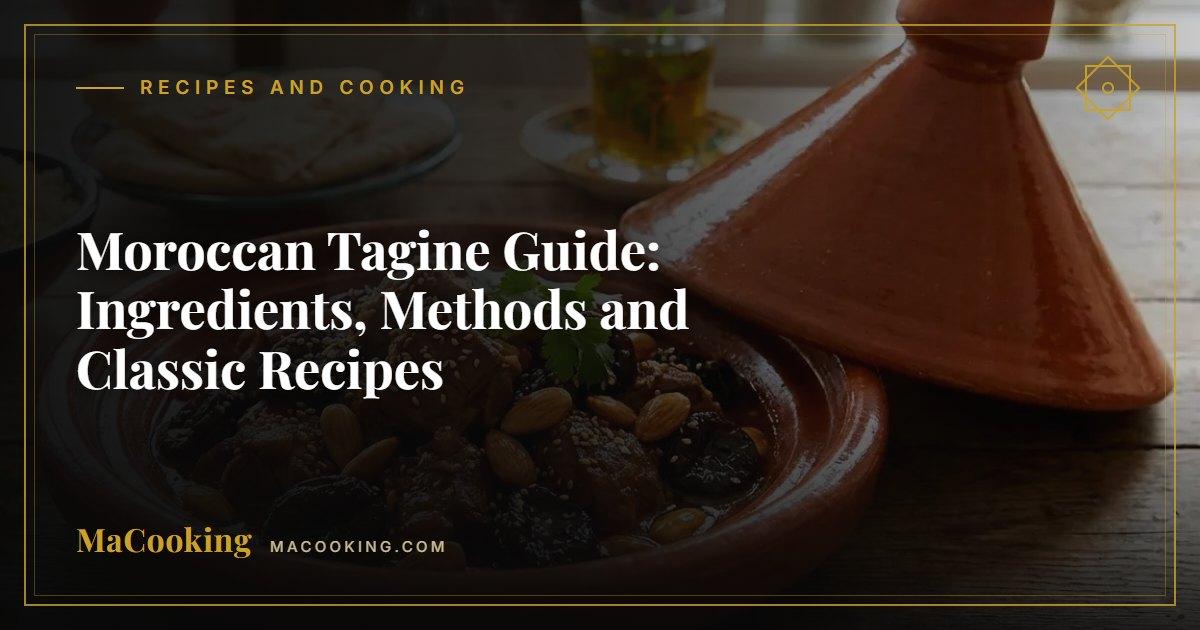
People often ask what a Moroccan tagine is used for, and the answer has two parts. The word tagine names the shallow clay base with its cone-shaped lid, and it also names the slow-cooked stew made in it. The pot is used for gentle braising of meat, poultry, fish or vegetables in their own juices and a small amount of liquid. The same pot often doubles as a serving dish, brought straight to the table. For a short background on the word and the vessel, see the Wikipedia entry on tagine.
The cone shape has a practical job. Steam rises into the lid, cools against the upper walls and drips back onto the food. This is why a tagine needs so little water and why the meat ends up tender rather than boiled. Traditionally, the pot sits over a small charcoal brazier, which gives low, steady heat. Home cooks today use a gas ring with a diffuser, an electric hob or an oven.
Tagines are everyday food in Morocco, but they are also served for gatherings and feast days. The range is wide. You will find peppery chicken with preserved lemon, sweet lamb with prunes or quince, fish with chermoula and simple vegetable versions. Browse the full range in our tagine recipes collection.
What Are the Essential Moroccan Tagine Ingredients?
Moroccan tagine ingredients are less exotic than they look. Most come from an ordinary supermarket, with two or three specialty items that are worth seeking out. The table below shows what each element does and what you can use if you cannot find it.
| Ingredient | Role in the tagine | Western pantry substitute |
|---|---|---|
| Onions (grated or sliced) | Melt into the sauce and give body and sweetness | Yellow or white onions work well |
| Garlic | Savory depth | Fresh cloves; avoid jarred paste |
| Ginger and turmeric | The earthy, golden base of many savory tagines | Ground spices are fine; use fresh turmeric if you like |
| Saffron threads | Aroma and color | A little extra turmeric for color; the aroma is not replaceable |
| Cinnamon, cumin, paprika, ras el hanout | Warmth and complexity | Cinnamon stick plus cumin and paprika approximates a simple blend |
| Cilantro and flat-leaf parsley | Fresh, green finish; often tied in a bundle and cooked in the sauce | Use all parsley if cilantro is unwelcome |
| Preserved lemon | Salty, floral tang for chicken and fish tagines | Fresh lemon zest plus a pinch of extra salt (a weaker match) |
| Olives (green or violet) | Briny contrast | Unflavored green olives, rinsed |
| Prunes, apricots, dates, quince | Sweet notes for lamb and beef tagines | Unsweetened dried fruit; fresh pears or firm apples can stand in for quince |
| Olive oil, sometimes smen (aged butter) | Fat for browning and richness | Olive oil with a small knob of butter |
Which cuts of meat work best?
Choose cuts with connective tissue and some fat, because they turn silky after long, gentle cooking. For lamb, that means bone-in shoulder, neck or shanks. For beef, use chuck or shin. For chicken, bone-in thighs and drumsticks hold up better than breast. Lean cuts dry out and give a stringy result.
Do I need preserved lemons?
You do not need them for every tagine, but they are essential to the classic chicken and olive version. They are easy to make at home, and our step-by-step guide to Moroccan preserved lemons walks you through it. Plan ahead, since they need a few weeks to cure.
Which Moroccan Tagine Pot Should You Buy?
A Moroccan tagine pot can be made of several materials, and each behaves differently. Choose based on how you cook and how much care you are willing to give it.
| Type | Best for | Things to know |
|---|---|---|
| Unglazed clay | Authentic flavor, charcoal or very low heat | Needs seasoning, a heat diffuser on most hobs, and care to avoid thermal shock |
| Glazed ceramic or painted clay | Serving and moderate-heat cooking | Check the maker's instructions; some decorative pots are for serving only |
| Cast iron base with ceramic or iron cone | Everyday hob use, can brown meat first | Heavy and forgiving; holds heat well |
| Dutch oven or heavy casserole | When you do not own a tagine | Works well; the sauce may need reducing at the end |
How do you season a new clay tagine?
Unglazed clay should be prepared before first use, and the exact method depends on the maker, so read the instructions that come with your pot. The usual approach is as follows:
- Soak the base and lid in cool water for a couple of hours, then dry them.
- Rub the inside lightly with olive oil.
- Warm the pot slowly, either in a low oven or over very low heat with a diffuser, then let it cool gradually.
Never put a cold clay pot on a hot flame, and never add cold liquid to a hot pot. Sudden temperature changes are what crack clay. Let it cool before washing, and avoid strong detergents on unglazed surfaces, since the clay can absorb them.
How to Cook Moroccan Tagine Step by Step
This master method suits lamb, beef and chicken, with timing adjustments. It serves 4 to 6 people and produces a classic savory tagine that you can then take in a sweet or briny direction.
Ingredients for a basic Moroccan lamb tagine
- 1.5 kg (3 lb) bone-in lamb shoulder, cut into large chunks
- 2 large onions, grated or very finely chopped
- 3 garlic cloves, crushed
- 1 tsp ground ginger
- 1 tsp ground turmeric
- ½ tsp ground black pepper
- ½ tsp ground cumin
- 1 good pinch of saffron threads, crushed and steeped in 2 tbsp warm water
- 1 cinnamon stick
- 3 tbsp olive oil
- 1 tsp salt, adjusted at the end
- A bunch of cilantro and parsley, tied together
- About 250 ml (1 cup) water
Method
- Marinate if you can. Toss the lamb with the garlic, spices, oil and half the saffron water. Even 1 hour helps, and overnight in the fridge is better.
- Build the base. Spread the onions across the bottom of the tagine or pot. Place the meat on top, tuck in the cinnamon stick and set the herb bundle in the center.
- Add a little water. Pour in about 250 ml (1 cup) around the edges, not directly over the meat. Too much water gives a thin, boiled flavor.
- Heat slowly. Place the covered pot over low heat. Bring it to a bare simmer, which can take 10 to 15 minutes in clay. You should see wisps of steam, not a vigorous bubble.
- Cook gently for 2 to 2½ hours. Do not stir much. Lift the lid occasionally to check that there is still some liquid, and add a splash of hot water if the pot is drying out. Turn the meat once, midway.
- Finish the sauce. When the meat is tender and nearly falling from the bone, remove the herb bundle and cinnamon. If the sauce is thin, remove the lid and simmer for 10 to 15 minutes, until it clings to the meat. Stir in the remaining saffron water and taste for salt.
- Rest and serve. Let the tagine sit, covered, for 10 minutes. Scatter with chopped fresh herbs and serve with bread.
If you want to see this method taken further, our guides to cooking Moroccan tagine professionally and the professional way to prepare tagine cover technique and flavor-building in more detail.
Can you brown the meat first?
Both approaches are used. Many traditional cooks skip browning and simply let the meat cook gently in its spiced fat and onions, which gives a pale, silky, fragrant sauce. Browning first gives a deeper, roasted flavor and a darker sauce. Neither is wrong. If you use a cast-iron tagine, browning in the base is easy and worth trying.
What Are the Classic Moroccan Tagine Recipes?
Once you understand the base method, variations are mostly a matter of changing the main ingredient, the fruit or the finishing garnish. The table lists classic combinations with approximate cooking times at a gentle simmer. Treat the times as guides, because pots and heat sources vary.
| Tagine | Key flavors | Approx. cooking time |
|---|---|---|
| Chicken with preserved lemon and olives | Ginger, saffron, preserved lemon, green or violet olives | 50–70 minutes |
| Lamb with prunes and almonds | Cinnamon, honey, toasted almonds, sesame | 2–2½ hours |
| Lamb with quince | Quince, honey, cinnamon | 2–2½ hours |
| Lamb with potatoes and cilantro | Cumin, paprika, cilantro, tender potatoes | 2 hours |
| Beef with prunes | Cinnamon, ginger, dried fruit | 2–2½ hours |
| Kefta (meatball) with eggs | Tomato, cumin, paprika, cilantro | 25–35 minutes |
| Fish with chermoula | Garlic, cilantro, cumin, lemon, paprika | 25–35 minutes |
| Vegetable tagine | Seasonal vegetables, saffron, herbs | 45–60 minutes |
Sweet and savory lamb tagines
Moroccan lamb tagine is the dish most people picture first. The sweet-savory style pairs rich lamb with dried or fresh fruit. Try our lamb tagine with prunes and almonds for the best-known version, or the lamb tagine with quince and honey in autumn, when quince is in season. For something more savory and everyday, the lamb tagine with potatoes and cilantro is a good place to start.
Chicken tagine with preserved lemon and olives
This is a staple of Moroccan home and restaurant cooking. Chicken thighs are cooked with onions, ginger, saffron and garlic, then finished with sliced preserved lemon rind and olives in the last 15 to 20 minutes. Rinse the lemon and olives first, and taste before adding more salt, since both are already salty.
Vegetable tagines
Vegetable tagines are quick, flexible and far from an afterthought. Layer root vegetables at the bottom, where they get the most heat, and put softer ones, such as zucchini or peas, on top. For ideas, see 12 classic Moroccan vegetable tagine combinations.
Why Is Tagine Cooking So Well Regarded?
Cooks value the tagine for its gentle, moist heat, which tenderizes tougher cuts without much fat, and for the way vegetables and fruit keep their flavor in the sealed pot. If you are curious about the science behind the method, our article on why tagine cooking is considered nutritionally superior explores the question. For the philosophy of the dish itself, you can read the free chapter "The Tagine — Philosophy & Mastery" from The Royal Moroccan Table — Part 3: The Slow Fire. It is free to read online.
What Mistakes Should You Avoid When Cooking a Tagine?
- Adding too much water. Start with about a cup for a meat tagine. Vegetables and onions release liquid too. You can add more later, but you cannot easily take it away.
- Cooking on high heat. A hard boil toughens meat and can crack clay. Aim for a bare, steady simmer.
- Lifting the lid constantly. Each peek lets steam escape and slows cooking.
- Stirring too much. Large pieces of meat and vegetables should stay intact. Turn them once, gently.
- Over-salting early. Preserved lemons, olives and reduction all concentrate saltiness. Season lightly at the start and correct at the end.
- Skipping the rest. Ten minutes off the heat lets the sauce settle and the flavors meld.
- Using lean meat. Chicken breast and lean lamb leg dry out in a long braise. Choose well-marbled, bone-in cuts.
How Do You Serve and Store a Tagine?
In Morocco, a tagine is traditionally eaten from the shared dish with bread, which is used as the utensil. At home, serve it in the tagine base if the pot is suitable for the table, or in a warmed shallow bowl. Garnish with fresh herbs, toasted almonds or sesame seeds for sweet versions, and olives or preserved lemon for savory ones.
Leftovers keep well, and the flavor often improves overnight. Cool the tagine promptly, refrigerate it in a covered container and eat it within 3 days. Reheat gently on the hob with a splash of water until steaming hot throughout. Meat tagines freeze well for a few months, though potatoes and delicate vegetables can turn soft after thawing. If you have leftover roast lamb, our ideas for leftover Eid lamb may help.
Frequently Asked Questions
Can I cook a Moroccan tagine in a regular pot?
Yes. A heavy Dutch oven or lidded casserole works well. Use low heat, keep the lid on, and add only a little liquid. You will not get the conical-lid condensation of a tagine pot, so check the sauce near the end and reduce it uncovered if it is thin.
Do you have to soak a clay tagine pot before using it?
Unglazed clay pots generally need soaking in water and gentle seasoning before first use, and many cooks soak the base and lid again before later uses. Glazed and cast-iron tagines do not need this. Always follow the maker's instructions, because clay varies.
What spices go in a Moroccan tagine?
The usual base is ginger, turmeric, black pepper, cinnamon and saffron, often with cumin, paprika or ras el hanout. Fresh cilantro and parsley finish the dish. The mix changes by region and by cook, so treat any list as a starting point.
How long does a lamb tagine take to cook?
Bone-in lamb shoulder usually needs about 2 to 2½ hours of gentle simmering, and lamb shanks can take closer to 3. It is ready when the meat yields to a spoon and the sauce has thickened. Cooking time depends on the cut and your heat.
Can you cook a tagine in the oven?
Yes. A tagine pot or Dutch oven can go into a moderate oven at about 150–160°C (300–320°F). Check your pot's instructions first, since some clay and glazed lids are not oven-safe. Oven cooking gives gentle, even heat that suits lamb and beef.
What do you serve with Moroccan tagine?
Traditionally, crusty round bread, which you use to scoop the meat and sauce. Couscous, plain rice or a simple tomato and cucumber salad also work well. Sweet fruit tagines pair nicely with something fresh and acidic on the side.
Conclusion
Learning how to cook Moroccan tagine comes down to a few habits: a good base of onions and spices, a small amount of liquid, low heat and patience. Start with the basic lamb or chicken method, then explore fruit, olives, preserved lemons and vegetables as your confidence grows. Whether you use a clay pot or a Dutch oven, the reward is the same: tender meat, a glossy, fragrant sauce and a dish made for sharing.