
Introduction
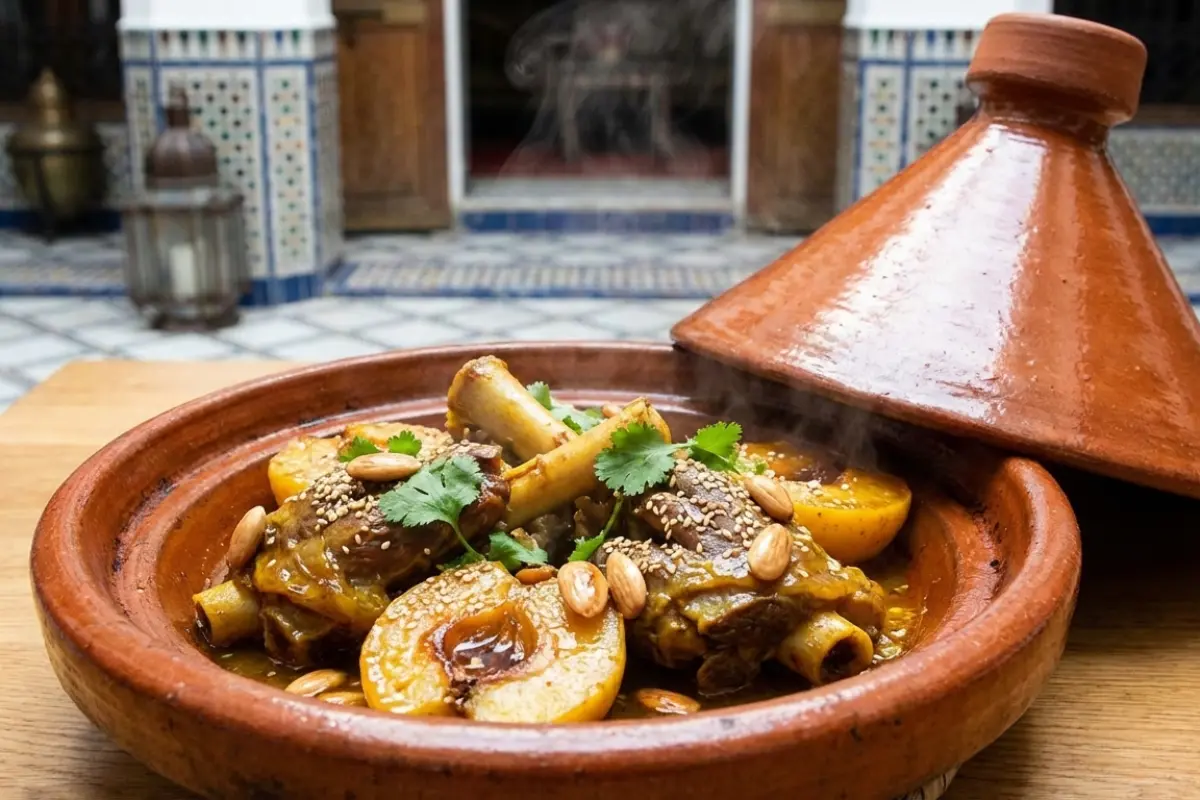
Lamb Tagine with Quince and Honey is one of Morocco's most celebrated seasonal dishes, a culinary ode to autumn when quince—known as 'the golden apple'—reaches its perfumed perfection. This tagine from Fez represents the pinnacle of Moroccan sweet-savory alchemy, where the lamb's richness meets the quince's delicate floral notes in a sauce perfumed with honey and warm spices.
Quince, unlike other fruits, transforms magically during cooking: from pale, hard, and astringent when raw to tender, rose-colored, and delicately sweet when slowly braised. This transformation mirrors the tagine process itself—patient cooking turning humble ingredients into something extraordinary. The lamb, often shoulder or shank, becomes meltingly tender, its collagen-rich connective tissue breaking down into silkiness that complements the quince's soft texture.
This dish carries particular cultural significance, often prepared for the first autumn gatherings after summer's heat, for Eid celebrations, or as a comforting meal during cooler months. The combination speaks to Morocco's agricultural rhythms and culinary wisdom—using what the season provides to create dishes that nourish both body and soul. Cooking this tagine fills the kitchen with an unforgettable aroma: the scent of lamb merging with cinnamon, ginger, and the distinctive perfume of cooking quince, a fragrance that epitomizes Moroccan autumn.
About This Recipe
Lamb Tagine with Quince has ancient roots in the imperial city of Fez, where the combination of savory meat with perfumed fruit represents the sophistication of Moroccan court cuisine. Quince, originally from the Caucasus, was cultivated in Moroccan orchards since Roman times and became especially prized during the Islamic Golden Age when physicians valued its medicinal properties. The dish likely evolved from Persian influences brought by early Islamic scholars to Fez's renowned Qarawiyyin University. Historically, it was prepared for special autumn occasions—the quince harvest coincided with important Islamic holidays and family celebrations. Each Fez neighborhood developed subtle variations: some adding rose water instead of orange blossom, others including walnuts or prunes alongside quince. The dish spread from Fez to other cities but remained particularly associated with Fez's reputation for refined, subtly sweet tagines. During French Protectorate, it gained popularity in European circles as an example of 'exotic' Moroccan cuisine. Today, it remains a beloved seasonal specialty, connecting modern Moroccans to centuries of culinary tradition and the rhythmic changing of seasons.
Nutritional Info (per serving)
Recipe Tags
Understanding the Ingredients
Lamb Shoulder or Shanks
Lamb shoulder (bone-in or boneless) is ideal for its perfect balance of meat and fat that becomes fork-tender during slow cooking. Shanks make a dramatic presentation—their marrow enriches the sauce. The lamb should be cut into 2-inch cubes if using shoulder, keeping some fat for flavor. For deeper flavor, some traditional recipes call for lightly browning the bones separately before adding to the tagine. The lamb's richness is essential to balance the quince's delicate sweetness.
Fresh Quince
Choose firm, unblemished quince with intense fragrance—the stronger the aroma, the better the flavor. They should be yellow without green tinge. Quince oxidizes quickly; prepare just before use or hold in acidulated water. Unlike apples or pears, quince requires preliminary cooking (poaching or sautéing) to develop its characteristic rosy color and tender texture. Underripe quince will remain hard and astringent; overripe becomes mushy. The transformation during cooking—from pale to pink/red—is part of the dish's magic.
Smen (Aged Butter) or Butter
Traditional recipes use smen—Moroccan aged, salted butter with a distinctive fermented flavor that adds incredible depth. If unavailable, unsalted butter with a pinch of salt works, though the flavor profile changes. Smen is added toward the end, enriching the sauce with its unique aroma. For authentic flavor, seek smen in Middle Eastern markets or make your own (though aging takes months). The fat choice significantly impacts the final flavor character.
Orange Blossom Water and Honey
Orange blossom water (ma zhar) provides the essential floral note that complements quince's natural perfume. Add just a teaspoon or two at the end—too much tastes soapy. Honey (preferably orange blossom or wildflower) sweetens naturally while contributing its own floral notes. The honey is added in two stages: some during cooking to flavor the sauce, and a final drizzle before serving. The combination creates the signature fragrance of this tagine.
Warm Spice Blend
Cinnamon dominates, with ginger providing warmth and turmeric adding golden color. A whole cinnamon stick simmers with the lamb, while ground cinnamon is added later with the quince. Some Fez versions include a tiny pinch of mace or nutmeg for complexity. The spices should be fresh—their warmth should frame the lamb and quince without overpowering. Saffron threads, though optional, add luxurious color and aroma.
Aromatic Base
Onions are grated rather than chopped—a traditional technique that creates a silky, melting base that thickens the sauce naturally. Garlic and ginger are finely minced. The onions cook slowly until golden and sweet, forming the foundation that balances the quince's tartness. Some versions include a tablespoon of tomato paste for color and umami depth, though this isn't universal.
Step-by-Step Cooking Guide
Prepare Lamb and Aromatics
Pat lamb pieces dry with paper towels. Season generously with salt and pepper. Let rest at room temperature 30 minutes. Meanwhile, grate onions using large holes of grater or food processor—they should resemble coarse pulp. Mince garlic and grate ginger. Peel quince, quarter, and remove core. Cut each quarter into 2-3 wedges. Immediately place in bowl of water with lemon juice to prevent browning.
Tip: Grating onions releases their juices, creating a sauce base that thickens naturally without flour. For deeper flavor, season lamb the night before and refrigerate uncovered.
Brown Lamb and Start Onion Base
Heat 2 tablespoons oil or butter in tagine or heavy pot over medium-high heat. Brown lamb in batches, 3-4 minutes per side, developing golden crust. Transfer to plate. Reduce heat to medium. Add grated onions with a pinch of salt. Cook, stirring frequently, for 8-10 minutes until onions soften, release liquid, and begin to turn golden. Add garlic and ginger, cook 1 minute until fragrant.
Tip: Don't rush browning—proper Maillard reaction develops flavor foundation. The onions will seem wet at first but will reduce as liquid evaporates.
Bloom Spices and Combine
Add ground spices (cinnamon, ginger, turmeric) to onions. Cook, stirring constantly, for 1 minute until fragrant. Return lamb and any accumulated juices to pot. Add cinnamon stick, saffron (if using), and enough water or light broth to come halfway up the lamb. Bring to bare simmer.
Tip: If using saffron, steep threads in ¼ cup warm water for 10 minutes before adding—this releases color and flavor. Add both threads and water.
First Braising Phase
Once simmering, immediately reduce heat to lowest setting. Cover tightly. Simmer gently for 1 hour 15 minutes, until lamb is becoming tender but not yet falling apart. Check occasionally that liquid maintains gentle movement—add hot water if needed. Meanwhile, prepare quince: drain and pat dry.
Tip: The lamb should be partially submerged throughout cooking. If liquid reduces too much, the lamb will steam rather than braise, potentially drying out.
Prepare and Add Quince
In separate skillet, melt 2 tablespoons butter or oil over medium heat. Add quince wedges in single layer. Sauté 3-4 minutes per side until lightly golden and beginning to soften. Sprinkle with 1 teaspoon ground cinnamon. After lamb has braised 1 hour 15 minutes, add sautéed quince to tagine, nestling them among lamb pieces. Add honey. Continue simmering covered for another 30-45 minutes until both lamb and quince are very tender.
Tip: Sautéing quince separately develops flavor and helps them hold shape. They should be golden, not browned. The quince will turn pink/red during braising—this is normal and desirable.
Final Enrichment and Serving
When lamb is fork-tender and quince is soft (test with toothpick), remove cinnamon stick. Stir in orange blossom water and smen or remaining butter. Taste sauce—balance sweetness with salt, tartness with a bit more honey if needed. The sauce should be glossy and lightly syrupy. If too thin, remove lamb and quince temporarily and reduce over medium heat. Garnish with toasted almonds and serve immediately.
Tip: Orange blossom water is volatile—add off heat to preserve aroma. The quince should be tender but not disintegrated. Let tagine rest 5-10 minutes before serving—sauce will thicken slightly.
Common Mistakes to Avoid
❌ Adding Quince Too Early
Solution: Quince added at beginning becomes mushy and loses its delicate texture. Add during last 30-45 minutes only. Sautéing first helps them hold shape. They should be tender but intact when served.
❌ Using Unripe Quince
Solution: Unripe quince remains hard, astringent, and won't develop rosy color or sweetness. Choose fragrant, yellow quince without green tinge. If only unripe available, poach in sugar syrup before adding to tagine.
❌ Overcooking the Quince
Solution: Quince goes from perfectly tender to mushy quickly. Check frequently after 30 minutes. It should yield to toothpick but not fall apart. Remove quince pieces if they're done before lamb.
❌ Insufficient Onion Cooking
Solution: Grated onions must cook until their liquid evaporates and they begin to caramelize slightly. This develops sweetness that balances quince's tartness. Rushing this step results in watery sauce and raw onion flavor.
❌ Skipping the Quince Sauté
Solution: Sautéing quince before adding develops flavor, enhances color change, and helps maintain shape. If added raw, they may remain pale and can water down the sauce. Don't skip this step.
Ingredient Substitutions
Instead of: Fresh Quince
Use: Canned quince (drain well and reduce honey) or firm pears (add in last 15 minutes only). Apples can work but add in last 10 minutes—they cook much faster. The unique quince flavor is hard to replicate.
Instead of: Smen (Aged Butter)
Use: Unsalted butter with ¼ teaspoon sea salt. For fermented note, add a tiny pinch of fenugreek powder (carefully—it's strong). Or use European-style cultured butter.
Instead of: Lamb Shoulder
Use: Beef chuck (cook 30 minutes longer) or goat meat. Chicken thighs (reduce cooking time to 45 minutes) work but change character dramatically. Lamb shanks are excellent if available.
Instead of: Orange Blossom Water
Use: Rose water (use half amount) or 1 teaspoon orange zest added at end. For different profile, use 1 tablespoon orange liqueur like Grand Marnier (add with quince).
Instead of: Honey
Use: Date syrup (rub) for deeper, caramel-like sweetness. Maple syrup works but changes flavor profile. Brown sugar can be used but add gradually and taste.
Serving Suggestions
Serve over saffron or plain couscous steamed with butter—the grains soak up the fragrant quince-infused sauce beautifully.
Accompany with warm, crusty Moroccan bread for scooping up tender lamb and quince pieces.
A simple salad of bitter greens (arugula, chicory) with orange segments and walnuts provides refreshing contrast.
Garnish generously with toasted slivered almonds or pine nuts for crunch and visual appeal.
For beverage pairing, a medium-bodied red wine like Syrah or Grenache complements the sweet-savory balance.
Finish with mint tea and delicate pastries like fekkas or chebakia for traditional Moroccan meal completion.
Storage & Reheating Guide
Storage
Cool completely and store in airtight container in refrigerator up to 3 days—flavors improve overnight. Freeze for up to 2 months. Thaw overnight in refrigerator before reheating.
Reheating
Reheat gently on stovetop over low heat with splash of water or broth. Alternatively, reheat covered in 300°F (150°C) oven for 20-25 minutes. Microwave in covered dish, stirring gently halfway.
Tips: Quince becomes softer upon storage and reheating. If possible, remove quince before storing and add fresh when reheating. The sauce may need thinning—use broth or water. Always taste and re-season after reheating.
Frequently Asked Questions
Recipe by

Similar Recipes


Our Recipe Ebooks
Discover our collection of authentic Moroccan recipe ebooks. Learn traditional cooking methods and create delicious meals at home.
The Moroccan Vegen
The Royal Moroccan Table -Part1
The Royal Moroccan Table -Part2
YouTube Channel
Watch step-by-step cooking videos, learn professional techniques, and get inspired by traditional and modern recipes from around the world.
Latest Video
"Traditional Moroccan Tagine Masterclass"