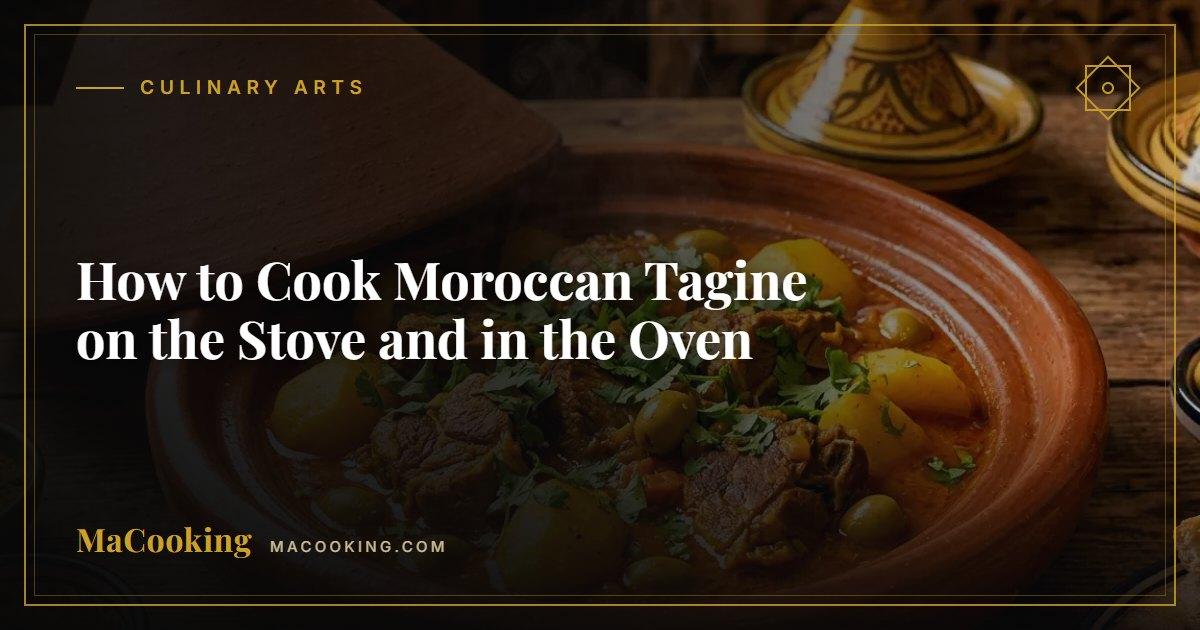
How to cook Moroccan tagine: layer meat, onions and spices in the base, add a little water, cover with the cone lid and cook very gently, on the stove over low heat with a diffuser or in the oven at about 160°C/325°F, until tender. Most meat tagines take 1.5 to 2.5 hours.
Key Takeaways
- A tagine is both the pot and the dish. Its cone lid circulates steam, so it needs far less liquid than a conventional stew.
- Low, steady heat matters more than the pot. A diffuser on the stove, or a cold-start oven at around 160°C/325°F, protects clay and keeps the meat tender.
- Season a new clay tagine before first use, and never heat it empty or move it between hot and cold surfaces.
- Bone-in, collagen-rich cuts such as lamb shoulder, neck and shank give the best results. Lean cuts dry out.
- No tagine pot? A heavy Dutch oven or casserole works well with the same spices, layering and low heat.
What is a Moroccan tagine dish, and how does the pot work?
The word "tagine" names both the vessel and the slow-cooked stew made in it. The pot has a wide, shallow base and a tall conical lid. As food simmers, steam rises into the cone, condenses on the cooler upper walls and trickles back down. The meat and vegetables cook in a closed, self-basting environment. That is why a good tagine tastes concentrated rather than watery, and why the sauce ends up thick and glossy with little added liquid. If you want the cultural background of the pot itself, the Wikipedia entry on the tagine is a reasonable starting point.
The Moroccan tagine dish is also a style of cooking, not one recipe. A tagine can be lamb with prunes and almonds, chicken with preserved lemon and olives, fish with chermoula, or simply seasonal vegetables. What they share is a slow simmer, an aromatic base of onion, garlic, herbs and spices, and a sauce reduced until it clings. If you are curious why the dish has such a reputation among chefs, we looked at it in why Gordon Ramsay called Moroccan tagine the most perfect dish on earth.
Which tagine pot should you use?
The right pot depends on your heat source, and this is the part of Moroccan tagine how-to advice most often skipped. Here is how the common options compare.
| Pot type | Best for | Heat source | Notes |
|---|---|---|---|
| Unglazed or lightly glazed clay (cooking tagine) | Traditional flavor, gentle cooking | Oven; stove with a diffuser; charcoal | Needs seasoning. Vulnerable to thermal shock. |
| Painted or decorative glazed clay | Serving at the table | Often not for cooking | Some are sold for display or serving only. Check the label for food-safe, lead-free cooking use. |
| Enameled cast-iron tagine | Reliable everyday cooking | Gas, electric, induction, oven | Heavier and more forgiving. The lid shape still circulates steam. |
| Dutch oven or heavy casserole | A great substitute | Any hob, oven | Flat lid returns less condensation, so watch the liquid level. |
If you are shopping for a first tagine, a cast-iron one is the least fussy, and a seasoned clay pot is the most traditional. Both make excellent food.
How do you season a new clay tagine?
An unseasoned clay pot is more porous and more likely to crack. Seasoning is simple, and it is worth doing properly.
- Soak. Submerge the base and lid in water for at least two hours. Overnight is better.
- Dry. Let both pieces air-dry fully.
- Oil. Rub the inside of the base and lid with olive oil.
- Heat gently. Place the pot in a cold oven, set it to about 150°C/300°F, and bake for around two hours.
- Cool slowly. Turn off the oven and let the tagine cool inside before handling.
Always follow the maker's instructions if they differ. Some pots come pre-treated, and some glazed ones need little preparation.
How to cook Moroccan tagine on the stove
Stovetop cooking is the most common home method, and it gives you the most control. Below is a base lamb tagine you can adapt, serving 4 to 6.
Ingredients
- 1.2 kg (2.5 lb) bone-in lamb shoulder or neck, cut into large pieces (or 900 g/2 lb boneless shoulder)
- 2 large onions, grated or very finely chopped
- 3 garlic cloves, minced
- 3 tbsp olive oil (or 2 tbsp oil plus 1 tsp smen, if you have it)
- 1 tsp ground ginger
- 1 tsp ground turmeric
- 1 tsp ground cumin
- 1 tsp sweet paprika
- ½ tsp ground black pepper
- ½ tsp ground cinnamon
- A generous pinch of saffron threads, steeped in 3 tbsp warm water
- 1½ tsp salt, adjusted to taste
- Small bunch each of cilantro and flat-leaf parsley, tied with kitchen string
- About 250 ml (1 cup) water
Method
- Prepare the pot. Place a diffuser on the burner. Pour the oil into the tagine base and add the onions in an even layer.
- Add the meat and spices. Toss the lamb with garlic, all the spices and salt, then arrange it on top of the onions with the thickest pieces toward the outside. Pour over the saffron water and tuck in the herb bundle.
- Heat slowly. Put the lid on and set the heat to low for the first 10 minutes. Raise it to low-medium until you hear a faint, steady murmur, never a rolling boil.
- Add water. After 20 to 30 minutes, once the onions and meat have released juices, add the water around the meat, not over it.
- Simmer. Cook, covered, for 1½ to 2 hours. Turn the meat once or twice and check that the liquid hasn't dried out.
- Finish the sauce. When the lamb pulls away from the bone easily, remove the herb bundle. Lift the lid and simmer for 5 to 10 minutes to thicken the sauce until it coats a spoon.
- Rest and serve. Let it rest for 10 minutes, then serve from the pot with crusty bread to scoop up the sauce.
On gas or electric, a diffuser is essential for clay. On induction, use an induction-compatible base such as enameled cast iron. Never put an empty clay tagine on any heat, and always have oil or liquid in the base before you turn it on.
How do you cook a tagine in the oven?
The oven is the easiest way to get even, hands-off heat, which is especially useful if you are cooking for a crowd or your hob is too hot at its lowest setting.
- Assemble the tagine exactly as above, with onions on the bottom, then meat, spices, saffron water and herbs. Add the water straight away, since the oven's dry heat evaporates liquid faster.
- Clay pot: put the covered tagine into a cold oven, then set it to 160°C/325°F (140°C fan). Letting the pot warm up with the oven reduces the risk of cracking.
- Cast-iron pot or Dutch oven: you can preheat the oven first.
- Cook for 2 to 2½ hours, turning the meat once at the halfway point if you like.
- For a thicker sauce, take the lid off for the last 15 to 20 minutes, or move the pot to the hob over gentle heat if it is cast iron.
Oven cooking is also forgiving of timing. If dinner is delayed, turn the oven down to around 120°C/250°F and the tagine will hold well. Prefer something even more hands-off? Our roundup of Moroccan slow cooker recipes covers the set-and-forget approach.
How do you cook Moroccan lamb so it turns out tender?
Tenderness depends on the cut and on patience. Lamb shoulder, neck and shank have connective tissue and bone, which melt into the sauce and give body. Lean leg meat can turn dry and stringy in a long cook.
| Cut | Stove (low) | Oven (160°C/325°F) | Comment |
|---|---|---|---|
| Bone-in shoulder, large pieces | 1½–2 hrs | 2–2½ hrs | The best all-rounder for a lamb tagine. |
| Neck slices | 1¾–2¼ hrs | 2–2½ hrs | Rich and gelatinous. Excellent value. |
| Shanks | 2½–3 hrs | 2½–3 hrs | Dramatic presentation. Turn occasionally. |
| Boneless leg, cubed | 1½–2 hrs | 1¾–2¼ hrs | Leaner. Keep a close eye on the liquid. |
| Beef chuck or shin | 2½–3 hrs | 2½–3 hrs | Needs longer than lamb. |
| Chicken thighs, bone-in | 45–60 min | 50–70 min | Add olives and preserved lemon near the end. |
These timings are guides. The real test is texture: a fork should slide into the meat with no resistance, and the meat should pull easily from the bone.
A few habits improve every lamb tagine:
- Salt early, spice generously. Moroccan cooks season at the start so the flavor goes into the meat, not just the sauce.
- Use grated onion. It nearly dissolves into the sauce and gives it natural thickness and sweetness.
- Keep the lid on. Every peek releases steam and slows the cook.
- Add fruit and nuts late. Prunes, apricots and quince need only the last 30 to 45 minutes, depending on firmness. Toasted almonds go on at the end for crunch.
What mistakes should you avoid when using a tagine?
- Too much liquid. A tagine is not a soup. Start with about a cup of water for 1.2 kg (2.5 lb) of meat and add small splashes only if the pot is drying out.
- Heat too high. Rapid boiling toughens the meat and risks cracking clay. If the lid rattles with steam, turn it down.
- Thermal shock. Do not put a cold tagine on a hot burner, add cold liquid to a hot empty pot, or place a hot pot on a cold or wet countertop. Use a wooden board or trivet.
- Skipping the diffuser. On gas or electric hobs, a clay base needs a diffuser for even, gentle heat.
- Washing with strong soap. Unglazed clay can absorb detergent. Use hot water and a soft brush, then dry completely before storing.
- Crowding the pot. If the base is overfilled, meat steams unevenly. Choose a tagine large enough, or cook in two batches.
Storing leftovers: move the tagine to a covered container (not in the clay pot) and refrigerate within two hours of cooking. It keeps for up to three days and often tastes better the next day. Reheat gently on the stove with a splash of water. If you have lamb left over from a larger feast, our guide to leftover Eid lamb recipes has plenty of ideas.
Which Moroccan recipes are cooked in a tagine?
Once you have the method, the flavor combinations are endless. Here are some classic pairings and recipes worth trying on this base technique.
| Combination | Character | Add near the end |
|---|---|---|
| Lamb with prunes and almonds | Sweet, cinnamon-scented, festive | Prunes (last 30 min), toasted almonds, sesame |
| Lamb with potatoes and cilantro | Savory, herbal, everyday comfort | Potatoes (last 40–45 min) |
| Lamb with quince | Fragrant, autumnal, honeyed | Browned quince wedges (last 30–40 min) |
| Beef with prunes | Deep and rich | Prunes (last 30 min) |
| Chicken with preserved lemon and olives | Bright, salty, tangy | Lemon rind and olives (last 15–20 min) |
To put the technique into practice, these recipes follow the same method:
- Lamb tagine with potatoes and cilantro, a simple everyday version that is ideal as a first tagine.
- Lamb tagine with prunes and almonds, the sweet-savory classic.
- Lamb tagine with apricots and almonds, a slightly brighter, tangier take on the fruit tagine.
- Lamb tagine with quince and honey, for autumn when quince is in season.
- Beef tagine with prunes, if you prefer beef to lamb.
For more ideas beyond tagines, browse our main dishes collection.
What does the philosophy behind the tagine teach us?
Cooking in a tagine is a lesson in restraint: moderate heat, a lid you leave alone, and time doing the work. Moroccan cooks often speak of letting a dish "arrive" rather than forcing it, and that mindset helps more than any gadget. If you would like to go deeper into the thinking behind the method, you can read the free chapter "The Tagine — Philosophy & Mastery" from the ebook The Royal Moroccan Table — Part 3: The Slow Fire. It is free to read online.
Frequently Asked Questions
Can you cook a tagine on an electric or induction hob?
Yes, with the right setup. On gas or electric, use a heat diffuser under a clay tagine and start on low. Induction needs an induction-compatible base, such as an enameled cast-iron tagine, or an induction interface disc if the maker says it is safe. Never heat an empty clay pot.
Do you have to brown the meat for a tagine?
No. Many traditional Moroccan cooks simply sweat the meat with onions, oil and spices and let it cook gently in its own juices. Browning adds a deeper, roasted flavor and is a good choice with beef or when using a Dutch oven. For a classic, silky result, gentle cooking without hard searing works well.
How much liquid does a tagine need?
Very little. The cone lid traps steam, which condenses and drips back onto the food. For about 1.2 kg (2.5 lb) of meat, a cup (250 ml) of water or less is usually plenty, plus juices from onions or vegetables. You want a thick, glossy sauce at the end, not a soup.
Can I cook a tagine in a regular pot or Dutch oven?
Yes. A heavy lidded Dutch oven or casserole reproduces the slow, moist cooking well. Use the same spices and layering, keep the heat low, and check the liquid occasionally, since a flat lid returns less condensation. You can finish the sauce uncovered for a few minutes to thicken it.
How do I stop my clay tagine from cracking?
Avoid sudden temperature changes. Season the pot before first use, always put a little oil and liquid in before heating, use a diffuser on the hob, and start in a cold oven. Never put a hot tagine on a cold or wet surface, and let it cool gradually before washing.
Conclusion
Learning how to cook Moroccan tagine is mostly about three things: a pot suited to your heat source, gentle and steady temperature, and the patience to leave the lid on. Whether you use a clay tagine on a diffuser, a cast-iron one in the oven, or a Dutch oven, the same principles give tender meat and a concentrated, fragrant sauce. Start with the base lamb recipe above, then move on to the fruit and vegetable variations as your confidence grows.