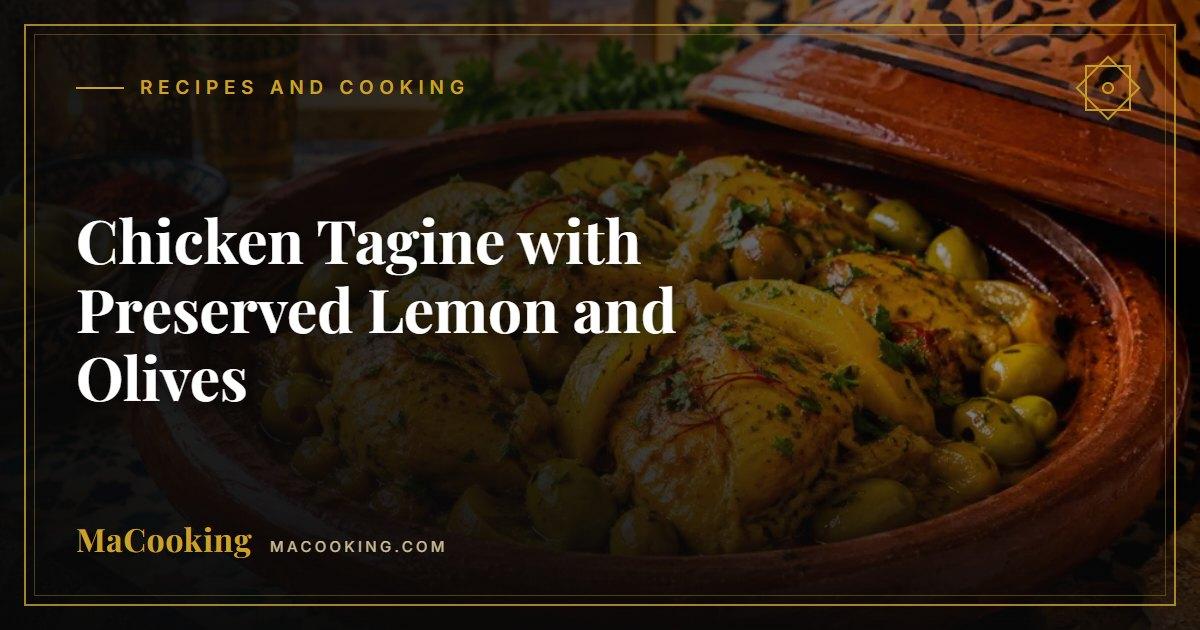
Here is how to make Moroccan chicken tagine: marinate bone-in thighs in ginger, turmeric, paprika, garlic and herbs, then braise gently over sliced onions with a little water until tender. Add preserved lemon rind and green olives for the last 15 minutes and reduce the sauce until glossy.
Key Takeaways
- Bone-in, skin-on chicken thighs give the best texture and a naturally rich sauce.
- Onions are the base of the sauce. Layer them under the chicken and cook them down; there is no need for stock or flour.
- Add preserved lemon rind and olives late so they stay bright, and season with salt only at the end.
- A heavy Dutch oven or wide casserole works well if you do not own a clay tagine.
- Total time is about 1 hour 15 minutes of cooking, plus at least an hour of marinating.
This is one of the best-loved dishes of the Moroccan table: a bright, savoury Moroccan chicken stew in which the sharp, floral tang of preserved lemon meets briny olives and a gently spiced onion sauce. It is the version many people think of first when they hear "chicken tagine". It needs very few ingredients and almost no fuss, only patience and a low flame. If you want a deeper look at the dish's roots, our piece on the flavour, tradition and artistry of Moroccan chicken tagine covers the cultural side.
What Do You Need to Make Moroccan Chicken Tagine?
The ingredient list is short. What matters is the quality of the few things you use, especially the preserved lemons and olives. This recipe serves four.
Ingredients
- 8 bone-in, skin-on chicken thighs (about 1.6 kg / 3.5 lb)
- 2 large onions (about 500 g / 1 lb), half grated and half thinly sliced
- 4 garlic cloves, crushed
- 1 tsp ground ginger
- 1 tsp ground turmeric
- 1 tsp sweet paprika
- ½ tsp ground cumin
- ½ tsp freshly ground black pepper
- A generous pinch of saffron threads, crumbled into 2 tbsp warm water (optional but traditional)
- 3 tbsp olive oil, plus extra for finishing
- ½ tsp fine salt for the marinade
- Small bunch of flat-leaf parsley and cilantro (coriander), tied together or finely chopped
- 250 ml (1 cup) water
- 2 preserved lemons, rind only, cut into strips
- 150 g (1 cup) green olives, rinsed
- Juice of ½ fresh lemon, to finish (optional)
Smart Substitutions for Western Pantries
| If you cannot find... | Use this instead | Note |
|---|---|---|
| Preserved lemons | Homemade preserved lemons, or thin strips of fresh lemon zest plus extra juice | Fresh lemon is brighter and less fermented. Add it only in the last 5 minutes. |
| Saffron | An extra ¼ tsp turmeric | You lose aroma but keep colour. |
| Moroccan green olives | Plain brine-cured green olives (Castelvetrano or similar) | Avoid olives stuffed or marinated with garlic, chilli or herbs. |
| Fresh cilantro | All parsley | The flavour will be gentler but still authentic in spirit. |
| Bone-in thighs | Whole chicken legs, split into drumsticks and thighs | Add 10 minutes to the cooking time. |
Why Are Preserved Lemons the Heart of This Dish?
Preserved lemons are lemons cured in salt and their own juice for several weeks. The rind softens and takes on a mellow, almost floral flavour that is quite different from fresh lemon. In this tagine, the rind is the star. The pulp is often discarded or used sparingly because it is very salty and sharp.
If you want to make your own, our step-by-step guide to preserving lemons at home walks through the jar, the salt ratio and the waiting time. For the wider context of lemons, olives and curing, see Moroccan fermented foods and their ancient traditions. Shop-bought jars work well too. Look for ones that list only lemons, salt and perhaps lemon juice.
How to Prep Preserved Lemon
- Remove a lemon quarter from the jar and rinse it under cold water.
- Scrape away the pulp with a spoon; keep a little if you want a stronger, tangier sauce.
- Slice the rind into thin strips or small squares.
Which Moroccan Spices for Chicken Work Best?
Moroccan spice blends vary by region and by household, but a chicken tagine like this one usually relies on a small, balanced group of warm and earthy spices rather than heat. Together they build a golden, fragrant sauce without overpowering the lemon.
| Spice or aromatic | What it adds | Tip |
|---|---|---|
| Ginger | Warm, peppery backbone | Use fresh, aromatic ground ginger; old jars taste dusty. |
| Turmeric | Earthy flavour and golden colour | It stains, so be careful with wooden spoons and light countertops. |
| Saffron | Floral aroma and deep yellow sauce | Crumble and steep in warm water for 10 minutes before using. |
| Black pepper | Gentle heat | Grind it fresh for the best aroma. |
| Paprika | Sweetness and rounded colour | Choose sweet, not smoked. |
| Cumin | Earthy depth | Keep it light so it supports the lemon rather than competing with it. |
| Parsley and cilantro | Fresh, green lift | Tie in a bundle for easy removal, or chop and stir in. |
A well-stocked spice shelf makes all of this easier. Our Moroccan pantry checklist for home cooks lists what to keep on hand.
How to Make Moroccan Chicken With Preserved Lemon and Olives: Step by Step
This method uses moroccan chicken thighs, which stay juicy through the long, gentle braise. Read through the steps first and keep the heat low. A tagine should barely murmur.
Step 1: Marinate the Chicken (1 hour to overnight)
- Pat the chicken thighs dry with paper towels.
- In a large bowl, combine the ginger, turmeric, paprika, cumin, black pepper, garlic, grated onion (from one onion), chopped herbs, ½ tsp salt, saffron water and 2 tbsp of the olive oil into a paste.
- Rub the paste all over the chicken, under the skin where possible. Cover and refrigerate for at least 1 hour, or up to 12 hours.
Step 2: Build the Base
- Heat the remaining 1 tbsp olive oil in a wide, heavy pot or the base of a tagine over medium-low heat.
- Add the sliced onion in an even layer. Cook gently for 5 minutes, just to soften, without browning.
- Nestle the chicken thighs on top, skin side up, and scrape in any marinade left in the bowl.
- Pour in 250 ml (1 cup) of water around, not over, the chicken.
Step 3: Braise Slowly (about 45 minutes)
- Bring to the gentlest simmer. Cover and cook on low for 45 minutes, turning the chicken once halfway through.
- Check that the liquid is barely bubbling. If the sauce is catching on the bottom, add 2 to 3 tbsp of water.
Step 4: Add the Lemon and Olives (15 minutes)
- Scatter the preserved lemon rind and the olives over and around the chicken.
- Cover and cook for another 15 minutes, until the chicken is fully cooked and tender. A thermometer should read at least 74°C / 165°F, and thighs are often at their most tender around 85 to 90°C / 185 to 195°F.
Step 5: Reduce and Finish (10 to 15 minutes)
- Lift the chicken, olives and lemon onto a warm plate and cover loosely.
- Simmer the sauce uncovered over medium heat for 10 to 15 minutes. The onions will melt into it and the oil will gloss the surface. It should coat the back of a spoon.
- Taste. Add a squeeze of fresh lemon if you want more brightness, and salt only if needed.
- Return the chicken and olives to the pot for a minute or two to rewarm, then serve straight from the pot.
Timing at a Glance
| Stage | Heat | Time |
|---|---|---|
| Marinate | Refrigerator | 1 to 12 hours |
| Soften onions | Medium-low | 5 minutes |
| Covered braise | Low | 45 minutes |
| Add lemon and olives | Low | 15 minutes |
| Reduce sauce | Medium | 10 to 15 minutes |
For a shorter recipe card, see our Chicken Tagine with Preserved Lemons. If you like the idea of a saffron-and-ginger sauce cooked until almost jammy, try Djaj Mqualli, the classic Moroccan preserved lemon chicken stew.
Can You Make Chicken Tagine Without a Tagine Pot?
Yes. The clay tagine is lovely, but its conical lid is simply a way to return steam to the dish. A heavy Dutch oven, a lidded casserole or a deep, wide skillet with a tight lid gives very good results. If you are curious about the traditional vessel itself, there is a good overview of the tagine pot and its history on Wikipedia.
Dutch Oven Method
- Follow the same steps on the stovetop, using the lowest heat that keeps a gentle simmer.
- Or braise in the oven at 160°C / 325°F (fan 140°C) for the covered stages, then finish the sauce on the stove.
- If the lid is loose, lay a sheet of parchment paper under it to hold in steam.
Clay Tagine Tips
- Soak a new clay tagine in water for a few hours before first use and dry it completely.
- Always use a heat diffuser on a gas or electric hob, and heat the pot gradually. Sudden changes in temperature can crack clay.
- Check the manufacturer's instructions, as some glazed tagines are decorative only.
For more on technique, see our guide to cooking Moroccan tagine professionally.
What Are the Most Common Mistakes With Moroccan Chicken Stew?
- Salting too early. Preserved lemons and olives are salty. Season lightly at the start and adjust at the end.
- Browning the onions. In this style of tagine the onions soften and melt, so aim for pale and silky, not caramelised.
- Cooking too hot. Vigorous boiling toughens the chicken and evaporates the sauce before the flavours have developed.
- Adding too much water. The chicken and onions release liquid. A cup is enough, and a thin sauce can always be reduced at the end.
- Using the lemon pulp freely. It is intensely salty and sharp. Add small amounts only, tasting as you go.
- Skipping the rinse. Rinse both the lemons and the olives. If your olives are very salty, simmer them in water for 5 minutes.
- Skipping the reduction. Removing the chicken and reducing the sauce is what gives the dish its glossy, concentrated finish.
What Should You Serve With Chicken Tagine?
Moroccan meals are built around bread, which doubles as a spoon. Serve the tagine in the middle of the table with warm, crusty bread for scooping up the sauce. Some good partners:
- Plain couscous, or couscous with a little butter and a pinch of cinnamon
- Crusty country bread, or Moroccan-style round loaves (khobz)
- A simple tomato and cucumber salad with olive oil and lemon
- Roasted or boiled potatoes, which soak up the sauce well
Storage and Reheating
- Refrigerate: cool within 2 hours, store airtight for up to 3 days.
- Freeze: up to 2 months, in a container with sauce covering the chicken. Olives may soften.
- Reheat: gently on the stove with a splash of water until piping hot throughout.
How Can You Vary This Recipe?
Once you have the base method down, small changes give you a different dish each time:
- Add a few strips of fresh lemon zest at the end for extra fragrance.
- Use violet or purple olives if you prefer a softer, less bitter taste.
- Try a sweeter profile with Chicken Tagine with Raisins and Spices.
- Browse the wider collection in our full collection of Moroccan recipes.
Frequently Asked Questions
Can I use chicken breast instead of thighs in a Moroccan tagine?
You can, but thighs are far more forgiving. Breast meat dries out during a long braise. If you use it, choose bone-in, skin-on breasts, cut them in half, and cook for 35 to 40 minutes in total, adding the olives and lemon about 10 minutes before the end.
Do I rinse preserved lemons before cooking?
Yes, briefly. Rinse the lemon under cold water to remove surface salt, scrape away the pulp if you like, and use the softened rind. Taste the sauce before adding any extra salt, since both the lemon and the olives season the dish as it cooks.
Which olives are best for chicken tagine?
Moroccan cooks often use green olives, either cracked or whole, or violet and purple olives for a mellower flavour. Choose brine-cured olives without strong flavourings. Rinse them well, and if they are very salty, simmer them in water for 5 minutes before adding them to the pot.
How do I thicken the sauce for Moroccan chicken stew?
Do not add flour. Lift the chicken out, then simmer the sauce uncovered for 10 to 15 minutes. The onions break down and the olive oil emulsifies into a glossy, spoonable sauce. Return the chicken to the pot for a few minutes before serving.
Can I make chicken tagine ahead of time?
Yes. The flavours deepen overnight. Cool the tagine, refrigerate it in an airtight container for up to 3 days, and reheat gently on the stove with a splash of water. Reheat until steaming hot throughout. You can also freeze it for up to 2 months, though the olives soften.
Conclusion
Once you know how to make Moroccan chicken this way, it becomes an easy dish to repeat: a spiced marinade, a bed of onions, a low flame and a final flourish of preserved lemon and olives. Give the sauce time to reduce, season carefully at the end, and serve it with plenty of bread. Whether you use a clay tagine or a trusty Dutch oven, the result is a comforting, fragrant pot that suits a weeknight as well as a table full of guests.