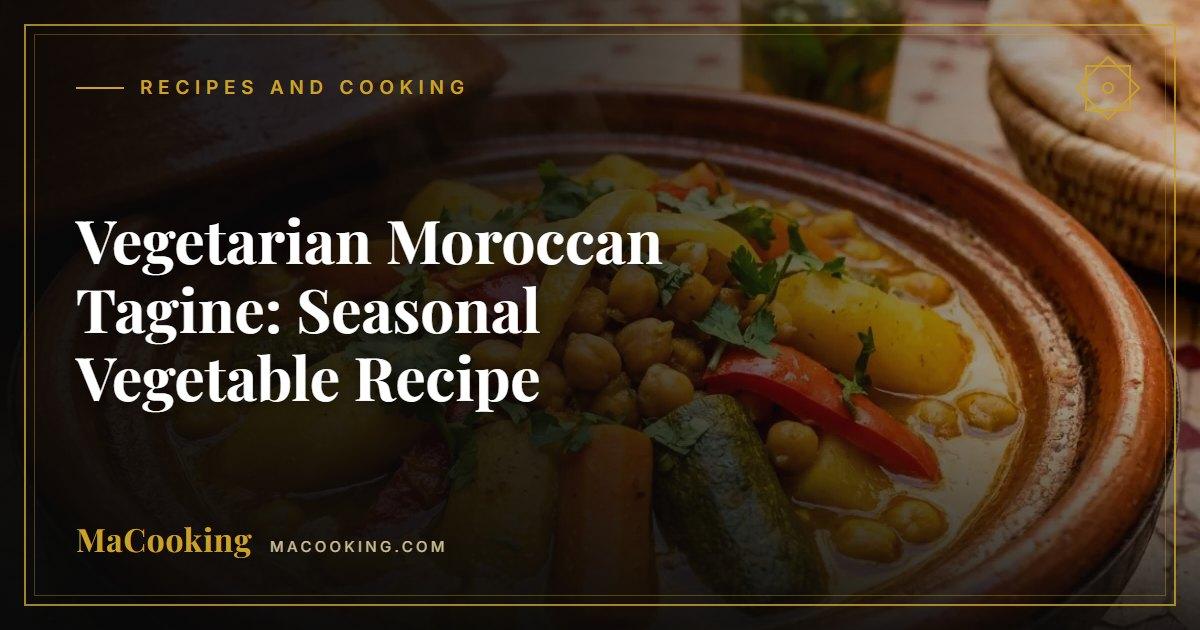
A vegetarian Moroccan tagine is a slow-simmered stew of seasonal vegetables, gently spiced with ginger, turmeric, cumin, paprika and saffron, then brightened with preserved lemon and olives. Build it in layers, start with onions and spices, add firm vegetables first, and cook covered over low heat for about an hour until tender.
Key Takeaways
- A vegetarian Moroccan tagine gets its depth from soft-cooked onions, bloomed spices and a bundle of fresh herbs rather than from meat.
- Add vegetables in stages: roots and squash first, then chickpeas and peppers, then courgettes or other tender vegetables.
- Preserved lemon and green olives give the finish; a splash of lemon juice and fresh cilantro lift it at the table.
- The stew itself is naturally gluten free, but couscous and khobz bread are wheat, so serve rice, millet or potatoes if you need to avoid gluten.
- You can cook it in a clay tagine or in any heavy lidded pot; leftovers keep for about three days.
What Is a Vegetarian Moroccan Tagine?
The word tagine names both the conical-lidded earthenware pot and the dish cooked inside it (there is a good overview of the vessel on Wikipedia). Most people picture lamb with apricots or chicken with olives, but vegetables have always had a place in the Moroccan home kitchen, especially for everyday meals and during the seasons when produce is at its best.
A vegetarian tagine follows the same logic as any other. You soften onions in olive oil, stir in warm spices, add a little liquid, and let the pot do the work with a lid on and the heat low. The vegetables cook partly in the sauce and partly in steam, which is why the result tastes concentrated rather than watery. If you want a gentler introduction to the whole family of dishes, our tagine recipe collection shows how widely the technique stretches.
This version is deliberately flexible. It gives you a reliable base recipe and a seasonal guide, so you can cook it in April with artichokes and peas or in November with squash and turnips. It is one of the most useful vegetarian Moroccan recipes to learn, because once you understand the method you can adapt it to whatever is in your market basket.
What Ingredients Do You Need for a Vegetarian Moroccan Tagine?
This makes 4 to 6 servings. Quantities are for a pot of about 3 to 4 litres (3 to 4 quarts).
For the base and sauce
- 3 tablespoons olive oil (or 4 if you want a richer sauce)
- 2 medium onions (about 300 g / 10 oz), grated or very finely chopped
- 3 garlic cloves, crushed
- 1 teaspoon ground ginger
- 1 teaspoon ground cumin
- 1 teaspoon sweet paprika
- ½ teaspoon ground turmeric
- ½ teaspoon ground cinnamon
- ½ teaspoon freshly ground black pepper
- A generous pinch of saffron threads (about 15), crumbled into 2 tablespoons warm water
- 2 ripe tomatoes, grated and skins discarded (or 200 g / 7 oz canned chopped tomatoes)
- 1½ teaspoons fine salt, adjusted at the end
- 250 ml (1 cup) water or light vegetable stock
- A bundle of cilantro and flat-leaf parsley (about 20 g), tied with kitchen string
For the vegetables
- 3 carrots, cut into thick batons
- 2 medium potatoes (about 400 g / 14 oz), peeled and cut into large chunks
- 300 g (10 oz) butternut squash or sweet potato, in large chunks
- 1 red pepper, cut into strips
- 2 courgettes (zucchini), cut into thick half-moons
- 1 can (400 g / 14 oz) chickpeas, drained and rinsed, or about 250 g cooked chickpeas
For finishing
- ½ preserved lemon, pulp removed, rind rinsed and sliced
- 80 g (¾ cup) green olives, rinsed
- 1 tablespoon fresh lemon juice
- Chopped fresh cilantro, for serving
- Optional: 6 to 8 soft prunes or 2 tablespoons raisins for a sweet-savoury edge
Substitutions for a Western pantry
| If you do not have | Use instead | What changes |
|---|---|---|
| Preserved lemon | Zest of 1 lemon, a pinch of salt, and juice added at the end | Brighter and less mellow, with no fermented note |
| Saffron | Extra ½ teaspoon turmeric | Colour only; the floral aroma is missing |
| Fresh cilantro | All flat-leaf parsley | Milder, less citrusy herb flavour |
| Grated fresh tomatoes | Canned chopped tomatoes | Slightly sweeter and a little more acidic |
| Dried chickpeas, cooked | Canned chickpeas | Quicker; add them later so they stay intact |
| Tagine pot | Dutch oven or heavy casserole with a lid | Less steam circulation; use a touch less liquid |
How Do You Make a Vegetarian Moroccan Tagine Step by Step?
Allow about 20 minutes of preparation and 55 to 65 minutes of cooking. The method below uses a clay tagine or a heavy pot on the stove.
- Prepare the pot. If you are using a clay tagine, make sure it has been seasoned and soaked according to the maker's instructions, and use a heat diffuser. Start on low heat; never put a cold clay pot on a high flame, as it can crack.
- Soften the onions. Warm the olive oil over medium-low heat and add the onions with a pinch of salt. Cook for 8 to 10 minutes, stirring, until soft, translucent and sweet. Do not brown them deeply; you want a mellow base rather than a roasted one.
- Bloom the spices. Add the garlic, ginger, cumin, paprika, turmeric, cinnamon and pepper. Stir for about 1 minute until fragrant. If the pan is dry, add a spoonful of water to stop the spices catching.
- Cook down the tomatoes. Stir in the grated tomatoes and cook for 5 minutes, until they lose their raw smell and the mixture thickens slightly.
- Add liquid and hard vegetables. Pour in the saffron with its soaking water and the 250 ml of water or stock. Add the herb bundle, then the carrots, potatoes and squash. Arrange them in a mound or even layer, with the slowest-cooking pieces closest to the heat.
- Simmer covered. Bring to a gentle bubble, cover, and cook on low for 20 minutes. Resist the urge to stir constantly; a few turns of the spoon is enough.
- Add the second round. Tuck in the chickpeas, pepper strips and courgettes (and prunes, if using). Cover again and cook 15 to 20 minutes more, until a knife slides easily into the potatoes and the sauce has thickened to a glossy, spoonable consistency.
- Finish. Scatter the preserved lemon rind and olives on top, cover for 5 minutes, then remove the herb bundle. Taste and adjust the salt, add the lemon juice, and shower with fresh cilantro.
For a variation with a more saffron-forward character and plenty of chickpeas, see our Vegetable Tagine with Chickpeas and Saffron. If you prefer a classic version with a different vegetable lineup, try the Moroccan Vegetable Tagine recipe.
Which Vegetables Should You Use in Each Season?
The great strength of a vegetarian tagine is that it follows the market. Use the base recipe above and swap the vegetables according to the season. Keep roughly 1 to 1.2 kg (2¼ to 2½ lb) of prepared vegetables in total, and always put the densest pieces in first.
| Season | Good vegetables | Notes on timing |
|---|---|---|
| Spring | Artichoke hearts, fresh peas, broad (fava) beans, new potatoes, young carrots | Add peas and fava beans in the last 10 minutes so they stay bright |
| Summer | Courgettes, aubergine (eggplant), peppers, tomatoes, green beans | Aubergine benefits from a quick pan-fry first; green beans need about 20 minutes |
| Autumn | Pumpkin or butternut squash, sweet potato, cauliflower, carrots | Squash and sweet potato cook fast; add cauliflower florets with the second round |
| Winter | Turnips, carrots, potatoes, parsnips, chickpeas | Cut turnips in wedges and give them the full 30 to 40 minutes |
For more ideas on combinations that work together, the guide to 12 classic Moroccan vegetable tagine combinations goes into pairings in detail. If chickpeas are the star for you, the article on Moroccan chickpea recipes has plenty of other directions to take them.
Can You Make a Tagine Without a Tagine Pot?
Yes, and you will get a delicious result. A clay tagine does give a particular softness and encourages gentle steam circulation under its cone, but a Dutch oven, a wide sauté pan with a tight lid, or a heavy casserole can all produce a rich, tender stew.
A few adjustments help:
- Use a pot wide enough to hold the vegetables in two layers rather than a tall heap, so they cook evenly.
- Keep the heat on the lowest setting that maintains a quiet simmer. Metal pots conduct heat faster than clay and scorch more easily.
- Reduce the liquid slightly if your lid is very tight; vegetables will release their own water.
- If the sauce is too thin at the end, remove the lid and simmer for 5 to 10 minutes.
If you would like to understand why the pot and the technique matter so much, the free chapter "The Tagine — Philosophy & Mastery" is free to read online and covers the thinking behind the method.
Is a Moroccan Tagine Gluten Free?
A vegetable tagine is naturally gluten free in its basic form. Vegetables, olive oil, chickpeas, fresh herbs, preserved lemon, olives and pure ground spices contain no wheat. That makes this one of the easier Moroccan dishes to adapt if you are searching for a Moroccan tagine gluten free option.
Where gluten can creep in:
- The accompaniments. Couscous is made from wheat semolina, and khobz, the round Moroccan bread used to scoop up the sauce, is wheat-based.
- Stock cubes and powders. Some contain wheat as a filler. Check the label or use homemade stock or water.
- Spice blends. Pure single spices are usually fine, but ready-made blends such as ras el hanout can occasionally include fillers or be processed alongside gluten-containing products. If you have coeliac disease, choose products labelled gluten free.
To serve the dish gluten free, pair it with steamed rice, cooked millet, quinoa, boiled new potatoes or a gluten-free flatbread. The sauce is generous, so you need something to soak it up.
What Should You Serve With It, and Where Can You Find Couscous Near You?
Traditionally, a tagine is served in the pot at the centre of the table, with bread for scooping. Many households also serve it with couscous, a simple salad of tomato and cucumber, and mint tea afterwards.
If you want couscous alongside, search for a Moroccan or North African grocer, a halal shop or a well-stocked international aisle. Those are the places most likely to sell medium-grain couscous in bulk, plus preserved lemons, good olives and saffron at reasonable prices. People typing "Moroccan couscous near me" will often find it in these shops, but regular supermarkets also stock instant couscous, which is precooked and only needs steeping in hot water.
A quick buying guide:
- Instant (precooked) couscous: the quickest; fluff with olive oil and a little butter or more oil for a vegan version.
- Traditional medium couscous: usually needs steaming over a pot, which gives lighter grains. Always check the packet instructions.
- Pearl (Israeli) couscous: larger toasted pasta balls, a different product that is not traditional for Moroccan dishes.
Our couscous recipes cover the steaming method, and the Moroccan vegetarian and vegan guide suggests many side dishes that sit well next to a tagine.
What Are the Most Common Mistakes, and How Do You Store Leftovers?
Mistakes to avoid
- Rushing the onions. Without long, gentle cooking, the sauce tastes sharp and flat.
- Adding too much water. The sauce should be thick enough to coat a spoon, not a soup. Start with 250 ml and add a splash only if needed.
- Cooking everything for the same time. Courgettes added at the start will collapse, while carrots added late stay hard. Use the two-stage method above.
- Over-salting early. Preserved lemon and olives are salty. Season lightly at the start and correct at the end.
- Heating a clay pot too fast. Always begin on low heat and avoid pouring cold liquid into a hot pot.
Storing and reheating
Cool the tagine, then keep it in a sealed container in the fridge for up to three days. Reheat gently in a pan with a splash of water, covered, until steaming hot throughout. The sauce and chickpeas freeze reasonably well, but potatoes and courgettes lose their texture, so if you plan to freeze it, consider using more squash, carrots and chickpeas.
Leftover sauce makes a fine base for a quick lunch. Pour it over rice or couscous, or top it with a fried or poached egg if you eat eggs. For lighter meal ideas built around dishes like this, take a look at healthy Moroccan recipes with meal plan ideas, or browse Moroccan vegetarian dishes for the cultural background.
Frequently Asked Questions
Can you make a vegetarian Moroccan tagine without a tagine pot?
Yes. A heavy Dutch oven or a wide casserole with a tight lid works well. Keep the heat low, avoid lifting the lid too often, and use a little less liquid than you think you need, because vegetables release plenty of water as they cook.
Is this vegetarian Moroccan tagine also vegan?
As written, yes: it uses olive oil, vegetables, chickpeas and spices, with no dairy, eggs or honey. Check that your stock is vegetable-based, and if you add the optional prunes or raisins, skip any honey. Serve with couscous, rice or bread, all of which are normally plant-based.
How long does vegetable tagine keep in the fridge?
Store it in a sealed container in the fridge for up to three days. The flavour often improves overnight. Reheat gently on the stove with a splash of water. Freezing works for the sauce and chickpeas, but potatoes and courgettes turn soft and mealy after thawing.
Which spices go into a Moroccan vegetable tagine?
A typical combination is ginger, turmeric, cumin, sweet paprika, black pepper and cinnamon, with saffron for aroma and colour. Fresh cilantro and parsley are added as a bundle. Many cooks also use ras el hanout, but a simple blend lets the vegetables taste of themselves.
Is couscous gluten free?
No. Traditional couscous is made from wheat semolina, so it contains gluten. If you need a gluten-free meal, serve the tagine with rice, millet, quinoa or boiled potatoes instead, and look for products labelled gluten free if you have coeliac disease.
What can I use instead of preserved lemon?
Stir in the finely grated zest of one lemon plus a pinch of extra salt and a squeeze of juice at the end. It will not have the mellow, fermented depth of preserved lemon, but it adds the bright citrus note the dish needs.
Conclusion
A vegetarian Moroccan tagine rewards patience more than skill: slow-cooked onions, bloomed spices, vegetables added in stages and a bright finish of preserved lemon and olives. Once you have the base method, it adapts to every season and works with or without a clay pot. Cook it once as written, then make it your own, and when you want to explore further, the full collection of Moroccan recipes is a good next stop.