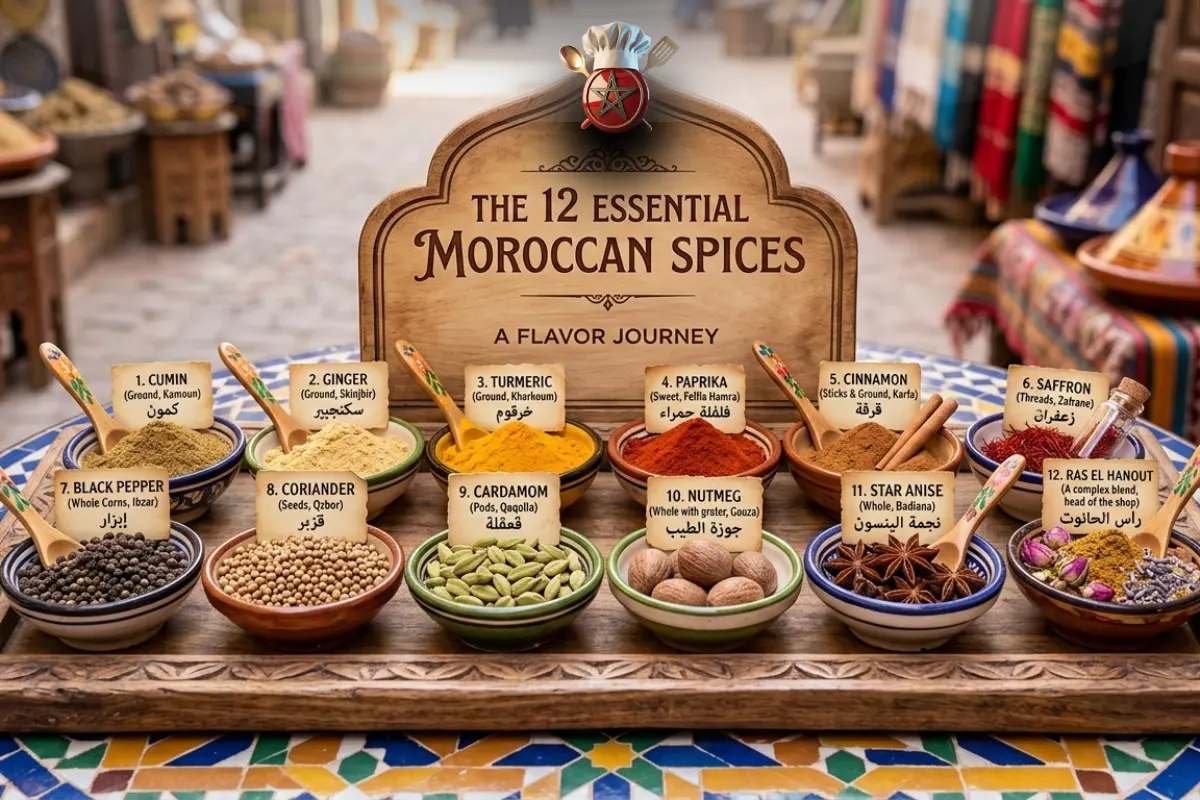
Introduction: The Soul of Moroccan Cooking
Walk through the spice souks of Marrakech or Fes and your senses are overwhelmed. Mountains of crimson paprika rise beside golden pyramids of turmeric. Baskets overflow with cinnamon bark, fragrant and curled. Glass jars contain precious threads of saffron, glowing like captured sunlight. The air itself is thick with the scent of cumin, the warmth of ginger, the sweet complexity of ras el hanout—the mysterious "head of the shop" blend that can contain anywhere from 12 to 40 different spices.
A merchant calls out: "Taste this!" He offers a pinch of his family's ras el hanout recipe on your palm. You taste it—and suddenly understand. This isn't just seasoning. This is centuries of culinary wisdom, trade routes across deserts, the marriage of African, Arab, Andalusian, and Berber cultures, all condensed into aromatic powder.
But here's what surprises most people about Moroccan spices: they're not hot. Unlike Indian or Thai cuisine where spices bring heat, Moroccan spices bring warmth, depth, and aromatic complexity. A perfectly spiced Moroccan tagine doesn't burn your tongue—it envelops your palate in layers of flavor that reveal themselves gradually: the earthiness of cumin, the floral notes of saffron, the sweet warmth of cinnamon, all balanced in perfect harmony.
Understanding Moroccan spices is essential to mastering Moroccan cooking. You can follow a recipe perfectly, but if your spices are old and flavorless, or if you use the wrong type (smoked paprika instead of sweet, for example), the dish will taste wrong. Conversely, master these 12 essential spices and you can improvise, adapt, create—because you'll understand the flavor philosophy that guides all Moroccan cooking.
This comprehensive guide teaches you everything you need to know about the 12 spices that define Moroccan cuisine. You'll learn what each spice contributes, how to buy quality versions, how to store them properly, how to make traditional blends like ras el hanout at home, and—most importantly—how to use them like a Moroccan cook, with intuition and confidence rather than rigid measurements.

Understanding Moroccan Spice Philosophy
The Moroccan Approach to Spicing
🌶️ What Makes Moroccan Spicing Unique:
| Principle | Moroccan Way | Why It Matters |
|---|---|---|
| Heat level | Aromatic, NOT spicy-hot | Warmth and complexity, not burning heat |
| Layering | Multiple spices in harmony | No single spice dominates; creates depth |
| Sweet-savory | Cinnamon and ginger with meat | Unexpected but balanced combinations |
| Freshness | Ground fresh when possible | Maximum flavor and aroma |
| Toasting | Often toasted before grinding | Releases essential oils, deepens flavor |
| Balance | Sweet + earthy + floral together | Complex but harmonious taste |
The Four Spice Categories
📋 Understanding Flavor Families:
1. WARMING SPICES (Sweet & Aromatic):
- Cinnamon, ginger, nutmeg, cardamom
- Use: Sweet tagines, couscous, pastries, tea
- Character: Sweet warmth, comfort, depth
2. EARTHY SPICES (Savory Foundation):
- Cumin, coriander, turmeric
- Use: All savory dishes, tagines, soups, salads
- Character: Grounding, substantial, savory
3. AROMATIC SPICES (Floral & Precious):
- Saffron, rose, anise, fennel
- Use: Special dishes, desserts, tea
- Character: Delicate, luxurious, fragrant
4. PEPPERY SPICES (Mild Heat):
- Black pepper, white pepper, (cayenne - used sparingly!)
- Use: All savory cooking
- Character: Subtle heat, enhances other flavors
Moroccan balance: A typical tagine uses all four categories in small amounts, creating complexity without any single flavor dominating.
The 12 Essential Spices
1. Ras el Hanout (رأس الحانوت) - "Head of the Shop"

What it is: Morocco's most famous and complex spice blend. The name means "head of the shop"—the best spices the merchant has to offer. Can contain anywhere from 12 to 40+ ingredients.
Flavor profile: Warm, sweet-savory, floral, slightly peppery. Impossible to describe because every blend is unique.
Common ingredients: Cardamom, cinnamon, cumin, coriander, nutmeg, mace, allspice, ginger, turmeric, paprika, black pepper, cloves, rose petals, lavender, and many more.
🌟 How to Use Ras el Hanout:
In cooking:
- Tagines: 1-2 tsp per recipe (the signature spice blend for most tagines)
- Couscous: Sprinkle over steamed couscous with butter
- Roasted vegetables: Toss vegetables with olive oil and ras el hanout before roasting
- Grilled meats: Rub on lamb, chicken before grilling
- Rice dishes: Add to pilaf-style rice
- Soups: Adds complexity to harira and other soups
Typical amounts:
- Tagine for 4-6 people: 1-2 tsp
- Meat marinade: 1 tbsp per kg of meat
- Vegetable dish: 1 tsp per 500g vegetables
🛒 Buying Guide:
Quality indicators:
- Strong, complex aroma (not dusty or flat)
- Visible whole spice pieces (shows freshness)
- Deep color (not faded brown)
- Sold in small quantities (indicates turnover)
Price expectations: $8-15 per 100g (quality blend). If it's $3, it's probably old or low-quality.
Where to buy:
- Moroccan specialty shops (best)
- Middle Eastern markets
- Online spice specialists (Diaspora Co., Burlap & Barrel, Zamouri Spices)
- Some upscale supermarkets (check freshness!)
📖 DIY Ras el Hanout Recipe:
Makes: ~1/2 cup
Ingredients:
- 2 tbsp ground cumin
- 2 tbsp ground coriander
- 2 tbsp ground ginger
- 1 tbsp ground cinnamon
- 1 tbsp turmeric
- 1 tbsp paprika (sweet)
- 2 tsp ground cardamom
- 1 tsp ground nutmeg
- 1 tsp black pepper
- 1/2 tsp ground allspice
- 1/2 tsp ground cloves
- 1/4 tsp cayenne pepper (optional)
- Pinch saffron threads, crushed (optional but wonderful)
Instructions: Mix all ingredients thoroughly. Store in airtight jar. Use within 3 months for best flavor.
Note: This is a simplified version. Traditional ras el hanout can include rose petals, lavender, grains of paradise, cubeb pepper, and many more exotic ingredients.
2. Cumin (الكمون) - Kamoun
What it is: THE most frequently used spice in Moroccan cooking. Earthy, warm, slightly bitter seeds or ground powder.
Why it's essential: Cumin is the backbone of Moroccan savory cooking. If a dish tastes "Moroccan," cumin is probably why.
🌟 How to Use Cumin:
Forms:
- Whole seeds: Toasted and ground fresh (best flavor)
- Ground: Convenient, most common
In cooking:
- All tagines: 1-2 tsp ground cumin is standard
- Salads: Essential in Moroccan salad dressings
- Meat marinades: Cumin + paprika + garlic = Moroccan flavor base
- Bissara: Generous cumin on top is traditional
- Grilled meats: Cumin rub before grilling
- Vegetable dishes: Cumin brings out natural sweetness
🎯 Pro Tips:
- Toast before grinding: Heat whole cumin seeds in dry pan 1-2 minutes until fragrant. Grind fresh. Game-changing!
- Don't burn: Burnt cumin is bitter. Toast gently
- Generous use: Moroccans use more cumin than Westerners expect. Don't be shy
- Pairing: Cumin + lemon juice = magic combination
Shelf life: Whole seeds: 2-3 years. Ground: 6 months peak flavor
3. Ginger (الزنجبيل) - Skinjbir
What it is: In Morocco, always dried ground ginger, not fresh ginger root! This is crucial—fresh and dried ginger are completely different in Moroccan cooking.
Flavor profile: Warm, slightly sweet, peppery. Adds depth and warmth without heat.
🌟 How to Use Ginger:
IMPORTANT: Moroccan recipes calling for "ginger" mean ground dried ginger powder, NOT fresh ginger root!
In cooking:
- All tagines: 1-2 tsp ground ginger is standard
- Harira soup: Essential warming spice
- Meat marinades: Part of standard spice rub
- Sweet dishes: Chebakia, cookies
- Tea: Sometimes added to mint tea
Typical amounts: 1 tsp per tagine recipe (4-6 servings)
⚠️ Common Mistake:
Don't substitute fresh ginger for ground! Fresh ginger has sharp, zingy flavor. Ground dried ginger is mellow and warm. They're not interchangeable in Moroccan cooking.
4. Turmeric (الكركم) - Kharkoum
What it is: Golden-yellow powder from turmeric root. Earthy, slightly bitter, mostly used for color.
Why it's used: Creates the golden color in tagines, plus adds earthy depth and health benefits.
🌟 How to Use Turmeric:
In cooking:
- Tagines: 1/2 - 1 tsp for golden color
- Rice dishes: Colors rice beautiful yellow
- Soups: Adds warmth and color
- Marinades: Part of spice rub
⚠️ Important Notes:
- Use sparingly: Too much = bitter and metallic
- Stains everything: Turmeric stains clothes, cutting boards, hands. Be careful!
- Cook it: Raw turmeric can taste harsh. Always cook it in oil or with other spices
- Health benefits: Anti-inflammatory, antioxidant (bonus!)
Pairing: Always use turmeric WITH other spices. Never alone—it's supporting player, not star.
5. Cinnamon (القرفة) - Karfa

What it is: True cinnamon (Ceylon) is preferred but cassia cinnamon is more common and acceptable.
Why it's unique: Morocco uses cinnamon in SAVORY dishes, not just desserts. This surprises Western cooks!
🌟 How to Use Cinnamon:
Forms:
- Sticks: Added to tagines whole, removed before serving (best flavor)
- Ground: Mixed into spice blends, baking
In cooking:
- Sweet tagines: Lamb with prunes, chicken with figs—cinnamon is essential
- Couscous: Sweet couscous with cinnamon sugar
- Harira: 1-2 cinnamon sticks for depth
- Desserts: Chebakia, cookies, pastries
- Tea: Cinnamon stick in mint tea
- Rice dishes: Sweet spiced rice
🎯 Moroccan Wisdom:
- Stick vs. ground: Sticks for savory tagines (subtle), ground for sweets (pronounced)
- Don't overdo: A little goes a long way
- The sweet-savory bridge: Cinnamon connects sweet and savory in dishes like mrouzia
6. Paprika (الفلفل الحلو) - Felfel Hlou
What it is: SWEET paprika, not hot, not smoked! This is critical.
Common mistake: Using smoked paprika or hot paprika ruins Moroccan dishes. Always use sweet paprika.
🌟 How to Use Paprika:
In cooking:
- All tagines: 1-2 tsp for color and mild sweetness
- Marinades: Colors meat beautifully
- Chermoula: Essential in fish marinade
- Salad dressings: Adds color
- Grilled meats: Part of spice rub
⚠️ CRITICAL:
Only use SWEET paprika in Moroccan cooking!
- ❌ NOT smoked paprika (wrong flavor entirely)
- ❌ NOT hot paprika (Moroccan food is NOT spicy-hot)
- ✅ ONLY sweet paprika (mild, slightly sweet, bright red)
Purpose: Paprika is for color and mild sweetness, not for heat or smokiness.
7. Saffron (الزعفران) - Za'faran
What it is: The world's most expensive spice. Red-orange threads (stigmas) from crocus flowers.
Why it's expensive: Must be hand-harvested. Takes 150 flowers to make 1 gram. Costs $500-$5,000 per kilogram!
🌟 How to Use Saffron:
IMPORTANT: Moroccans use saffron sparingly and for special occasions, not in everyday cooking!
Preparation (essential step!):
- Crush 10-15 threads between fingers
- Soak in 2 tbsp warm water for 10+ minutes
- Add both water AND threads to dish
In cooking:
- Special tagines: Weddings, Eid, important guests
- Couscous: Friday couscous for guests
- Rice: Colors rice golden and adds aroma
- Bastilla: Traditional in this celebration dish
🎯 Saffron Wisdom:
How much to use:
- Tagine for 6: 10-15 threads (pinch)
- Couscous for 8: 15-20 threads
- A little goes a long way!
🚨 Identifying REAL vs. FAKE Saffron:
Real saffron:
- ✅ Deep red threads with orange/yellow ends
- ✅ Each thread is trumpet-shaped (wider at one end)
- ✅ Strong, unique aroma (hay-like, floral, slightly metallic)
- ✅ Colors water slowly (takes several minutes)
- ✅ Expensive ($10-30 per gram retail)
Fake saffron (avoid!):
- ❌ Uniformly red with no orange ends
- ❌ All threads exactly the same size/shape
- ❌ Weak or no aroma
- ❌ Colors water immediately bright yellow
- ❌ Too cheap ($1-2 per gram = definitely fake)
💰 Is Saffron Necessary?
Honest answer: Not for everyday cooking. Most Moroccan home cooks use saffron rarely. It's special occasion spice. Your tagines will be delicious without it. BUT—for special dishes, real saffron is transformative and worth the investment.
8. Black Pepper (الفلفل الأسود) - Felfel Kahel
What it is: The universal pepper. Used in Morocco but more moderately than in Western cooking.
🌟 How to Use Black Pepper:
Moroccan approach: Gentle use. Provides subtle heat without overpowering aromatic spices.
In cooking:
- All savory dishes: Usually 1/2 - 1 tsp per recipe
- Marinades: Part of spice blend
- Ras el hanout: Component of the blend
🎯 Tips:
- Freshly ground is best: Invest in a pepper mill
- Don't overdo: Moroccan food is NOT peppery-hot
- White pepper alternative: Some recipes use white pepper for lighter color
9. Coriander Seeds (الكزبرة) - Kozbara
What it is: Seeds of the cilantro plant. Completely different flavor from fresh cilantro leaves!
Flavor profile: Citrusy, slightly sweet, warm. Essential supporting spice.
🌟 How to Use Coriander:
Forms:
- Whole seeds: Can be toasted and ground
- Ground: Most common in home cooking
In cooking:
- Tagines: Part of spice blend (usually 1 tsp)
- Ras el hanout: Essential component
- Marinades: Adds citrus notes
- Pickles: Whole seeds in pickling
⚠️ Note:
Coriander seeds ≠ cilantro leaves. They're from the same plant but taste completely different!
10. Nutmeg (جوزة الطيب) - Gouza Taieb
What it is: Seed of the nutmeg tree. Warm, sweet, slightly nutty.
Moroccan use: Sparingly, in specific dishes. Adds warmth and complexity.
🌟 How to Use Nutmeg:
Best form: Whole nutmeg, grated fresh on microplane (flavor is incomparable to pre-ground)
In cooking:
- Bastilla: Sweet-savory pigeon or chicken pie
- Mrouzia: Sweet lamb tagine
- Ras el hanout: Component of blend
- Desserts: Some cookies and pastries
- Bechamel: In Moroccan-French fusion dishes
⚠️ Use Sparingly:
Nutmeg is powerful. Too much = medicinal, overpowering. A little grating goes a long way.
11. Anise Seeds (الحبة الحلوة) - Haba Helwa
What it is: Small seeds with licorice flavor. Sweet, aromatic.
Moroccan use: Mostly in breads and sweets, occasionally in savory dishes.
🌟 How to Use Anise:
In cooking:
- Chebakia: The Ramadan honey cookie—anise is essential
- Bread: Khobz with anise seeds on top
- Tea: Anise tea for digestion
- Fekkas: Twice-baked cookies
Amount: Usually 1-2 tsp per recipe (baking/bread)
12. Cardamom (الهيل) - Hel
What it is: Green cardamom pods (not white or black). Intensely aromatic, floral, complex.
Moroccan use: Less common than in Middle Eastern cooking, but used in special dishes and tea.
🌟 How to Use Cardamom:
Forms:
- Whole pods: Added to tea, rice, couscous (removed before eating)
- Seeds only: Crushed or ground for ras el hanout
- Ground: Convenient but loses flavor quickly
In cooking:
- Ras el hanout: Key component in quality blends
- Tea: 2-3 pods in mint tea for special occasions
- Rice dishes: Whole pods for aroma
- Desserts: Some traditional sweets
🎯 Tips:
- Use sparingly: Cardamom is VERY strong
- Whole pods last longer: Buy pods, crush fresh when needed
- Remove before eating: Biting into whole cardamom pod = unpleasant!

Spice Blends & Combinations
Beyond Ras el Hanout: Other Traditional Blends
📖 DIY Moroccan Spice Blends:
1. Basic Tagine Spice Mix
For when you don't have ras el hanout
- 2 tbsp cumin
- 2 tbsp paprika (sweet)
- 1 tbsp ginger
- 1 tbsp coriander
- 1 tsp turmeric
- 1 tsp cinnamon
- 1/2 tsp black pepper
2. Chermoula Spice Base
For fish marinades (add to fresh herbs and oil)
- 2 tbsp cumin
- 2 tbsp paprika
- 1 tbsp coriander
- 1/2 tsp cayenne (optional)
3. Sweet Spice Mix (for desserts)
- 2 tbsp cinnamon
- 1 tbsp anise seeds, ground
- 1 tsp nutmeg
- 1 tsp cardamom
4. Kefta Spice Mix
For meatballs and ground meat
- 2 tbsp cumin
- 1 tbsp paprika
- 1 tbsp coriander
- 1 tsp black pepper
- 1/2 tsp cinnamon
Buying, Storing & Using Spices
The Complete Buying Guide
Storage Best Practices
🏺 Keeping Spices Fresh:
The enemies of spices:
- ☀️ Light: Breaks down essential oils
- 🔥 Heat: Accelerates degradation
- 💧 Moisture: Causes clumping and mold
- 🌬️ Air: Oxidation destroys flavor
Proper storage:
- ✅ Container: Airtight glass jars (amber or dark glass best)
- ✅ Location: Cool, dark cabinet AWAY from stove
- ✅ Temperature: Room temperature (not refrigerator!)
- ✅ Organization: Label with purchase date
Shelf life guide:
| Form | Peak Flavor | Still Usable | Signs It's Bad |
|---|---|---|---|
| Whole spices | 2-3 years | 3-4 years | No aroma when rubbed, faded color |
| Ground spices | 6 months | 1-2 years | Flat aroma, dusty smell, clumping |
| Saffron | 2 years | 3-4 years | Loss of color, weak aroma |
| Blends (ras el hanout) | 3 months | 6 months | Individual spices smell fades |
🧪 Freshness Tests:
- Rub test: Rub small amount between fingers. Should release strong aroma immediately
- Color test: Vibrant color = fresh. Faded = old
- Smell test: Open jar, smell from 6 inches away. Should smell strong. If you need to put nose in jar to smell it, it's too old
- Taste test: Tiny pinch should have pronounced flavor
How Much to Buy
Common Mistakes & How to Avoid Them
| ❌ Mistake | Why It's Wrong | ✅ Do This Instead |
|---|---|---|
| Using old spices | No flavor, dusty taste | Buy small amounts, replace every 6-12 months |
| Storing above stove | Heat destroys flavor quickly | Store in cool cabinet away from heat |
| Using smoked paprika | Wrong flavor profile entirely | Only sweet paprika for Moroccan cooking |
| Adding spices at wrong time | Burnt spices = bitter | Toast in oil first OR add with liquid |
| Using too little | Bland, not authentically Moroccan | Moroccans are generous with spices—don't be timid |
| Skipping ras el hanout | Missing the complexity | Buy or make ras el hanout—it's worth it |
| Substituting fresh ginger for ground | Completely different flavor | Always use ground dried ginger in Moroccan recipes |
Frequently Asked Questions
Can I substitute garam masala for ras el hanout?
No—they're completely different! Common misconception, but:
Garam masala: Indian blend, heavy on cumin, coriander, cardamom. Warming but different flavor profile.
Ras el hanout: Moroccan blend, includes rose, cinnamon, nutmeg, and many unique spices.
They're not interchangeable. If you don't have ras el hanout, use the basic tagine spice mix recipe above, NOT garam masala.
Why doesn't my tagine taste like the one I had in Morocco?
Most common reasons:
1. Old spices - Check your spice cabinet. If spices are over 1 year old, they've lost potency
2. Wrong paprika - Smoked or hot paprika instead of sweet
3. Not enough spices - Moroccan cooking uses generous amounts
4. Low-quality ras el hanout - Supermarket ras el hanout is often stale
5. Fresh ginger instead of ground - Common mistake!
Solution: Invest in fresh, quality spices from specialty shop. Makes huge difference!
Is saffron worth the price?
Depends on your budget and how often you cook Moroccan food:
Yes, buy saffron if:
• You make Moroccan food regularly
• You want authentic flavor for special occasions
• You can afford $15-30 for 1-2g (lasts many months)
Skip saffron if:
• You're just starting out with Moroccan cooking
• Budget is very tight
• You make Moroccan food occasionally
Compromise: Buy 0.5g of real saffron, use only for special dishes. Your everyday tagines will be delicious without it!
Can I grind my own spices?
Absolutely yes—and it's better!
Benefits:
• Much more flavorful (fresh-ground releases essential oils)
• Longer shelf life (whole spices last 2-3 years)
• More aromatic
• Better quality control
Tools needed:
• Spice/coffee grinder ($20-40)
• OR mortar and pestle (traditional but labor-intensive)
• OR high-powered blender for larger batches
Best candidates for grinding fresh: Cumin, coriander, cardamom, black pepper, cinnamon (if you can find sticks to grind)
How do I know if my ras el hanout is good quality?
Quality indicators:
✅ Aroma: Should smell complex, rich, aromatic from several inches away
✅ Visible texture: Should see pieces of different spices (not uniform powder)
✅ Color: Rich, warm brown with red/yellow tones (not gray or faded)
✅ Ingredients list: Should list 10+ spices (not just 'spices')
✅ Price: Quality ras el hanout costs $8-15 per 100g minimum
✅ Source: From Moroccan or Middle Eastern specialty shop
Red flags:
❌ Weak smell
❌ Uniform fine powder (over-ground, stale)
❌ Very cheap ($2-3 per 100g)
❌ Sold in supermarket regular spice aisle
Do spices expire?
They don't become unsafe, but they lose flavor:
Ground spices: Peak flavor 6 months, usable 1-2 years, then become flavorless
Whole spices: Peak flavor 2-3 years, usable 3-4 years
Saffron: Peak 2 years, usable 3-4 years (store very carefully)
How to tell if expired:
• Rub between fingers—no aroma = expired
• Faded color
• Dusty or flat smell
• No flavor when tasted
Best practice: Buy small amounts, replace frequently. Fresh spices make all the difference!
Conclusion: The Art of Balance
Mastering Moroccan spices isn't about memorizing measurements or following recipes exactly. It's about understanding the philosophy: warmth without heat, complexity without confusion, balance between earth and sky, sweet and savory, ancient and alive.
A Moroccan cook doesn't measure cumin with teaspoons—she knows by smell when the spices are right. She adds a pinch more cinnamon because this lamb tagine needs sweetness. She grinds fresh cumin seeds for special guests because she knows the difference it makes. She guards her grandmother's ras el hanout recipe like a family secret because it IS a family secret—and every family's blend is unique.
Start with these 12 essential spices. Buy them fresh. Store them properly. Use them generously. Taste as you cook. Trust your senses. And gradually, intuitively, you'll develop the same understanding that Moroccan cooks have carried for centuries: that spices aren't just ingredients—they're the soul of the food, the bridge between ingredients and magic, the ancient voice of the spice routes speaking through your tagine.
🌶️ From the Spice Merchant:
"People ask me: 'What's the secret to good ras el hanout?' And I tell them—there is no secret. There are forty secrets. Every spice in this blend has a purpose. The cumin grounds it. The cinnamon sweetens it. The cardamom lifts it. The rose petals perfume it. Remove one, and the symphony becomes incomplete. Add too much of another, and the balance breaks. This is not cooking—this is alchemy. This is five thousand years of refinement. This is the Silk Road and the Sahara and Andalusia all mixed together in a bowl. Respect the spices. Use them fresh. Trust the proportions that generations perfected. And your food will sing."
Download Your Spice Mastery Resources:
- 📋 12 Essential Spices Quick Reference Card (Printable)
- 📖 Complete Spice Blend Recipes Collection
- 🛒 Moroccan Spice Shopping List (Printable for Store)
- 🏺 Spice Storage Guide with Printable Labels
- ⏰ Spice Shelf Life Chart (Print & Stick in Cabinet)
- 🌍 Where to Buy Quality Spices Directory (By City)
Share your spice journey! Tag #MaCookingSpices with photos of your spice cabinet transformation!
May your spices be fresh, your blends be balanced, and your kitchen smell like the souks of Marrakech.
بالتوابل الزينة - Bil tawabil ez-zina (With the beautiful spices)