Moroccan desserts from Morocco are mostly honey-soaked pastries, almond cookies and simple fruit rather than heavy cakes. Locals love chebakia, sellou, ghriba, makrout, baghrir and sweet briouats, usually served with mint tea. Many are tied to Ramadan, Eid and weddings, while fruit and sfenj fill everyday life.
Key Takeaways
- Everyday Moroccan meals usually end with fruit; pastries and cookies are for tea time, guests and celebrations.
- Almonds, sesame, honey, orange blossom water, cinnamon and semolina are the backbone of most sweets.
- Some desserts belong to specific moments: chebakia and sellou to Ramadan, ghriba and kaab el ghazal to feasts and weddings.
- Many classics are easier at home than they look, especially baghrir, ghriba, fekkas and rice pudding.
- Mint tea is part of the dessert experience, not an afterthought; its bitterness and sweetness balance the pastries.
What Are Moroccan Desserts From Morocco Really Like?
If your idea of Moroccan sweets comes from a tourist-restaurant plate, the real thing may surprise you. In Moroccan homes, the sweet course is often modest: a bowl of peeled oranges dusted with cinnamon, slices of melon, or dates. The elaborate pastries come out when there is a reason. A guest arrives, a baby is born, Ramadan begins, or Eid is around the corner.
The flavour palette is consistent across regions. Almonds are everywhere, ground into pastes, toasted for crunch or left whole as garnish. Orange blossom water gives a floral perfume, sesame adds a nutty richness, and honey binds or soaks many of the most iconic sweets. Spices are used lightly: cinnamon, anise, a little gum arabic or mastic in some doughs. Fez is known for refined pastry work, while northern towns such as Tetouan have a strong tradition of almond sweets influenced by Andalusian cooking. For a broader overview of the cuisine behind these dishes, Wikipedia's article on Moroccan cuisine is a good starting point.
Home cooks who search for Moroccan desserts BBC-style roundups are usually after dependable versions they can make in an ordinary kitchen. This guide aims for the same practicality, while explaining how these sweets are actually eaten in Morocco.
Which Are the Most Popular Moroccan Desserts?
Here is the quick overview of the twelve sweets we cover below. Use it as a map of popular Moroccan desserts and a shortlist of Moroccan dessert ideas for your own table.
| Sweet | Type | Key flavours | When it is served |
|---|---|---|---|
| Chebakia | Fried, honey-dipped dough | Sesame, honey, orange blossom, spices | Ramadan |
| Sellou (sfouf) | No-bake toasted flour mix | Almonds, sesame, anise, cinnamon | Ramadan, births, celebrations |
| Ghriba | Crackled cookie | Almond, coconut, semolina or walnut | Eid, tea time, weddings |
| Makrout | Stuffed semolina cookie | Dates, honey, orange blossom | Celebrations, tea time |
| Kaab el ghazal | Crescent pastry | Almond paste, orange blossom | Weddings, Eid, guests |
| Fekkas | Twice-baked biscuit | Almonds, raisins, aniseed | Tea time, travel snack |
| M'hancha | Coiled almond pastry | Almond paste, cinnamon | Special occasions |
| Baghrir | Spongy semolina pancake | Honey, butter | Breakfast, Ramadan, tea |
| Sfenj | Ring doughnut | Sugar or honey | Breakfast, street food |
| Sweet briouats | Fried or baked parcels | Almond, honey | Celebrations, Ramadan |
| Orange with cinnamon | Fresh fruit | Orange, cinnamon, sometimes orange blossom water | End of everyday meals |
| Rice pudding | Creamy milk dessert | Milk, orange blossom water | Home dessert |
The 12 Moroccan Sweets Locals Love
1. Chebakia
Chebakia is the sweet most Moroccans associate with Ramadan. A sesame-and-spice dough is rolled thin, cut, folded into a rose-like shape, fried until golden and dipped in warm honey. The result is crisp at the edges, slightly chewy inside and fragrant with orange blossom water. Families often make big batches together, and it is traditionally eaten with harira at the breaking of the fast. The shaping takes practice, so expect your first few to look rustic. Our guide to how to make Moroccan sweets, chebakia and sellou basics walks through the method.
2. Sellou (Sfouf)
Sellou is a fine, crumbly, no-bake mixture of toasted flour, ground almonds, sesame, butter or smen, honey or sugar, and spices such as anise and cinnamon. It is dense and nutty, and it is eaten by the spoonful or pressed into a mound and decorated with almonds. Many families serve it during Ramadan, and it is also made to celebrate special occasions. The main secret is patience while toasting the flour: it should turn a deep golden colour and smell nutty, without scorching.
3. Ghriba
Ghriba is a family of cookies, not a single recipe. Versions use almonds, coconut, semolina, walnuts or chickpea flour, but the best-known ones are domed, crackled on top, crisp outside and soft within. The cracks appear because of the dough's moisture and the oven heat, so don't flatten the balls too much. Try our almond ghriba cookies if you want a dependable first batch.
4. Makrout
Makrout is a diamond-shaped semolina pastry filled with a spiced date paste. It is a sweet shared across North Africa, with local variations in the dough, shape and finish. Some are fried and soaked in honey, others baked and lightly glazed. The dough should be rested so that the semolina hydrates and becomes easy to shape. Our makrout semolina date cookies recipe gives exact quantities.
5. Kaab el Ghazal (Gazelle Horns)
These delicate crescents are among the most elegant Moroccan pastries. A thin, tender dough wraps a smooth almond filling flavoured with orange blossom water, and the shape is meant to evoke a gazelle's horn. They are typical of weddings, Eid and special tea trays. The dough is thin, so take care when sealing the edges and shaping the curve. They should be pale, never deeply browned.
6. Fekkas
Fekkas are Morocco's answer to biscotti: a loaf is baked, sliced, then baked again until dry and crunchy. Almonds, raisins and aniseed are common additions. They are not very sweet, which makes them ideal for dunking in mint tea or coffee, and they keep well. Our Moroccan fekkas with almonds and raisins is a good option if you like a drier cookie.
7. M'hancha (The Almond Snake)
M'hancha is a showpiece: thin sheets of warqa or filo are wrapped around fragrant almond paste, coiled into a spiral that resembles a snake, baked or fried, then dusted with cinnamon and powdered sugar. It looks impressive but uses straightforward techniques. The cinnamon-almond filling is the heart of it. See our M'hancha (Moroccan almond snake pastry) for a step-by-step walk-through.
8. Baghrir
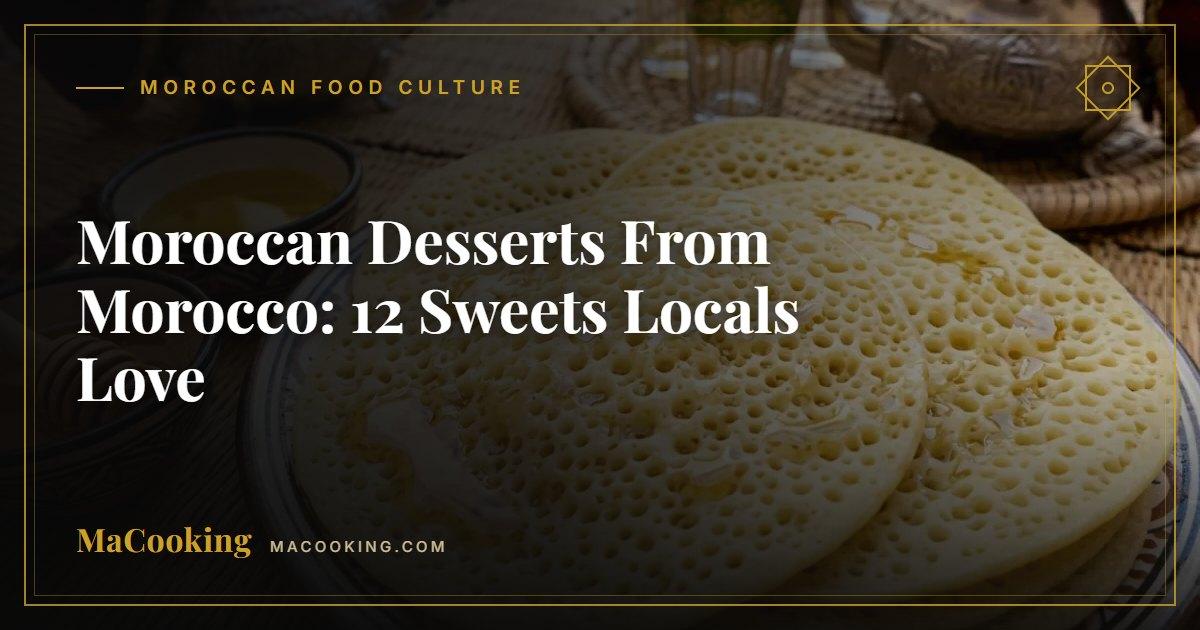
Baghrir is often called the thousand-hole pancake, and for good reason. The semolina batter is cooked on one side only, forming a honeycomb surface that soaks up melted butter and honey. It is served for breakfast, at tea time and during Ramadan evenings. A bubbly, slightly loose batter and a medium-low pan are the keys. Try it with honey and argan oil for a nutty twist.
9. Sfenj
Sfenj is a chewy, airy ring doughnut made from a wet yeasted dough, shaped by hand and fried. It is a popular breakfast food in cities and towns, often sold from small stalls, and is eaten plain, with sugar or dipped in honey. It is best eaten immediately while the exterior is still crisp and the middle is still tender.
10. Sweet Briouats
Briouats are small parcels of thin pastry, usually triangles or cigars, which can be savoury or sweet. The sweet ones are typically filled with almond paste and finished with honey or syrup. They are a staple on celebration trays. For the technique behind the folding and frying, look for the chapter "Briouats — The Art of the Sweet Parcel" inside the full ebook The Royal Moroccan Table — Part 5: Sweet Morocco, which also includes "Chebakia & Sellou — Ramadan Sweets".
11. Oranges With Cinnamon
This simple dessert is common in Moroccan homes and restaurants. Oranges are peeled and sliced into thin rounds, then lightly dusted with cinnamon, and sometimes sprinkled with a little orange blossom water or sugar. It is refreshing after a rich tagine or couscous, and it makes an easy choice for anyone who finds pastries too heavy.
12. Rice Pudding With Orange Blossom Water
Creamy milk pudding is a gentle, comforting dessert, perfumed with orange blossom water and sometimes decorated with cinnamon. Its simplicity makes it a good introduction for new cooks. Our rice pudding with orange blossom water shows how to keep it silky rather than gluey.
How Are Moroccan Desserts Served?
Moroccan sweets are rarely served alone. A typical tea tray holds a small selection: perhaps ghriba, a few kaab el ghazal, some fekkas and a plate of dates. Guests take a few pieces, and refills of mint tea keep the conversation going. This is why Moroccan pastries are often small and not overly sweet; they are meant to be paired with a strong, sugared green tea.
Presentation matters. Trays are arranged with attention to colour and shape, often with a mix of white, golden and dark pieces. During Ramadan, the evening table may feature chebakia, sellou, dates and baghrir alongside soup and savoury pastries. At Eid, families prepare trays well in advance so visitors always find something on the table. For more on festive traditions, read our guide to Eid al-Adha Moroccan sweets and desserts.
Which Moroccan Desserts Are Made for Ramadan and Celebrations?
Some sweets are tied to particular moments, though practice varies by family and region:
- Ramadan: chebakia, sellou, baghrir, dates and sweet briouats are common at the evening meal.
- Eid: ghriba, kaab el ghazal, fekkas and other cookies fill the tea tray.
- Weddings and births: almond-based pastries, sellou and richly decorated trays are typical.
- Everyday life: fruit, yoghurt, rice pudding, sfenj and baghrir.
Can I Make Traditional Moroccan Dessert Recipes With Western Pantry Ingredients?
Yes. Most traditional Moroccan dessert recipes rely on ingredients available in well-stocked supermarkets or online. These swaps work reasonably well, though flavour will shift slightly:
| Traditional ingredient | Western substitute | Notes |
|---|---|---|
| Warqa pastry | Filo (phyllo) sheets, brushed with butter | Filo is drier; keep it covered with a damp towel while working |
| Smen (aged butter) | Ghee, or butter with a pinch of salt | You lose the funky depth, but the texture is similar |
| Fine semolina | Fine semolina or semolina flour | Avoid coarse semolina for pastry doughs |
| Orange blossom water | Use less rose water if needed | Rose water is stronger and different; start with half |
| Date paste | Pitted Medjool dates, blitzed with a little water | Add cinnamon and orange blossom for flavour |
| Ground almonds | Almond flour | Choose finely ground, blanched almonds for fillings |
What Mistakes Should You Avoid When Making Moroccan Sweets?
- Over-sweetening. Moroccan pastries are usually balanced by tea. Reduce syrup if you serve them with something sugary.
- Rushing the toasting. For sellou, sesame and flour should be toasted slowly and evenly.
- Using too much orange blossom water. It is potent. Add gradually and taste.
- Overworking cookie dough. Ghriba and makrout doughs become tough if kneaded too long.
- Frying at the wrong temperature. If oil is too cool, sfenj and chebakia absorb grease; too hot, and they brown before cooking through.
How Should You Store Moroccan Sweets?
Dry cookies and biscuits such as ghriba, fekkas and sellou keep well in airtight tins at room temperature for about one to two weeks. Honey-based sweets such as chebakia and makrout last for roughly a week in a cool place, in a container that is not completely sealed while still warm. Baghrir and rice pudding are best fresh, though leftover baghrir can be gently warmed with butter and honey. If you plan for a large gathering, our guide to traditional Moroccan cookies: 10 classic sweets explained helps you pick varieties that keep well.
Where Can You Go Next?
Browse the full Desserts & Sweets recipes collection to find step-by-step methods for the sweets above, and start with one or two rather than attempting a whole tray at once. A simple plan is to pair one crisp cookie, one soft pastry and fresh fruit, then add mint tea. That mirrors the balance of a real Moroccan tea table.
Frequently Asked Questions
What is the most popular dessert in Morocco?
There is no single winner. Fresh fruit is the everyday finish to a meal, while chebakia, ghriba and sellou are the best-loved sweets for celebrations and Ramadan. Baghrir and sfenj are the most popular sweet breakfast or tea-time treats.
Do Moroccans eat dessert after dinner?
Usually the meal ends with fresh fruit, such as oranges, melon or watermelon, or sometimes a simple sweet. Pastries and cookies are more often served with mint tea in the afternoon, to guests, or at celebrations.
What is the difference between chebakia and sellou?
Chebakia is a fried, rose-shaped sesame dough that is dipped in honey, while sellou is a no-bake mixture of toasted flour, almonds, sesame, butter and spices. Both are strongly linked to Ramadan, but their textures are very different: crisp and sticky versus crumbly and rich.
Which Moroccan desserts are easiest for beginners?
Baghrir pancakes, rice pudding with orange blossom water and almond ghriba cookies are good starting points. They need few ingredients and no special equipment, and they teach key skills such as batter consistency and judging doneness by feel.
How long do Moroccan cookies keep?
Dry cookies such as ghriba, fekkas and sellou keep well in an airtight tin for about one to two weeks. Honey-soaked sweets such as chebakia and makrout keep for about a week or a little longer in a cool place. Fresh pancakes and puddings are best eaten the same day.
Conclusion
Moroccan desserts from Morocco are less about grand finales and more about hospitality: a tray of almond cookies, a plate of warm pancakes, a bowl of fragrant oranges, always with tea. Pick one sweet from this list, make it properly and serve it the Moroccan way, with company and a glass of mint tea, and you will understand why these small, fragrant treats matter so much.