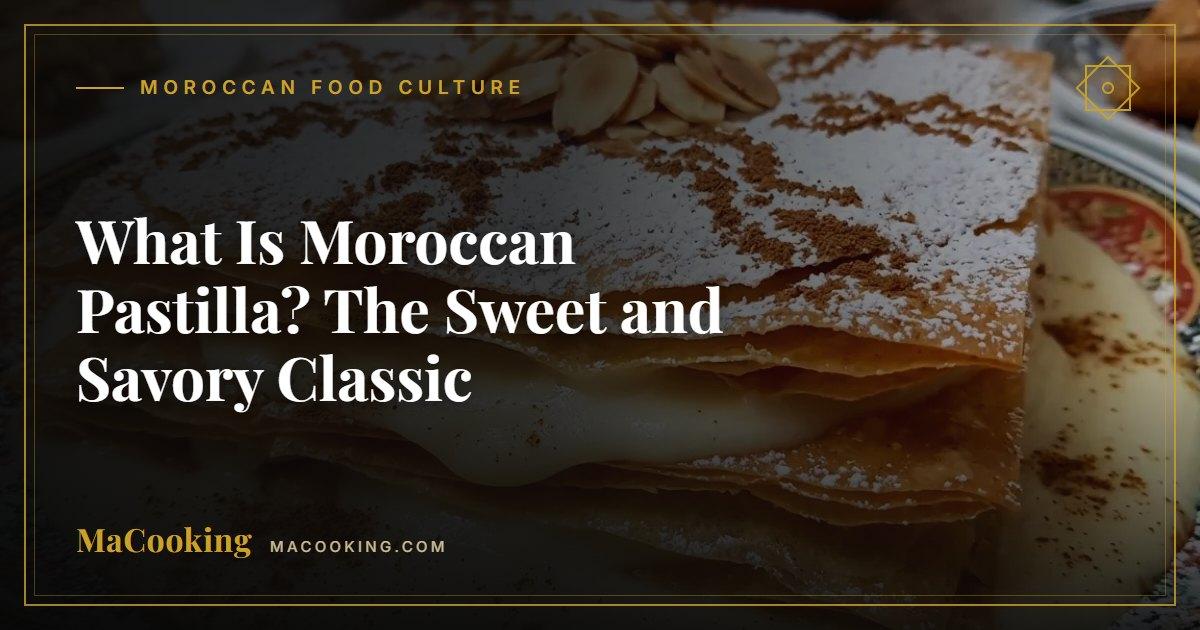
A Moroccan pastilla (also spelled bastilla or b'stilla) is a large, round, flaky pie made from paper-thin warqa pastry. It is traditionally filled with spiced pigeon or chicken, eggs and almonds, then dusted with sugar and cinnamon. Its signature is the sweet-and-savory contrast in every bite. Sweet milk versions also exist as dessert.
Key Takeaways
- Pastilla is a festive Moroccan pie wrapped in warqa pastry, with a spiced meat, egg and almond filling and a sugar-and-cinnamon top.
- The sweet-and-savory balance is intentional. It comes from sweetened almonds, cinnamon and a savory, saffron-scented sauce.
- Chicken has largely replaced pigeon. Seafood pastilla and sweet milk pastilla are popular variations.
- Filo pastry is a reliable substitute for warqa in Western kitchens.
- You can prepare the filling a day ahead, then assemble and bake just before serving.
What Is a Moroccan Pastilla, Exactly?
If you have only seen photos, pastilla can look like a plain golden pie. In person it is something else. The top is a crackling disc, often finished with a lattice of cinnamon over powdered sugar. Cut into it and the layers shatter, revealing a moist, fragrant filling that smells of saffron, ginger, cinnamon and fresh herbs.
Pastilla is usually served as a starter at weddings, family gatherings and important dinners. It is often linked to Fez and to the Andalusian-influenced cooking of Morocco's imperial cities, though you will find it across the country today. The dish takes time and skill, which is why it is mostly reserved for special occasions. For more history and cultural context, see our companion piece, The Art of Moroccan Pastilla. There is also a general overview of the dish on Wikipedia.
What Is Moroccan Pastilla Made Of?
The list of pastilla Moroccan ingredients is short, but each element has a clear job. The pastry gives crunch, the meat and onion sauce give depth, the eggs give body, and the almonds and sugar supply the sweet side of the dish.
| Ingredient | Role in the pastilla | Western pantry substitute |
|---|---|---|
| Warqa pastry | Paper-thin, crisp outer shell | Filo (phyllo) sheets, buttered; brik or spring roll wrappers in a pinch |
| Chicken (or pigeon) | Savory, tender filling | Bone-in chicken thighs give the best flavor; squab if you can find it |
| Onions | Form the base of the sauce | Yellow or white onions, grated or finely chopped |
| Saffron, ginger, turmeric, cinnamon | Aroma and color | Turmeric can stretch a small amount of saffron |
| Parsley and cilantro | Freshness | Both are easy to find fresh; do not skip |
| Eggs | Set into a soft, rich layer with the reduced sauce | No real substitute |
| Almonds, sugar, cinnamon | Sweet, crunchy layer | Blanched almonds; caster sugar |
| Butter or smen | Brushed between pastry layers; adds richness | Unsalted butter; ghee also works |
Some cooks add a little orange blossom water to the almonds or a pinch of ras el hanout to the sauce, but the core structure stays the same. If you are curious about the role almonds play across Moroccan sweets, our article on Moroccan almond culture goes deeper.
Why Does Pastilla Taste Both Sweet and Savory?
This is the question most first-time eaters ask. The answer lies in Moroccan cooking's long habit of pairing fruit, nuts, sugar and spices with meat, as in tagines with prunes or apricots. Pastilla takes that idea and builds it into layers.
- The savory part: the chicken is cooked with onion, ginger, saffron and herbs, then the sauce is reduced until thick and mixed with eggs.
- The sweet part: fried almonds are crushed with sugar and cinnamon, and the finished pie is dusted with powdered sugar and cinnamon.
- The bridge: cinnamon appears in both halves, so the flavors feel connected rather than clashing.
The contrast is also textural: shattering pastry, soft egg and shredded meat, and crunchy almonds. Many people find that the first bite is surprising and the second is hard to stop.
What Are the Main Types of Pastilla?
When people ask what a Moroccan pastilla is, they usually mean the chicken or pigeon version. But the name covers a family of dishes.
| Type | Filling | Character |
|---|---|---|
| Pigeon (squab) pastilla | Spiced pigeon, eggs, almonds | The traditional festive version; richer and more gamey |
| Chicken pastilla | Spiced chicken, eggs, almonds | The most common version today; milder and easier to source |
| Seafood pastilla | Fish, shrimp, sometimes vermicelli, with chili and herbs | Usually savory and spicier, with little or no sugar; popular in coastal areas |
| Milk pastilla | Creamy milk filling, almonds, orange blossom water | A fully sweet dessert |
Seafood pastilla is a good option if you want something lighter. Our mini seafood pastilla recipe shows how to make individual portions that suit a buffet or starter course.
Is Moroccan Pastilla a Dessert?
Not in its classic form. The chicken or pigeon pastilla is served as a starter or main part of a festive meal, even though sugar and cinnamon appear on top. However, the term Moroccan pastilla dessert does point to something real: milk pastilla, sometimes called pastilla au lait.
In this version, crisp layers of warqa or filo hold a smooth, lightly sweet cream filling, and the top is finished with toasted almonds and cinnamon. The contrast of crunchy pastry and soft cream is the whole appeal. You can try it with our Milk Pastilla with Cream and Cinnamon. For other sweets in the same family, browse the Desserts & Sweets recipes.
How Do You Make a Moroccan Pastilla Recipe at Home?
This is a straightforward home version of a chicken pastilla using filo. It serves 6 to 8 and fits a 26-28 cm (10-11 inch) round baking dish or ovenproof pan.
Ingredients
- 1 kg (2.2 lb) bone-in chicken thighs
- 2 large onions, grated
- 3 tbsp butter or olive oil
- 1 tsp ground ginger, 1 tsp ground cinnamon, ½ tsp turmeric, a good pinch of saffron threads
- Salt and black pepper
- 1 small bunch each of parsley and cilantro, finely chopped
- 250 ml (1 cup) water
- 6 eggs, lightly beaten
- 200 g (7 oz) blanched almonds
- 2 tbsp caster sugar plus ½ tsp cinnamon, for the almonds
- 10-12 sheets filo pastry, thawed
- 80-100 g (about 6-7 tbsp) melted butter, for brushing
- Powdered sugar and cinnamon, for the top
Method
- Cook the chicken. In a wide pot, combine chicken, onions, butter, spices, saffron, salt, pepper and half the herbs. Add the water, cover and simmer gently for 40-45 minutes until the chicken is very tender.
- Shred and reduce. Remove the chicken, discard the skin and bones, and shred the meat. Simmer the sauce uncovered for 10-15 minutes until it is thick and onion-rich.
- Set the eggs. Lower the heat, stir in the remaining herbs, then pour in the beaten eggs. Stir gently until they form soft curds, about 3-5 minutes. Combine with the shredded chicken and let cool.
- Prepare the almonds. Fry the almonds in a little oil or butter until golden, cool them, then crush coarsely with the sugar and cinnamon.
- Assemble. Heat the oven to 200°C (400°F). Brush the dish with butter and lay filo sheets in it, overlapping so they hang over the edges, brushing each with butter. Spread half the almonds, then all the chicken and egg filling, then the remaining almonds.
- Close and bake. Fold the overhanging pastry over the top and cover with 3-4 more buttered sheets, tucking the edges under. Bake for 20-25 minutes, until deep golden.
- Finish. Let it rest for 5 minutes. Dust generously with powdered sugar and make a cinnamon lattice or pattern on top.
Common mistakes
- A wet filling. Excess liquid makes the bottom soggy. Reduce the sauce until it clings to the spoon before adding the eggs.
- Dry pastry. Keep unused filo covered with a damp towel while you work, and do not skimp on butter between layers.
- Too much sugar on the almonds. The sweetness should be a gentle contrast, not a candy layer.
- Cutting immediately. A short rest helps the filling set so the slices hold together.
Storage and make-ahead
The filling and almonds can be prepared a day in advance and kept in the fridge. Assemble just before baking for the crispest result. Leftover baked pastilla keeps for up to two days refrigerated; reheat at about 160-180°C (320-350°F) until warmed through and the pastry crisps again. Add the sugar and cinnamon topping after reheating.
How Does Pastilla Connect to Moroccan Palace Cooking?
Warqa, the thin pastry traditionally used for pastilla, is made by dabbing a soft dough repeatedly onto a hot surface to create a delicate sheet. It is a good example of how refined technique shaped festive Moroccan food. If you want to see this craft in context, you can read the free chapter "The Warqa Legacy: Pastry as Palace Art" from Tables of Fez.
Pastilla also sits naturally beside other celebratory dishes. At a large feast it might come before a slow-roasted lamb or a tagine, with sweets and mint tea at the end of the meal.
Frequently Asked Questions
Is Moroccan pastilla sweet or savory?
Both. The classic chicken or pigeon pastilla has a savory, spiced filling of onions, herbs, saffron and eggs, but the top is dusted with powdered sugar and cinnamon, and the almonds inside are lightly sweetened. Milk pastilla is a fully sweet dessert version made with cream and warqa.
What is traditional pastilla filled with?
Traditionally it is filled with pigeon (squab), though chicken is now the usual choice. The meat is simmered with onions, ginger, saffron, cinnamon and herbs, then combined with a set egg mixture and layered with sweetened, fried almonds inside thin sheets of warqa pastry.
Can I use filo instead of warqa?
Yes. Filo is the most practical substitute outside Morocco. Brush each sheet with melted butter and use more layers than you would with warqa, since filo is drier and more fragile. Spring roll wrappers or brik pastry can also work, but they give a slightly different texture.
Can pastilla be made ahead?
Yes. You can cook the filling and fry the almonds a day ahead and keep them refrigerated. For the crispest crust, assemble and bake on the day of serving. A fully baked pastilla keeps for two days in the fridge and reheats well in a moderate oven.
What is the difference between pastilla and bastilla?
There is no difference in the dish. Pastilla, bastilla, bstilla and b'stilla are all English spellings of the same Moroccan pie, which comes from the Arabic name. You will see all of them on menus and in cookbooks, and the spelling does not indicate a different recipe.
Is there a dessert version of pastilla?
Yes. Milk pastilla is a dessert of crisp warqa layered with a creamy milk filling, often scented with orange blossom water and topped with almonds and cinnamon. It is served in many Moroccan homes and restaurants after a festive meal.
Conclusion
So, what is a Moroccan pastilla? It is a celebration pie that balances crisp pastry, fragrant spiced filling and a dusting of sugar and cinnamon. It rewards patience, but it is very achievable at home with filo and a little planning. Start with the chicken version, try the seafood or milk variations once you feel confident, and serve it to people you want to impress.