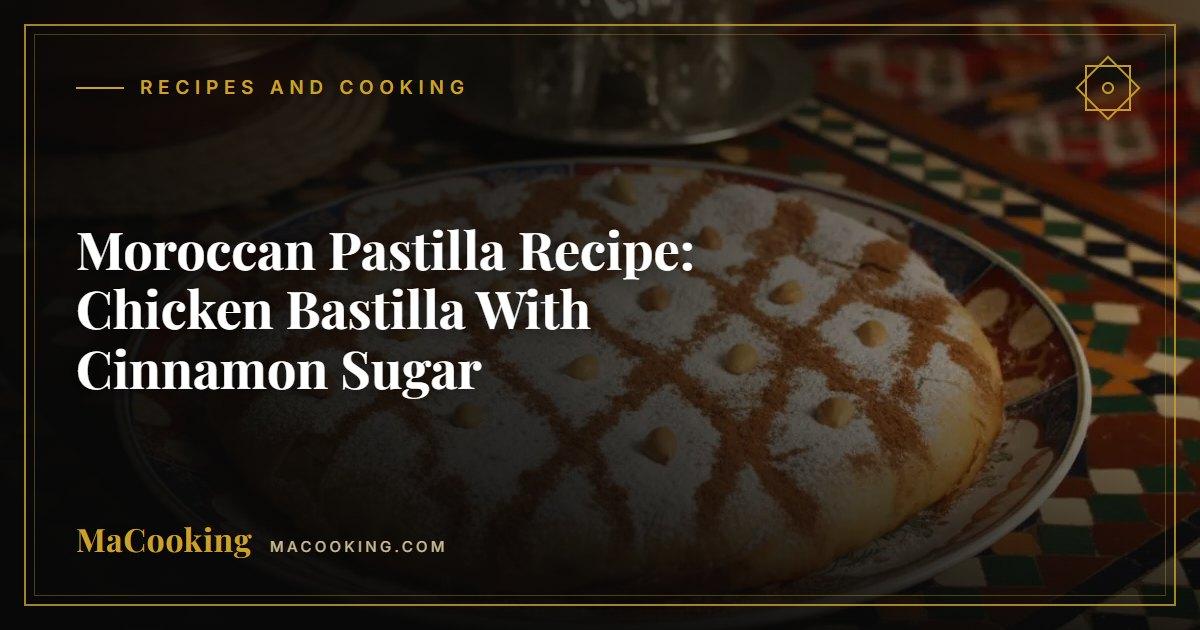
A classic Moroccan pastilla recipe layers tender, saffron-and-ginger-spiced shredded chicken, soft egg curds and crushed cinnamon almonds between paper-thin pastry, then bakes it until golden and dusts it with icing sugar and cinnamon. The result is sweet, savory, crisp and rich all at once.
Key Takeaways
- Pastilla (also spelled bastilla) is a sweet-savory pie: spiced chicken and eggs, a crunchy almond layer, and a cinnamon-sugar finish.
- Traditional Moroccan pastilla sheets are called warqa; ordinary filo brushed with butter is a reliable substitute.
- A dry, well-reduced, fully cooled filling is the secret to crisp pastry rather than a soggy base.
- Every component can be made a day or two ahead, so it suits entertaining.
- This recipe serves 8 and bakes at 200°C (400°F) in a 28 to 30 cm pan.
What Is Moroccan Pastilla, and Why the Sugar on Chicken Pie?
Pastilla is Morocco's celebration pie, served at weddings, family feasts and formal dinners. The traditional filling uses pigeon, though chicken has long been the everyday and export-friendly choice. The dish is closely linked with the refined cooking of Fez, and many food historians connect its sweet-and-savory character to Andalusian influence. If you want the encyclopedic overview, there is a short entry on pastilla on Wikipedia.
The sugar and cinnamon surprise many first-time cooks, but think of it as a seasoning. The chicken filling is well salted and peppery, with ginger, turmeric and saffron. The almonds are sweetened, and the top is dusted with sugar. Each bite lands somewhere between a savory pie and a pastry, and the contrast is what makes it memorable.
Readers who search for a "moroccan pastilla recipe BBC" style method are often after a dependable home-kitchen version using supermarket ingredients. That is exactly how this one is written: classic flavors, accessible pastry options and clear timings.
What Ingredients Do You Need for a Moroccan Pastilla Recipe?
The list looks long, but most items are pantry spices. This makes one large pastilla, enough for 8 as a main course or 12 as a starter.
For the chicken filling
- 1.2 to 1.5 kg bone-in chicken thighs and drumsticks (skin on gives a richer sauce)
- 2 large onions, grated
- 3 tbsp butter or 2 tbsp butter plus 1 tbsp neutral oil
- 1 tsp ground ginger
- 1 tsp ground turmeric
- 1 tsp freshly ground black pepper
- ½ tsp ground cinnamon
- A generous pinch of saffron threads, crushed and steeped in 3 tbsp hot water
- 1 small bunch each of fresh cilantro and flat-leaf parsley, finely chopped (about ½ cup combined)
- 1 tsp salt, plus more to taste
- 400 ml (1⅔ cups) water
- 6 large eggs, lightly beaten
- Juice of ½ lemon
For the almond layer
- 200 g (about 1⅓ cups) blanched almonds
- 3 tbsp neutral oil for frying
- 3 tbsp icing (powdered) sugar
- 1 tsp ground cinnamon
- 1 tbsp orange blossom water (optional)
For assembly and finishing
- About 12 sheets of filo, or 8 to 10 warqa sheets
- 100 g (7 tbsp) melted butter
- Icing sugar and ground cinnamon for the top
| Ingredient | Role in the dish | Substitution if needed |
|---|---|---|
| Saffron | Color and floral aroma | Extra ½ tsp turmeric for color; flavor will be less complex |
| Fresh cilantro and parsley | Freshness against the richness | Use all parsley if cilantro is not to your taste |
| Blanched almonds | Crunch and sweetness | Skinned, roasted almonds work; do not use salted ones |
| Orange blossom water | Perfume in the almond layer | Omit, or add the zest of ½ orange |
| Warqa / filo | Crisp, golden shell | Filo is the easiest swap; see the section below |
| Butter | Flavor and browning | Smen is traditional but strong; use ghee as a mild alternative |
How Do You Make Moroccan Chicken Pastilla Step by Step?
This is the core method for how to make Moroccan chicken pastilla at home. Read the steps through once before you start, then work in the order below. Cooking and cooling the filling takes the longest, so start there.
1. Simmer the chicken
- Put the chicken, grated onions, butter, ginger, turmeric, pepper, cinnamon, saffron with its soaking water, half the herbs and the salt into a wide, heavy pot.
- Add the water, bring to a gentle boil, then cover and simmer on low heat for 45 to 50 minutes, turning the chicken once, until it is very tender and falls from the bone.
- Lift the chicken onto a plate. When cool enough to handle, discard the skin and bones and shred the meat into bite-size pieces.
2. Reduce the sauce and cook the eggs
- Return the pot to medium heat and simmer the sauce uncovered for 10 to 15 minutes, until the onions have melted into a thick, jammy sauce and you have roughly 250 ml (1 cup) left.
- Reduce the heat to low. Pour in the beaten eggs in a slow stream while stirring gently. Keep stirring for 4 to 6 minutes until you have soft, set curds, like loose scrambled eggs.
- Stir in the remaining herbs and the lemon juice. Taste and adjust the salt and pepper.
- Tip the egg mixture into a sieve over a bowl and let any loose liquid drain. Combine with the shredded chicken and cool completely.
3. Toast and crush the almonds
- Heat the oil in a small pan over medium heat. Fry the almonds, stirring, for 3 to 4 minutes until pale gold. They keep cooking after you remove them, so do not wait for deep brown.
- Drain on paper towels and cool, then pulse in a food processor or crush in a bag with a rolling pin until coarse, with some small chunks left.
- Mix with the icing sugar, cinnamon and orange blossom water, if using.
4. Assemble the pastilla
- Heat the oven to 200°C (400°F), or 180°C fan. Brush a 28 to 30 cm round baking dish or ovenproof skillet with melted butter.
- Lay 7 filo sheets in the dish, overlapping them like petals so that about a third of each sheet hangs over the edge. Brush each sheet with butter as you go.
- Scatter half the almond mixture over the base. Spoon over all of the chicken and egg filling and level it gently. Top with the remaining almonds.
- Fold the overhanging pastry over the filling. Lay 5 more buttered sheets on top, tucking the edges down around the filling like making a bed.
- Brush the top generously with butter.
5. Bake, flip and finish
- Bake for 20 minutes, until the top is lightly golden.
- Carefully slide the pastilla onto a large buttered baking sheet or plate, then invert it back into the dish so the underside is now on top. Brush with butter and bake for another 10 to 15 minutes until deep golden all over.
- Rest for 10 minutes. Dust thickly with icing sugar through a sieve, then draw thin lines of cinnamon across the top, often in a crisscross or diamond pattern.
For a second take on the same dish, with a different order of layers and a slightly different spice balance, compare it with the Chicken Pastilla recipe in our recipe collection, or follow the step-by-step master recipe for Moroccan bastilla with chicken if you want even more detail on each stage.
Can You Use Filo Instead of Moroccan Pastilla Sheets?
Yes, and most cooks outside Morocco do. Authentic Moroccan pastilla sheets are called warqa (or ouarka). They are made by dabbing a very wet dough onto a hot surface so that it sets into a thin, slightly elastic round. Warqa is chewier and more pliable than filo and crisps into a delicate, thin shell. It is sold in Moroccan and some Middle Eastern shops and online, usually frozen. If you are curious how it is made by hand, our guide to Moroccan warka dough walks through the technique.
Filo is easier to find and still works well. The key difference is that filo is dry and brittle, so each sheet needs butter, and you must keep the stack covered with a damp cloth while you work.
| Pastry | Where to find it | Texture when baked | Handling tips |
|---|---|---|---|
| Warqa (pastilla sheets) | Moroccan and Middle Eastern grocers, online, often frozen | Thin, crisp-chewy, delicate | Thaw fully; brush with butter or oil; use 8 to 10 sheets |
| Filo / phyllo | Supermarket freezer aisle | Flaky, shattering, lighter | Keep under a damp towel; butter every sheet; use about 12 |
| Spring roll wrappers | Asian grocers | Crisp but denser | Overlap in the pan; a last resort for the shell |
What Are the Most Common Pastilla Mistakes?
- A wet filling. Too much sauce turns the base to paste. Reduce the sauce, drain the eggs and cool everything before assembling.
- Assembling with warm filling. Warm filling steams the pastry from inside and tears the sheets. Chill the filling if you are short of time.
- Overcooking the eggs. Rubbery, dry eggs make a heavy pie. Stop stirring when you have soft, moist curds; they will firm up as they cool.
- Skimping on butter. Dry pastry browns unevenly. Brush every sheet, including the top, and the edges as well.
- Burning the almonds. They continue to color after leaving the pan. Take them off at pale gold.
- Dusting with sugar too early. Add the icing sugar and cinnamon only after baking, or it will melt and darken.
How Long Does It Take, and Can You Make It Ahead?
Allow about 2½ hours from start to table, including cooling time. Most of that is hands-off simmering and cooling.
| Stage | Time | Make-ahead option |
|---|---|---|
| Simmer chicken | 45 to 50 min | Up to 2 days ahead, refrigerated |
| Reduce sauce and cook eggs | 15 to 20 min | Refrigerate with the chicken in a covered bowl |
| Fry and crush almonds | 10 min | Up to 3 days ahead, airtight container |
| Assemble | 20 min | Cover and refrigerate overnight, unbaked |
| Bake | 30 to 35 min | Add 5 to 10 minutes if baking from cold |
What Should You Serve With Pastilla?
In Morocco, pastilla is typically served as a first course at a formal meal, before a tagine or couscous, rather than alongside it. At home you can simply serve it with a crisp salad of tomato, cucumber and onion dressed with lemon and olive oil, or a bowl of olives and pickled lemon. For a larger gathering, follow it with a chicken tagine with preserved lemons, whose tang cuts through the sweetness nicely.
Pastilla also has a dessert cousin. If you love the idea of crisp pastry with cinnamon, try the milk pastilla with cream and cinnamon, and for the seafood version, see our seafood pastilla post. You can browse more Moroccan recipes in the full collection, and our Moroccan desserts and cookies guide shows where this dish sits in the wider sweet repertoire.
How Do You Store and Reheat Leftover Pastilla?
Cool leftovers completely, then wrap tightly or store in an airtight container for up to 3 days in the fridge. Reheat slices on a baking tray at 180°C (350°F) for 12 to 15 minutes, until the pastry is crisp and the center is hot. Avoid the microwave, which makes the pastry soft and leathery. Refresh with a new dusting of icing sugar and cinnamon before serving.
Freezing is possible for the unbaked, assembled pie. Wrap it well, freeze, and bake from frozen at 180°C (350°F) for about 50 to 60 minutes, covering the top with foil if it browns too quickly. The texture is best, however, when the pastilla is baked fresh.
Frequently Asked Questions
Can I use filo pastry instead of Moroccan pastilla sheets?
Yes. Filo is the most practical substitute outside Morocco. Use about 12 sheets, brush every sheet with melted butter, and overlap them in the pan. The result is flakier and more shattering than warqa, which is thinner and chewier, but it is still delicious and holds the filling well.
Is Moroccan pastilla sweet or savory?
Both. The filling is savory, with gently spiced chicken, soft eggs and onion, while the almond layer and the cinnamon-sugar topping add sweetness. The contrast is the whole point of the dish. Reduce the sugar dusting if you prefer, but the classic version is distinctly sweet-and-savory.
Can I make pastilla ahead of time?
Yes. Cook the filling and almond mixture up to two days ahead and refrigerate them separately. You can also assemble the pastilla unbaked, cover it, and refrigerate it overnight. Bake it straight from the fridge, adding 5 to 10 minutes. Always cool the filling fully before assembling.
Why did my pastilla turn out soggy?
Usually the filling was too wet or still warm when it went into the pastry. Reduce the sauce well before adding the eggs, cook the eggs into soft curds, drain off any loose liquid, and cool everything completely. Brushing the pastry with butter and baking until deeply golden also helps.
How long does leftover pastilla keep?
Wrapped well, leftover pastilla keeps for up to 3 days in the fridge. Reheat slices on a baking tray at 180°C (350°F) for 12 to 15 minutes so the pastry crisps again. Add fresh icing sugar and cinnamon after reheating, since the first dusting will have melted into the pastry.
Final Thoughts on Making Pastilla at Home
A good Moroccan pastilla recipe is really a lesson in patience and contrast: slow-cooked, fragrant chicken; a dry, well-seasoned filling; crunchy almonds; and a thin, buttery shell finished with a veil of sugar and cinnamon. None of the individual steps is difficult, and the work spreads easily over two days. Start with filo if you need to, look for warqa when you want to go more traditional, and keep the filling dry and cool. When you slice through that crackling top and the cinnamon scent rises, you will see why this pie has been the centerpiece of Moroccan celebrations for generations.