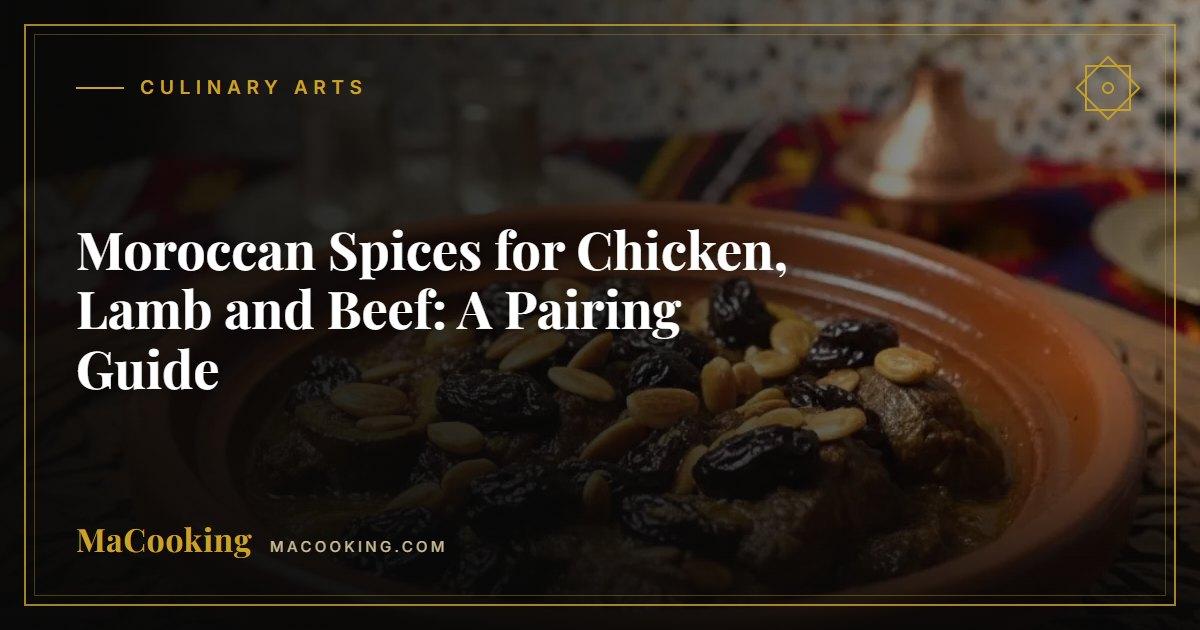
The best Moroccan spices for lamb are cumin, cinnamon, ginger, black pepper and saffron, often finished with ras el hanout. Chicken suits a gentler ginger, turmeric, saffron and herb mix, while beef takes bolder cumin, paprika and pepper. The skill is in matching spice intensity to the meat.
Key Takeaways
- Lamb loves warm, earthy, slightly sweet spices: cumin, cinnamon, ginger, saffron and ras el hanout.
- Chicken shines with a lighter base of ginger, turmeric, saffron, pepper and fresh herbs, plus preserved lemon or olives.
- Beef can carry the most assertive seasoning: cumin, paprika, black pepper and cinnamon, often with prunes or apricots.
- In a tagine, add the base spices early and the delicate aromatics (cinnamon sticks, honey, fresh herbs) later.
- Buy whole spices when possible, store them away from heat and light, and replace ground spices after roughly a year.
Moroccan cooking is often described as "heavily spiced," but that is misleading. A good tagine is balanced rather than hot: a handful of spices used with intent, softened by onions, oil, fruit and long, gentle cooking. This guide, part of our wider Moroccan Spices Guide: Ras el Hanout, Blends and How to Use Them, shows which spices suit which meat, in what proportions, and why.
What Are the Best Moroccan Spices for Lamb?
Lamb has a rich, slightly gamey flavor and plenty of fat, so it needs spices with warmth and backbone. In Moroccan kitchens, the usual lamb lineup looks like this:
- Cumin: earthy and savory, the classic partner for roasted and grilled lamb. It cuts through richness without sweetness.
- Cinnamon: used as a stick in the pot or ground in a rub, it gives lamb a gentle, perfumed sweetness, especially in dishes with dried fruit.
- Ginger and black pepper: the quiet foundation of many tagines. They add a clean, peppery heat that lifts heavier cuts.
- Saffron: a few threads, crumbled and steeped in warm water, give color and a honeyed, floral note.
- Paprika: sweet paprika adds color and mild fruitiness, particularly in grilled and roasted preparations.
- Ras el hanout: a blend whose recipe varies from shop to shop, usually warm, floral and complex. It works beautifully with lamb, but use it as a finishing accent rather than the only seasoning. For background on the blend, see the Wikipedia entry on ras el hanout.
A simple lamb tagine spice base
For about 2 pounds (900 g to 1 kg) of bone-in lamb shoulder or neck, cut into large pieces, try this as a starting point:
- 1 teaspoon ground ginger
- 1 teaspoon ground cumin
- ½ teaspoon ground black pepper
- ½ teaspoon ground turmeric
- A generous pinch of saffron, steeped in 2 tablespoons warm water
- 1 cinnamon stick
- 2 grated onions, 2 crushed garlic cloves, 3 tablespoons olive oil or a little butter
- About 1 teaspoon fine salt, adjusted at the end
Coat the lamb with the spices, onion, garlic and oil, let it sit for an hour if you can, then add just enough water to come partway up the meat and cook gently, covered, until tender. Bone-in shoulder usually needs roughly 1½ to 2½ hours at a bare simmer, depending on the size of the pieces. For a worked example with fruit and nuts, see our Lamb Tagine with Apricots and Almonds.
Lamb spicing styles: sweet versus savory
Moroccan lamb generally falls into two camps. The first is the sweet-spiced style, where cinnamon, ginger, saffron and honey meet prunes, apricots, raisins or almonds. The second is the savory style, where cumin, salt, paprika and garlic dominate, as in roasts, grills and the kind of roast that is cooked slowly until the meat pulls from the bone. If you are cooking for guests, the sweet style tends to feel celebratory, while the savory style is the better everyday choice.
Which Moroccan Spices Work Best for Beef?
Beef, particularly braising cuts such as chuck, shin or brisket, has a deeper, more mineral flavor than chicken and a leaner profile than lamb. It can stand up to the most forceful seasoning of the three meats. The core Moroccan spices for beef are:
- Cumin: the anchor spice. Beef and cumin are an old, reliable pairing, whether in a tagine or in minced-meat dishes like kefta.
- Paprika: adds color and a rounded, sweet-pepper depth. Use sweet paprika unless you specifically want heat.
- Black pepper: freshly ground, and more generously than you might expect.
- Cinnamon: a small amount, especially when the dish includes prunes or other dried fruit.
- Ginger and turmeric: a supporting duo that rounds out the sauce.
- Fresh cilantro and flat-leaf parsley: not spices, but essential for freshness, particularly in kefta and in tagines finished with herbs.
Beef pairs well with sweet-sour partners
Because beef is robust, it takes well to sweetness with a bit of acidity. Prunes, apricots and quince are the traditional choices, with a little honey and a spoonful of cinnamon to tie things together. Our Beef Tagine with Prunes is a good model. Tougher cuts need patience: expect around 2 to 2½ hours of gentle simmering for chuck cut into generous chunks, and check by tasting rather than watching the clock.
What Is the Best Moroccan Chicken Marinade?
A good Moroccan chicken marinade is built on ginger, turmeric, black pepper and saffron, bound with garlic, olive oil, a little lemon juice and plenty of fresh cilantro and parsley. Chicken is mild, so the goal is to season it thoroughly without burying it. Cumin and paprika are optional but common.
How to make Moroccan chicken: the basic marinade
This quantity suits about 3 pounds (1.4 kg) of chicken pieces, preferably bone-in thighs and drumsticks, which stay juicy through long cooking.
- Steep a generous pinch of saffron threads in 2 tablespoons of warm water for 10 minutes.
- In a bowl, mix 1 teaspoon ground ginger, 1 teaspoon ground turmeric, ½ teaspoon ground black pepper, ½ teaspoon ground cumin, 1 teaspoon sweet paprika and 1 teaspoon fine salt.
- Add 3 crushed garlic cloves, 3 tablespoons olive oil, 1 tablespoon lemon juice, 2 tablespoons each of chopped cilantro and parsley, and the saffron with its water.
- Rub the mixture over the chicken, working it under the skin where possible.
- Cover and refrigerate for 2 to 12 hours. Bring to room temperature before cooking.
The marinated chicken can go straight into a tagine with onions, or it can be roasted. A chicken tagine typically needs about 45 to 60 minutes of gentle cooking, until the thigh meat is tender and the juices run clear.
Choosing a style for your chicken
- Bright and savory: add preserved lemon and olives. Try our Chicken Tagine with Preserved Lemons.
- Earthy and savory: push the cumin forward and add olives, as in the Chicken Tagine with Cumin and Olives.
- Sweet and aromatic: add cinnamon, honey and raisins or almonds. For more on the heritage of the dish, read our feature on Moroccan chicken tagine, its flavor, tradition and artistry.
Moroccan Spice Pairing Chart: Lamb, Beef and Chicken Compared
This table summarizes the usual tendencies. Treat it as a map, not a rulebook, since families and regions vary widely.
| Meat | Lead spices | Supporting flavors | Classic partners | Approximate cooking time (stovetop tagine) |
|---|---|---|---|---|
| Lamb | Cumin, cinnamon, ginger, saffron | Black pepper, paprika, ras el hanout, garlic | Apricots, prunes, almonds, honey, raisins | 1½ to 2½ hours |
| Beef | Cumin, paprika, black pepper | Cinnamon, ginger, turmeric, cilantro | Prunes, apricots, quince, sesame seeds | 2 to 2½ hours |
| Chicken | Ginger, turmeric, saffron, black pepper | Cumin, paprika, garlic, parsley, cilantro | Preserved lemon, olives, raisins, onions | 45 to 60 minutes |
How Do You Use Moroccan Spices for Tagine?
The order in which you add spices matters nearly as much as which ones you choose. Here is a reliable sequence for most Moroccan spices for tagine cooking:
- Start with the base. Ginger, turmeric, black pepper and often cumin or paprika go in first, mixed with oil, grated onion and garlic and worked into the meat. Their flavors dissolve into the fat and form the foundation of the sauce.
- Add saffron early or in the water. Steeped saffron added with the cooking liquid distributes color and aroma evenly.
- Add cinnamon sticks with the liquid. They infuse slowly. Ground cinnamon is better added later, in small amounts, because it can become dusty or bitter if over-cooked.
- Add fruit, honey and fresh herbs near the end. Dried fruit needs only the last 20 to 30 minutes to soften, and herbs keep their color and perfume if added in the final stretch.
- Taste and adjust at the end. Salt, a squeeze of lemon, a pinch of cumin or a few turns of black pepper can balance a finished sauce.
Heat control is the other half of the equation. Keep the heat low, with a diffuser if you are using a clay tagine, so the sauce reduces slowly and the meat steams more than it boils. Our guide to the science of Moroccan tagine and why slow cooking creates perfect flavors explains why this gentle approach works so well.
Common Mistakes and Easy Substitutions for Western Kitchens
Mistakes to avoid
- Too much ras el hanout. It is a perfumed blend, not a general-purpose curry powder. Start with ½ to 1 teaspoon per pound (450 g) of meat.
- Burning ground spices. Ground cumin, paprika and turmeric scorch quickly in dry, hot oil. Add them with onions or liquid, not to an empty smoking pan.
- Using stale spices. Old ground spices taste flat and dusty. If a jar has no aroma when you open it, replace it.
- Salting only at the start. As the sauce reduces, salt concentrates. Season lightly early on and finish at the end.
- Boiling instead of simmering. A hard boil toughens the meat and can make the sauce taste muddy.
Substitutions that work
- No ras el hanout? Mix equal parts ground cumin, coriander, ginger and cinnamon with a smaller amount of turmeric, black pepper and a pinch of ground cloves or allspice. It will not match a good shop blend, but it is a serviceable stand-in.
- No saffron? Leave it out, or add a little extra turmeric for color. The flavor will differ, but the dish will still be good.
- No smen (aged preserved butter)? Use a knob of regular butter or ghee for richness. It will not have smen's pungency, but it adds comparable body.
- No preserved lemons? Use the zest of one fresh lemon and a squeeze of juice, added near the end, as a rough substitute. The salty, fermented depth will be missing.
How Should You Buy and Store Moroccan Spices?
Buy the freshest spices you can, in small quantities, from a shop with high turnover. Whole cumin seeds, peppercorns and cinnamon sticks hold their flavor much longer than pre-ground versions. Toast whole seeds gently in a dry pan for a minute or two, until fragrant, then grind them in a spice grinder or mortar. Store everything in airtight jars, away from the stove, sunlight and humidity.
When you are buying ras el hanout, check the label for added salt, fillers or very long lists you cannot identify, and smell it if possible. It should smell warm, floral and layered rather than harsh or dusty. Basic tagine staples, such as clay pots and spice grinders, are collected in our Moroccan kitchen essentials shop.
If you would like to go deeper, the ebook The Royal Moroccan Table: The Soul of Morocco includes a premium chapter titled "The Eight Essential Spices" inside the full ebook, and you can start with the free Foreword to get a feel for the writing.
Planning Your Spice Shopping Around the Recipes
You do not need dozens of jars. A compact Moroccan spice kit covers nearly every dish in this guide: ground ginger, turmeric, cumin, sweet paprika, black pepper, cinnamon sticks, a small amount of saffron, and a good ras el hanout. Add fresh cilantro, parsley, garlic, onions and lemons, and you can cook lamb, beef and chicken in several styles. Once the pantry is ready, browse our full collection of Moroccan recipes and pick a dish to match the meat you have on hand.
Frequently Asked Questions
What is the most important Moroccan spice for lamb?
Cumin is the most dependable partner for lamb, especially for roasts and grills, where it is often paired with salt, paprika and garlic. For slow-cooked tagines, cinnamon, ginger, saffron and black pepper build the sauce, and ras el hanout adds a complex, perfumed finish.
Can I use ras el hanout on chicken?
Yes, but use it with restraint. Ras el hanout is a multi-spice blend that can overpower delicate chicken, so start with half a teaspoon per pound (about 450 g) and combine it with ginger, turmeric and garlic. It suits dishes with raisins, almonds or honey better than lemon and olive tagines.
How long should I marinate chicken in a Moroccan marinade?
Two to twelve hours in the refrigerator works well. Two hours gives a gentle flavor, while overnight gives deeper seasoning. If your marinade contains a lot of lemon juice, keep it closer to the shorter end, because acid can make the surface of the chicken pasty.
What spices go into a Moroccan beef tagine?
A typical beef tagine uses cumin, paprika, black pepper, ginger, turmeric and cinnamon, plus onions, garlic and fresh cilantro or parsley. Beef can handle bolder seasoning than chicken, and it pairs well with sweet-sour partners such as prunes, apricots or quince.
When should I add spices to a tagine?
Add the base spices (ginger, turmeric, pepper, saffron, and usually cumin or paprika) at the start, so they coat the meat and bloom in the oil and onions. Add cinnamon sticks, honey, dried fruit and fresh herbs later, so their aromas stay bright and nothing turns bitter or sticky.
What can I substitute if I cannot find Moroccan spices?
For ras el hanout, mix cumin, coriander, ginger, cinnamon, turmeric, black pepper and a pinch of cloves or allspice. Smoked paprika can stand in for sweet paprika in a pinch, though it changes the flavor. Saffron has no true substitute, so omit it rather than use a stand-in.
Conclusion: Match the Spice to the Meat
The logic of Moroccan seasoning is simple once you see it. Lamb wants warmth and a touch of sweetness, beef wants depth and pepper, and chicken wants a light, fragrant base that lets lemon, olives or fruit take center stage. Start with the ratios above, taste as you go, and adjust to your own palate. If you want a confident first step, cook the Chicken Tagine with Olives and see how a few well-chosen spices transform a simple pot of chicken.