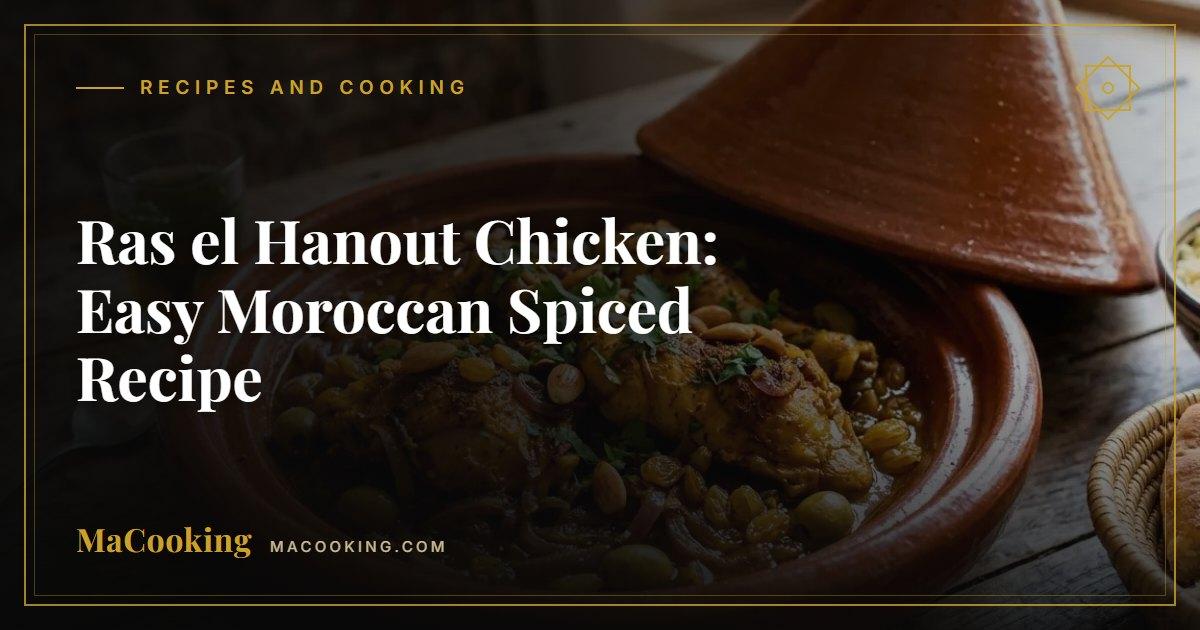
Ras el hanout chicken is bone-in chicken thighs rubbed with Morocco's signature spice blend, seared until golden, then braised with onion, garlic, honey and olives until the sauce turns glossy. Marinate for an hour, simmer about 40 minutes, and you get tender, fragrant chicken that tastes layered, warm and gently sweet rather than hot.
Key Takeaways
- Bone-in, skin-on thighs give the best texture and the richest sauce for ras el hanout chicken.
- Use about 2 teaspoons of ras el hanout per pound (450 g) of chicken, and add half of it as a rub and half to the onions.
- Sear first, then braise gently. A hard boil toughens the meat and turns the spices bitter.
- No blend in the cupboard? A mix of common spices makes a workable ras el hanout substitute.
- The dish keeps for 3 days in the fridge and freezes well, so it suits meal prep.
What Is Ras El Hanout Chicken?
Ras el hanout translates roughly as "head of the shop", meaning the best blend a spice seller could assemble. Every merchant has a different formula. Most include cumin, coriander, ginger, cinnamon, turmeric, black pepper and paprika. Many add cardamom, cloves, nutmeg, mace, allspice, dried rose petals or lavender. If you want the background, the Wikipedia entry on ras el hanout gives a good overview.
In Moroccan kitchens, ras el hanout is more often used in rich braises, tagines, rice dishes and stuffings than as a dry rub for the grill. That makes it a natural fit for chicken. The meat is mild enough to carry the perfume of the blend, and the long, gentle cooking lets the spices bloom in fat and dissolve into the sauce.
This recipe is a home-kitchen version. It borrows the logic of a Moroccan chicken stew (spices, onions, a little sweetness, something briny) but cooks in a single wide pan, no tagine pot needed. If you want a more traditional route, try the Djaj Mqualli preserved lemon chicken stew, which uses a different spice profile built around ginger, saffron and turmeric.
What Ingredients Do You Need for Moroccan Chicken Thighs?
This serves four generously. Everything is available in a well-stocked supermarket, apart from the spice blend, which you can buy or make (see below).
For the chicken
- 8 bone-in, skin-on chicken thighs (about 1.5 kg / 3.3 lb)
- 2 tablespoons ras el hanout
- 1 teaspoon fine sea salt (check your blend first; some contain salt)
- ½ teaspoon ground ginger
- ½ teaspoon ground turmeric
- 3 garlic cloves, grated
- 2 tablespoons olive oil, plus 1 tablespoon for searing
- 1 tablespoon lemon juice
For the sauce
- 2 large onions (about 400 g), halved and thinly sliced
- 1 teaspoon ras el hanout (kept back from the rub)
- 1 cinnamon stick
- Small pinch of saffron threads, soaked in 2 tablespoons warm water (optional)
- 250 ml (1 cup) chicken stock or water
- 1 tablespoon honey
- 100 g (about ⅔ cup) green olives, rinsed
- ½ preserved lemon, rind only, rinsed and sliced (optional)
- A small handful of chopped fresh coriander (cilantro) and flat-leaf parsley
How Do You Make Ras El Hanout Chicken?
- Marinate (1 hour to overnight). Pat the thighs very dry. Mix 2 tablespoons ras el hanout, the salt, ginger, turmeric, garlic, 2 tablespoons olive oil and the lemon juice into a paste. Rub it under and over the skin. Cover and refrigerate for at least 1 hour; overnight is better. Take the chicken out 20 minutes before cooking.
- Sear (8 to 10 minutes). Heat 1 tablespoon oil in a wide, lidded sauté pan or Dutch oven over medium-high heat. Place the thighs skin-side down without crowding (work in two batches if needed). Cook until the skin is deep golden and releases easily, about 6 to 8 minutes, then give the other side 2 minutes. Remove to a plate. The meat will not be cooked through yet.
- Soften the onions (8 minutes). Pour off all but about 2 tablespoons of fat. Lower the heat to medium, add the onions and a pinch of salt, and cook, stirring often, until soft and lightly golden. Stir in the reserved teaspoon of ras el hanout, the cinnamon stick and the saffron with its soaking water. Scrape up the browned bits from the pan.
- Braise (35 to 40 minutes). Add the stock and honey and bring to a bare simmer. Return the chicken, skin-side up, nestling it into the onions so the skin stays above the liquid. Cover and cook on low for 30 minutes.
- Finish (10 minutes). Add the olives and preserved lemon. Uncover and simmer for another 8 to 10 minutes, until the sauce is thick enough to coat a spoon. The chicken should reach at least 74°C (165°F) in the thickest part. Thighs are happiest closer to 85°C (185°F), where the connective tissue has softened.
- Rest and serve. Remove the cinnamon stick. Taste the sauce and adjust with salt or a squeeze of lemon. Scatter the herbs over the top.
Which Method Works Best: Stovetop, Oven or Slow Cooker?
The stovetop braise above gives you the most control over the sauce. The other methods all work, with small trade-offs.
| Method | Temperature / setting | Approx. time | Best for |
|---|---|---|---|
| Stovetop braise | Low simmer, lid on, then off | 40 to 50 min | Glossy, reduced sauce |
| Oven braise | 180°C / 350°F, covered, then uncovered | 45 to 55 min | Hands-off cooking, crisper skin |
| Sheet-pan roast | 220°C / 425°F, skin-side up | 35 to 45 min | Less sauce, more roasted flavour |
| Slow cooker | Low (sear first) | About 4 to 5 hours | Very soft meat, less crisp skin |
If you prefer a drier, roasted bird, our Moroccan-style roasted chicken (Djej Mhammar) uses a similar spice-forward approach in the oven.
What Can You Use as a Ras El Hanout Substitute?
Ideally you want a fresh, fragrant blend from a shop that sells spices by weight. If you can't find one, this mix gets you close. The measurements below make about 2 tablespoons, enough for this recipe's rub and sauce.
| Spice | Amount | What it contributes |
|---|---|---|
| Ground cumin | 2 tsp | Earthy backbone |
| Ground coriander | 2 tsp | Citrusy sweetness |
| Ground ginger | 2 tsp | Warm, peppery bite |
| Ground cinnamon | 1 tsp | Sweet perfume |
| Turmeric | 1 tsp | Colour, mild bitterness |
| Sweet paprika | 1 tsp | Colour, gentle sweetness |
| Black pepper | ½ tsp | Heat |
| Allspice | ½ tsp | Clove-nutmeg warmth |
| Ground cardamom | ¼ tsp | Floral, resinous note |
| Cayenne | ¼ tsp | Optional kick |
| Ground cloves | ⅛ tsp | Depth (go easy) |
This will taste good, but it won't have the complexity of a blend with twenty or thirty ingredients. For the full story of how those blends are built, read our piece on Moroccan ras el hanout and the many spices it can contain. If you'd like to see a long formula in detail, the free chapter "Ras el Hanout — The Complete 30-Spice Formula" can be read online at no cost. It belongs to the ebook The Royal Moroccan Table — Part 2: The Art of Spice.
Which Other Moroccan Spices for Chicken Pair With Ras El Hanout?
Ras el hanout is already a blend, so you rarely need much more. A few supporting players, however, sharpen the result:
- Ginger and turmeric. Classic in Moroccan chicken. They add earthiness and colour and round off the sweeter notes in the blend.
- Saffron. A pinch, soaked first, adds a honeyed, floral aroma. It's optional but lovely.
- Cumin. If your blend is mild, a half teaspoon of freshly toasted, ground cumin helps. It pairs especially well with olives, as in our chicken tagine with cumin and olives.
- Preserved lemon. Its salty, fermented brightness cuts through rich thighs and sweet spices.
- Fresh coriander and parsley. Stir them in at the end, not the start, to keep their colour and flavour.
To compare ras el hanout with chermoula, baharat-style mixes and other regional blends, see the complete guide to Moroccan spice blends. For the wider picture, start with our ultimate guide to Moroccan spices.
What Mistakes Should You Avoid?
- Burning the spices. Ground spices scorch quickly in hot oil. That's why the rub goes on the chicken and the extra teaspoon goes into the softened onions, with liquid close behind.
- Skipping the dry-off. Wet skin steams rather than browns. Pat the thighs thoroughly before and after marinating.
- Boiling instead of simmering. A vigorous boil tightens the meat and can make the sauce taste harsh. You want a bubble or two at the edge of the pan.
- Drowning the skin. Keep the thighs skin-side up and mostly above the liquid so the skin doesn't turn flabby.
- Using stale spices. Ground spices fade. If your ras el hanout has lost its smell, the dish will taste flat, however much you add. Buy small amounts and store them in a sealed jar away from heat and light.
- Over-salting. Olives and preserved lemon bring plenty of salt. Taste before the final adjustment, and rinse both well.
What Should You Serve With Ras El Hanout Chicken?
You want something to catch the sauce. Good choices:
- Fluffy couscous, tossed with a little butter or olive oil
- Warm flatbread, khobz or crusty bread for mopping
- Basmati rice with toasted almonds
- Roasted carrots or a simple tomato and cucumber salad with lemon and mint
- Steamed green beans or wilted spinach with garlic
For a festive spread, the sweet-savoury chicken pastilla works well beside it, though it's a more involved project. For everyday cooking, keep it simple: one pan, one starch, one salad.
How Do You Store and Reheat It?
Let the chicken cool for no more than an hour, then refrigerate it in a covered container. It keeps for up to 3 days. For longer storage, freeze it with its sauce for up to 3 months and thaw it overnight in the fridge.
Reheat in a covered pan over low heat with a splash of water or stock, turning the pieces once, until piping hot in the centre. A microwave works in a pinch, but the sauce reheats more evenly on the hob. The flavours deepen overnight, which makes this a good make-ahead dish for guests.
Can You Adapt the Recipe?
- Sweeter and fruitier: Replace the olives with 60 g (⅓ cup) of raisins or chopped dried apricots and finish with toasted almonds. For a more traditional version of that idea, see chicken tagine with raisins and spices.
- Brighter: Add the juice of half an orange along with the stock.
- With vegetables: Add 2 sliced carrots and 1 diced sweet potato with the stock. Allow 10 extra minutes.
- Spicier: Stir in ½ teaspoon of harissa or a pinch of cayenne near the end.
- Chicken pieces: Drumsticks work with the same timings. Boneless thighs need only 20 to 25 minutes of braising.
If you're stocking up for Moroccan cooking more regularly, our Moroccan pantry checklist for home cooks lists the staples worth keeping on hand.
Frequently Asked Questions
What does ras el hanout chicken taste like?
It tastes warm, aromatic and layered rather than hot. Cumin, coriander and ginger give earthiness, cinnamon and honey add gentle sweetness, and pepper brings a quiet heat. Olives and lemon juice lift the finished sauce, so the chicken feels rich but still bright.
Can I use chicken breast instead of thighs?
Yes, but breast dries out easily. Sear it, then simmer gently for only 15 to 20 minutes, until it reaches 74°C (165°F) inside. Thighs are more forgiving and give a richer sauce because the bones and skin release flavour and gelatine while cooking.
How much ras el hanout should I use per pound of chicken?
A good starting point is about 2 teaspoons per pound (450 g) of chicken, which equals 2 tablespoons for 1.5 kg of thighs. Blends vary in strength, so taste your spice first. Use less with a very pungent blend and a little more with a mild one.
What can I use if I don't have ras el hanout?
Mix cumin, coriander, ginger, cinnamon, turmeric, paprika, black pepper, allspice, cardamom, cloves and a pinch of cayenne. It won't have the full complexity of a good shop blend, but it gives a convincing Moroccan flavour for chicken. The quantities are in the table above.
Can I make ras el hanout chicken ahead of time?
Yes. The flavour improves after a night in the fridge. Store it covered for up to 3 days, or freeze for up to 3 months. Reheat gently in a covered pan with a splash of water or stock so the chicken stays tender and the sauce doesn't catch.
Is ras el hanout chicken spicy?
Not usually. Ras el hanout is fragrant rather than fiery, though some blends include a little chilli or a lot of black pepper. If you want more heat, add a pinch of cayenne or a spoonful of harissa at the end instead of changing the base recipe.
Final Thoughts on Ras El Hanout Chicken
Ras el hanout chicken proves that a single, well-chosen spice blend can carry a whole dinner. Sear the thighs properly, keep the braise gentle, and let the honey, olives and lemon do their balancing work. The result is a dish that feels special enough for guests and easy enough for a Tuesday. Once you've made it, explore more ideas in our collection of Moroccan recipes, and see how far one jar of spice can go.