
20
Prep (min)
45
Cook (min)
4
Servings
Medium
Level
Introduction
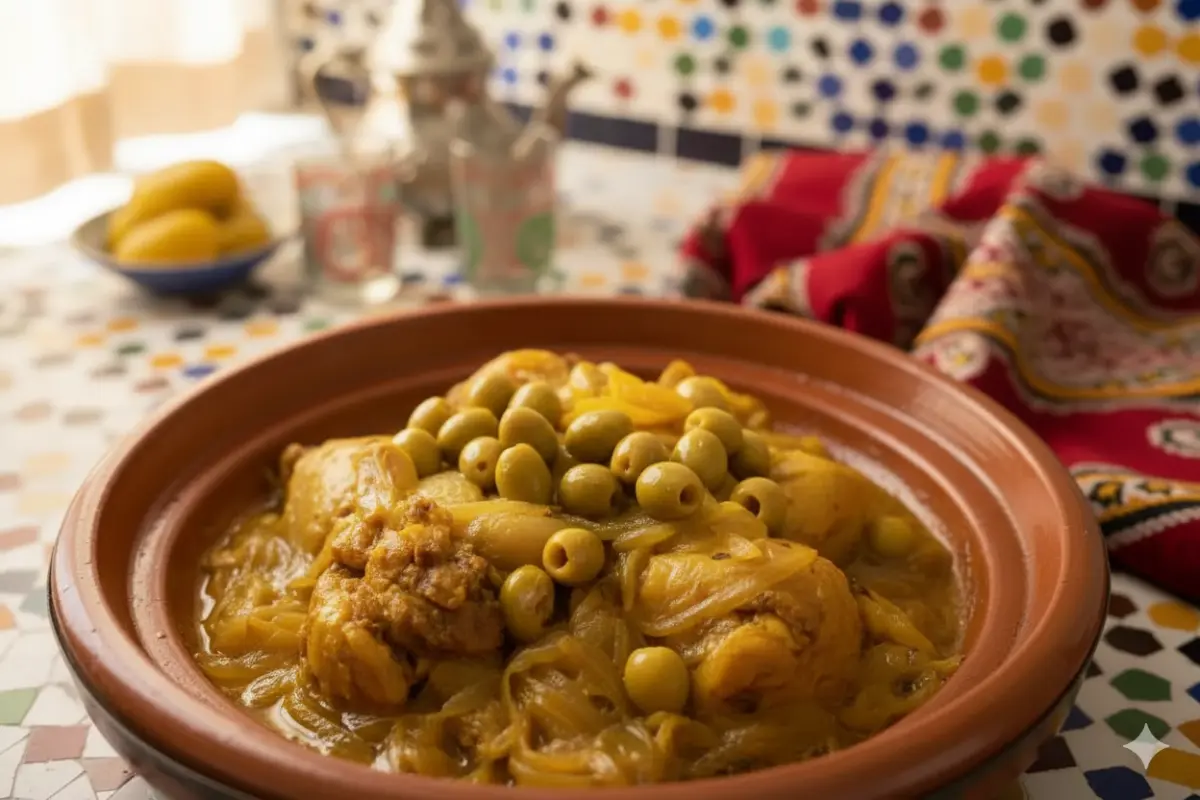
Tagine Chicken with Olives stands as one of Morocco's most celebrated culinary treasures, embodying centuries of cooking tradition from the imperial city of Fez. This iconic dish showcases the sophisticated balance of flavors that defines Moroccan cuisine: the brightness of preserved lemons, the briny depth of green olives, and the warmth of aromatic spices working in perfect harmony.
The name 'tagine' refers both to the distinctive conical earthenware pot and the slow-cooked stew prepared within it. This cooking method, passed down through generations of Moroccan families, creates incredibly tender chicken infused with complex layers of flavor. The high, cone-shaped lid of the traditional tagine pot allows steam to circulate continuously, condensing and dripping back onto the ingredients below, ensuring the meat stays moist while concentrating the flavors.
What makes this recipe particularly special is its accessibility combined with its impressive results. While the ingredient list might seem exotic to some, the cooking technique is straightforward and forgiving. The slow, gentle cooking process means the flavors develop naturally, making it difficult to overcook. Whether you are new to Moroccan cooking or a seasoned enthusiast, this tagine offers an authentic taste of North African hospitality that will transport your dinner table to the bustling souks and fragrant kitchens of Morocco.
About This Recipe
This classic Moroccan tagine originates from Fez, one of Morocco's four imperial cities and the spiritual heart of Moroccan culinary tradition. For centuries, Fassi cooks have perfected the art of tagine cooking, developing recipes that showcase the sophisticated balance of savory, sweet, and tangy flavors that define Moroccan cuisine. The combination of chicken with preserved lemons and olives represents one of the most beloved and iconic preparations in the Moroccan culinary repertoire. Traditionally prepared for Friday family gatherings and special occasions, this dish embodies the warmth of Moroccan hospitality and the rich cultural heritage passed down through generations of home cooks and professional chefs alike.
Nutrition / serving
Recipe Tags
Understanding the Ingredients
Whole Chicken
The foundation of this dish requires a quality whole chicken, ideally around three pounds. Using a whole chicken that you cut into pieces ensures you get a variety of cuts with different textures and flavors. The bones add richness to the sauce, while dark and white meat offer variety. Free-range or organic chicken will provide superior flavor, though standard chicken works perfectly well. The key is ensuring the pieces are roughly equal in size for even cooking.
Green Olives
Green olives are essential to authentic Moroccan tagines, providing a distinctive briny, slightly bitter note that balances the rich meat and sweet spices. Moroccan cooks traditionally use cracked green olives preserved in brine, which have a firmer texture and more pronounced flavor than canned varieties. If possible, choose olives from a Mediterranean market or deli counter. The olives should be pitted for easier eating, and rinsing them briefly can reduce excessive saltiness while maintaining their characteristic tang.
Preserved Lemons
Preserved lemons are the secret ingredient that elevates this tagine from good to extraordinary. These lemons, cured in salt and their own juices for weeks, develop a unique flavor that is simultaneously tangy, salty, and floral with none of the harsh acidity of fresh lemons. Only the peel is typically used, as it becomes soft and edible during preservation. The pulp can be discarded or added in small amounts. Homemade preserved lemons are ideal, but quality jarred versions from Middle Eastern or specialty stores work wonderfully. There is truly no perfect substitute, though a combination of fresh lemon zest and juice can approximate the citrus element in a pinch.
Onions and Aromatics
Large yellow onions form the aromatic base of the tagine sauce, breaking down during cooking to create a silky, flavorful foundation. Fresh garlic and ginger add pungent, warm notes that are essential to Moroccan cooking. Fresh ginger is strongly preferred over dried, as it provides a bright, clean heat that complements rather than overwhelms the other spices. Together, these aromatics create the flavor backbone that supports the more delicate spice notes.
Spice Blend
The spice combination in this tagine represents classic Moroccan flavor profiles. Ground cinnamon adds warmth and subtle sweetness without making the dish taste like dessert. Ground ginger reinforces the fresh ginger with a more concentrated, slightly sharper heat. Turmeric contributes earthy depth and a beautiful golden color. Saffron threads, though expensive, are worth the investment for their unique floral aroma and the luxurious golden hue they impart. These spices work together to create the complex, layered flavors that make Moroccan cuisine so distinctive. Using freshly ground spices whenever possible ensures maximum flavor potency.
Fresh Herbs
Fresh cilantro and parsley are not mere garnishes but integral flavor components in Moroccan cooking. They are added both during cooking and as a fresh finishing touch. The herbs brighten the rich sauce and add a fresh, green element that balances the heavier flavors. Cilantro provides a distinctive, slightly citrusy note, while flat-leaf parsley adds a clean, grassy freshness. Always use fresh herbs rather than dried for this application, as dried herbs cannot replicate the vibrant flavor fresh herbs provide.
Step-by-Step Cooking Guide
Prepare and Season the Chicken
5 minBegin by cutting your whole chicken into eight pieces: two breasts, two thighs, two drumsticks, and two wings. If you are not comfortable breaking down a whole chicken, ask your butcher to do this for you. Once cut, pat each piece thoroughly dry with paper towels. This step is crucial because moisture on the surface will prevent proper browning. Season all sides of the chicken pieces generously with salt and freshly ground black pepper. Allow the seasoned chicken to rest at room temperature for 15 to 20 minutes while you prepare other ingredients. This resting period allows the seasoning to penetrate the meat and brings the chicken to room temperature, which promotes even cooking.
Tip: Do not skip the drying step, as dry skin browns much better than wet skin. If time permits, season the chicken up to two hours ahead and refrigerate uncovered to further dry the skin.
Prepare Your Aromatics and Special Ingredients
10 minFinely chop your two large onions into small, uniform pieces to ensure they break down smoothly during cooking. Mince the four garlic cloves and grate or finely mince the fresh ginger. For the preserved lemons, rinse them under cold water to remove excess salt from the brine, then quarter them. Remove and discard the pulp if desired, keeping only the flavorful peel. If using whole olives, pit them now. Chop the fresh cilantro and parsley, keeping them separate. Prepare all these ingredients before you begin cooking, as the cooking process moves quickly once started.
Tip: Mise en place is essential for tagine cooking. Having everything prepped and ready prevents burning or overcooking while you scramble to prepare ingredients.
Brown the Chicken Pieces
8 minHeat three tablespoons of olive oil in your tagine base or a large, heavy-bottomed pot over medium-high heat. Once the oil shimmers and moves easily across the pan, carefully add the chicken pieces skin-side down, working in batches if necessary to avoid crowding. Do not move the chicken for at least three to four minutes, allowing a golden-brown crust to form. Turn each piece and brown the other side for an additional three to four minutes. The chicken does not need to cook through at this stage; you are simply developing flavor and color. Transfer the browned chicken to a plate and set aside.
Tip: Resist the urge to move the chicken too soon. Let it develop a proper crust before turning. If the chicken sticks, it is not ready to flip yet. A proper sear creates fond on the bottom of the pot, which will add tremendous flavor to your sauce.
Build the Aromatic Foundation
6 minReduce the heat to medium and add your chopped onions to the same pot, using the residual oil and fond. Sauté the onions, stirring occasionally, for about four minutes until they soften and become translucent. Add the minced garlic and fresh ginger, stirring constantly for about one minute until wonderfully fragrant. Now add your spice blend: the ground cinnamon, ground ginger, turmeric, and saffron threads. Stir constantly for 30 to 60 seconds until the spices become aromatic and coat the onions. This process, called blooming the spices, awakens their essential oils and deepens their flavors significantly.
Tip: Watch the heat carefully during this step. Spices can burn quickly, turning bitter. If they start to stick, add a splash of water. The spices should smell toasted and fragrant, not acrid or burnt.
Combine and Begin the Slow Cook
25 minReturn the browned chicken pieces to the pot, nestling them into the aromatic onion and spice mixture. Add the quartered preserved lemons, distributing them evenly around and over the chicken. Pour in approximately one and a half cups of water or chicken stock, enough to come about halfway up the chicken pieces. Bring the liquid to a gentle simmer, then reduce the heat to low. If using a traditional tagine, place the conical lid on top. If using a regular pot, cover tightly with a lid. Allow the tagine to simmer gently for 25 minutes, checking occasionally to ensure the liquid maintains a gentle bubble. During this time, the chicken will become tender and the flavors will meld beautifully.
Tip: The liquid should never boil vigorously, only simmer gently. Vigorous boiling will toughen the chicken. If the liquid reduces too quickly, add small amounts of water as needed. Conversely, if there seems to be too much liquid, you can leave the lid slightly ajar.
Add Finishing Touches
10 minAfter the initial cooking time, carefully add the green olives and half of your chopped herbs to the pot. Gently stir to incorporate them without breaking up the tender chicken. Continue cooking for an additional ten minutes, uncovered or with the lid askew, until the olives are heated through and the sauce has thickened slightly. The chicken should be fall-off-the-bone tender at this point. Taste the sauce and adjust seasoning with salt if needed, though the olives and preserved lemons often provide sufficient saltiness. Before serving, garnish with the remaining fresh herbs for a pop of color and fresh flavor.
Tip: Olives are added near the end because extended cooking can make them overly soft and bitter. The final cooking period also allows excess liquid to reduce, concentrating the flavors.
Common Mistakes to Avoid
✗ Using Too High Heat
Fix: Tagines require patience and gentle heat. High temperatures will cause the chicken to toughen and the sauce to reduce too quickly. Always maintain a gentle simmer rather than a rolling boil.
✗ Skipping the Browning Step
Fix: While it might seem tempting to skip browning and just throw everything in the pot, this step is crucial for developing deep, complex flavors. The caramelization creates fond that becomes the foundation of your sauce.
✗ Adding Too Much Liquid
Fix: Unlike a soup, a tagine should have a concentrated, thick sauce. Start with less liquid than you think you need. You can always add more during cooking, but reducing excess liquid takes time and can overcook your chicken.
✗ Using Old or Stale Spices
Fix: Spices lose potency over time. Using old spices results in a flat, lackluster tagine. Check the dates on your spice jars and replace any that are over a year old for the best flavor.
✗ Overcrowding the Pot During Browning
Fix: Placing too many chicken pieces in the pot at once lowers the temperature and causes steaming rather than browning. Work in batches if necessary to ensure each piece develops a proper golden crust.
Ingredient Substitutions
Instead of: Whole Chicken
Use: Chicken thighs only or a mix of thighs and drumsticks. Dark meat is more forgiving than white meat and stays moist during the long cooking time. You can also use bone-in, skin-on chicken breasts, but watch the cooking time carefully to prevent drying.
Instead of: Preserved Lemons
Use: While nothing truly replicates preserved lemons, you can approximate the flavor by using fresh lemon zest combined with a small amount of lemon juice and an extra pinch of salt. Add these during the last ten minutes of cooking rather than at the beginning.
Instead of: Green Olives
Use: Purple or Kalamata olives can work, though they will give a different flavor profile. Avoid black canned olives, as they lack the robust flavor needed for this dish.
Instead of: Saffron
Use: A small pinch of turmeric can provide color but not the distinctive flavor. Alternatively, omit it entirely rather than using artificial saffron coloring.
Instead of: Fresh Ginger
Use: In a pinch, use one-quarter teaspoon of ground ginger for every inch of fresh ginger called for, though fresh is strongly preferred for its bright, clean flavor.
Serving Suggestions
Serve your chicken tagine traditionally over a bed of fluffy couscous, which soaks up the delicious sauce beautifully. Steam the couscous with a pat of butter and a pinch of salt for the most authentic preparation.
Crusty bread is another classic accompaniment, perfect for mopping up every last drop of the flavorful sauce. Moroccan khobz or French baguette both work wonderfully.
For a complete Moroccan meal, begin with a simple tomato and cucumber salad dressed with lemon juice and olive oil. The fresh, crisp vegetables provide a refreshing contrast to the rich tagine.
Garnish the finished tagine with toasted slivered almonds for added texture and a subtle nutty flavor that complements the dish beautifully.
Serve with Moroccan mint tea after the meal for an authentic finishing touch that aids digestion and provides a sweet, refreshing conclusion to your feast.
Storage & Reheating
Storage
Allow the tagine to cool completely before transferring to an airtight container. Store in the refrigerator for up to three days. The flavors actually improve overnight as they continue to meld, making this an excellent make-ahead dish. For longer storage, freeze the tagine in portion-sized containers for up to three months. Freeze the sauce and chicken together for best results.
Reheating
Reheat gently on the stovetop over low heat, adding a splash of water or chicken broth if the sauce has thickened too much. Stir occasionally and heat until warmed through, about ten to fifteen minutes from refrigerated. If reheating from frozen, thaw overnight in the refrigerator first, then reheat as directed. Avoid using high heat, which can dry out the chicken. You can also reheat individual portions in the microwave, covered, stirring halfway through.
The preserved lemons and olives may become slightly saltier after storage. Taste before serving and balance with a squeeze of fresh lemon juice if needed. Fresh herbs should be added just before serving rather than being stored with the dish.
Frequently Asked Questions
Recipe by

Fatima El Amrani
فاطمة العمراني
Master Chef
View all recipes by Fatima →
You May Also Like
Our Ebooks

The Moroccan Vegan
$12.56
The Royal Moroccan Table — Part 1
$9.99

The Royal Moroccan Table — Part 2
$9.99
YouTube
Watch step-by-step cooking videos and learn traditional Moroccan techniques.
450+
Subscribers
150+
Videos