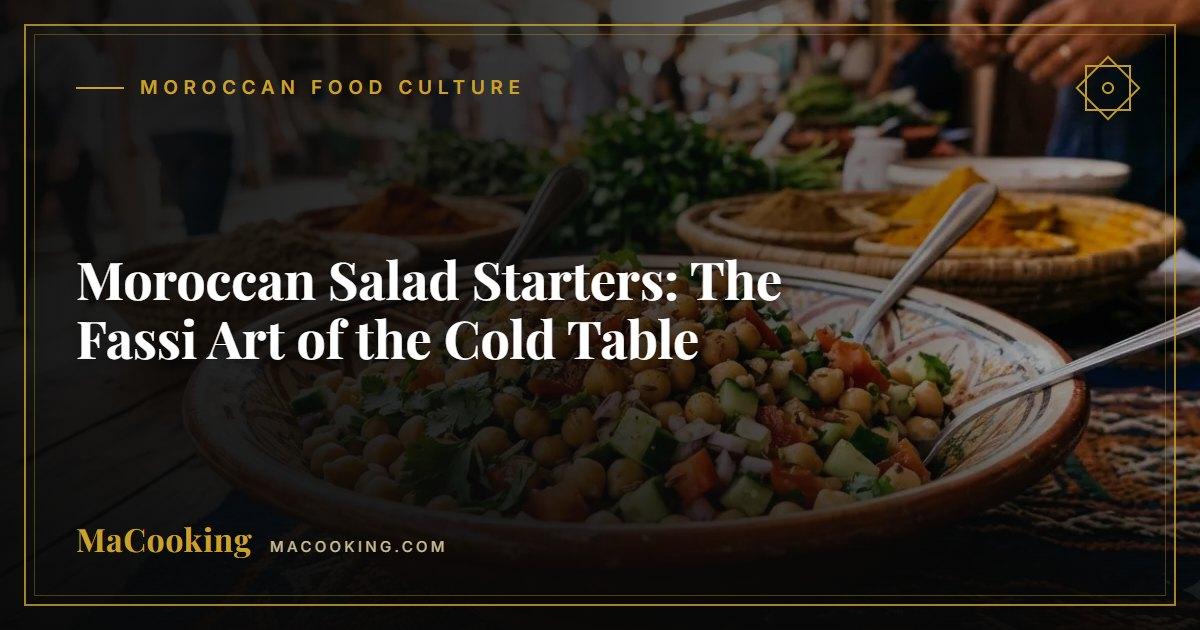
A Moroccan salad with chickpeas is a simple, room-temperature starter of tender chickpeas dressed with olive oil, lemon, cumin, paprika, garlic and fresh cilantro or parsley. It belongs to the small cooked and raw salads that open a Moroccan meal, and it takes about 15 minutes with canned chickpeas.
Key Takeaways
- A Moroccan meal often opens with several small salads served together, scooped up with bread, not one large salad bowl.
- Moroccan salads fall into two families: fresh raw salads and "cooked" salads, which are simmered or fried with oil and spices.
- Cumin, paprika, lemon, garlic, olive oil and fresh herbs flavor most of them, so a small pantry goes a long way.
- Warm the chickpeas before dressing them and the spices will cling to them instead of sitting in the bowl.
- A cold table of four or five salads is one of the easiest ways to serve a vegetarian Moroccan meal.
What is a Moroccan salad starter, and how does a cold table work?
If you picture a Western side salad of lettuce and vinaigrette, set that image aside. In Morocco, "salad" (slata) usually means a small dish of vegetables or legumes chopped, grated, mashed or slowly cooked, then seasoned with spices, lemon or vinegar and olive oil. Several arrive at once in little plates in the middle of the table. Everyone tears off pieces of khobz, the round everyday bread, and eats from the shared dishes.
The cold table is that spread. It might include a bright tomato and cucumber salad, grated carrots with cumin and orange, a dark smoky eggplant dip, a pepper and tomato salad, beets and a bowl of dressed chickpeas. Nothing is meant to be eaten in a hurry. The plates are there to wake up the appetite, give the table color and let guests settle in before the tagine or couscous arrives.
Two practical ideas sit behind the style. Most of these dishes can be made ahead, which suits hospitality, and they are served at room temperature, so the cook is not juggling hot and cold timings at the last minute. Our wider guide, 15 Moroccan Salads: Complete Guide to Cooked & Fresh, walks through the full repertoire if you want to see how many variations exist.
What makes the Fassi approach to the cold table special?
Fez is widely regarded as one of Morocco's great culinary centers, and Fassi cooking has a reputation for refinement, patience and balance. You can read about the city itself on Wikipedia's page on Fez. In the kitchens associated with Fassi tradition, the opening dishes are treated as seriously as the main course. The point is to begin the meal with contrast: sweet and sharp, smoky and fresh, soft and crisp.
You do not need a palace kitchen to borrow the logic. Fassi-style thinking comes down to a few habits:
- Balance across the plates. If one salad is rich and cooked, pair it with something raw and acidic.
- Fine cutting. Onions are sliced thinly, herbs chopped finely, tomatoes seeded and diced neatly, so each bite feels even.
- Restraint with spice. Cumin and paprika are used to support the vegetables, not to bury them. Heat, when it appears, is a pinch of cayenne or a spoon of harissa on the side.
- Presentation with care. A scatter of herbs, a few olives or a dusting of paprika on the surface is typical.
The ebook Tables of Fez: A Royal Palace Legacy explores this tradition in depth. Inside the full ebook you will find the chapter "The Salad Table: Cold Dishes and the Fassi Art of Beginning," which is the natural next step once you want to go beyond a single recipe.
Which ingredients define Moroccan salads?
One of the pleasures of Moroccan salads is how short the ingredient list is. If you cook Moroccan food even occasionally, you probably own most of what you need. This table shows the core Moroccan salad ingredients, what each one does and what you can use if your local store does not carry it.
| Ingredient | Role in the salad | Western pantry substitute |
|---|---|---|
| Ground cumin | Earthy, warm base note, especially with carrots, chickpeas and beets | Toast whole cumin seeds briefly and grind them for the best flavor |
| Sweet paprika | Color and gentle sweetness | Mild Spanish paprika (pimentón dulce) |
| Fresh cilantro and flat-leaf parsley | Freshness, often used together | Use all parsley if cilantro is not to your taste |
| Lemon juice or white vinegar | Acidity that lifts cooked vegetables and legumes | Lime juice in a pinch |
| Preserved lemon | Salty, floral, concentrated citrus flavor | A little extra lemon zest plus a pinch more salt |
| Olive oil | Richness and carrier for spices | A neutral oil for cooking, olive oil for finishing |
| Garlic | Sharpness, raw or cooked | Use less if raw; one small clove is enough for most bowls |
| Harissa or cayenne | Optional heat | Crushed chili flakes |
| Orange blossom water | Perfume in sweeter salads such as carrot | Omit, or add a little orange zest |
Preserved lemons are the one item that can feel intimidating, but they are just lemons cured in salt. If you would like to make them, follow our guide to making Moroccan preserved lemons at home. Use only the rind and rinse it before chopping.
How do you make a Moroccan salad with chickpeas?
This is the everyday version, built for a home kitchen. It serves four as part of a larger spread and takes about 15 minutes with canned chickpeas. If you want a fully written recipe card to keep, our Chickpea Salad with Cilantro and Lemon is the one to save.
Ingredients
- 2 cans (400 g / 14 oz each) chickpeas, drained and rinsed, or about 1 cup (200 g) dried chickpeas, soaked overnight and cooked until tender
- 3 tablespoons extra-virgin olive oil
- Juice of 1 large lemon (about 3 tablespoons), plus more to taste
- 1 small garlic clove, grated or crushed to a paste
- ½ teaspoon ground cumin
- ½ teaspoon sweet paprika, plus a little for dusting
- A pinch of cayenne or ¼ teaspoon harissa (optional)
- ½ small red onion, very thinly sliced
- 2 ripe tomatoes, seeded and finely diced (optional but good in summer)
- ¼ cup chopped fresh cilantro and ¼ cup chopped flat-leaf parsley
- 1 tablespoon finely diced preserved lemon rind (optional)
- Salt to taste
Method
- Warm the chickpeas. Put the drained chickpeas in a saucepan with about ½ cup (120 ml) water, a pinch of salt and a pinch of cumin. Heat gently for 5 minutes, until warmed through. If you cooked them from dried, simply use them warm.
- Soak the onion. While the chickpeas heat, put the sliced onion in a bowl with a squeeze of lemon and a pinch of salt. This softens its bite.
- Make the dressing. In a large bowl, whisk the olive oil, lemon juice, garlic, cumin, paprika and cayenne or harissa with ¼ teaspoon salt.
- Dress while warm. Drain the chickpeas well and tip them straight into the dressing. Stir gently and let them sit for 10 minutes. Warm chickpeas absorb the flavor far better than cold ones.
- Finish. Fold in the onion, tomatoes, herbs and preserved lemon rind. Taste and adjust with salt or lemon. Dust with a little paprika.
- Serve at room temperature with khobz or any good crusty bread.
Variations worth trying
- Creamy version: Mash a quarter of the chickpeas into the dressing for a thicker, looser texture.
- Crunchy version: Add diced cucumber and a handful of chopped green olives just before serving.
- Warm winter version: Serve the dressed chickpeas slightly warm with a spoonful of the cooking liquid, closer to the street-food spirit of Moroccan Vegetarian Chickpeas (Hummus Bidaoui).
What else belongs on a Moroccan cold table?
Chickpeas are an excellent anchor, but they shine most beside other dishes. Here is a practical guide to the classic companions, organized so you can mix textures and temperatures. These are all strong Moroccan salad recipes for beginners.
| Salad | Type | Main flavors | Make-ahead? |
|---|---|---|---|
| Zaalouk | Cooked | Eggplant, tomato, garlic, cumin, paprika | Yes, flavor deepens overnight |
| Taktouka | Cooked | Roasted peppers, tomato, garlic | Yes |
| Carrot salad | Cooked or lightly cooked | Carrot, cumin or orange blossom, lemon | Yes |
| Batata slata | Cooked | Potato, herbs, lemon, olive oil | Best the same day |
| Beet salad | Cooked | Beets, cumin, vinegar or lemon | Yes |
| Tomato and cucumber salad | Fresh | Tomato, cucumber, onion, herbs | No, assemble just before serving |
| Chickpea salad | Cooked legume | Chickpeas, cumin, lemon, herbs | Yes, add herbs at the end |
A few of these deserve a closer look:
- Eggplant: Our article on Moroccan zaalouk shows how to get the silky, smoky texture without making it greasy.
- Potato: Batata Slata is gentle and comforting, a good counterpoint to sharper dishes.
- Sweet-spiced: The Carrot Salad with Raisins and Orange Blossom brings a floral sweetness that sits well beside cumin-heavy dishes.
For more ideas, browse the full Salads & Appetizers recipes collection.
How do you build a balanced vegetarian Moroccan starter table?
Many Moroccan vegetarian recipes are already built into the starter course, so a cold table can easily become the main event for a light dinner. Think of it as a formula and choose one dish from each group:
- One smoky or soft dish: zaalouk or taktouka.
- One sweet-leaning dish: carrot with orange blossom, or beets.
- One protein-rich dish: chickpea salad, which makes the table filling.
- One fresh and crunchy dish: tomato and cucumber with herbs.
- One comforting dish: batata slata or a bowl of olives.
Serve with plenty of warm bread, a small bowl of olives and a pot of mint tea to finish. If you are feeding guests, set everything out together instead of sending dishes one by one. The shared, abundant look is part of how a Moroccan table communicates welcome.
Planning a longer menu? A chickpea salad on the cold table pairs well with a hot main such as Moroccan Chickpea Tagine, though you may prefer to vary the legumes if both appear on the same menu.
What common mistakes spoil Moroccan salads?
- Dressing cold chickpeas. Cold legumes stay bland. Warm them first, then dress.
- Too much raw garlic. A small clove, grated finely, is plenty. Raw garlic grows stronger as the salad sits.
- Adding herbs too early. Cilantro and parsley darken and lose aroma if they sit in lemon for hours. Add them at the end.
- Watery tomatoes. Seed them and let the diced flesh drain for a few minutes with a pinch of salt.
- Serving straight from the fridge. Cold dulls spice and olive oil. Let salads stand for 15-20 minutes before serving.
- Overcooking vegetables for cooked salads. Carrots and peppers should be tender but still hold their shape.
- Skimping on salt and acid. If a salad tastes flat, it usually needs a bit more lemon or salt, not more spice.
Storage and make-ahead tips
- Store chickpea salad in a covered container in the fridge for up to about three days. Hold back the herbs and a final squeeze of lemon until serving.
- Cooked salads such as zaalouk and carrot salad also keep for about three days. Their flavors often deepen overnight.
- Fresh salads with tomato and cucumber are best assembled within an hour of eating.
- Bring everything to cool room temperature before serving, and finish with a drizzle of fresh olive oil.
Why does the cold table matter in Moroccan food culture?
Beyond flavor, the salad course tells you how Moroccans think about hospitality. A table that begins with many small plates says the host has planned ahead, has time for you and wants you to taste a range of things. It also gives guests something to share, which turns eating into conversation before the main dish appears. For an overview of the cuisine's wider context, Wikipedia's Moroccan cuisine entry is a handy general reference.
It is also why the same salads appear in very different settings, from a family lunch to a celebration. Preparing a few of them at home is one of the most accessible ways into the cuisine: little equipment, forgiving techniques and flavors that reward small adjustments.
Frequently Asked Questions
What is in a classic Moroccan chickpea salad?
A classic Moroccan chickpea salad combines cooked chickpeas with olive oil, lemon juice, garlic, ground cumin, sweet paprika, salt and fresh cilantro or parsley. Many cooks add red onion, diced tomato or a little finely chopped preserved lemon rind. It is served at room temperature with bread.
Are Moroccan salads served hot or cold?
Both. Moroccan salads divide into fresh raw salads and cooked salads, such as zaalouk. Cooked salads are cooked with oil and spices, then usually served at room temperature or lightly chilled. Very cold food can dull the flavors, so most cooks take salads out of the fridge a little before serving.
Can I use canned chickpeas for Moroccan salad?
Yes. Drain and rinse canned chickpeas, then warm them gently in a little water with a pinch of salt and cumin for five minutes. Drain again and dress them while still warm. This softens the skins slightly and helps them absorb the lemon and spices much better.
How long does Moroccan chickpea salad keep?
Kept in a covered container in the fridge, chickpea salad stays good for about three days. The flavor often improves after a few hours. For the best color and aroma, stir in the fresh herbs and a last squeeze of lemon just before you serve.
What do you eat with Moroccan salads?
Moroccan salads are eaten with khobz, the round Moroccan bread, which is used to scoop them up. They are often served together as a spread before a tagine, couscous or grilled dishes. Olives, a bowl of preserved lemon and mint tea fit naturally around them.
Is a Moroccan salad spread suitable for vegetarians?
Mostly, yes. Chickpea, carrot, beet, eggplant, pepper and potato salads are all plant-based when made with olive oil or a neutral oil. Check any dish that has been cooked in meat stock or served with fish or meat toppings, and keep the table fully vegetarian by seasoning with spices and lemon.
Conclusion: start the meal the Moroccan way
A Moroccan salad with chickpeas is a good first dish to cook because it teaches the habits behind the whole cold table: warm legumes, bright acidity, restrained spice and fresh herbs at the end. Make it once, then add a second and third salad beside it, and you have the beginning of a Moroccan meal. From there, the wider world of dips, cooked vegetables and fresh salads opens up, one small plate at a time.