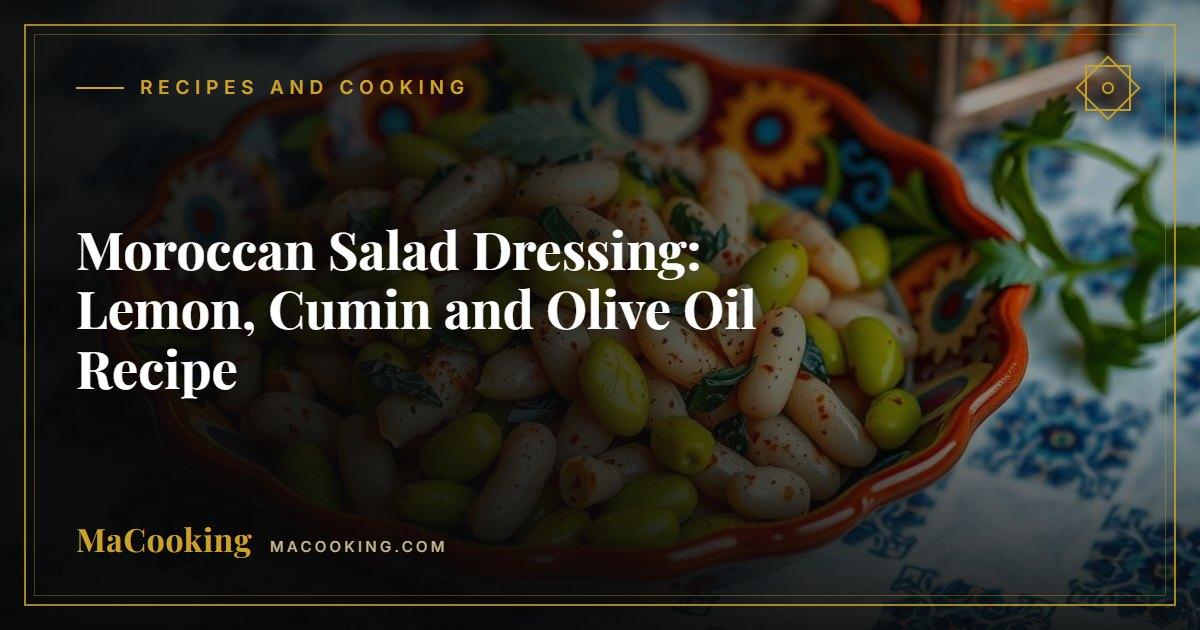
How to make Moroccan salad dressing: whisk 6 tablespoons extra virgin olive oil with 3 tablespoons fresh lemon juice, 1 grated garlic clove, 1 teaspoon toasted ground cumin, ½ teaspoon sweet paprika and a pinch of salt, then stir in chopped cilantro and parsley. It takes five minutes and suits cooked vegetable, legume and raw salads.
Key Takeaways
- The core Moroccan dressing is olive oil, lemon, cumin, paprika, garlic and fresh herbs, and it is brighter and more acidic than a classic French vinaigrette.
- Toasting whole cumin seeds and grinding them yourself gives a noticeably deeper flavor than old pre-ground powder.
- Letting the lemon, salt and garlic sit for five minutes before adding the oil softens the raw edge of the garlic.
- One small jar of homemade spice blend lets you season salads in seconds all week.
- The dressing keeps in the fridge for up to five days (three if it contains fresh garlic and herbs).
What Goes Into a Moroccan Salad Dressing?
If you sit down to a Moroccan table, you will often find several small salads served together at the start of the meal: cooked tomato and pepper, aubergine (eggplant), carrots, beetroot, lentils, chickpeas. Most of them are dressed in the same handful of ingredients, rearranged slightly for each vegetable. There is rarely a bottle of vinaigrette on the table. Instead, each salad is seasoned in the bowl, and the flavor comes from the vegetables themselves plus oil, acid, spice and herbs.
That is why a single well-balanced dressing is so useful. It captures the common thread, and you can tweak it for whatever you are serving. For a broader look at the cuisine behind it, Wikipedia's overview of Moroccan cuisine gives helpful background on the ingredients and regional influences.
The five building blocks
- Olive oil: Morocco is a major olive-growing country, and olive oil is the default salad fat. Choose a fruity, not overly bitter extra virgin oil, since the dressing has few other ingredients to hide behind.
- Lemon juice: Provides the sharpness. Some cooks use a splash of white wine vinegar or add preserved lemon for a more fermented, floral tang.
- Cumin: The signature salad spice. Earthy, warm and slightly citrusy, it works especially well with legumes, carrots and tomatoes.
- Paprika: Sweet paprika adds color and mild sweetness. A pinch of hot paprika or cayenne adds heat.
- Fresh herbs and garlic: Cilantro and flat-leaf parsley are the usual pair. Garlic is used with a light hand, often grated or crushed into a paste.
How to Make Moroccan Salad Dressing: Step by Step
This recipe makes about ¾ cup (180 ml), enough for roughly six to eight side salads. The oil-to-lemon ratio is 2:1, which is more assertive than the usual 3:1 vinaigrette. Moroccan salads are often built on sweet, mild vegetables, such as cooked carrots or tomatoes, and they can take that extra acidity.
Ingredients
- 6 tablespoons (90 ml) extra virgin olive oil
- 3 tablespoons (45 ml) fresh lemon juice (about 1 large lemon)
- 1 small garlic clove, finely grated or crushed to a paste
- 1 teaspoon ground cumin, preferably freshly toasted and ground (see below)
- ½ teaspoon sweet paprika
- ¼ teaspoon fine sea salt, plus more to taste
- Pinch of freshly ground black pepper
- 1 tablespoon finely chopped fresh cilantro (coriander leaf)
- 1 tablespoon finely chopped flat-leaf parsley
- Optional: ½ teaspoon honey, to soften the acidity
Method
- Toast the cumin. If using whole seeds, toast 1¼ teaspoons in a dry skillet over medium-low heat for 1 to 2 minutes, shaking the pan, until fragrant and a shade darker. Cool for a minute, then grind with a mortar and pestle or spice grinder. This yields about 1 teaspoon of ground cumin.
- Macerate the base. In a small bowl or jar, combine the lemon juice, garlic, salt, cumin, paprika and pepper. Leave for 5 minutes. The acid and salt tame the sharpness of raw garlic and help the spices dissolve.
- Add the oil. Whisk in the olive oil in a thin stream, or pour everything into a jar and shake hard for 20 seconds. It should look slightly cloudy and emulsified, though it will separate on standing, which is perfectly normal.
- Add the herbs. Stir in the cilantro and parsley just before using, so they stay green and fresh.
- Taste on a leaf or vegetable. Dip a piece of the actual salad ingredient, such as a tomato wedge or cucumber slice, into the dressing. It should taste a little too strong on its own. Adjust with salt, lemon or a touch of honey.
How much dressing to use
As a rule of thumb, use 2 to 3 tablespoons of dressing per 500 g (about 1 lb) of vegetables or cooked legumes. For warm cooked vegetables, such as boiled potatoes, beets or lentils, dress them while still warm, because they absorb the flavors far better than when cold.
How Do You Make a Moroccan Spice Blend for Salads?
If you make salads regularly, mixing your own spice jar saves time and keeps the flavor consistent. To be clear, this is a simple everyday blend, not the complex mixture known as ras el hanout, and it is not a formal or "official" recipe. It is a practical combination built from the spices most often used on Moroccan salads. If you want to know how to make a Moroccan spice blend that works in seconds, here is a good place to start.
Everyday Moroccan salad spice blend
| Spice | Quantity | Role |
|---|---|---|
| Ground cumin | 2 tablespoons | Earthy backbone |
| Sweet paprika | 1 tablespoon | Color and gentle sweetness |
| Ground coriander | 1 teaspoon | Citrusy, mellow lift |
| Ground ginger | ½ teaspoon | Warmth |
| Black pepper | ½ teaspoon | Gentle bite |
| Cayenne (optional) | ¼ teaspoon | Heat |
Combine everything in a small jar, seal it and shake. Makes about 4 tablespoons. For the dressing above, replace the cumin and paprika with 1½ teaspoons of this blend. Store it in a cool, dark cupboard and use within about three months for the best flavor, since ground spices fade steadily.
For a deeper look at how Moroccan cooks combine spices, see The Complete Guide to Moroccan Spice Blends, and for a breakdown of individual ingredients, the 12 Essential Moroccan Spices guide is a good companion.
How Do You Adjust the Dressing for Different Salads?
The base recipe is a starting point. Small changes make it fit specific vegetables, and the table below shows some reliable combinations. Each change is applied to the base quantities above.
| Variation | What to change | Best with |
|---|---|---|
| Preserved lemon | Replace 1 tbsp lemon juice with 1 tbsp finely chopped preserved lemon rind; cut salt by half | Olives, tomatoes, cucumber, chickpeas |
| Citrus and cinnamon | Use 2 tbsp orange juice and 1 tbsp lemon juice; add ¼ tsp cinnamon and 1 tsp honey; skip the paprika | Grated or cooked carrots, beets |
| Spicy harissa | Whisk in ½ to 1 tsp harissa paste | Roasted pepper, aubergine, potato |
| Herb-heavy | Double the cilantro and parsley; add 1 tbsp chopped mint | Lentils, chickpeas, cucumber |
| Mild and garlic-free | Omit garlic; add a pinch more cumin | Fava beans, potatoes, make-ahead salads |
Putting it to work: salad ideas
- Olives and preserved lemon: The salty, floral punch of preserved lemon pairs well with the dressing's cumin. Try the Olive and Preserved Lemon Salad.
- Carrots: The citrus-and-cinnamon variation suits sweet carrots very well. The Moroccan Carrot Salad with Citrus & Spices shows that style in full.
- Chickpeas: Legumes soak up dressing and love herbs, so the herb-heavy version works well in the Chickpea Salad with Cilantro and Lemon.
- Fava beans: Cumin and olive oil are a classic partner for green fava beans, as in this Green Fava Bean Salad with Oil and Cumin.
For more ideas, browse the full Salads & Appetizers recipes collection.
Why Toast and Grind Your Own Cumin?
Ground cumin loses its aroma quickly. A jar that has sat in the cupboard for a year can taste dusty and flat, and in a dressing with so few ingredients, you will notice. Toasting whole seeds wakes up their natural oils and gives a rounder, nuttier flavor. Grinding them just before use releases more of that fragrance.
A few tips for success:
- Use a dry pan, not an oiled one, over medium-low heat. Cumin burns easily and turns bitter.
- Take the seeds off the heat the moment you can smell them strongly, usually within two minutes.
- Grind in small batches. A mortar and pestle gives a slightly coarser, more textured result that many cooks prefer for salads.
If you would like to go deeper into this spice and the others on the Moroccan shelf, you can read the free chapter The Moroccan Spice Map online. The full ebook, The Moroccan Spice Bible, Part 1: The Spice Atlas, also includes a chapter titled "Cumin — The Democratic Spice".
What Mistakes Should You Avoid?
- Adding raw garlic in large amounts. A whole clove in a small amount of dressing can dominate. Use one small clove, grated finely, and let it sit in the lemon juice first.
- Dressing too early. Salads with raw tomato, cucumber or leafy herbs turn watery if dressed long before serving. Dress them within 10 to 15 minutes of eating. Cooked vegetables and legumes, in contrast, improve when dressed ahead.
- Using stale spices. If your cumin or paprika has no smell when you rub a pinch between your fingers, replace it.
- Using a harsh olive oil. A very peppery, bitter oil can overpower the other flavors. A milder, fruitier oil lets the lemon and cumin come through.
- Skipping the tasting step. Vegetables vary in sweetness and water content. Always taste the dressed salad, not just the dressing on a spoon.
- Forgetting to season cooked vegetables while warm. Warm potatoes, carrots or lentils absorb flavor best. Once cold, they take on dressing only on the surface.
How Long Does Moroccan Salad Dressing Keep, and What Can You Substitute?
Store the dressing in a clean, airtight jar in the refrigerator. Without fresh herbs, it keeps for up to five days. If it contains fresh garlic and herbs, use it within three days and keep it refrigerated at all times, since garlic stored in oil at room temperature is not a good idea. Olive oil can solidify and look cloudy in a cold fridge. This is harmless: leave the jar at room temperature for 15 minutes, then shake well.
Substitutions for a Western pantry
| If you do not have | Use instead | Note |
|---|---|---|
| Fresh cilantro | Extra flat-leaf parsley, plus a little lemon zest | Flavor will be milder and less citrusy |
| Fresh lemons | Lime juice, or 2 tbsp lemon juice plus 1 tbsp white wine vinegar | Lime gives a sharper, slightly different aroma |
| Preserved lemon | 1 tsp finely grated lemon zest plus an extra pinch of salt | Lacks the fermented depth, but is a fair stand-in |
| Sweet paprika | Mild smoked paprika, in a smaller amount (¼ tsp) | Adds smokiness that is not strictly traditional |
| Whole cumin seeds | Fresh ground cumin from a recently opened jar | Warm it briefly in a dry pan to revive it |
| Harissa | Pinch of cayenne or chili flakes | Gives heat without the roasted-pepper depth |
Is This Dressing Good for You?
The dressing is made from olive oil, citrus, herbs and spices, which are staples of Mediterranean-style eating. Olive oil is the main fat, and the dressing contains no added sugar unless you choose to add honey. It also encourages you to eat more vegetables and legumes, which is a good reason to keep a jar ready. If you are curious about the wider eating pattern, read Moroccan Mediterranean Diet: The Science Behind Morocco's Longevity Secret. As always, this is a food article, not medical advice.
Frequently Asked Questions
What is in a traditional Moroccan salad dressing?
Most everyday Moroccan salad dressings combine olive oil, lemon juice (or sometimes vinegar), ground cumin, paprika, salt, garlic and fresh cilantro or parsley. Regional and family versions vary, adding preserved lemon, orange juice, cinnamon or a little harissa depending on the salad being served.
Can I make Moroccan salad dressing without garlic?
Yes. Leave the garlic out and the dressing will taste brighter and keep a little longer. Many Moroccan salads, such as carrot salad, rely mainly on citrus, cumin or cinnamon, and herbs. If you want a gentle garlic note, rub the bowl with a cut clove before dressing.
How long does homemade Moroccan dressing last?
Without fresh herbs, the dressing keeps about five days in a sealed jar in the fridge. With fresh garlic and chopped herbs, use it within three days. Olive oil may turn cloudy or solidify when cold, so let the jar sit at room temperature for 15 minutes and shake.
What is the difference between a Moroccan spice blend and ras el hanout?
A simple Moroccan salad spice blend uses three to six pantry spices, mainly cumin, paprika and coriander. Ras el hanout is a far more complex mixture that can contain dozens of ingredients, and it is usually reserved for tagines, rice and slow-cooked dishes rather than light salad dressings.
Can I use bottled lemon juice?
Fresh lemon juice gives a much cleaner, more fragrant result, and it is worth the minute it takes to squeeze. If you only have bottled juice, use slightly less, taste, and add a little finely chopped preserved lemon rind to bring back some of the missing aromatic brightness.
Which Moroccan salads suit this dressing best?
It works well with cooked tomato and pepper salads, chickpeas, fava beans, lentils, cucumber and tomato, boiled potatoes and grated raw vegetables. It is less suited to very delicate lettuces, which can wilt under the acidity and spice, unless you dress them lightly at the last moment.
Conclusion
Once you know how to make Moroccan salad dressing, you can season almost any vegetable or legume in minutes. Start with the base of olive oil, lemon, toasted cumin, paprika, garlic and herbs, then adjust it for the salad in front of you with preserved lemon, orange and cinnamon, or a spoonful of harissa. Keep a jar of spice blend nearby, taste as you go, and dress each salad at the right moment. The method is simple, and the results are fresh, aromatic and satisfying every time.