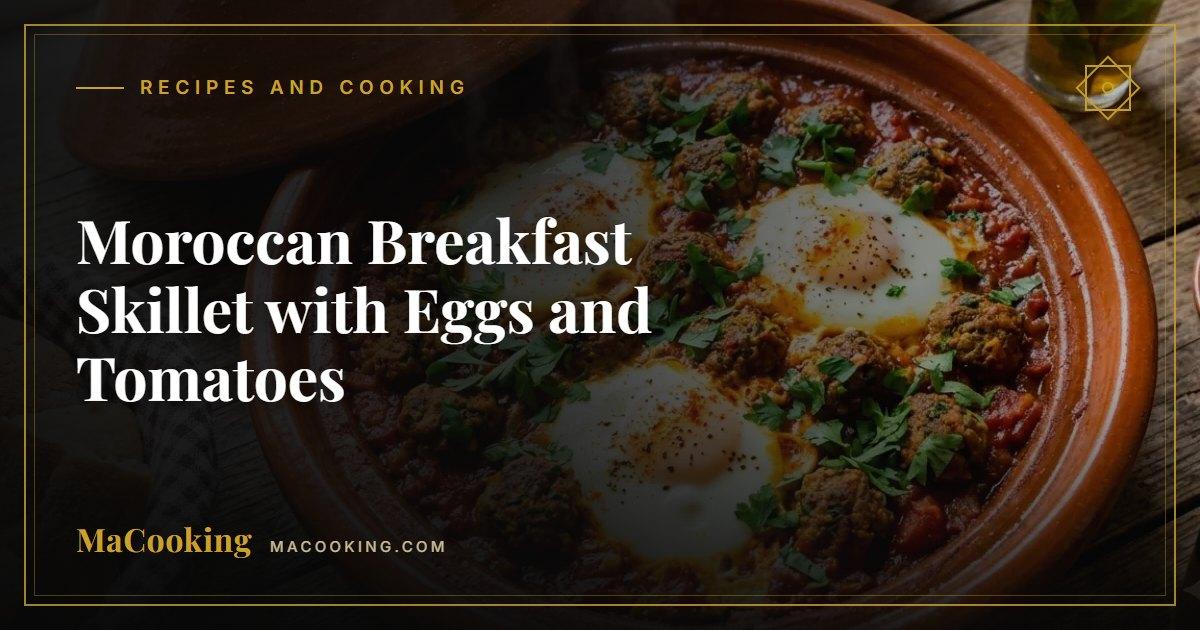
A Moroccan breakfast skillet is a one-pan dish of eggs gently cooked in a spiced tomato sauce scented with garlic, paprika, cumin and fresh herbs. Simmer the sauce for about 20 minutes, crack in the eggs, cover and cook for 5 to 7 minutes, then scoop everything up with warm bread.
Key Takeaways
- A good Moroccan breakfast skillet depends on a thick, well-reduced tomato sauce, not a watery one. Budget 20 minutes of simmering.
- The core spices are sweet paprika, cumin and a little ginger, with cilantro and parsley added at the end for freshness.
- Cover the pan and keep the heat low so the whites set while the yolks stay soft.
- Canned tomatoes, harissa and a pinch of saffron or turmeric are easy swaps for a Western pantry.
- Serve with khobz, msemen or baghrir, olives and mint tea for a complete Moroccan breakfast spread.
What Is a Moroccan Breakfast Skillet?
Eggs and tomatoes belong together in kitchens all around the Mediterranean, and Morocco has its own versions. Some are cooked in a clay tagine, others in a wide, shallow frying pan. The idea is the same: tomatoes, onion and garlic are cooked down with spices until jammy, then eggs are poached directly in the sauce. Many home cooks bring the pan straight to the table, where everyone tears off pieces of bread and dips in from the shared dish.
This kind of dish is often related to shakshouka, which is also eaten across North Africa. What sets the Moroccan accent apart is the seasoning. Paprika and cumin lead, ginger and turmeric (or saffron, when it is on hand) add warmth, and lots of chopped cilantro and flat-leaf parsley give the whole thing a green, fresh finish. Heat is optional, and usually comes from a spoonful of harissa or a pinch of cayenne rather than a fiery base.
If you want the clay-pot take on the same idea, our Egg Tagine with Fresh Tomatoes shows how the dish is traditionally built. The skillet recipe below is the quicker, everyday-kitchen adaptation, and it works well on a regular stove with any wide pan.
What Ingredients Do You Need for Moroccan Breakfast Eggs and Tomatoes?
The ingredient list is short and mostly pantry-friendly. This makes enough for 2 hungry people or 3 with plenty of bread and sides.
- 3 tablespoons olive oil
- 1 medium onion, finely chopped (about 150 g / 5 oz)
- 3 garlic cloves, minced
- 1 red bell pepper, diced (optional but traditional in many homes)
- 600 g (1 1/3 lb) ripe tomatoes, grated or finely chopped, or one 400 g (14 oz) can of tomatoes plus a splash of water
- 1 teaspoon sweet paprika
- 1/2 teaspoon ground cumin
- 1/4 teaspoon ground ginger
- A pinch of turmeric or a few saffron threads crushed into a spoonful of warm water
- 1/2 to 1 teaspoon harissa or a pinch of cayenne (optional)
- 3/4 teaspoon salt, plus more to taste
- 1/2 teaspoon sugar, only if the tomatoes are sharp
- 4 to 6 large eggs
- 3 tablespoons chopped fresh cilantro and 2 tablespoons chopped flat-leaf parsley
- To finish: black pepper, a squeeze of lemon, a few olives or a little finely chopped preserved lemon rind
Substitutions for a Western Pantry
| If you do not have | Use instead | Notes |
|---|---|---|
| Ripe fresh tomatoes | One 400 g (14 oz) can whole tomatoes per 500 g fresh | Crush by hand; simmer 3 to 5 minutes longer |
| Saffron | Pinch of turmeric | Colour is similar; flavour is milder and earthier |
| Harissa | Pinch of cayenne or chilli flakes | Add a little extra paprika for depth |
| Cilantro | All parsley, with a little mint | Flavour changes, but it stays fresh and herby |
| Preserved lemon | Lemon zest plus a squeeze of juice | Add at the end; use extra salt sparingly |
| Khobz | Crusty bread, pita or naan | Choose something sturdy enough to scoop |
How Do You Make a Moroccan Breakfast Skillet Step by Step?
Use a wide, heavy skillet, about 26 to 28 cm (10 to 11 in), with a lid. A cast-iron or thick stainless pan keeps heat even. If you do not have a lid, a flat baking sheet or large plate works.
- Soften the aromatics (6 to 8 minutes). Warm the olive oil over medium heat. Add the onion and pepper with a pinch of salt and cook until soft and translucent but not browned. Stir in the garlic for the final minute.
- Bloom the spices (30 to 60 seconds). Add the paprika, cumin, ginger and turmeric. Stir constantly. Spices scorch quickly in hot oil, so lower the heat if the pan sizzles aggressively.
- Add the tomatoes (15 to 20 minutes). Pour in the tomatoes with the harissa and the rest of the salt. Bring to a lively bubble, then lower the heat and simmer, stirring now and then, until the sauce is thick enough that a spoon dragged through it leaves a clear trail. Taste and adjust with sugar, salt or lemon.
- Stir in half the herbs. Add half of the cilantro and parsley and cook for 1 minute so they melt into the sauce.
- Make wells and add the eggs. With the back of a spoon, press 4 to 6 shallow hollows into the sauce. Crack an egg into each. Season the eggs lightly with salt and pepper.
- Cover and cook (5 to 7 minutes). Reduce the heat to low and cover. Check at 5 minutes. For soft yolks, the whites should be set and milky-white, with the yolks still wobbly. For firmer yolks, give it 2 more minutes.
- Finish and serve. Scatter the remaining herbs, add olives or preserved lemon if using, and bring the skillet to the table immediately with bread.
Timing at a Glance
| Stage | Heat | Time | What to look for |
|---|---|---|---|
| Onion and pepper | Medium | 6 to 8 min | Soft, translucent, no browning |
| Spices | Medium-low | 30 to 60 sec | Fragrant, not scorched |
| Tomato sauce | Medium-low | 15 to 20 min | Thick, oil starting to separate at the edges |
| Eggs | Low, covered | 5 to 7 min | Set whites, soft yolks |
Why Is My Skillet Watery, and What Other Mistakes Should I Avoid?
This dish is forgiving, but a few common slips can spoil the texture or the flavour.
- Not reducing the sauce enough. Eggs poached in a thin sauce float and break apart, and the dish turns soupy. Keep simmering until the sauce is jammy. If it has thickened too far, stir in a splash of water before adding the eggs.
- Using tomatoes with tough skins. Grating tomatoes on a box grater and discarding the skins gives a smoother, more traditional sauce. If you chop them, simmer longer so the skins soften.
- Cooking the eggs over high heat. This makes rubbery whites and chalky yolks. Low heat and a lid are the secret.
- Salting at the wrong moment. Salt the sauce while it cooks, then taste again before adding eggs. If you plan to add olives or preserved lemon, go lighter on the salt, as both are salty.
- Adding all the herbs too early. Cooked herbs lose brightness. Keep half for the end.
- Overcrowding the pan. Six eggs in a small skillet will merge. Use a larger pan or cook in two batches.
How Can You Vary Moroccan Breakfast Eggs?
Once the base sauce is in your hands, it flexes easily. These are variations that keep the spirit of the dish intact.
With Spiced Meatballs
Brown small kefta meatballs first, then simmer them in the sauce for 10 minutes before adding the eggs. Our Egg Tagine with Kefta and Tomatoes walks through the seasoning for the meat and is an excellent weekend brunch.
With Roasted Peppers
Add extra peppers, cooked until completely soft, for a sweeter, more textured sauce reminiscent of the Moroccan cooked salad taktouka. Use two or three peppers and simmer the sauce a few extra minutes.
With Potatoes or Chickpeas
For a heartier meal, stir in 1 diced and par-boiled potato or a cup of drained canned chickpeas after the sauce has thickened. Cook 5 minutes more before making the wells for the eggs.
With Greens
Fold in a few handfuls of baby spinach or chopped chard just before adding the eggs. They wilt in about 2 minutes and add colour and iron-rich greenery.
Scrambled Instead of Poached
In some homes, the eggs are stirred into the tomato sauce rather than left whole. If you prefer this, beat the eggs lightly, pour them over the simmering sauce and stir gently over low heat for 2 to 3 minutes until just set.
What Should You Serve with a Moroccan Breakfast Skillet?
In Morocco, breakfast is often a spread rather than a single plate. Bread, olive oil, olives, soft cheese, jam, mint tea and something hot from the pan can all share the table. Our guide to Moroccan breakfast traditions explains how those pieces fit together across the country.
Here are the best companions for the skillet:
- Khobz or crusty bread. Essential for scooping. Tear, dip, repeat.
- Moroccan breakfast pancakes. Layered msemen is crisp outside and tender within, and is excellent for mopping the sauce. For something softer and spongier, try baghrir.
- Olives and a drizzle of good olive oil. Salty, bitter and rich, they balance the sweet tomatoes.
- Fresh cucumber or tomato salad. A cool, crunchy side lifts the warm spices.
- Mint tea. Its sweetness and freshness suit this savoury breakfast well.
If you are feeding a crowd, double the sauce, cook it in a larger pan and add the eggs in two shifts. Put the pancakes, bread and olives in the middle of the table and let everyone help themselves.
Can You Make Moroccan Breakfast Skillet Ahead and Store It?
The sauce is the make-ahead component. Cool it completely, then refrigerate in a covered container for up to 3 days. It also freezes well for up to 2 months, though fresh herbs should be added after reheating. To serve, warm the sauce in the skillet until bubbling, adjust the seasoning, then cook the eggs fresh.
Leftover finished skillet, with eggs, can be refrigerated for one day. Reheat gently, covered, over low heat; the yolks will be firm rather than runny. For food safety, cool leftovers quickly and do not leave them at room temperature for long.
A practical plan for busy mornings: make a double batch of sauce on Sunday, then crack in fresh eggs on weekday mornings. Breakfast takes under 10 minutes.
Frequently Asked Questions
Is a Moroccan breakfast skillet the same as shakshuka?
They are close relatives. Both poach eggs in a tomato sauce, and shakshuka is also cooked in Morocco. The Moroccan version usually leans on paprika, cumin, garlic, olive oil and plenty of fresh cilantro and parsley, and is often finished with a squeeze of lemon or a little preserved lemon.
Can I make the tomato sauce ahead of time?
Yes. The sauce keeps in the fridge for up to three days and tastes even better the next day. Reheat it in the skillet until it bubbles gently, then crack in the eggs and cook them fresh. Do not store the finished dish with cooked eggs for more than a day.
What can I use instead of fresh tomatoes?
Use a 400 g (14 oz) can of whole or chopped tomatoes per 500 g of fresh. Crush whole tomatoes by hand and simmer a few extra minutes to thicken the sauce. Good canned tomatoes often beat pale, out-of-season fresh ones in a skillet like this.
How do I keep the egg yolks runny?
Cook the eggs over low heat with the pan covered, and start checking at 5 minutes. The whites should be opaque and set while the yolks still wobble. Remember that the eggs keep cooking in the hot sauce after you take the pan off the burner.
What bread do you serve with Moroccan eggs and tomatoes?
Traditionally, khobz (round Moroccan bread) is used to scoop up the sauce. Outside Morocco, crusty country bread, pita or warm flatbread works well. For a fuller breakfast spread, serve it with msemen or baghrir pancakes, olives and mint tea.
Can I make this skillet vegan or dairy-free?
It is already dairy-free. For a vegan version, replace the eggs with firm tofu cut into thick slabs or with a can of chickpeas, simmering them in the sauce for 8 to 10 minutes. The spiced tomato base is just as satisfying that way.
Conclusion: A Simple Skillet for Slow Mornings
A Moroccan breakfast skillet asks for very little: ripe tomatoes, a few spices, good olive oil, fresh herbs and eggs. What it rewards is patience with the sauce and a light hand with the heat. Make it on a lazy weekend, bring the pan to the table, and let bread and pancakes do the serving. For more ideas, browse our full collection of Moroccan recipes and find your next breakfast favourite.