The best Moroccan breakfast recipes are simple, bread-centred and ready in under 30 minutes: msemen or baghrir with honey and butter, eggs cooked with tomatoes and cumin, olive oil and olives, and fresh mint tea. Pick one bread, one egg dish and one sweet spread, and you have a Moroccan morning.
Key Takeaways
- A Moroccan breakfast is built around bread or flatbread, olive oil, something sweet, and hot drinks, with eggs or soup as the savoury anchor.
- Eggs with tomatoes, garlic and cumin are the easiest entry point and need only one pan.
- Baghrir, harcha and msemen can be mostly prepared ahead, so weekday mornings stay manageable.
- Bissara (fava bean soup) and amlou (almond, argan oil and honey dip) are worth learning for cooler mornings and weekend spreads.
- Almost every ingredient has a workable substitute in a Western supermarket.
What Do Moroccans Eat for Breakfast?
Ask what Moroccans eat for breakfast and the honest answer is "it depends on the household, the season and the day of the week". Still, a pattern runs through most tables: bread in some form, a good fat (olive oil, butter or smen, the preserved butter), something sweet such as honey or jam, and hot drinks. Eggs, olives and fresh cheese often join in. Colder months bring warm, filling dishes such as bissara.
Weekdays tend to be quick: bread, olive oil, jam, coffee with milk. Weekends and holidays are the time for yeasted pancakes, layered flatbreads and egg dishes cooked in a tagine or shallow pan. For a wider cultural picture, our piece on Moroccan breakfast traditions covers how the meal varies across the country. The Wikipedia overview of Moroccan cuisine gives useful background on the staples.
Moroccan Breakfast Foods at a Glance
This table gives a quick map of the most common Moroccan breakfast foods, so you can decide what to cook first.
| Dish | Type | Active time | Make ahead? |
|---|---|---|---|
| Eggs with tomato and cumin | Savoury, eggs | 20 min | Sauce, yes |
| Baghrir | Sweet, "thousand-hole" pancake | 25 min plus resting | Batter, a few hours |
| Harcha | Semolina griddle bread | 20 min | Freezes well |
| Msemen | Layered flatbread | 45 min | Freezes well |
| Bissara | Savoury fava bean soup | 10 min plus simmering | 3 days in fridge |
| Amlou | Sweet-savoury nut dip | 10 min | Weeks, in a jar |
| Hard-boiled eggs with cumin | Savoury, eggs | 12 min | Yes |
How Do You Make Moroccan Breakfast Eggs?
Eggs are the heart of most savoury Moroccan breakfast ideas. They are rarely fussy: gentle heat, olive oil, cumin, and bread for scooping. Here are three approaches, from easiest to most substantial.
1. Hard-boiled eggs with cumin and salt
The simplest of all. Boil eggs for 9 to 10 minutes, cool briefly in cold water, peel, and serve with a small dish of ground cumin mixed with fine salt. Each bite gets dipped. Add a few olives and a piece of bread and you have a complete plate.
2. Eggs with tomato, garlic and cumin (serves 2)
- Warm 2 tablespoons of olive oil in a wide, shallow pan over medium heat. Add 2 crushed garlic cloves and cook for 30 seconds without browning.
- Grate 4 ripe tomatoes (about 500 g) straight into the pan, discarding the skins. Add ½ teaspoon ground cumin, ½ teaspoon sweet paprika, a pinch of salt and a pinch of black pepper.
- Simmer for 10 to 12 minutes, stirring now and then, until the sauce is thick and the oil starts to separate at the edges.
- Make 4 small wells with a spoon and crack an egg into each. Cover and cook on low for 3 to 5 minutes, until the whites are set and the yolks still soft.
- Finish with chopped parsley or coriander and eat from the pan with bread.
This is the same idea behind our full recipe for Egg Tagine with Fresh Tomatoes, which walks through the clay-pot version step by step. Common mistake: adding the eggs to a watery sauce. Reduce the tomatoes properly first or the eggs will poach in liquid and the flavour will be thin.
3. Kefta and eggs for a bigger breakfast
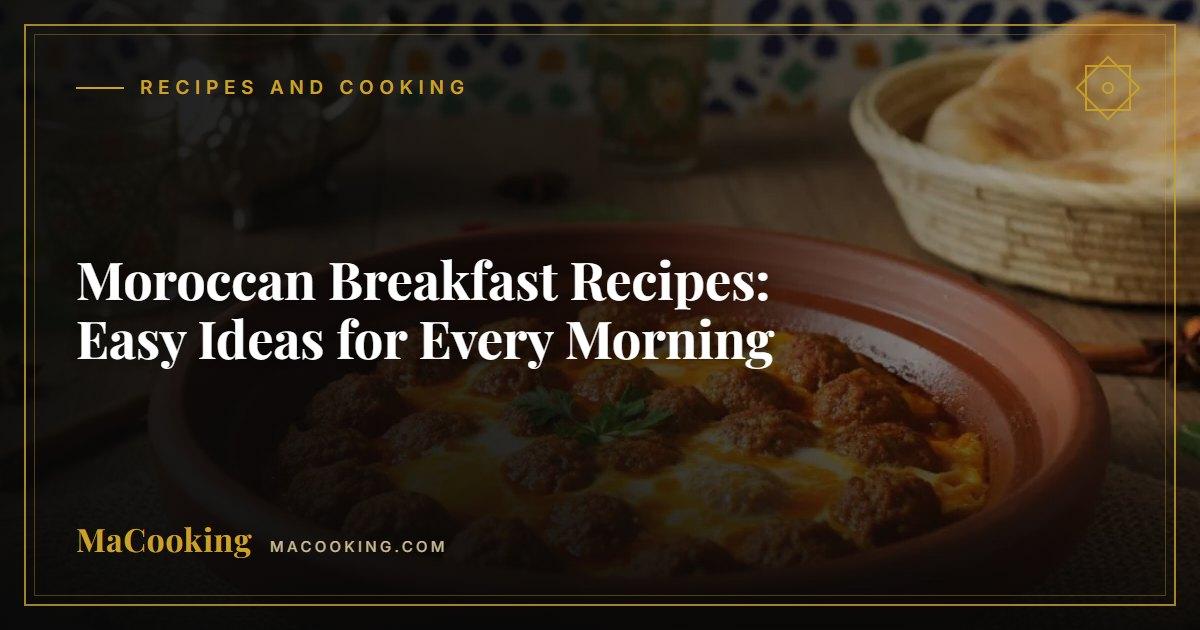
On weekends, or when the whole family is at the table, small spiced meatballs simmered in tomato sauce with eggs cracked on top make a hearty meal. Our Kefta Tagine with Eggs is a good place to start. It is best treated as a late brunch rather than a quick weekday meal.
What Is Baghrir and How Do You Make It?
Baghrir is a yeasted semolina pancake cooked on one side only. As it cooks, tiny bubbles rise and burst, leaving the top covered in holes that soak up melted butter and honey. It is soft, springy and lightly sweet.
Baghrir ingredients (makes about 10)
- 1 cup (180 g) fine semolina
- ½ cup (65 g) plain (all-purpose) flour
- 1 teaspoon instant dried yeast
- 1 teaspoon baking powder
- 1 tablespoon sugar and ½ teaspoon salt
- 2 cups (480 ml) warm water, plus a splash more if needed
Method
- Blend everything for 1 to 2 minutes until completely smooth and slightly frothy. A blender gives the best texture.
- Rest the batter, covered, for 30 minutes. It should thicken a little and show bubbles on the surface.
- Heat a non-stick pan over medium-low heat. Do not oil it.
- Pour in about ¼ cup of batter and leave it alone. Bubbles will form and pop. After 2 to 3 minutes the surface should look dry and matte.
- Lift it out without flipping and cool on a clean towel. Stacking hot baghrir while wet makes them stick, so lay them in a single layer.
- Serve warm with melted butter and honey.
Common mistakes: a pan that is too hot (the underside browns before the top sets), and a batter that is too thick, which gives fewer holes. If the first pancake looks dense, add a spoonful or two of water to the batter.
How Do You Make Harcha, the Semolina Griddle Bread?
Harcha is crumbly on the outside, soft inside, and quicker than yeasted bread. It is wonderful split and filled with soft cheese or jam. Many cooks use medium semolina for the characteristic grainy bite.
Ingredients (makes 6 to 8 rounds)
- 2 cups (320 g) medium semolina
- ½ cup (115 g) butter, melted
- 1 tablespoon sugar
- 1 tablespoon baking powder
- ½ teaspoon salt
- About ¾ cup (180 ml) milk
Method
- Mix the dry ingredients, then rub in the melted butter until the mixture resembles damp sand.
- Add the milk gradually, mixing until the dough just holds together. It should be soft but not sticky.
- Shape into thick discs about 1.5 cm (½ inch) high. Press some extra dry semolina onto both sides for texture.
- Cook in a dry, heavy pan over low heat for 5 to 6 minutes per side, until golden and cooked through.
If the outside browns too fast, lower the heat. A thick disc needs gentle cooking to set in the middle. Substitution: if you cannot find medium semolina, use fine semolina with a spoonful of polenta or cornmeal for grain.
Where Does Msemen Fit in a Moroccan Breakfast?
Msemen is the layered, square flatbread that many people think of first. It is folded with oil and semolina so it puffs into flaky layers when cooked. It takes more time than harcha or baghrir, but it freezes beautifully, so one batch covers several mornings. Our step-by-step guide to making Moroccan msemen covers dough hydration, folding and cooking.
Serve it hot with honey and butter, or with a drizzle of olive oil and a soft-boiled egg. Reheat frozen pieces in a dry pan for about 2 minutes per side, with no thawing needed.
What Is Bissara and Why Eat It for Breakfast?
Bissara is a creamy soup of dried split fava beans, garlic and cumin, finished with a generous pour of olive oil. In cooler weather it is a warming, filling start to the day, often eaten with bread and a sprinkle of paprika. It is naturally plant-based.
Bissara (serves 4)
- Soak 1 cup (200 g) peeled, dried split fava beans in cold water for at least 4 hours, or overnight. Drain.
- Put them in a pot with 4 peeled garlic cloves, 4 cups (1 litre) of water and ½ teaspoon of salt. Simmer gently for 40 to 50 minutes, until completely soft.
- Add 1 teaspoon ground cumin and 1 teaspoon paprika, then blend until silky. Add hot water if it is too thick; it should be like thin porridge.
- Adjust the salt, ladle into bowls, and add a spoonful of olive oil, a pinch of cumin and a dusting of paprika to each.
Substitution: peeled split fava beans are sold in Middle Eastern and North African shops. If you cannot find them, dried split peas give a similar texture, though the flavour is sweeter and less earthy.
What Sweet Spreads and Sides Complete the Table?
A Moroccan breakfast spread feels generous because of small dishes. You do not need all of them, but two or three transform simple bread.
Amlou: almond, argan and honey
Amlou is a thick, spoonable dip, somewhere between nut butter and a sweet sauce. Blend 1 cup (150 g) of well-toasted almonds until they form a paste, then add 2 to 3 tablespoons of culinary argan oil, 2 to 3 tablespoons of honey and a tiny pinch of salt. Blend until smooth. It keeps for a few weeks in a jar. If you cannot find argan oil, toasted almond or hazelnut oil works, though the flavour is milder.
Other simple additions
- Olives and olive oil: serve good oil in a shallow dish for dipping.
- Fresh cheese: a soft, mild white cheese similar to jben. Fresh ricotta or a mild farmer's cheese works as a substitute.
- Honey, jam, butter: apricot, fig and orange jams are classic.
- Fresh fruit and juice: orange juice, sliced melon or dates, depending on the season.
How Do You Serve Moroccan Mint Tea at Breakfast?
Hot drinks complete the table. Mint tea is the best-known, made from gunpowder green tea, fresh spearmint and sugar, poured from a height to create a little foam. Many households also drink coffee with milk in the morning, particularly on weekdays.
For a basic pot, rinse 1 tablespoon of gunpowder green tea with a little boiling water and discard the liquid. Add a large handful of fresh mint, sugar to taste, and about 500 ml of boiling water. Steep for 3 to 4 minutes, then pour back and forth between the pot and a glass once or twice to mix. You can read the free chapter on the Moroccan tea ceremony for the full ritual. Readers who want the complete morning spread will also find a chapter titled "The Moroccan Breakfast Table" inside the full ebook The Royal Moroccan Table, Part 5: Sweet Morocco.
What Can I Substitute in a Western Kitchen?
| Moroccan ingredient | Easy substitute | Note |
|---|---|---|
| Medium semolina | Fine semolina plus a little cornmeal | Keeps the grainy bite in harcha |
| Argan oil (culinary) | Toasted almond or hazelnut oil | Milder, still nutty |
| Smen | Salted butter, or ghee | Less pungent than aged smen |
| Jben (fresh cheese) | Ricotta or farmer's cheese | Drain well before serving |
| Split fava beans | Dried split peas | Sweeter, less earthy |
| Gunpowder green tea | Loose Chinese green tea | Use a bit less to avoid bitterness |
How Can I Plan a Week of Moroccan Breakfasts?
You do not need to cook something new every day. Prepare in batches on a free morning, then rotate through the week.
- Weekend: make msemen or harcha, freeze half, and cook a pan of eggs with tomatoes or a kefta tagine.
- Monday and Tuesday: reheated harcha or msemen with olive oil, cheese and olives.
- Wednesday: baghrir (the batter takes five minutes to blend) with honey and butter.
- Thursday: bissara made in advance and reheated, with bread.
- Friday: hard-boiled eggs with cumin, amlou on toast, and fresh fruit.
If you are watching your diet, the eggs, bissara and fruit options pair well with the ideas in our guide to healthy Moroccan recipes and meal plan ideas. For pre-dawn meals during Ramadan, many of the same dishes appear in our Moroccan suhoor recipes. You can also browse the full collection on our Moroccan recipes page.
Frequently Asked Questions
What do Moroccans eat for breakfast?
A typical Moroccan breakfast centres on bread or flatbread such as khobz, msemen, baghrir or harcha, served with olive oil, butter, honey, jam, cheese or olives. Eggs, often cooked with tomatoes or cumin, are common, along with mint tea, coffee with milk and fresh orange juice. Bissara soup is popular in cooler months.
What is the easiest Moroccan breakfast for beginners?
Eggs cooked gently in olive oil with grated tomato, garlic and cumin is the easiest. It needs one pan, about 20 minutes and ordinary ingredients, and you can serve it with any crusty bread. Fried or hard-boiled eggs with salt and ground cumin are even simpler.
Can I make Moroccan breakfast breads ahead of time?
Yes. Msemen and harcha freeze well, either cooked or, for msemen, shaped and uncooked, and reheat in a dry pan in a few minutes. Baghrir is best eaten the day it is made but can be refrigerated for a day and warmed briefly. Bissara keeps three days in the fridge.
What can I use instead of argan oil in amlou?
Toasted almond oil or hazelnut oil gives a similar nutty depth, though the flavour will be milder than true argan. Use culinary argan oil if you can find it, never the cosmetic kind. Toast the almonds well, as their roasted flavour carries most of the taste.
Is Moroccan breakfast healthy?
It can be balanced. Eggs, beans in bissara, olive oil, olives and fresh fruit offer protein, fibre and unsaturated fats, while honey, jam and fried doughnuts are more indulgent. Portion size and the choice of savoury or sweet toppings make the biggest difference.
Start Your Moroccan Morning
You do not have to cook everything on the table. Start with eggs in tomato sauce and a warm piece of bread, add a small dish of olive oil and a glass of mint tea, and you have captured the spirit of a Moroccan breakfast. From there, baghrir, harcha, msemen, bissara and amlou are easy to add one at a time, until your weekend mornings feel like a gathering.