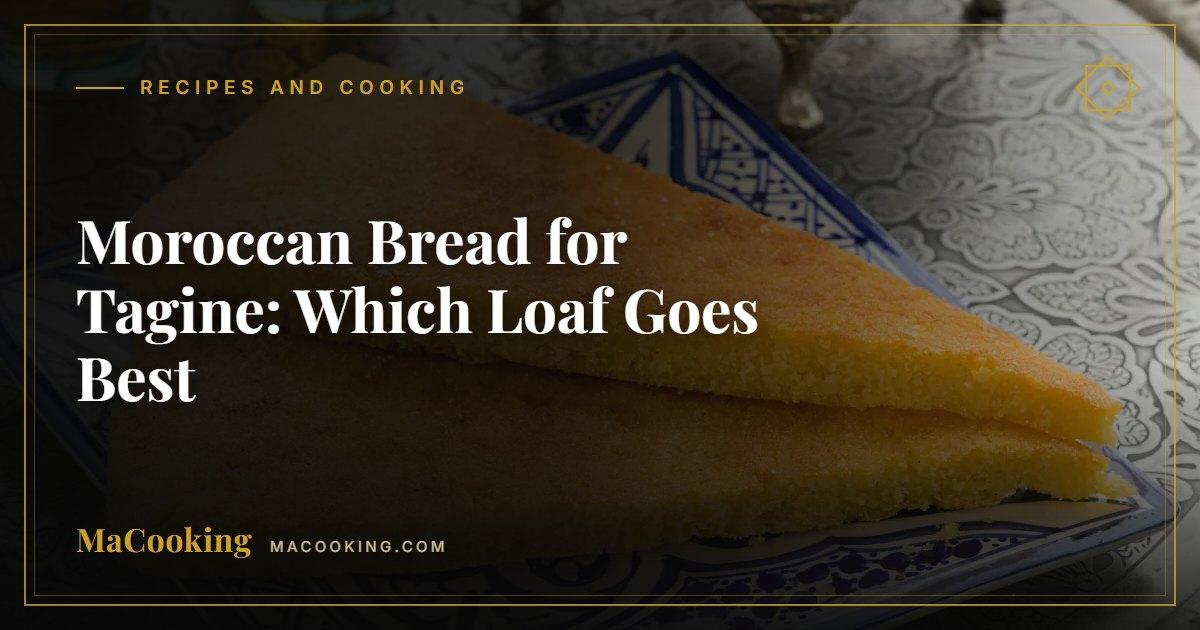
The best Moroccan bread for tagine is khobz, a round, sturdy loaf with a tender crumb and a crust firm enough to scoop up sauce without collapsing. Soft batbout works well for lighter tagines and egg dishes, while msemen and harcha suit breakfast tables better than dinner.
Key Takeaways
- Khobz is the default bread for almost every tagine because it is sturdy, mild and made for scooping.
- Batbout is a soft, pocketed griddle bread that suits egg tagines, kefta and lighter chicken dishes.
- Semolina is used in the dough and as a dusting, giving Moroccan loaves a golden, slightly sandy crust.
- Traditionally you tear the bread and use it as your utensil, taking food from the section of the dish in front of you.
- Good substitutes exist: a rustic country loaf or thick, fresh pita will work if you cannot bake khobz.
Which Moroccan Bread for Tagine Works Best?
In a Moroccan home, a tagine rarely arrives without bread beside it. The bread is not a side dish in the Western sense. It is the tool for eating, and a good loaf has to do a specific job: hold its shape when dragged through sauce, soak up just enough liquid, and stay neutral enough that the spices, preserved lemon, prunes or olives still take centre stage.
That is why khobz (also written khubz) is the standard. It is a round, fairly thick loaf, usually made from wheat flour, often with some whole wheat in the mix, and commonly dusted with fine semolina or coarse bran. The crust is thin but firm, the crumb is soft and a little springy, and the whole loaf is easy to tear into palm-sized pieces. In many neighbourhoods, families traditionally shape their dough at home and send it to the local communal oven to be baked, which is why a good khobz often has a faintly smoky, wood-fired character.
If you are cooking tagine in a Western kitchen, you do not need that oven to get excellent results. A hot baking steel, pizza stone or even a heavy sheet pan will give you a loaf that does the job well. We include a full recipe below.
For more on the whole family of loaves, our pillar guide to Moroccan breads covers the types in depth, and the Breads & Pastries recipes collection gathers the step-by-step recipes in one place.
What Are the Main Types of Moroccan Bread?
Morocco has a wide bread repertoire, and not every loaf belongs next to a tagine. Some are built for scooping, some for stuffing, and some for dipping in tea or honey at breakfast. Here is how the common ones compare.
| Bread | Texture | Cooked how | Best with tagine? |
|---|---|---|---|
| Khobz | Thin crust, soft, springy crumb | Baked, traditionally in a communal oven | Yes, the classic choice for any tagine |
| Batbout | Soft, pillowy, with a pocket | Cooked on a dry griddle or pan | Yes, especially egg, kefta and chicken tagines |
| Msemen | Flaky, layered, buttery | Folded and pan-fried | Occasionally; better with tea, honey or as breakfast |
| Harcha | Crumbly, semolina-rich, slightly sweet | Pan-cooked | Rarely; better for breakfast or tea with cheese and jam |
| Barley bread (rural) | Dense, earthy, heavier | Baked or cooked on a hot surface | Yes, in rural settings, though less common in cities |
The two you will use most often for tagine are khobz and batbout. Msemen is wonderful, but its richness and flakiness compete with sauce rather than carry it. If you want to explore it, our guide to making Moroccan msemen explains the folding technique clearly. For a crumbly, semolina-forward alternative, try the harcha recipe, ideal for breakfast with cheese, honey or jam rather than a saucy dinner.
Which Bread Goes With Which Tagine?
You can use khobz with everything and never go wrong, but small adjustments make a meal feel more considered. As a rule, the saucier and sweeter the tagine, the sturdier your bread should be. Lighter, more delicate dishes can handle a softer bread.
| Tagine | Best bread | Why it works |
|---|---|---|
| Lamb with apricots and almonds | Khobz | The thick, sweet-savoury sauce needs a sturdy crumb for scooping |
| Beef with prunes | Khobz | Rich, sticky sauce clings to the crust and soft interior |
| Chicken with preserved lemons | Khobz or batbout | Either bread lets the bright, salty lemon and olive flavours stand out |
| Fish with chermoula and olives | Crusty khobz | A firm crust handles the herby, oily chermoula sauce |
| Egg tagine with tomatoes | Batbout or khobz | Soft bread folds easily around runny yolks and tomato sauce |
| Camel tagine with dates and pepper | Khobz | Gamey, richly spiced sauce suits a neutral, hearty loaf |
Beef with prunes and camel with dates are both on MaCooking if you want to try them: see the full Moroccan recipe collection. Whatever you choose, make sure the bread is warm. A cold, stiff loaf turns scooping into a chore.
What Are the Ingredients in Moroccan Bread?
Moroccan bread ingredients are refreshingly simple, which is part of why the bread works so well as a backdrop to heavily spiced food. A typical khobz uses:
- Flour: white bread flour, whole wheat flour, or a mix of the two. Many households blend them for flavour and a slightly nuttier crumb.
- Fine semolina: mixed into the dough in small amounts and used for dusting. This is the classic Moroccan bread with semolina touch, giving a gentle sweetness and a pleasing grain.
- Yeast: fresh or instant dry. Some home bakers still use a bit of fermented starter.
- Salt and a pinch of sugar: salt for flavour, sugar to feed the yeast and encourage browning.
- Warm water: the dough is fairly soft and a little tacky.
- Optional extras: a splash of olive oil, a sprinkle of anise or sesame seeds on top, or a little bran for dusting.
Semolina is worth explaining because it shows up in several Moroccan breads in different ways. In khobz and batbout it is a small supporting player, used for texture and to stop sticking. In harcha it becomes the main ingredient, giving that rich, crumbly bite. If you only have coarse semolina, pulse it briefly in a blender or spice grinder so it blends smoothly into dough.
How Do You Make Khobz at Home?
This is a straightforward home version, adapted to Western ovens. It makes two medium loaves, enough for 4 to 6 people eating tagine.
Ingredients
- 350 g (about 2¾ cups) white bread flour
- 150 g (about 1¼ cups) whole wheat flour
- 50 g (⅓ cup) fine semolina, plus extra for dusting
- 7 g (2¼ tsp) instant yeast
- 10 g (2 tsp) fine salt
- 1 tsp sugar
- 1 tbsp olive oil (optional)
- About 360 to 390 ml (1½ to 1⅔ cups) warm water
Method
- Mix. Combine both flours, semolina, yeast, salt and sugar in a large bowl. Add the olive oil and 360 ml of water, then mix to a shaggy dough. Add more water a spoonful at a time if it feels stiff. The dough should be soft and slightly sticky.
- Knead. Knead for 8 to 10 minutes by hand, or 6 minutes in a stand mixer, until smooth and elastic.
- First rise. Cover and let rise for about 1 hour, until roughly doubled. Timing varies with your kitchen temperature.
- Shape. Divide in two. Flatten each piece gently, then fold the edges to the centre and turn it over. Cup your hand and roll it on the counter to make a tight round. Place each loaf on a tray generously dusted with semolina, and flatten slightly into a disc about 3 cm (1¼ in) thick.
- Second rise. Cover with a clean cloth and rest for 40 to 45 minutes. The loaves should look puffy, and a fingertip press should spring back slowly.
- Heat the oven. About 30 minutes before baking, heat the oven to 230°C (450°F) with a baking stone, steel or heavy tray inside.
- Prick and bake. Prick each loaf a few times with a fork to prevent large air pockets. Slide onto the hot surface and bake for 18 to 22 minutes, until golden and hollow-sounding when tapped underneath.
- Cool briefly. Wrap in a clean cloth for 10 minutes. This keeps the crust from turning hard and makes the crumb tender.
Quick batbout alternative
If you want something faster, batbout uses a similar dough with a little more semolina. After the first rise, shape into small flat rounds, rest 30 minutes, then cook in a dry, medium-heat pan for about 4 to 5 minutes per side. They puff and form a pocket. They are lovely stuffed with kefta or eggs, or simply torn and used for dipping.
A good tagine bread should be a quiet supporting act: warm, a little chewy and sturdy enough to carry the sauce.
How Do You Eat Moroccan Bread With Tagine?
Moroccan bread how to eat is mostly a matter of habit and respect. The bread is the utensil, and a few conventions make the experience feel natural.
- Tear, don't cut. Break off a palm-sized piece with your right hand. Many hosts bring bread already torn or in wedges.
- Eat from your side. A tagine is typically shared. Each person eats from the section of the dish nearest to them, working inward rather than reaching across.
- Scoop with a pinch. Fold a piece of bread around a bite of meat or vegetable, using the bread like a small pair of tongs, together with sauce.
- Let the host serve the best pieces. It is common for a host to place a choice piece of meat in front of a guest. Accept it graciously.
- Treat bread with respect. Bread is widely regarded as something to value and not waste. Keep it off the floor and finish what you take, or pass leftovers on.
If you are travelling, you will see these customs everywhere, from family kitchens to casual cafés. Our Marrakech food guide for tourists covers what to order and what to expect at the table.
Moroccan bread dip ideas
Bread is not just for the tagine. Khobz is the natural partner for Moroccan salads and dips served alongside or before the main course. Try it with:
- Zaalouk: smoky cooked aubergine (eggplant) and tomato salad.
- Taktouka: grilled peppers and tomatoes cooked down with garlic and spices.
- Bissara: a warm dried fava bean soup or dip, often finished with olive oil and cumin.
- Olive oil and spices: a simple saucer of oil with a pinch of cumin or paprika.
- Amlou: a spread of almonds, argan oil and honey, more of a breakfast or tea-time dip.
For drinks to serve alongside, our Moroccan food pairing guide suggests what suits each dish.
What Can You Use Instead, and How Do You Store It?
Good substitutes
- Rustic country loaf or boule: the closest Western equivalent to khobz. Choose one with a thin crust and a soft interior.
- Thick, fresh pita: a decent substitute for batbout. Warm it so it stays pliable.
- Ciabatta: chewy and airy, good for soaking sauce.
- Naan: soft and tearable, though richer than Moroccan breads.
Avoid sliced sandwich bread, which collapses in sauce, and very crisp baguettes, whose crust can scratch your mouth and shatter rather than scoop.
Common mistakes
- Serving cold bread. Warm it for a few minutes in the oven or wrapped in a cloth.
- Baking too thin. A flat, dry disc will crack. Aim for about 3 cm thick.
- Skipping the rest. Under-proofed dough bakes dense and heavy.
- Over-flouring. A soft, slightly sticky dough gives the best crumb, so resist adding too much flour.
- Using too little bread. Plan on about half a small loaf per person for a saucy tagine.
Storage and reheating
Khobz is best on the day it is baked. Keep it wrapped in a clean cloth for a day at room temperature. For longer storage, slice or tear it and freeze for up to a month. To refresh, sprinkle lightly with water and warm in a 180°C (350°F) oven for 5 to 8 minutes. Leftover pieces are excellent for wiping up the last of the sauce, or for toasting and serving with olive oil.
If you like the idea of learning bread alongside the cooking traditions around it, the full ebook The Royal Moroccan Table: The Soul of Morocco includes the chapters "Moroccan Breads" and "Your First Tagine", which pair well with the techniques in this guide.
Frequently Asked Questions
What bread do you eat with tagine?
Khobz is the classic choice: a round, sturdy loaf with a tender crumb that scoops sauce well. Batbout, a soft griddle-cooked pocket bread, is a good second option, especially for egg tagines and lighter chicken dishes. Msemen and harcha are more common at breakfast or tea time.
Can I use pita instead of Moroccan bread for tagine?
Yes, in a pinch. Thick, soft pita is closest to batbout and will scoop up sauce reasonably well. Warm it first so it stays pliable. Thin or dry pita tears easily, so choose the thickest, freshest kind you can find. A rustic round loaf like a country boule is a better stand-in for khobz.
Why is semolina used in Moroccan bread?
Fine semolina adds a faint sweetness, a slightly sandy bite and a golden look. Many khobz and batbout recipes mix a little into the dough, and bakers dust trays and loaves with it so the bread does not stick. It also gives the crust a distinctive texture.
Do Moroccans really eat tagine without cutlery?
Often, yes, especially at home. Diners tear off pieces of bread and use them to pick up meat, vegetables and sauce from the part of the shared dish in front of them. Spoons are common for soupy dishes, and restaurants will usually give cutlery if you ask.
How do I keep khobz fresh?
Khobz is best on the day it is baked. Wrap it in a clean cloth at room temperature for a day, or slice and freeze it for up to a month. To refresh, sprinkle with a little water and warm in a 180°C (350°F) oven for 5 to 8 minutes.
Conclusion
Choosing the right Moroccan bread for tagine comes down to function. Khobz is the dependable all-rounder, batbout is the soft, flexible helper for lighter dishes, and msemen and harcha shine at other times of day. Bake a simple semolina-dusted khobz, warm it well, and tear it by hand. For background on the dish itself, Wikipedia's overview of the tajine is a handy starting point. Your next tagine will feel far more complete with the right loaf beside it.