
Introduction
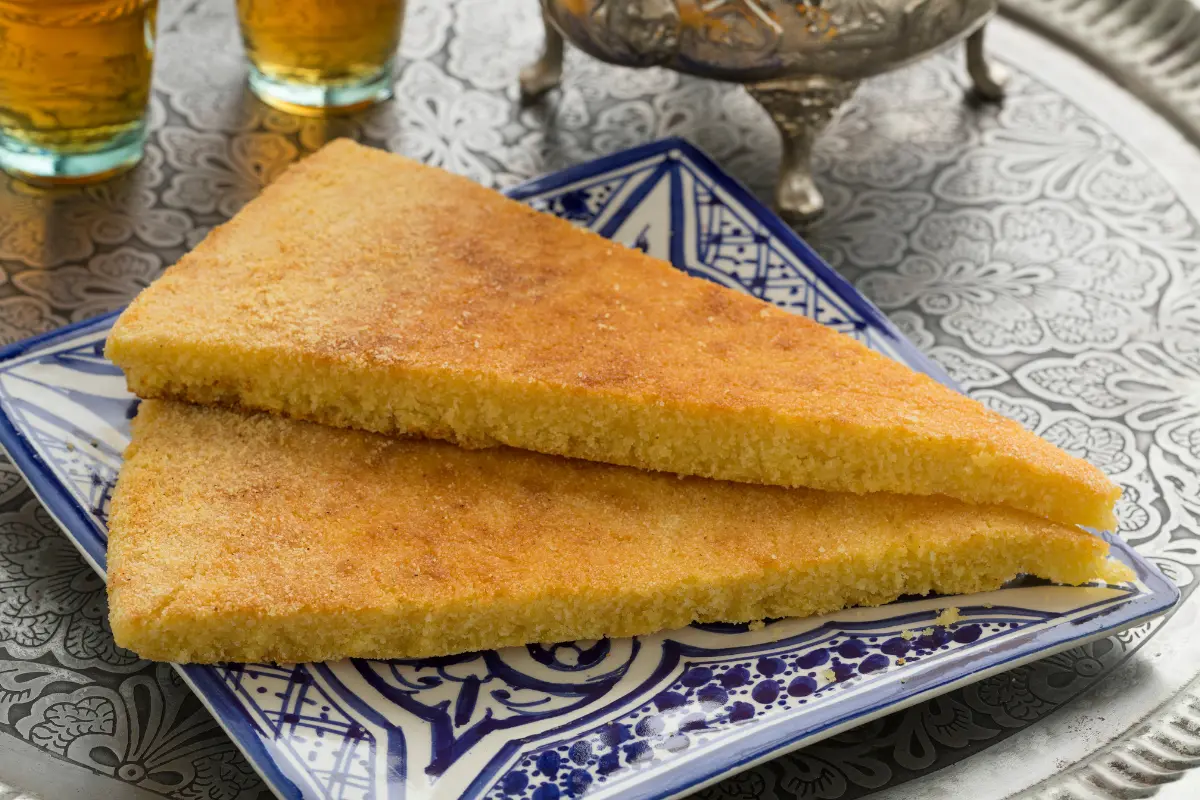
Harcha is one of Morocco's most beloved everyday breads - a rustic, golden semolina flatbread with a uniquely satisfying texture that's crispy and slightly crumbly on the outside, soft and tender within. Unlike oven-baked khobz or the layered complexity of msemen, harcha is wonderfully simple: semolina flour, a touch of butter or oil, milk, and leavening come together into a crumbly dough that's shaped into rounds and cooked on a hot griddle or skillet. The result is a bread with a beautiful golden crust speckled with darker spots from the griddle, a slight crunch that gives way to pillowy softness, and a delicate corn-like sweetness from the semolina. The name 'harcha' comes from the Arabic word meaning 'rough' or 'coarse,' referring to the grainy texture of semolina that defines this bread's character.
Harcha holds a special place in Moroccan food culture as the quintessential breakfast and tea-time bread. In homes across Morocco, harcha appears on breakfast tables split open and spread with butter and honey, or filled with fresh cheese and olive oil. Street vendors sell harcha from carts and small shops, often serving them hot off the griddle. During Ramadan, harcha frequently appears at suhoor (the pre-dawn meal) and iftar, valued for being filling yet easy to digest. The bread pairs beautifully with mint tea throughout the day - the slight sweetness and grainy texture complement tea's aromatic bitterness perfectly. What makes harcha particularly special is its accessibility: the ingredients are pantry staples, no kneading or rising time is required, and no oven is needed. With just a skillet and fifteen minutes of prep, you can have fresh, warm bread.
The beauty of harcha lies in its versatility and regional variations. Some families make theirs with only semolina for maximum graininess, while others add a small portion of all-purpose flour for tenderness. The fat can be butter for richness, olive oil for traditional flavor, or a combination. Sugar is optional - some prefer savory harcha, others enjoy a hint of sweetness. Flavorings like anise seeds, sesame seeds, or orange blossom water can be added. The bread can be thick and cake-like or thin and crispy. Despite these variations, the fundamental character remains: that distinctive semolina texture and the simple satisfaction of fresh griddle-cooked bread.
About This Recipe
Harcha represents one of Morocco's most ancient and enduring bread traditions, with roots extending deep into Berber culinary heritage. Semolina, derived from durum wheat, has been cultivated in North Africa since antiquity, and the Berber peoples developed numerous ways to transform this golden grain into sustenance. Harcha emerged as a practical, accessible bread that required no oven - crucial in traditional Moroccan homes where outdoor clay ovens (farnatchi) were community resources, not household fixtures. A simple griddle over coals or an open fire was all that was needed, making harcha achievable for even the humblest households. The name 'harcha' itself, meaning 'rough' in Arabic, references the characteristically grainy texture of semolina that defines these breads. Across Moroccan history, harcha has been rural and urban food, everyday sustenance and special treat, breakfast staple and tea-time companion. In Berber villages, harcha cooked on earthenware griddles over wood fires. In medina bakeries, vendors sold fresh harcha from small shops. In modern homes, harcha cooks on stovetops and electric griddles. The fundamental preparation has remained remarkably unchanged - semolina, fat, liquid, and heat. Regional variations emerged: some areas favor purely savory harcha with olive oil, others add sugar and butter. Coastal regions might include sesame seeds, inland areas anise. During French colonization, baking powder was adopted, creating lighter texture while maintaining traditional flavor. Today, harcha occupies a special place in Moroccan food culture as comfort food that transcends class and occasion. Street vendors sell it hot off griddles to morning commuters. Families make it for weekend breakfasts. It appears at Ramadan iftar tables. Cafés serve it with mint tea throughout the day. The bread's enduring popularity stems from its perfect balance of simplicity, satisfaction, and versatility - requiring minimal skill and ingredients while delivering maximum comfort and flavor. As Moroccan diaspora communities spread globally, harcha has become an ambassador of Moroccan cuisine, introducing international audiences to the beauty of semolina and griddle breads. More than just flatbread, harcha embodies Moroccan resourcefulness, the central role of semolina in North African cooking, and the universal human desire for warm, fresh bread.
Nutritional Info (per serving)
Recipe Tags
Understanding the Ingredients
Fine Semolina Flour
The heart and soul of harcha is fine semolina flour - the same golden durum wheat product used for couscous. You need approximately two cups of fine semolina for eight breads. Fine semolina (not coarse) is essential - look for semolina labeled 'fine' or 'extra fine,' which feels like slightly grainy flour rather than like sand. In Moroccan markets, this is called 'smida rqiqa.' The semolina gives harcha its characteristic texture, golden color, and slightly sweet, nutty flavor. Do not substitute regular semolina used for pasta - it's too coarse. Do not use semolina flour (which is finely ground) - you want the slightly grainy texture of fine semolina. Available in Middle Eastern or international grocery sections.
All-Purpose Flour (Optional)
Many modern recipes add a small amount of all-purpose flour (about one-quarter to one-half cup) to the semolina to create a slightly softer, less crumbly texture. This is not traditional, but it makes the harcha easier to handle and gives a tender crumb. Purists use 100% semolina for authentic texture and flavor, which is more crumbly but wonderfully grainy. If you're new to harcha, starting with a small amount of all-purpose flour helps ensure success. You can adjust the ratio in future batches based on your preference.
Butter or Oil
Fat provides richness, flavor, and helps create the tender texture. Traditional recipes use melted butter (about four tablespoons or one-quarter cup) for rich flavor. Olive oil is also traditional and creates slightly different but equally delicious harcha with more savory character. You can use a combination of both. Vegetable oil works but provides less flavor. The fat should be at room temperature or slightly warm (melted butter should cool slightly before mixing). The fat coats the semolina grains and creates the bread's characteristic texture.
Milk
Milk provides the liquid that brings the dough together and contributes to tenderness and flavor. You need approximately three-quarters to one cup of warm whole milk. Whole milk is best for richness, but 2% works. The milk should be warm (not hot) to help activate the baking powder and make mixing easier. Some recipes use a combination of milk and water, or even buttermilk for tang. The exact amount varies based on the semolina's absorption - you want a crumbly dough that holds together when pressed, not a wet batter or dry, sandy mixture.
Leavening
Harcha uses baking powder (about two teaspoons) for lift and lightness. This is a modern addition - traditional harcha had no leavening and was denser. Baking powder creates a lighter, more cake-like interior texture while maintaining the crispy exterior. Make sure your baking powder is fresh for best rise. Some recipes add a pinch of baking soda as well, especially if using buttermilk. A pinch of salt (about half a teaspoon) enhances all the flavors.
Sugar (Optional)
Sugar is optional in harcha - some families make theirs savory, others prefer a hint of sweetness. If adding sugar, use one to three tablespoons depending on preference. Sugar enhances browning, adds subtle sweetness that complements honey or jam toppings, and balances the grainy semolina flavor. For savory harcha served with cheese or used for sandwiches, omit the sugar entirely. The choice is entirely personal and regional.
Flavorings (Optional)
Traditional flavorings include anise seeds (one teaspoon) for subtle licorice notes, sesame seeds (two tablespoons) for nuttiness and texture, orange blossom water (one teaspoon) for floral aroma, or vanilla extract for sweetness. These are all optional and vary by family preference. Some cooks add nothing beyond the base ingredients, letting the semolina's natural flavor shine.
Step-by-Step Cooking Guide
Mix Dry Ingredients
In a large mixing bowl, combine two cups of fine semolina flour, one-quarter cup of all-purpose flour (if using), two teaspoons of baking powder, half a teaspoon of salt, and one to three tablespoons of sugar (if using). If adding any dry flavorings like anise seeds or sesame seeds, add them now. Whisk together thoroughly to ensure the baking powder is evenly distributed throughout the flour. This even distribution is important for uniform rise and texture.
Tip: Whisk dry ingredients well - lumps of baking powder create uneven texture. Fresh baking powder is essential for proper rise. Adjust sugar to preference.
Add Fat
Add four tablespoons of melted butter (cooled slightly) or olive oil to the dry ingredients. If using solid butter, melt it and let it cool to warm room temperature before adding - too hot and it will cook the dough. Using your fingertips or a pastry cutter, rub the fat into the semolina mixture until it resembles coarse breadcrumbs or wet sand. Every grain of semolina should be coated with fat. This step is crucial - it creates the characteristic crumbly yet tender texture. Take your time to work the fat in thoroughly. The mixture should hold together when squeezed but fall apart when released.
Tip: Work the fat in thoroughly until no dry flour remains and mixture resembles wet sand. This step creates the signature texture. Cooled melted butter or room temperature oil works best.
Add Liquid and Form Dough
Make a well in the center of the semolina mixture. Pour in three-quarters cup of warm milk (and one teaspoon of orange blossom water if using). Using your hand or a wooden spoon, gradually incorporate the semolina into the milk, mixing until everything comes together into a cohesive, crumbly dough. The dough should feel like wet sand - crumbly and grainy, but when you squeeze a handful firmly, it should hold together and form a ball. If the mixture is too dry and won't hold together at all, add milk one tablespoon at a time. If it's too wet and sticky, add a tablespoon of semolina. The correct consistency is crucial - too dry and the harcha will crack and fall apart during cooking; too wet and it won't have the right texture.
Tip: The dough should be crumbly but hold together when firmly pressed. Adjust liquid gradually - it's easier to add than remove. Different semolina brands absorb different amounts of liquid.
Rest Dough
Cover the bowl with a clean kitchen towel and let the dough rest for ten to fifteen minutes at room temperature. This resting period allows the semolina to fully absorb the liquid, the baking powder to begin activating, and the dough to become easier to handle. During this time, the texture will improve and the dough will become more cohesive. This rest is optional but highly recommended for best results, especially if you're new to making harcha.
Tip: Resting improves texture and makes shaping easier. The dough will become slightly more cohesive. Use this time to heat your griddle or skillet.
Shape the Harcha
Divide the dough into eight equal portions (about one-third cup each). For perfectly equal portions, you can weigh them - each should be about 70-80 grams. Roll each portion between your palms into a ball, then flatten into a disc about half an inch thick and three to four inches in diameter. The edges will be slightly rough and crumbly - this is normal and authentic. You can smooth them gently with your fingers. Alternatively, some cooks press the dough into round cookie cutters or small bowls for perfectly uniform shapes, then carefully unmold. The thickness is important - too thin and they'll be dry and crispy throughout; too thick and the center may stay undercooked while the outside burns. Half an inch is the sweet spot for crispy exterior and tender interior.
Tip: Keep thickness consistent for even cooking. Slightly rough edges are authentic. If dough cracks while shaping, press it back together - add a drop of milk if needed. Work gently - don't compress too hard.
Heat Griddle
Heat a heavy griddle, cast-iron skillet, or non-stick pan over medium to medium-low heat. This is crucial - the heat must be moderate, not high. Harcha needs time to cook through, and too-high heat will burn the outside while leaving the inside raw. The griddle should be hot enough that a drop of water sizzles and evaporates within a few seconds, but not so hot that it evaporates instantly. Do not oil or butter the griddle - harcha cooks on a dry surface. A well-seasoned cast-iron skillet or non-stick pan works best. Heat the griddle for at least five minutes before adding the first harcha to ensure even, consistent heat.
Tip: Medium to medium-low heat is essential - too high burns the outside. Dry griddle - no oil or butter needed. Cast iron or non-stick works best. Give it time to heat evenly.
Cook the Harcha
Carefully place the shaped harcha on the hot, dry griddle, leaving space between them (cook in batches if necessary - don't crowd). Cook for about five to seven minutes on the first side, without moving them. You'll see the bottom edges begin to look golden and the surface will start to look less wet. When the bottom is golden brown with darker spots and the edges are set and slightly crispy, carefully flip using a spatula. Cook the second side for another five to seven minutes until golden brown and cooked through. The harcha should sound slightly hollow when tapped and feel firm but springy when pressed gently. The interior should be cooked through but still tender and moist. If the outside is browning too quickly but the inside feels raw, reduce heat. If they're taking much longer than fifteen minutes total, increase heat slightly. Total cooking time is about twelve to fifteen minutes per batch.
Tip: Don't flip too early - let the bottom fully set and brown. Adjust heat if browning too fast or too slow. The harcha should be golden with darker spots. Cook until firm and springy to touch.
Serve
Remove cooked harcha from the griddle and wrap in a clean kitchen towel to keep warm and prevent drying out while you cook the remaining batches. Serve warm, ideally right off the griddle. The traditional way to eat harcha is to split it open horizontally (like a pita) while still warm and spread with butter and honey, or fill with fresh cheese and olive oil. Harcha is also delicious simply torn and eaten alongside mint tea. For breakfast, serve with jam, amlou (almond butter), or cheese. The contrast between the crispy exterior and tender, steaming interior is what makes fresh harcha so special.
Tip: Serve immediately while warm for best texture. Split horizontally and fill with butter and honey for traditional serving. Wrapping in towel keeps them soft. Best eaten fresh.
Common Mistakes to Avoid
❌ Using Coarse Semolina
Solution: Coarse semolina (used for pasta) creates gritty, unpleasant texture. Always use fine semolina, labeled 'fine' or 'extra fine' - it should feel like slightly grainy flour, not like sand. Look in Middle Eastern or international grocery sections.
❌ Adding Too Much Liquid
Solution: Wet, sticky dough creates dense, gummy harcha that won't cook properly. The dough should be crumbly like wet sand - it should only hold together when firmly pressed. Add liquid gradually and stop when you reach the right consistency, even if you haven't used all the milk called for.
❌ Cooking at Too High Heat
Solution: High heat burns the exterior before the interior cooks through, leaving raw centers and bitter, charred outsides. Use medium to medium-low heat and be patient. Harcha needs twelve to fifteen minutes total cooking time to cook through properly while developing golden crust.
❌ Flipping Too Early
Solution: Flipping before the bottom is properly set causes harcha to fall apart or stick to the griddle. Wait until the bottom is golden brown with the edges set and slightly crispy - about five to seven minutes - before flipping. Be patient.
❌ Not Working Fat In Thoroughly
Solution: Inadequately incorporated fat creates pockets of dry flour and uneven texture. Take time to rub the butter or oil into the semolina until the entire mixture resembles coarse breadcrumbs with no dry flour remaining. Every grain should be coated.
❌ Making Them Too Thick or Too Thin
Solution: Too thick and the center stays raw while outside burns. Too thin and they're dry throughout. Aim for about half an inch thick - this allows the interior to cook through while the exterior gets crispy and golden. Consistent thickness is key.
Ingredient Substitutions
Instead of: Fine Semolina
Use: No good substitute exists for traditional texture - semolina defines harcha's character. In an emergency, fine cornmeal or cream of wheat creates different but interesting flatbreads, though they won't be authentic harcha.
Instead of: Whole Milk
Use: 2% milk, buttermilk (adds tang - reduce baking powder slightly), or even water works. Non-dairy milk like almond or oat milk creates different flavor but works structurally. Buttermilk creates particularly delicious, tangy harcha.
Instead of: Butter
Use: Olive oil is traditionally used and creates excellent harcha with more savory character. Vegetable oil works but has less flavor. Ghee adds rich, nutty flavor. Vegan butter substitutes work for dairy-free version.
Instead of: Baking Powder
Use: For traditional dense harcha, omit leavening entirely. For lighter texture, baking powder is essential and has no good substitute - it's what creates the tender, cake-like interior.
Serving Suggestions
Split warm harcha horizontally and spread generously with butter and honey - the classic Moroccan breakfast.
Fill with fresh cheese (like jben) and drizzle with olive oil and za'atar for savory option.
Serve alongside steaming glasses of Moroccan mint tea throughout the day for tea time.
Spread with amlou (Moroccan almond butter with honey and argan oil) for rich, nutty treat.
Use as bread for breakfast sandwiches - fill with eggs, cheese, olives, or preserved lemon.
Serve with Moroccan dips like zaalouk (eggplant), taktouka (peppers and tomatoes), or khlea (preserved meat).
During Ramadan, serve at suhoor or iftar with dates, cheese, and olives.
Accompany soups like harira or chorba for complete meal - use to soak up broth.
Storage & Reheating Guide
Storage
Harcha is best eaten fresh off the griddle while still warm. However, cooked harcha can be stored at room temperature in an airtight container or resealable bag for two to three days. The texture will soften as they sit, losing some of the crispy exterior, but they remain delicious. For longer storage, freeze cooked harcha in a freezer bag with parchment paper between each piece for up to three months. Frozen harcha can be reheated directly from frozen. Uncooked dough can be refrigerated for up to 24 hours - shape into discs, stack with parchment between them, cover well, and refrigerate. Let come to room temperature before cooking.
Reheating
To reheat harcha and restore crispy exterior, the best method is to heat them on a dry skillet or griddle over medium heat for two to three minutes per side until warmed through and the crust crisps up again. This recreates the just-cooked texture beautifully. Alternatively, reheat in a 350°F (175°C) oven for five to eight minutes. Microwave reheating works in a pinch (thirty to forty-five seconds) but won't restore crispiness - the harcha will be soft throughout. Toasting halved harcha in a toaster works well and creates crispy surfaces.
Tips: Wrapping warm harcha in a kitchen towel immediately after cooking keeps them soft if you prefer that texture. Store completely cooled harcha to prevent condensation and sogginess. Griddle reheating is best for restoring crispy exterior. Make fresh when possible - they're quick enough that fresh batches are feasible.
Frequently Asked Questions
Recipe by

Similar Recipes


Our Recipe Ebooks
Discover our collection of authentic Moroccan recipe ebooks. Learn traditional cooking methods and create delicious meals at home.
The Moroccan Vegen
The Royal Moroccan Table -Part1
The Royal Moroccan Table -Part2
YouTube Channel
Watch step-by-step cooking videos, learn professional techniques, and get inspired by traditional and modern recipes from around the world.
Latest Video
"Traditional Moroccan Tagine Masterclass"