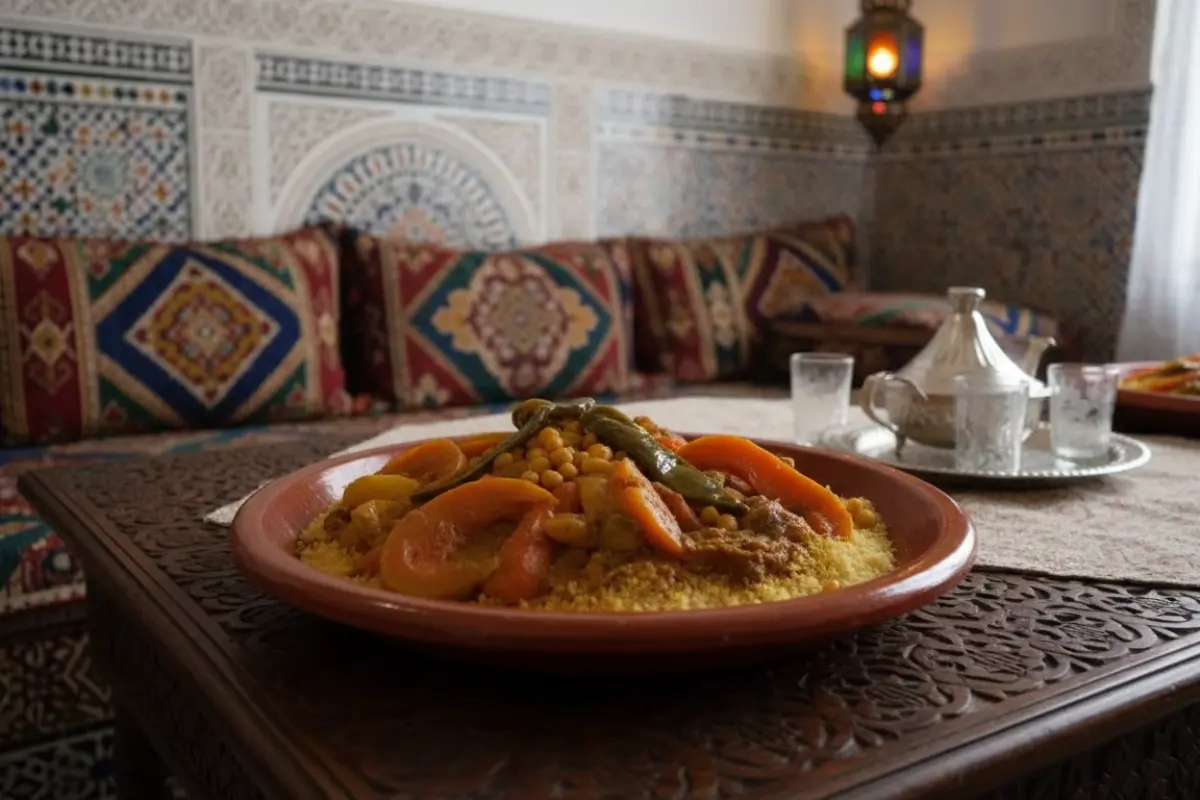
Couscous with Seven Vegetables
كسكس
About This Dish
Morocco's most sacred dish — hand-rolled semolina steamed three times to cloud-like perfection, crowned with seven seasonal vegetables and slow-braised lamb in golden broth.
Cultural Heritage
History & Origins
Couscous is Morocco's national dish and arguably the most important food in North African culture. Hand-rolled from semolina wheat, it has been prepared by Amazigh women for over a millennium. The word "couscous" derives from the Amazigh "seksu," meaning well-formed or rounded. Friday Couscous is a sacred tradition tied to the weekly congregational prayer (Jumu'ah) — families gather after mosque to share a communal pot. UNESCO inscribed couscous on its Intangible Cultural Heritage list in 2020, recognizing a dish shared across Morocco, Algeria, Tunisia, and Mauritania. The seven-vegetable version symbolises abundance and is considered a blessing.
What You Need
Ingredients
Pro Tips
Chef's Secrets
Regional Variations
Types & Variants
Couscous with Lamb & Seven Vegetables — the classic Friday version
Couscous Tfaya — topped with caramelised onions, raisins and almonds
Couscous with Chicken & Caramelised Onions — popular in Rabat
Couscous Belboula — made with barley, traditional in the Rif mountains
Sweet Couscous Seffa — with cinnamon, powdered sugar and raisins, a dessert version
Where It Comes From
Origin Region — Rabat, Morocco
Map data © OpenStreetMap contributors
Ready to Cook?
Get the full step-by-step recipe with exact measurements and chef's secrets.
Full RecipeFree • No signup required
Quick Facts
Nutrition
Per serving (approximate)
520kcal
Calories
28g
Protein
72g
Carbs
14g
Fat
You Might Also Like