
15
Prep (min)
40
Cook (min)
6
Servings
Easy
Level
Introduction
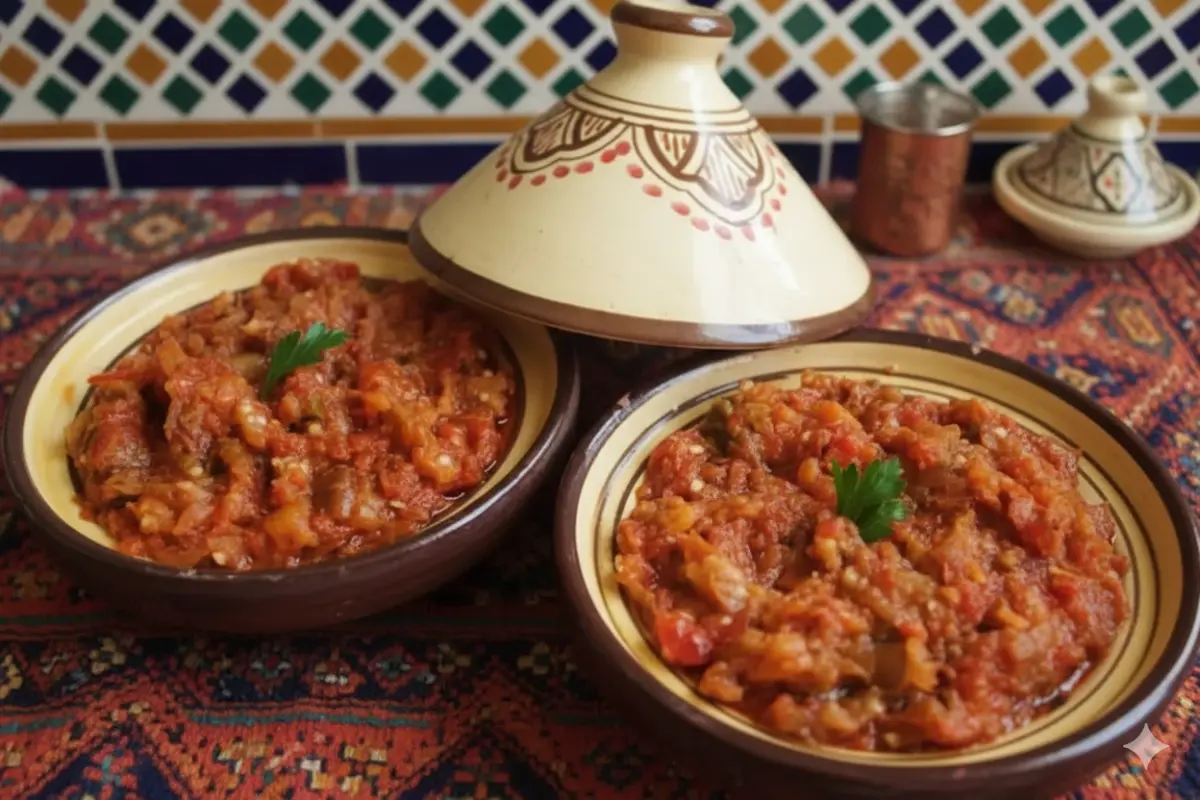
Zaalouk is one of Morocco's most beloved and ubiquitous dishes - a rustic, flavorful cooked salad that appears on nearly every Moroccan table as part of the mezze spread that begins meals. This humble preparation of eggplant and tomatoes, seasoned with garlic, cumin, and paprika, embodies the Moroccan genius for transforming simple, affordable ingredients into something deeply satisfying through proper technique and judicious seasoning. The name 'zaalouk' likely derives from a Berber word, reflecting the dish's ancient roots in North African cooking that predate Arab influence.
What makes zaalouk special is its texture and depth of flavor. Unlike fresh vegetable salads, zaalouk is cooked until the eggplant and tomatoes break down into a thick, almost jam-like consistency with a rustic, chunky texture. The eggplant is typically roasted or grilled first to develop smoky depth and remove bitterness, then combined with tomatoes and aromatics and cooked until everything melds together. The result is a dish that is simultaneously smoky, tangy, garlicky, and aromatic - complex flavors from simple ingredients. Zaalouk can be served warm, at room temperature, or cold, making it perfect for advance preparation and ideal for mezze spreads, picnics, or as an accompaniment to grilled meats and tagines.
In Moroccan homes, zaalouk appears constantly - it is everyday food that never becomes boring because each family has subtle variations in technique and seasoning. Some prefer their zaalouk quite smooth, almost pureed, while others maintain chunky texture. Some use more garlic, others emphasize cumin or add fresh cilantro. The best zaalouk balances all elements: smoky eggplant, sweet-tart tomatoes, pungent garlic, warm spices, bright herbs, and good olive oil binding everything together. This is peasant food elevated through care and tradition into something that satisfies both body and soul.
About This Recipe
Zaalouk represents one of Morocco's most ancient and beloved culinary traditions - a dish whose roots stretch back centuries to the Berber peoples of North Africa. The name itself likely derives from Berber origins, reflecting the indigenous culture that shaped much of Moroccan cuisine before Arab influence arrived in the seventh century. Eggplant, native to India and Southeast Asia, traveled westward along ancient trade routes, arriving in the Mediterranean and North Africa during the early Islamic period. Moroccan cooks embraced this versatile vegetable, developing numerous preparations that showcased its ability to absorb flavors and transform through cooking. Zaalouk emerged as one of the most popular eggplant dishes, combining the vegetable with tomatoes (introduced from the New World in the sixteenth century), garlic, and the warm spices that define Moroccan cooking. The dish reflects the ingenious resourcefulness of Moroccan home cooks who transformed humble, affordable ingredients into something deeply satisfying through proper technique and judicious seasoning. The practice of charring eggplant over open flame - still common in Moroccan households - predates modern cooking equipment and developed from necessity when cooking was done over wood or charcoal fires. This technique not only cooked the eggplant but imparted essential smoky flavor that became integral to zaalouk's character. As Moroccan cuisine developed its sophisticated mezze culture - the tradition of beginning meals with numerous small salads and appetizers - zaalouk became a staple alongside other cooked salads like taktouka (peppers and tomatoes), khizou (carrots), and beet salad. Each Moroccan region and family developed subtle variations in zaalouk preparation: some prefer it quite smooth and almost pureed, others maintain chunky texture; northern regions sometimes add more tomatoes, southern areas might emphasize cumin more heavily; urban recipes often include tomato paste for concentrated flavor, while rural versions rely entirely on fresh tomatoes. The dish's versatility and forgiving nature made it beloved across all social classes - zaalouk graced both humble family tables and elegant dinner parties, always appreciated for its bold flavors and satisfying nature. During the twentieth century, as Moroccan cuisine gained international recognition, zaalouk became one of the dishes that introduced global audiences to Moroccan cooking. Its similarity to other Mediterranean eggplant preparations like baba ganoush and caponata made it accessible to international palates, while its distinctive Moroccan spicing set it apart. Today, zaalouk remains ubiquitous in Morocco - it appears daily in homes, features prominently in restaurant mezze spreads, stars at celebrations and festivals, and continues to be passed down from grandmothers to granddaughters with each family's subtle variations. The dish has also gained appreciation among modern health-conscious eaters who recognize zaalouk as nutritious, plant-based eating at its most delicious - vegetables, olive oil, and spices creating food that satisfies without heaviness. In Moroccan diaspora communities worldwide, zaalouk serves as edible memory, a taste of home that connects people to their roots. The simple act of charring an eggplant, stirring in tomatoes and spices, and sitting down to eat zaalouk with bread becomes a ritual that transcends mere eating to become cultural preservation and celebration of identity.
Nutrition / serving
Recipe Tags
Understanding the Ingredients
Eggplant
The foundation of zaalouk requires about two pounds of eggplant - typically two to three medium globe eggplants or several smaller Italian eggplants. The eggplant should be firm, glossy, and heavy for its size with no soft spots or browning. The key to great zaalouk is properly preparing the eggplant: it must be roasted, grilled, or fried until the flesh is completely soft and develops smoky, caramelized flavor. This initial cooking step is crucial and cannot be skipped. Many Moroccan cooks roast whole eggplants over open flame or under a broiler until the skin is charred and the interior is soft and creamy. This charring adds essential smoky depth. Alternatively, eggplant can be cubed and roasted in the oven or fried until golden and tender. The cooking method affects the final flavor - charred whole eggplant produces the smokiest zaalouk, oven-roasted cubes create milder flavor, and fried eggplant adds richness. Regardless of method, the eggplant must be very soft and tender, not al dente.
Tomatoes
Fresh ripe tomatoes provide essential acidity, moisture, and sweet-tart flavor that balances the eggplant. You need about one and a half pounds of tomatoes - approximately four to five medium tomatoes. The tomatoes should be ripe and flavorful; during winter when fresh tomatoes lack flavor, canned crushed tomatoes or tomato puree work excellently. Some cooks peel and seed fresh tomatoes for smoother texture, while others use them with skin on for rustic zaalouk. Cherry or grape tomatoes can substitute, providing concentrated sweetness. The tomatoes are cooked down until they break down into a thick sauce that binds the eggplant. Some recipes include tomato paste (one to two tablespoons) for concentrated tomato flavor and deeper color. The tomatoes should cook until their liquid evaporates and the mixture thickens considerably.
Garlic
Garlic is essential to zaalouk's character, providing pungent depth that defines the dish. You need generous amounts - at least four to six large cloves, minced or crushed. Some Moroccan families use even more garlic, making zaalouk quite assertive. Fresh garlic is mandatory; garlic powder cannot substitute. The garlic is added during cooking and mellows as it cooks in the oil with the tomatoes, losing its harsh raw bite while maintaining aromatic presence. For maximum garlic impact, some cooks add half the garlic during cooking and stir in the remaining raw garlic just before serving for bright, sharp notes alongside the mellowed cooked garlic. The amount of garlic can be adjusted to taste, but zaalouk should be noticeably garlicky.
Spices and Seasonings
The spice profile is simple but essential. Ground cumin is the dominant spice, providing earthy warmth - you need about one to two tablespoons. Cumin is the soul of zaalouk and should be generous. Paprika, preferably smoked, adds color and mild sweetness - about one tablespoon. Sweet paprika works, but smoked paprika contributes additional depth. Ground cayenne or red pepper flakes provide optional heat - start with half a teaspoon and adjust to taste. Some recipes include a pinch of ground coriander for citrusy notes. Salt is crucial for bringing out all the flavors - zaalouk needs assertive seasoning. Black pepper adds subtle heat. The spices should be fresh and aromatic; stale spices produce flat zaalouk.
Fresh Herbs
Fresh cilantro and flat-leaf parsley are traditional finishing herbs, added at the end to provide brightness and fresh flavor that balances the rich, cooked vegetables. You need about half a cup total of chopped herbs - use all cilantro, all parsley, or a combination based on preference. The herbs should be fresh, vibrant, and aromatic. They are stirred in after cooking and just before serving, or used as a final garnish. Some zaalouk recipes include herbs during cooking as well for deeper herb flavor. Fresh herbs are strongly preferred, though in their absence, a squeeze of fresh lemon juice can provide some of the brightness herbs contribute.
Olive Oil
Good quality olive oil is essential, serving as both cooking medium and flavor component. You need about one quarter to one third cup of olive oil. Extra virgin olive oil is preferred for its fruity flavor and health benefits. The oil should be used generously - this is Mediterranean cooking where olive oil is celebrated, not avoided. Some oil is used for cooking the vegetables and spices, and additional oil is drizzled over the finished zaalouk for richness and sheen. The olive oil binds everything together and adds silky mouthfeel. Some traditional preparations use more oil than modern recipes, creating very rich zaalouk. Adjust to your preference, but do not skimp completely or the zaalouk will be dry.
Acid and Optional Elements
Fresh lemon juice (from half to one lemon) or vinegar adds essential brightness and acidity that balances the rich vegetables. The acid is typically added at the end to preserve its fresh taste. Some cooks add preserved lemon for complex tangy notes. Optional additions include a pinch of sugar to balance acidity, fresh green chilies for heat, or a drizzle of honey for subtle sweetness. These elements should enhance, not dominate, allowing the eggplant and tomato to remain the stars.
Step-by-Step Cooking Guide
Roast or Char the Eggplant
40 minThe first and most crucial step determines zaalouk's final flavor. Choose your method: For maximum smokiness (traditional), place whole eggplants directly over a gas burner flame, turning frequently with tongs, until the skin is completely charred black and the eggplant collapses and feels very soft, about fifteen to twenty minutes. Alternatively, char under a broiler, turning occasionally, until completely charred and soft. For oven method, preheat to 450°F, prick eggplants with a fork, place on a baking sheet, and roast for thirty-five to forty-five minutes until completely soft and collapsing. For fried version, peel and cube the eggplant, salt generously, let sit thirty minutes to draw out moisture and bitterness, rinse and pat dry, then fry in olive oil until golden brown and very tender. Whichever method you choose, the eggplant must be completely soft - no firmness should remain. Once cooked, let the eggplant cool slightly so you can handle it.
Tip: Open flame or broiler charring creates the most authentic smoky flavor. If roasting in the oven, line the sheet with foil for easier cleanup. The eggplant should be very soft and collapsing when properly cooked.
Peel and Chop the Eggplant
10 minOnce the eggplant is cool enough to handle, use your hands or a paring knife to peel away and discard the charred skin - it should slip off easily. Place the peeled eggplant flesh in a colander and gently press or squeeze to remove excess liquid and any remaining bitter juices. This draining step is important for preventing watery zaalouk. Transfer the drained eggplant to a cutting board and roughly chop it into small pieces. The texture is up to you - some prefer finely chopped for smooth zaalouk, others keep it chunky. You can also use a fork to mash the eggplant into a rough puree. The eggplant will break down further during cooking, so do not worry about achieving perfect consistency at this stage. Set the prepared eggplant aside.
Tip: Do not skip draining the eggplant - excess moisture makes watery zaalouk. Save some of the smoky cooking liquid if you want to add it back for flavor. The charred skin must be completely removed.
Prepare the Tomatoes
10 minIf using fresh tomatoes and you prefer smooth zaalouk, you can peel them: score an X on the bottom of each tomato, drop into boiling water for thirty seconds, then plunge into ice water - the skins will slip off easily. Otherwise, simply dice the tomatoes, including seeds and juice. If using canned crushed tomatoes, have them ready. Mince or crush four to six large garlic cloves. Chop the fresh herbs and set aside - these will be added at the end. Measure all your spices and have them ready: cumin, paprika, cayenne if using, salt, and pepper.
Tip: Peeling tomatoes is optional but creates smoother texture. Save all the tomato juice - it contributes flavor and moisture. Having everything prepped before you start cooking makes the process smooth.
Cook the Tomato Base
15 minHeat three to four tablespoons of olive oil in a large, wide skillet or sauté pan over medium heat. When the oil shimmers, add the minced garlic. Stir constantly for about one minute until fragrant and just beginning to turn golden - do not let it brown or burn, which creates bitterness. Immediately add the diced tomatoes (or canned crushed tomatoes). If using tomato paste, add it now as well. Stir everything together. Add all the spices: cumin, paprika, cayenne if using, salt, and black pepper. Stir well to combine and coat the tomatoes with the spices. Let the mixture cook over medium heat, stirring occasionally, for about ten to fifteen minutes. The tomatoes should break down, their liquid should evaporate, and the mixture should thicken considerably into a concentrated, aromatic sauce. The oil should begin to separate slightly from the tomatoes.
Tip: Watch the garlic carefully - it burns quickly. The tomatoes need to cook down substantially to concentrate their flavor. Stir occasionally to prevent sticking and burning on the bottom.
Combine and Cook Everything Together
15 minAdd the prepared eggplant to the cooked tomato mixture. Stir well to combine everything thoroughly. Reduce heat to medium-low. Let the zaalouk cook together, stirring frequently, for about ten to fifteen minutes. During this time, the eggplant and tomatoes will meld together, the eggplant will break down further into the tomato sauce, and the flavors will integrate beautifully. The mixture should be quite thick and jammy, not watery. If it seems too dry and is sticking to the pan, add a tablespoon or two of water or olive oil. If it seems too wet, continue cooking uncovered to evaporate excess liquid. Use a wooden spoon or potato masher to mash some of the eggplant into the tomatoes if you prefer smoother consistency, or leave it chunky if you prefer texture. Taste and adjust seasoning - zaalouk needs assertive salt and spices to shine.
Tip: The texture should be thick enough to mound on a spoon but not dry. Stir frequently to prevent sticking. This cooking period is when all the flavors meld together beautifully.
Finish and Rest
10 minOnce the zaalouk has cooked together and reached your desired consistency - thick, jammy, and well-combined - remove it from heat. Stir in the fresh chopped herbs (cilantro and/or parsley). Add a generous squeeze of fresh lemon juice or a splash of vinegar to brighten the flavors. Drizzle with one to two tablespoons of your best olive oil and stir it in. Taste one final time and adjust seasoning if needed - you might want more salt, lemon juice, cumin, or cayenne. The zaalouk should be boldly flavored, slightly smoky, garlicky, and well-balanced. Transfer to a serving dish. Zaalouk is traditionally served at room temperature, though it can be enjoyed warm or even cold from the refrigerator. Let it rest for at least fifteen to thirty minutes before serving to allow flavors to settle and meld. The zaalouk will continue to thicken slightly as it cools.
Tip: The resting period improves flavor significantly - zaalouk made hours ahead or even the day before often tastes better. Adjust final seasoning after resting as flavors intensify. Fresh herbs at the end keep their vibrant flavor.
Serve Traditionally
5 minServe zaalouk at room temperature or slightly warm as part of a mezze spread or as a side dish. Transfer to a shallow serving bowl or plate. Make a shallow well in the center and fill it with a generous drizzle of good olive oil - this is traditional presentation. Garnish with additional fresh herbs, a dusting of paprika, or olives if desired. Traditionally, zaalouk is eaten by scooping it up with pieces of Moroccan bread (khobz) or pita. It can also be served as a side dish alongside grilled meats, fish, tagines, or couscous. Some people enjoy zaalouk as a sandwich filling or as a topping for grilled bread. Provide small plates and serving spoons, or serve family-style with everyone eating from the communal dish using bread to scoop.
Tip: The olive oil pool in the center is traditional and adds richness. Room temperature is ideal as the flavors are most pronounced. Zaalouk keeps beautifully and can be made entirely ahead.
Common Mistakes to Avoid
✗ Not Cooking Eggplant Enough Initially
Fix: Undercooked eggplant remains firm and bitter. The eggplant must be completely soft and tender from the initial roasting, grilling, or frying before adding to the tomatoes. Cook until it collapses and has no firmness.
✗ Not Draining the Eggplant
Fix: Eggplant contains lots of moisture that will make watery zaalouk. After cooking, always squeeze or press the eggplant in a colander to remove excess liquid before proceeding.
✗ Not Cooking Down the Tomatoes Enough
Fix: If the tomatoes remain too liquid, the zaalouk will be soup-like instead of thick and jammy. Cook the tomatoes until their liquid evaporates substantially before adding eggplant, then continue cooking until very thick.
✗ Under-Seasoning
Fix: Zaalouk needs bold seasoning to shine. Do not be timid with salt, garlic, cumin, and lemon juice. Taste and adjust until the flavors are prominent and well-balanced. Bland zaalouk is disappointing.
✗ Using Old, Stale Spices
Fix: Cumin and paprika lose potency quickly. Using old spices produces flat-tasting zaalouk. Check dates, smell your spices, and replace them if they lack aroma. Fresh spices make a dramatic difference.
✗ Skipping the Resting Period
Fix: Serving zaalouk immediately after cooking means the flavors have not had time to meld. Let it rest at least fifteen to thirty minutes, or make it hours or a day ahead for best flavor development.
✗ Adding Herbs During Cooking
Fix: If fresh herbs are added too early, they lose their bright, fresh flavor and turn dull and khaki-colored. Add herbs at the very end, after cooking, to maintain their vibrant flavor and color.
Ingredient Substitutions
Instead of: Fresh Eggplant
Use: While fresh eggplant is ideal, in a pinch you can use frozen roasted eggplant (thawed and drained). Jarred roasted eggplant can work but may be softer. The flavor will not be quite as good as fresh.
Instead of: Fresh Tomatoes
Use: One 28-ounce can of crushed tomatoes or two 14-ounce cans of diced tomatoes (drained) work excellently, especially in winter. Canned often has better flavor than pale winter fresh tomatoes.
Instead of: Fresh Cilantro
Use: If you cannot use cilantro, use all fresh parsley instead. Fresh mint can also substitute for a different but delicious flavor profile. Dried herbs are not recommended.
Instead of: Cumin
Use: While cumin is traditional and preferred, ground coriander or caraway seeds can provide different but pleasant earthy notes. However, the flavor will differ from classic zaalouk.
Serving Suggestions
Serve zaalouk as part of a traditional Moroccan mezze spread alongside other salads like taktouka, carrot salad, and beet salad.
Use as a side dish for grilled meats, fish, or kebabs - the smoky flavors complement grilled proteins beautifully.
Serve alongside tagines or couscous as part of a complete Moroccan meal.
Spread on grilled or toasted bread for an excellent appetizer or light lunch.
Use as a filling for sandwiches, wraps, or as a topping for flatbreads.
Serve with plenty of warm Moroccan bread (khobz) or pita for scooping.
Accompany with olives, feta cheese, and fresh vegetables for a Mediterranean mezze platter.
Drizzle generously with good olive oil and garnish with fresh herbs just before serving.
Zaalouk is perfect for potlucks and parties as it is served at room temperature and tastes better when made ahead.
Storage & Reheating
Storage
Zaalouk actually improves in flavor after a day or two as the flavors meld and develop. It is an ideal make-ahead dish. Allow to cool completely, then transfer to an airtight container and refrigerate for up to five days. The zaalouk will thicken further in the refrigerator, which is normal. Store any fresh herb garnish separately and add just before serving. Zaalouk can also be frozen for up to three months in freezer-safe containers, though the texture may become slightly softer after thawing. Thaw overnight in the refrigerator before using.
Reheating
Zaalouk is traditionally served at room temperature or slightly warm, not hot. To serve, remove from refrigerator thirty minutes to one hour before serving to bring to room temperature. If you prefer it warm, reheat gently on the stovetop over low heat, stirring occasionally, or microwave individual portions. Add a splash of water or olive oil if it seems dry after storage. After reheating, refresh with a squeeze of lemon juice, fresh herbs, and a drizzle of olive oil. Many people actually prefer zaalouk cold straight from the refrigerator.
Make zaalouk at least a few hours ahead, or even the day before, for best flavor. The texture will thicken during storage - thin with water or olive oil if desired. Always refresh with fresh herbs and olive oil before serving for best presentation and flavor.
Frequently Asked Questions
Recipe by

Samira Tazi
سميرة تازي
Salad & Meze Specialist
View all recipes by Samira →
You May Also Like
Our Ebooks

The Moroccan Vegan
$12.56
The Royal Moroccan Table — Part 1
$9.99
The Royal Moroccan Table — Part 2
$9.99
YouTube
Watch step-by-step cooking videos and learn traditional Moroccan techniques.
450+
Subscribers
150+
Videos