
Introduction
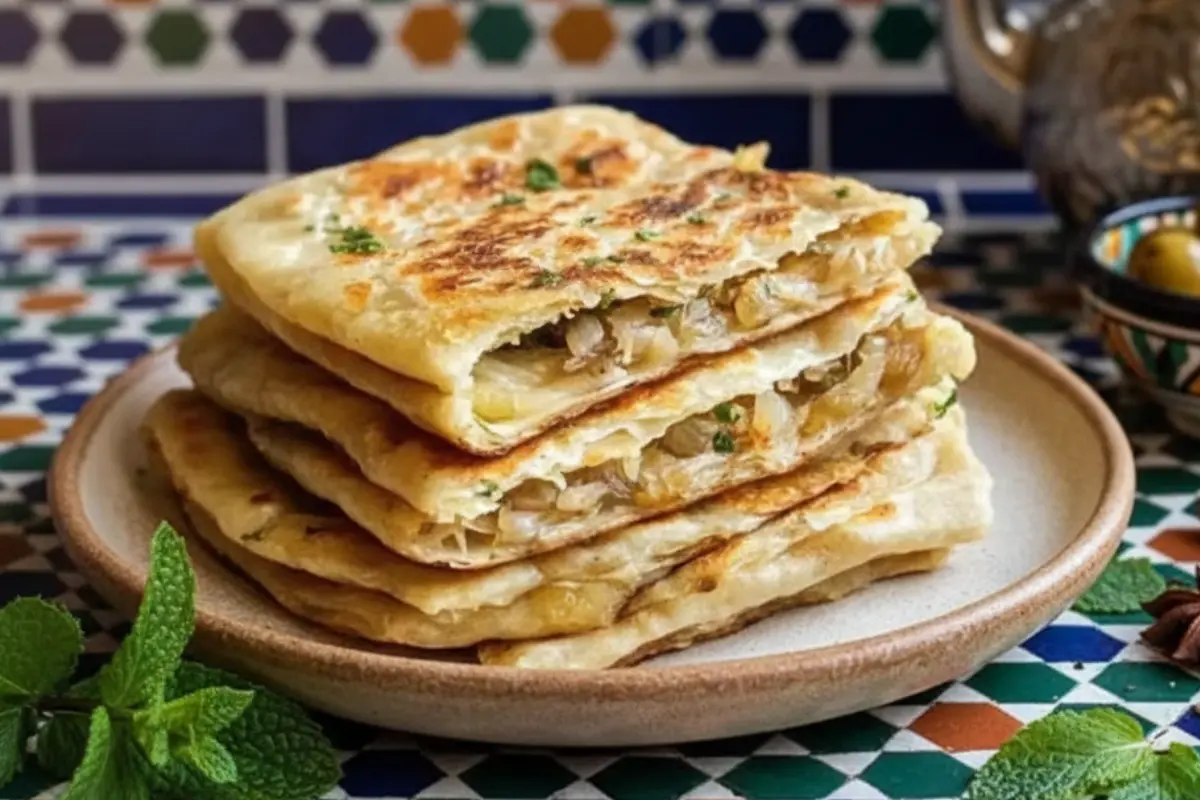
Msemen mahshi - stuffed msemen - represents the beloved Moroccan layered flatbread elevated to new heights with savory fillings. While plain msemen is wonderful on its own, stuffing it with aromatic mixtures transforms it into a complete meal. The most traditional and popular filling combines caramelized onions, fresh herbs like parsley and cilantro, and warming spices, creating a savory pancake that's crispy and flaky on the outside, tender and flavor-packed within. The technique involves spreading the onion-herb mixture onto the stretched dough before folding it into the characteristic square shape, so each bite delivers layers of buttery dough interleaved with fragrant filling. The result is breakfast perfection, street food satisfaction, or a light lunch that needs nothing more than hot tea alongside.
Msemen itself is one of Morocco's most iconic breads - a laminated flatbread made by repeatedly folding and stretching an oiled dough to create multiple flaky layers, then cooking on a griddle until golden and crispy. The name comes from the Arabic word for 'greased' or 'oiled,' referring to the generous amounts of oil or butter used to create the layers. Making msemen is an art form passed down through generations, with experienced cooks able to stretch the dough paper-thin and fold it with practiced precision. The stuffed version requires all the same techniques as plain msemen, with the additional step of filling - making it slightly more complex but tremendously more rewarding. The contrast between the crispy, flaky exterior and the savory, aromatic filling is absolutely irresistible.
Stuffed msemen appears across Morocco in various forms. Street vendors sell them hot off griddles, often wrapped in paper for eating on the go. Home cooks make them for special breakfasts or weekend treats. During Ramadan, stuffed msemen frequently appears at iftar tables, providing satisfying sustenance after fasting. The fillings vary widely - onions and herbs are most traditional, but ground meat with spices, cheese, preserved lemon, olives, or even sweet fillings like almond paste are all popular. The fundamental technique remains the same: stretch, fill, fold, cook. What makes this version special is the perfect balance of sweet caramelized onions, fresh green herbs, warming spices, and those impossibly flaky layers.
About This Recipe
Msemen stands as one of Morocco's most iconic and beloved breads, embodying the country's rich culinary traditions and the artistry of Moroccan home cooks. The name derives from the Arabic root 's-m-n' meaning 'to grease' or 'to oil,' directly referencing the generous amounts of fat used to create the bread's characteristic flaky layers. Msemen's origins lie deep in Berber and Moorish culinary traditions, where stretched and folded flatbreads have been made for centuries using techniques that may have traveled along ancient trade routes connecting North Africa to the Middle East and beyond. The fundamental technique of stretching dough paper-thin and folding it with fat to create layers appears across many cultures - from Turkish yufka to Malaysian roti canai - suggesting ancient connections and shared culinary innovations. In Morocco, msemen evolved as everyday bread and special treat, cooked on traditional clay griddles over charcoal fires in both humble homes and grand houses. The stuffed version - msemen mahshi - represents an evolution of the basic bread, transforming it from accompaniment to main dish. Fillings varied by region and season: onions and herbs in agricultural areas, kefta (spiced ground meat) in pastoral regions, cheese and preserved lemons in dairy-producing areas. During French colonization, European ingredients and techniques influenced Moroccan cooking, but msemen remained steadfastly traditional, a symbol of Moroccan identity and home cooking. Street vendors began selling msemen from carts and small shops, often stuffing them to order and serving them hot - this street food tradition continues vigorously today in medinas and modern neighborhoods alike. The onion and herb filling became particularly popular as it required no expensive ingredients yet delivered tremendous flavor, making stuffed msemen accessible to all economic classes. Msemen's preparation became a skill passed from grandmother to mother to daughter, with each family developing their particular techniques for stretching the dough, their preferred ratio of butter to oil, their signature filling seasonings. Today, msemen mahshi appears on breakfast tables, at Ramadan iftar spreads, in cafés serving traditional foods, and increasingly in restaurants showcasing Moroccan cuisine to international audiences. The bread represents more than sustenance - it embodies Moroccan hospitality, the value placed on handmade foods, and the continuing relevance of traditional techniques in modern life. As Moroccan diaspora communities spread globally, msemen has become an ambassador of Moroccan cuisine, introducing the world to the satisfying beauty of flaky, layered, stuffed flatbreads. The sight of a skilled cook stretching msemen dough paper-thin remains one of Moroccan cooking's most impressive demonstrations of technique, patience, and culinary artistry.
Nutritional Info (per serving)
Recipe Tags
Understanding the Ingredients
All-Purpose Flour
The foundation of msemen dough is all-purpose flour - you need approximately three cups for eight msemen. All-purpose flour provides the right balance of structure and tenderness, with enough gluten to stretch thin without tearing, but not so much that the dough becomes tough. Some cooks add a small amount of fine semolina (about one-quarter cup) for additional texture and flavor, though this is optional. The flour should be sifted or at least whisked to remove lumps and aerate it, which makes the dough easier to work with.
Instant Yeast
Traditional msemen uses no yeast and relies purely on stretching and folding for texture. However, many modern recipes add a small amount of instant yeast (about one teaspoon) for a slightly lighter, more tender result. The yeast also makes the dough more forgiving and easier to stretch. If you prefer completely traditional msemen, you can omit the yeast entirely - the dough will be denser but still delicious. If using yeast, instant or rapid-rise yeast works best as it can be mixed directly into the flour.
Warm Water
Water hydrates the flour and brings the dough together. You need approximately one and one-quarter cups of warm water - warm to the touch but not hot (around 100-110°F or 38-43°C). If using yeast, warm water helps activate it. The exact amount of water needed varies based on flour type and humidity - you want a soft, slightly sticky dough that's pliable and easy to knead. Start with less water and add gradually until you achieve the right consistency. Some recipes use a combination of water and milk for richer flavor.
Sugar and Salt
A small amount of sugar (one tablespoon) feeds the yeast if using and adds subtle flavor complexity. Salt (one teaspoon) enhances all flavors and strengthens the gluten structure. Both are essential for balanced flavor - even savory msemen benefits from a touch of sugar. These should be mixed into the dry ingredients before adding liquid.
Oil and Butter for Dough and Folding
Oil and butter are absolutely crucial for msemen's characteristic flaky layers. You need oil (about two tablespoons) in the dough itself for tenderness. Then you need soft butter or additional oil for coating and folding - at least half a cup of soft butter or three-quarters cup of oil. Traditional recipes use a mixture of melted butter and oil, which provides rich flavor plus the ability to create thin layers. The dough is generously coated with butter or oil before stretching and folding, and this fat creates the separation between layers that makes msemen flaky. Some cooks use purely oil for ease, others insist on butter for flavor. A combination works beautifully.
Onion Filling
The filling requires onions (about three large onions, finely chopped or grated) that are cooked slowly until deeply caramelized and sweet. The onions should be cooked in olive oil until golden brown and soft, which concentrates their sweetness and creates the rich, savory base for the filling. This step takes patience - about fifteen to twenty minutes of gentle cooking - but is essential for flavor. The onions should be completely soft with no crunch remaining, and golden to light brown in color.
Fresh Herbs
Fresh herbs are essential for the filling's bright flavor. You need generous amounts of fresh cilantro and parsley - about one cup each, finely chopped. Some recipes add fresh dill or mint as well. The herbs should be washed, thoroughly dried (wet herbs make the filling too moist), and chopped fine. They're mixed with the cooled caramelized onions, adding fresh, green flavor that balances the sweet onions. Use only the leaves and tender stems, discarding tough stems.
Spices for Filling
The filling is seasoned with warm Moroccan spices: ground cumin (one teaspoon) for earthiness, paprika (one teaspoon) for color and mild flavor, optional turmeric (half teaspoon) for golden color and earthy notes, and black pepper for subtle heat. Salt is crucial - the filling should be well-seasoned. Some cooks add a pinch of cayenne or hot paprika for heat. The spices are typically added to the cooking onions so their flavors bloom and permeate the filling.
Step-by-Step Cooking Guide
Make the Dough
In a large mixing bowl, combine three cups of all-purpose flour (and one-quarter cup fine semolina if using), one teaspoon instant yeast (if using), one tablespoon sugar, and one teaspoon salt. Whisk together thoroughly. Add two tablespoons of oil. Make a well in the center and gradually add one and one-quarter cups of warm water, mixing with your hand or a wooden spoon. The dough will be shaggy at first. Once it comes together, turn it out onto a clean work surface and knead for about eight to ten minutes until smooth, soft, and slightly sticky. The dough should be softer than bread dough - it should feel pliable and easy to work with. If too dry, add water one tablespoon at a time. If too sticky, add flour sparingly. Form into a smooth ball.
Tip: The dough should be soft and slightly sticky - this makes stretching easier. Knead thoroughly until very smooth and elastic. The softer the dough, the easier it stretches thin.
Rest the Dough
Coat the dough ball lightly with oil to prevent drying. Place in a clean bowl, cover with plastic wrap or a damp kitchen towel, and let rest at room temperature for at least thirty minutes, or up to two hours. This rest period is crucial - it allows the gluten to relax, making the dough much easier to stretch thin without tearing. If using yeast, the dough will puff up slightly during this time. While the dough rests, prepare your filling and set up your workspace.
Tip: Don't skip the rest - it makes stretching much easier. Longer rest (up to 2 hours) creates even more extensible dough. Use this time to make the filling.
Prepare the Onion-Herb Filling
While the dough rests, make the filling. Finely chop or grate three large onions. Heat three tablespoons of olive oil in a large skillet over medium heat. Add the onions and cook, stirring occasionally, for fifteen to twenty minutes until deeply caramelized, soft, and golden brown. The onions should be very soft with no crunch, and sweet from caramelization. Add one teaspoon ground cumin, one teaspoon paprika, half teaspoon turmeric (if using), salt, and black pepper. Stir for one minute until fragrant. Remove from heat and let cool to room temperature. Once cooled, mix in one cup each of finely chopped fresh cilantro and parsley. The filling should be well-seasoned and aromatic. Set aside until ready to use.
Tip: Cook onions slowly until truly caramelized - this sweetness is essential. Cool completely before adding herbs. Taste and season boldly. The filling should be flavorful enough to season the dough.
Divide and Shape Dough Balls
After the dough has rested, prepare a work surface with a shallow dish or plate containing soft butter or oil for coating. Divide the dough into eight equal portions (about 90-100 grams each). Roll each portion into a smooth ball between your palms. As you form each ball, roll it generously in the soft butter or oil to coat completely. Place the coated balls on an oiled plate or tray, leaving space between them. Cover with plastic wrap and let rest for another fifteen to thirty minutes. This additional rest makes the dough even more extensible and easier to stretch paper-thin. Have your butter or oil, filling, and a clean work surface ready.
Tip: Coat balls generously with butter or oil - this prevents sticking and creates layers. The second rest is important for easy stretching. Keep balls covered to prevent drying.
Stretch and Fill the First Msemen
Prepare a clean, smooth work surface (marble, granite, or stainless steel works best). Oil it generously. Take one dough ball and place it on the oiled surface. Using oiled hands, press it into a disc, then begin stretching from the center outward, working carefully and gently. Stretch the dough as thin as possible - it should be nearly translucent, like filo pastry. You're aiming for a rectangle about twelve by sixteen inches. Take your time and work gently - if a small tear forms, pinch it closed. The dough should be so thin you can almost see through it. Once stretched, brush or drizzle the entire surface with melted butter or oil. Spread about two to three tablespoons of the onion-herb filling in an even layer across the entire surface, leaving just a small border. Don't overfill - too much filling makes folding difficult.
Tip: Work gently and patiently when stretching - the dough is forgiving if you're gentle. Stretch as thin as possible for maximum layers. Oil prevents sticking. Don't overfill or it will leak during cooking.
Fold the Msemen
To fold the filled msemen into its characteristic square shape: First, fold one long side about one-third of the way over the filling. Then fold the opposite long side over, creating a long, narrow rectangle. Brush the top with more butter or oil. Now fold one short end about one-third of the way over. Finally, fold the opposite short end over, creating a square packet. You should have a square about four to five inches across with multiple layers. Press gently to seal. The filling is now encased in many thin layers of dough. Set aside on an oiled plate and repeat with remaining dough balls and filling.
Tip: Fold gently but firmly to create clean layers. Brush with butter between folds for extra flakiness. The square should be compact but not compressed. Work methodically through all eight.
Cook the Msemen
Heat a large griddle, cast-iron skillet, or non-stick pan over medium heat. Do not oil the cooking surface. When the pan is hot but not smoking, place one or two stuffed msemen in the pan (don't crowd - cook in batches). Cook for three to four minutes on the first side without moving them, until golden brown with darker spots. You'll see the layers beginning to separate and the edges turning golden. Carefully flip using a wide spatula. Cook the second side for another three to four minutes until golden brown and crispy. Press gently with the spatula to ensure even cooking and contact with the hot surface. The msemen should be crispy on the outside, with the filling hot and fragrant inside. Total cooking time is about six to eight minutes per msemen. Keep cooked msemen warm while you cook the remaining batches.
Tip: Medium heat prevents burning while cooking through. Don't oil the pan - the dough has enough oil. Cook until golden and crispy on both sides. Gentle pressing helps even cooking. Keep warm in low oven.
Serve
Serve the stuffed msemen hot off the griddle while the exterior is still crispy and the filling is warm and aromatic. Cut into halves or quarters if desired, though many prefer eating them whole. Stuffed msemen needs no accompaniment - it's a complete meal on its own - but is traditionally served with hot mint tea. Some people enjoy them with a side of Moroccan salad, olives, or a dollop of yogurt. They're perfect for breakfast, brunch, lunch, or as a satisfying snack. The contrast between the crispy, flaky layers and the savory, herb-filled interior is absolutely irresistible.
Tip: Serve immediately while crispy for best texture. Cut into portions if desired. Pairs perfectly with mint tea. Can be eaten with hands or fork. Best enjoyed hot.
Common Mistakes to Avoid
❌ Not Resting Dough Long Enough
Solution: Insufficient rest makes the dough elastic and resistant to stretching, leading to thick, tough msemen instead of thin, flaky ones. Always rest the dough at least thirty minutes after kneading, and again after dividing into balls. Longer rest creates more extensible dough.
❌ Stretching Dough Too Quickly
Solution: Rushing the stretching process causes tears and uneven thickness. Work slowly and gently, stretching from the center outward with patient, gradual movements. If the dough resists, let it rest a few minutes longer. Gentle persistence wins over force.
❌ Overfilling the Msemen
Solution: Too much filling makes folding difficult and causes leaking during cooking, creating a mess and uneven results. Use just two to three tablespoons of filling spread in an even, thin layer. Less is more - the filling should season the layers, not dominate them.
❌ Not Using Enough Oil or Butter
Solution: Skimping on fat results in msemen that lacks flaky layers and sticks to surfaces. Be generous with oil or butter when coating the dough balls, the work surface, your hands, and the stretched dough. The fat creates the layers and prevents sticking - it's essential.
❌ Cooking at Too High Heat
Solution: High heat burns the exterior before the interior cooks through and the filling heats properly. Use medium heat and be patient. Each side needs three to four minutes to develop golden color, crispy texture, and ensure the filling is hot throughout.
❌ Adding Wet Filling
Solution: If the onions aren't cooked down enough or the herbs are wet, the filling releases moisture during cooking, making the msemen soggy. Cook onions until very soft with no liquid remaining. Thoroughly dry herbs after washing. Let filling cool completely before using.
Ingredient Substitutions
Instead of: All-Purpose Flour
Use: Bread flour creates slightly chewier msemen with stronger gluten. A combination of all-purpose and bread flour (50/50) works well. Adding one-quarter cup fine semolina to all-purpose flour adds pleasant texture and traditional flavor.
Instead of: Butter
Use: Neutral vegetable oil works fine and is traditional in many regions, though flavor is less rich. Olive oil adds flavor but can be heavy. Ghee provides rich, nutty flavor. For vegan version, use only oil. A mixture of butter and oil combines best qualities.
Instead of: Onion-Herb Filling
Use: Ground meat (lamb or beef) cooked with spices makes delicious savory filling. Cheese (feta, goat cheese, or Moroccan jben) with herbs. Preserved lemon and olives. Spiced potatoes. Kefta mixture. Even sweet fillings like almond paste work for dessert msemen.
Instead of: Fresh Herbs
Use: While fresh is vastly superior, in an emergency use one-quarter cup dried herbs (parsley and cilantro) rehydrated in a little warm water and squeezed dry. Fresh dill or mint can replace some of the cilantro or parsley for different flavor.
Serving Suggestions
Serve hot as a complete breakfast with glasses of Moroccan mint tea - no accompaniment needed.
Cut into quarters and serve as part of a Moroccan brunch spread with olives, cheese, and fresh fruit.
Pair with a simple salad of tomatoes, cucumbers, and onions for a light lunch.
Serve during Ramadan at iftar alongside dates, soup, and other traditional break-fast foods.
Pack in lunchboxes - they're delicious at room temperature too, though best hot.
Accompany with yogurt or labneh for cooling contrast to the savory filling.
Serve with harissa on the side for those who want additional heat and complexity.
Include as part of a Moroccan street food spread with briwats, harira, and fresh juices.
Storage & Reheating Guide
Storage
Stuffed msemen is best eaten fresh off the griddle while crispy. However, cooked msemen can be stored in an airtight container in the refrigerator for up to three days. The texture will soften as they sit, but flavor remains good. For longer storage, freeze cooked msemen in a single layer on a baking sheet until solid, then transfer to freezer bags with parchment between each piece for up to three months. Uncooked, filled msemen can be frozen the same way - freeze immediately after folding, before cooking. Cook directly from frozen, adding a few extra minutes to cooking time.
Reheating
To restore crispy texture, the best reheating method is on a dry griddle or skillet over medium heat for two to three minutes per side until heated through and the exterior crisps up. This recreates the just-cooked texture beautifully. Oven reheating works well too - place in a 350°F (175°C) oven for eight to ten minutes. Microwave reheating (one to two minutes) works in a pinch but won't restore crispiness - the msemen will be soft throughout. For frozen cooked msemen, thaw overnight in refrigerator before reheating, or reheat from frozen adding extra time.
Tips: Freeze uncooked msemen for ultimate convenience - you can cook them fresh whenever you want. Separate layers with parchment to prevent sticking. Griddle reheating is best for restoring crispy exterior. Make double batches intentionally for freezer stock.
Frequently Asked Questions
Recipe by

Similar Recipes


Our Recipe Ebooks
Discover our collection of authentic Moroccan recipe ebooks. Learn traditional cooking methods and create delicious meals at home.
The Moroccan Vegen
The Royal Moroccan Table -Part1
The Royal Moroccan Table -Part2
YouTube Channel
Watch step-by-step cooking videos, learn professional techniques, and get inspired by traditional and modern recipes from around the world.
Latest Video
"Traditional Moroccan Tagine Masterclass"