
30
Prep (min)
45
Cook (min)
6
Servings
Medium
Level
Introduction
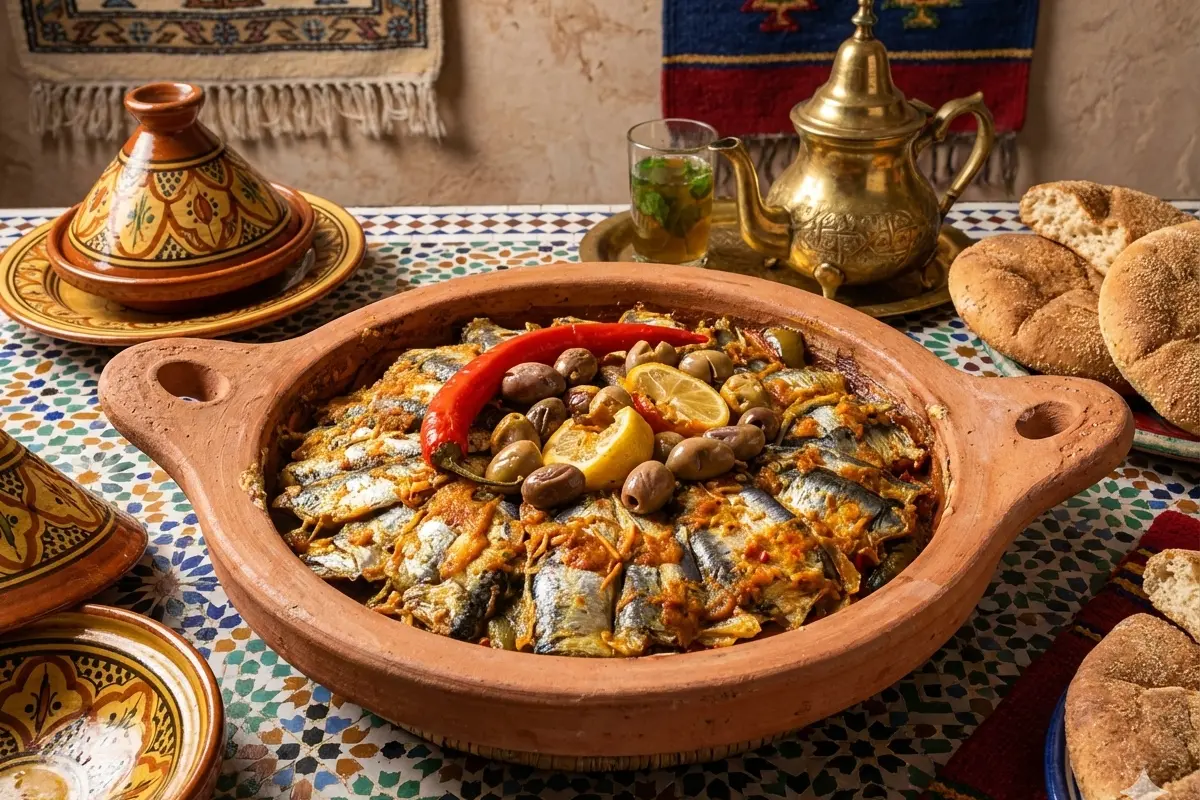
Sardine tagine represents the vibrant culinary traditions of Morocco's Atlantic coast, where the ocean's bounty meets the country's sophisticated spice culture. This dish embodies the essence of coastal Moroccan cooking - fresh sardines from the morning catch, layered with colorful vegetables and aromatic chermoula, then slow-cooked until everything melds into a harmonious, deeply flavorful meal. While inland Morocco celebrates lamb and chicken tagines, the coastal cities of Essaouira, Casablanca, Agadir, and Safi have perfected the art of seafood tagines, with sardines holding a place of particular honor.
Sardines are not merely affordable fish in Morocco - they are celebrated, almost revered, especially along the coast where fishing communities have harvested them for centuries. The sardine harvest season brings festivals and celebrations to coastal towns, with Essaouira's Sardine Festival attracting thousands who gather to enjoy these silver fish prepared in countless ways. Sardine tagine showcases the fish at its finest, respecting its delicate texture while infusing it with Morocco's characteristic bold flavors. What makes this dish exceptional is the chermoula - Morocco's famous herb and spice marinade that combines fresh cilantro and parsley with garlic, cumin, paprika, and preserved lemon. This vibrant green sauce is the soul of Moroccan fish cookery.
The beauty of sardine tagine lies in its layers: tender potatoes forming a protective base, fresh sardines marinated in aromatic chermoula, ripe tomatoes providing acidity and moisture, colorful bell peppers adding sweetness, and olives contributing briny depth. As the tagine gently simmers, these elements transform into something greater than the sum of their parts - the vegetables soften and absorb the fish flavors, the chermoula permeates everything, and the sardines become incredibly tender while maintaining their structure. This is healthy cooking at its most delicious, providing omega-3 fatty acids, vegetables, and complex flavors without heaviness. Sardine tagine proves that simple, fresh ingredients treated with respect and traditional technique create food that nourishes both body and soul.
About This Recipe
Sardine tagine represents the culinary soul of Morocco's Atlantic coast, where centuries of fishing traditions meet sophisticated Moroccan spice culture. The cities of Essaouira, Safi, Agadir, and Casablanca have long been centers of sardine fishing, with fleets heading out each day to harvest the silver fish that swim in abundance along Morocco's productive coastline. Sardines have been a staple of coastal Moroccan diet for millennia, providing affordable, nutritious protein to fishing communities and inland populations alike. Unlike the lamb and chicken tagines that dominate inland Morocco, coastal regions developed a rich repertoire of seafood tagines that showcase the day's catch. Sardine tagine emerged as one of the most beloved preparations, combining the humble fish with Morocco's characteristic bold flavors - the aromatic chermoula marinade, preserved lemons, cumin, and paprika. The dish reflects the ingenuity of coastal cooks who elevated an everyday ingredient into something special through layering, spicing, and careful technique. Chermoula itself is ancient, with roots in Moorish Andalusia and possibly even earlier Roman fish preparations. The bright green herb paste became the signature marinade for all Moroccan fish cookery, distinguishing it from other Mediterranean cuisines. The layering technique of sardine tagine - potatoes providing a base, fish in the middle, tomatoes and peppers on top - ensures even cooking and creates a complete meal in one pot. Traditionally, sardine tagine was everyday food for coastal families, prepared when the fishing boats came in with fresh catch. Today, while sardines remain affordable and accessible, sardine tagine has gained recognition as a healthy, delicious dish worthy of celebration. Essaouira hosts an annual Sardine Festival each summer, attracting thousands who gather to enjoy sardines prepared in countless ways, with sardine tagine featured prominently. The festival celebrates not just the fish but the fishing heritage, the sustainability of sardine stocks (when properly managed), and the culinary traditions that have sustained coastal communities for generations. Modern Moroccan cuisine has embraced sardine tagine as an icon of coastal cooking - restaurants throughout Morocco feature it, and diaspora communities prepare it as a taste of home. The dish also represents the Mediterranean diet at its finest: omega-3-rich fish, abundant vegetables, olive oil, and herbs - simple, healthy, and deeply satisfying. As Morocco works to preserve its culinary heritage while adapting to modern tastes, sardine tagine stands as proof that traditional dishes created from humble ingredients and time-honored techniques can be both authentic and relevant, nourishing both body and cultural memory.
Nutrition / serving
Recipe Tags
Understanding the Ingredients
Fresh Sardines
The quality and freshness of sardines are paramount to this dish's success. You need approximately two pounds of fresh whole sardines, which will serve six people generously. Fresh sardines should smell clean and oceanic, never fishy or ammonia-like. Look for bright, clear eyes, shiny silver skin with minimal blemishes, and firm flesh that springs back when pressed. The sardines can be purchased whole and cleaned at home, or ask your fishmonger to clean them - they should be gutted, scaled, and heads removed if preferred, though some traditional preparations leave heads on. Some recipes call for removing the backbone to create butterflied sardines, which makes eating easier and allows better chermoula penetration. However, bone-in sardines are traditional and the bones soften during cooking, becoming completely edible. If fresh sardines are unavailable, frozen sardines that have been properly thawed can work, though the texture will not be quite as delicate. Canned sardines are not suitable for tagine - this dish showcases fresh fish.
Chermoula Ingredients
Chermoula is the aromatic marinade that defines Moroccan fish dishes, and making it fresh is essential. You need generous amounts of fresh cilantro and flat-leaf parsley - at least one cup of each when chopped. The herbs must be fresh and vibrant; dried herbs cannot substitute. Fresh garlic cloves (four to five) provide pungent depth. Ground cumin and paprika (preferably smoked) add warm, earthy notes. A preserved lemon quarter contributes the distinctive tangy, salty complexity that characterizes Moroccan cooking. Fresh lemon juice and zest provide brightness. Olive oil creates the base, helping the flavors meld and cling to the fish. Optional additions include ground coriander, saffron threads, and cayenne pepper for heat. The chermoula should be a thick, vibrant green paste, intensely aromatic and flavorful. It serves both as marinade for the sardines and as a flavor base for the entire tagine.
Vegetables
The vegetable selection provides structure, flavor, and nutritional balance to the tagine. Potatoes (three to four medium) form the traditional base layer - they create a protective bed for the delicate sardines and absorb the delicious cooking liquid. Waxy potatoes like Yukon Gold hold their shape better than russets. Ripe tomatoes (four to five large) provide acidity, moisture, and body to the sauce - they should be firm-ripe for best flavor and texture. Bell peppers (two to three, preferably different colors) add sweetness and visual appeal - red, yellow, and green create a beautiful presentation. Some variations include carrots for sweetness or zucchini for additional vegetables. The vegetables should be cut into substantial pieces that will hold their shape during the cooking process, not too small or they will disintegrate.
Olives
Green or purple Moroccan olives add essential briny, slightly bitter notes that balance the rich sardines and sweet vegetables. Cracked green olives are traditional and preferred, offering a firmer texture and more complex flavor than canned varieties. If using olives packed in brine, rinse them briefly to reduce excessive saltiness. The olives should be pitted for easier eating, though some traditional preparations leave them whole - just warn your guests. Approximately one cup of olives is needed. Kalamata olives can substitute if Moroccan olives are unavailable. The olives are added partway through cooking so they warm and flavor the dish without becoming mushy.
Aromatics and Seasonings
Beyond the chermoula, additional aromatics build the flavor foundation. Onions (one to two medium) provide sweetness and body when they cook down. Fresh garlic (additional cloves beyond what goes in the chermoula) adds depth. Ground cumin, paprika, and turmeric provide the warm spice notes characteristic of Moroccan cooking. Saffron threads, while optional, contribute luxurious floral notes and golden color. Salt and black pepper season throughout. Fresh herbs (additional cilantro and parsley) finish the dish, adding brightness. Olive oil is used generously - this is Mediterranean cooking where good olive oil is both cooking medium and flavor component.
Step-by-Step Cooking Guide
Clean and Prepare the Sardines
20 minIf your sardines are not already cleaned, you must prepare them first. Rinse the sardines under cold running water. Using a sharp knife or kitchen scissors, make an incision along the belly from head to tail and remove the innards. Rinse the cavity thoroughly under cold water, removing any remaining bits. Scale the fish by scraping from tail to head with the back of a knife or a fish scaler - work in the sink as scales will fly. Remove the heads by cutting just behind the gills, or leave them on if you prefer traditional presentation. For easier eating and better marinade penetration, you can butterfly the sardines: after gutting and cleaning, use your fingers or a small knife to gently separate the flesh from the backbone, then carefully pull out the backbone from head to tail, leaving the fish opened flat. Rinse the cleaned sardines one final time and pat completely dry with paper towels. Dry fish is essential for the chermoula to adhere properly. Arrange the cleaned sardines in a single layer on a large plate or tray.
Tip: Fresh sardines are delicate, so handle gently. If butterflying seems daunting, ask your fishmonger to do it. The backbone softens during cooking, so leaving it in is fine for bone-in preparation.
Prepare the Chermoula Marinade
10 minThoroughly wash and dry the fresh cilantro and parsley. Remove the tough stems but leave tender stems attached - they contain flavor. Roughly chop the herbs. Peel the garlic cloves. If using preserved lemon, rinse it and remove the pulp, keeping only the peel. In a food processor or blender, combine the chopped cilantro and parsley, garlic cloves, preserved lemon peel, two tablespoons of ground cumin, one tablespoon of paprika (smoked if available), one teaspoon of ground coriander, half a teaspoon of cayenne pepper if using, the zest of one fresh lemon, three tablespoons of fresh lemon juice, one teaspoon of salt, and half a teaspoon of black pepper. Pulse several times to chop, then with the motor running, drizzle in half a cup of good olive oil through the feed tube. Process until you have a thick, relatively smooth paste - some texture is fine, but it should be well-blended and cohesive. Taste and adjust seasoning, adding more salt, lemon juice, or spices as needed. The chermoula should be intensely flavored, vibrant green, and aromatic. Transfer about two-thirds of the chermoula to a large bowl and reserve the remaining one-third for the vegetable layer.
Tip: The chermoula can be made up to two days ahead and refrigerated in an airtight container with a thin layer of olive oil on top to prevent oxidation. This actually improves the flavors.
Marinate the Sardines
5 minAdd the cleaned, dried sardines to the bowl containing two-thirds of the chermoula. Using your hands, gently but thoroughly coat each sardine with the chermoula, making sure to get the marinade inside the cavities and coating both sides if butterflied. Handle the delicate fish carefully to avoid tearing the flesh. Once all sardines are well-coated, cover the bowl with plastic wrap or transfer to a container with a lid. Refrigerate for at least thirty minutes, or up to two hours for deeper flavor penetration. This marination time allows the aromatic chermoula to permeate the fish, seasoning it thoroughly and adding protective moisture for cooking. Do not marinate longer than two hours, as the acid in the lemon juice will begin to 'cook' the fish, affecting its texture.
Tip: Marinate in the refrigerator, not at room temperature, for food safety. Bring the sardines back to room temperature for fifteen minutes before cooking for more even results.
Prepare the Vegetables
15 minWhile the sardines marinate, prepare your vegetables. Peel the potatoes and slice them into rounds about one-quarter inch thick - not too thin or they will disintegrate, not too thick or they will not cook through. Slice the onions into thin half-moons. Core and seed the bell peppers, then cut them into thick strips about half an inch wide. Slice the tomatoes into thick rounds, about half an inch each. If using carrots, peel and cut into thick diagonal slices. Keep each vegetable separate as they will be layered strategically. Season the sliced vegetables lightly with salt and pepper. Pit the olives if they are not already pitted.
Tip: Uniform vegetable slicing ensures even cooking. The potato layer is crucial as it protects the delicate sardines from direct heat and prevents sticking to the tagine bottom.
Layer the Tagine - Potatoes and Onions
5 minPrepare your tagine pot or a large, wide, oven-safe dish with a lid (a Dutch oven or deep skillet with lid works well). Drizzle the bottom with two tablespoons of olive oil, spreading it to coat evenly. Create the first layer with the sliced potatoes, arranging them in overlapping concentric circles or rows to cover the entire bottom of the tagine. This potato layer is crucial - it acts as a protective bed for the sardines, prevents them from sticking, and absorbs the delicious cooking liquids. Sprinkle the potato layer with a pinch of salt, pepper, and a small amount of ground cumin. Next, scatter the sliced onions over the potatoes, distributing them evenly. Drizzle another tablespoon of olive oil over the onion layer. This foundation will soften during cooking and create a flavorful base.
Tip: Do not skip the potato layer - it is traditional and functional. Make sure the potatoes cover the bottom completely with no gaps. This protects the delicate fish and prevents burning.
Layer the Sardines
5 minRemove the marinated sardines from the refrigerator. Arrange them in a single layer over the potato and onion base, laying them side by side in neat rows or in a circular pattern radiating from the center. If you have butterflied sardines, place them opened flat. If whole, arrange them in one direction for neat presentation. They should fit snugly but not be crammed - some overlap is fine. Spoon any remaining chermoula from the marinating bowl over the sardines, distributing it evenly. This layer of chermoula-coated sardines will infuse everything with flavor as it cooks. At this point, the tagine is beginning to take its characteristic layered form.
Tip: Arrange sardines neatly for attractive presentation when the tagine is served. The fish should be in a single layer, not piled on top of each other, for even cooking.
Layer the Tomatoes and Peppers
8 minArrange the sliced tomatoes over the sardines in an overlapping pattern, creating a complete layer that covers the fish. The tomatoes provide moisture and acidity, protecting the sardines from drying out. Season the tomato layer lightly with salt, pepper, and a pinch of cumin. Next, arrange the bell pepper strips over the tomatoes in an attractive pattern - you can alternate colors for visual appeal, creating a beautiful mosaic. Take a few spoonfuls of the reserved chermoula and dot it over the vegetables, distributing it around the tagine. Drizzle with another two tablespoons of olive oil. The layering is almost complete, and you should have a colorful, aromatic stack of vegetables and fish.
Tip: The tomato layer is important for moisture - do not skimp on tomatoes. If your tomatoes are not very juicy, add a quarter cup of water or fish stock to the tagine.
Add Final Seasonings and Begin Cooking
5 minScatter the pitted olives over the top of the vegetable layers, distributing them evenly across the surface. Add any optional ingredients such as preserved lemon quarters tucked into the layers, or a pinch of saffron threads scattered on top. Drizzle with one final tablespoon of olive oil. Season the top layer lightly with salt and pepper. Add a quarter cup of water or fish stock around the edges of the tagine - just enough to create steam and prevent sticking, but not so much that the dish becomes soupy. Cover the tagine with its conical lid, or if using a Dutch oven or skillet, cover tightly with a lid or heavy-duty aluminum foil. Place the tagine on the stovetop over medium-low heat. Allow it to come to a gentle simmer - you should see steam escaping from under the lid after about ten minutes. Once simmering, reduce heat to low.
Tip: The cooking should be gentle - low and slow is the key to tender sardines and perfectly cooked vegetables. Too much heat will cause the fish to fall apart and vegetables to burn.
Simmer Until Everything is Tender
45 minAllow the tagine to simmer very gently over low heat for forty to forty-five minutes without lifting the lid for the first thirty minutes. The trapped steam creates a moist cooking environment that gently cooks everything. After thirty minutes, carefully lift the lid and check the progress. The potatoes should be nearly tender when pierced with a knife, the tomatoes should have broken down into a sauce, and the sardines should be opaque and cooked through. If the tagine seems dry, carefully add a few tablespoons of water around the edges. If there is too much liquid, leave the lid off for the final ten to fifteen minutes to allow excess moisture to evaporate. Continue cooking until the potatoes are completely tender, the vegetables are soft, and the sardines are cooked through but still holding their shape - they should flake easily but not be falling apart. The sauce should be slightly thickened and coating the vegetables.
Tip: Resist the urge to stir or disturb the tagine during cooking - the layers should remain intact. Gentle heat and patience are essential. The tagine is done when potatoes are tender and sardines are cooked through.
Rest and Garnish
10 minOnce everything is cooked through and tender, remove the tagine from heat. Let it rest, covered, for five to ten minutes. This resting period allows the flavors to settle and meld, and makes serving easier as everything sets slightly. While the tagine rests, chop fresh cilantro and parsley for garnish. After resting, carefully remove the lid - steam will escape, so be cautious. Sprinkle the freshly chopped herbs generously over the top of the tagine for color and a burst of fresh flavor. If desired, add a final drizzle of high-quality olive oil for richness and shine. Squeeze fresh lemon wedges over the top just before serving for brightness. The tagine should be aromatic, colorful, and inviting, with the layers still visible and the sardines intact.
Tip: The resting period is important - it allows the dish to set slightly, making it easier to serve without everything falling apart. Fresh herbs at the end add brightness and visual appeal.
Serve Traditionally
5 minSardine tagine is traditionally served directly from the cooking vessel, brought to the table in the tagine pot for dramatic presentation. Place the hot tagine on a trivet or protective surface in the center of the table. Provide individual plates and serving spoons. To serve, carefully scoop portions that include some of each layer - potatoes from the bottom, sardines, vegetables, and sauce. The layers will have melded somewhat during cooking, which is perfect. Serve with plenty of crusty bread for sopping up the delicious sauce, or with couscous as a bed for the tagine. Provide lemon wedges on the side for those who want additional brightness. Traditionally, tagines are communal dishes with everyone eating from the shared pot, though individual plates are also common in modern service.
Tip: Serve hot or warm - tagine is forgiving and tastes good at various temperatures. The sauce is delicious, so make sure everyone gets plenty of bread for sopping. Leftovers are excellent the next day.
Common Mistakes to Avoid
✗ Using Frozen or Canned Sardines
Fix: This dish showcases fresh fish and requires fresh sardines for proper texture and flavor. Frozen sardines, if carefully thawed, can work in a pinch, but canned sardines are completely unsuitable as they are already cooked and preserved.
✗ Skipping the Potato Layer
Fix: The potato base is not optional - it protects the delicate sardines from direct heat, prevents sticking, and creates a delicious vegetable component. Always start with a complete potato layer covering the tagine bottom.
✗ Cooking Over High Heat
Fix: Tagines require gentle, low heat to cook properly. High heat will cause the sardines to fall apart, burn the bottom layer, and prevent vegetables from cooking evenly. Always use low to medium-low heat and be patient.
✗ Using Dried Herbs Instead of Fresh
Fix: Fresh cilantro and parsley are absolutely essential for authentic chermoula and the final garnish. Dried herbs cannot replicate the bright, fresh flavors that define this dish. Never substitute dried herbs.
✗ Over-Marinating the Sardines
Fix: While marination is important for flavor, leaving sardines in acidic chermoula for more than two hours will begin to 'cook' them through acid denaturation, affecting texture. Thirty minutes to two hours is optimal.
✗ Stirring or Disturbing During Cooking
Fix: The beauty of tagine is the intact layers. Stirring will break up the delicate sardines and mix everything into a stew rather than a layered dish. Leave it undisturbed during cooking.
✗ Adding Too Much Liquid
Fix: Tagine should have a thick, concentrated sauce, not be soupy. The vegetables and fish release moisture during cooking. Start with minimal added liquid - you can always add more, but you cannot remove excess easily.
Ingredient Substitutions
Instead of: Fresh Sardines
Use: Fresh mackerel, small herring, or anchovies can substitute with similar results. For a different but delicious variation, use firm white fish like sea bass or sea bream cut into large pieces. Avoid delicate fish like sole that will fall apart.
Instead of: Preserved Lemon
Use: While preserved lemon is traditional and ideal, you can substitute with fresh lemon zest and juice plus an extra pinch of salt. The flavor will differ but still be delicious. Some specialty stores sell jarred preserved lemons.
Instead of: Fresh Cilantro and Parsley
Use: There is no good substitute for fresh herbs in chermoula - they are essential. If you absolutely must, use only fresh parsley and increase the amount, though authentic chermoula requires both herbs.
Instead of: Bell Peppers
Use: Roasted red peppers from a jar can work in a pinch, though fresh is preferred. You can also use carrots, zucchini, or eggplant for vegetable variation while maintaining the layered concept.
Serving Suggestions
Serve sardine tagine as the main course with plenty of crusty bread or Moroccan khobz for sopping up the delicious sauce - this is essential and traditional.
Accompany with fluffy couscous as a bed for the tagine, allowing the aromatic sauce to flavor the grains.
Start the meal with Moroccan salads such as zaalouk (eggplant salad) or taktouka (roasted pepper and tomato salad) for a complete coastal Moroccan experience.
Provide lemon wedges on the side for squeezing over individual portions - the bright acidity complements the rich fish beautifully.
Serve with harissa paste on the side for those who want additional heat and spice complexity.
Follow with Moroccan mint tea and fresh seasonal fruit for a refreshing finish that aids digestion.
For an authentic coastal experience, serve family-style with everyone eating from the communal tagine pot using bread to scoop.
Pair with a crisp white wine or cold beer, which complement the fish and cut through the richness.
Leftover sardine tagine is excellent cold or at room temperature the next day, making it perfect for lunch with bread and salad.
Storage & Reheating
Storage
Sardine tagine is best enjoyed fresh, but leftovers can be stored successfully. Allow the tagine to cool to room temperature, then transfer to an airtight container and refrigerate for up to two days. The fish will continue to absorb flavors during storage, making the tagine even more flavorful the next day, though the sardines will become softer. Do not freeze sardine tagine, as the delicate fish texture deteriorates significantly when frozen and thawed.
Reheating
Reheat gently on the stovetop over low heat, adding a splash of water or stock if the sauce has thickened too much. Cover and heat slowly until warmed through, about ten to fifteen minutes. Avoid high heat, which will cause the sardines to fall apart completely. You can also reheat individual portions in the microwave, covered, heating in short intervals and checking frequently. Many Moroccans actually prefer sardine tagine at room temperature or even cold the next day, enjoying it as a composed salad with bread.
The flavors often improve overnight as they meld together. Consider making the tagine in the evening and serving it for lunch the next day. The sauce can be used to flavor couscous or rice even if the sardines have broken down too much for attractive presentation.
Frequently Asked Questions
Recipe by

Fatima El Amrani
فاطمة العمراني
Master Chef
View all recipes by Fatima →
You May Also Like
Our Ebooks

The Moroccan Vegan
$12.56
The Royal Moroccan Table — Part 1
$9.99

The Royal Moroccan Table — Part 2
$9.99
YouTube
Watch step-by-step cooking videos and learn traditional Moroccan techniques.
450+
Subscribers
150+
Videos