
Introduction
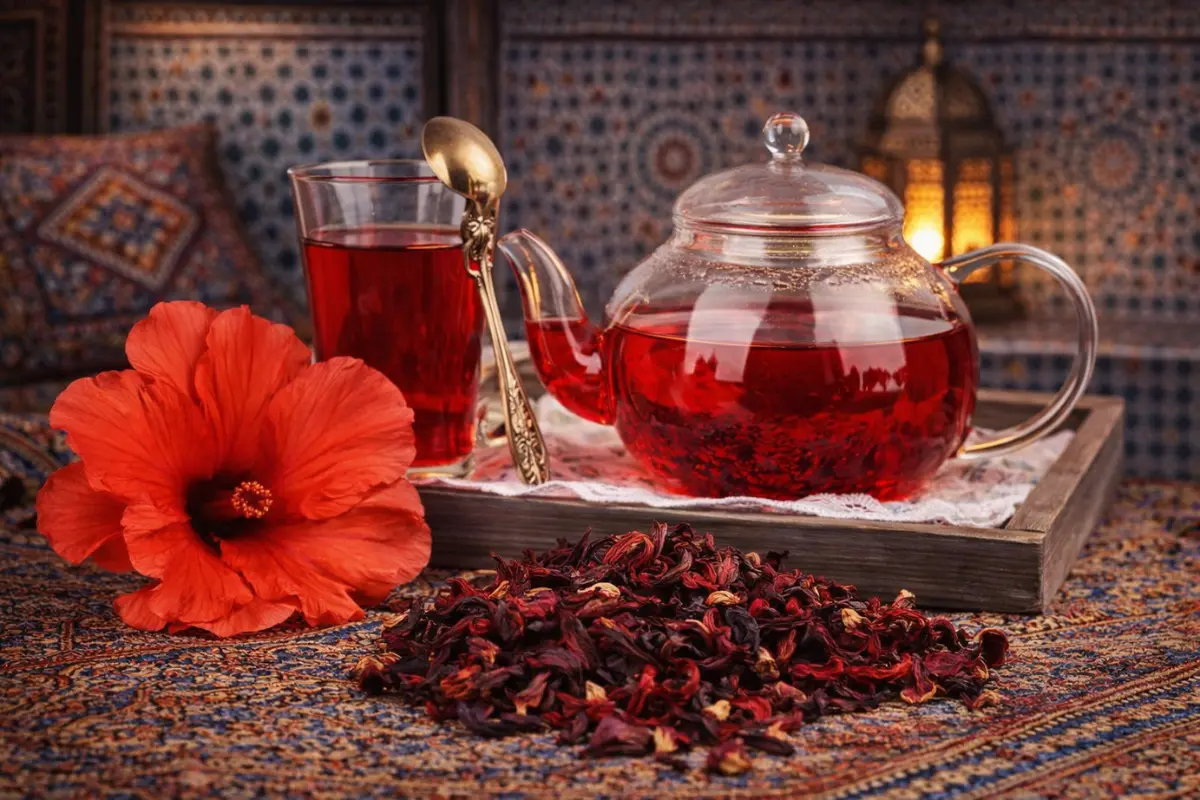
Rose Hip & Hibiscus Tea is Morocco's jewel-toned contribution to herbal tea culture—a stunning ruby-red infusion that delights both the eyes and the palate with its perfect balance of tartness and subtle sweetness. This tea celebrates two of nature's most vibrant botanicals: rose hips, the vitamin-C-packed fruit of the rose plant, and hibiscus flowers, known for their sharp, cranberry-like tartness and brilliant color.
In Moroccan gardens, particularly in coastal regions and imperial cities like Marrakech where roses are cultivated for precious rose water, the autumn harvest of rose hips transforms what might be waste into valuable medicine. Combined with hibiscus (often imported from Sudan or Egypt but deeply incorporated into Moroccan herbal practice), these two ingredients create a synergy where hibiscus's immediate tartness is softened by rose hips' rounded fruitiness, while rose hips' mild astringency is brightened by hibiscus's vibrant acidity.
This tea serves multiple roles in Moroccan wellness traditions: as a daily source of vitamin C (especially valued in winter), as a cooling beverage during hot summers (served over ice), as a digestive aid after rich meals, and as a beautiful, non-alcoholic option for celebrations. The preparation is intentionally gentle—hibiscus releases its color and flavor quickly, while rose hips benefit from longer steeping, creating a dance of timing that yields layered complexity. Whether served steaming hot on a chilly evening or iced with orange slices on a scorching afternoon, this tea embodies the Moroccan philosophy that healing can be beautiful, pleasure can be medicinal, and simplicity can yield extraordinary depth.
About This Recipe
Rose Hip & Hibiscus Tea represents the meeting of indigenous Moroccan knowledge and trans-Saharan trade routes. Rose hips have been foraged in Morocco's mountains and valleys for centuries, valued by Berber communities for their vitamin C content long before the vitamin was identified. Hibiscus, however, came from sub-Saharan Africa via ancient trade routes, likely introduced during the medieval period when Moroccan caravans traveled to and from empires like Ghana and Mali. The combination probably emerged in Moroccan herbalists' shops (attarine) where diverse botanicals from different ecosystems were blended for both flavor and efficacy. During the colonial period, French and Spanish botanists documented Moroccan use of both plants, with particular interest in rose hips' nutritional value. The tea gained popularity in 20th century urban Morocco as a refreshing, non-caffeinated alternative to mint tea, especially among women and children. Its brilliant color made it festive for celebrations, while its health benefits maintained its medicinal respect. Today, this tea bridges traditional and modern: rural foragers still collect wild rose hips following ancestral knowledge, while urban cafes serve elegant iced versions to tourists. Scientific research has confirmed both plants' antioxidant properties, validating traditional wisdom. In Moroccan diaspora communities worldwide, the tea represents a taste of home that's both vibrant and nurturing—a reminder that healing can come in the most beautiful packages, and that sometimes the simplest combinations (just two ingredients, really) can create something extraordinary that nourishes body, delights senses, and connects generations.
Nutritional Info (per serving)
Recipe Tags
Understanding the Ingredients
Dried Hibiscus Flowers (Karkadeh)
Hibiscus sabdariffa, known in Morocco as karkadeh or bissap, should be whole dried calyces (the part that holds the flower), not powder. They should be deep burgundy-red, not brown, and have a tart, cranberry-like aroma. Egyptian or Sudanese hibiscus is traditionally prized. The flowers release their vibrant color and tart flavor quickly—over-steeping makes them unpleasantly sour. They're rich in antioxidants, particularly anthocyanins that give the tea its spectacular color, and have mild blood-pressure lowering properties.
Dried Rose Hips
Rose hips are the fruit of rose plants, particularly Rosa canina or Rosa rugosa. They should be whole or halved, not powdered, and range from orange to deep red. Quality rose hips have a sweet-tart, slightly floral aroma reminiscent of apples and roses. They're one of nature's richest sources of vitamin C (though heat reduces it somewhat), and contain beneficial carotenoids. Rose hips require longer steeping than hibiscus to release their flavor and nutrients, making the two-stage steeping method ideal.
Cinnamon or Ginger (Optional)
A small piece of cinnamon stick or a few slices of fresh ginger can be added for warmth and complexity, particularly in winter versions. Cinnamon adds sweet spice that complements the tartness, while ginger adds gentle heat. These should be used sparingly—they're background notes, not main flavors. Some traditional recipes also include a single clove or cardamom pod for depth.
Orange or Lemon
Citrus enhances both the flavor and vitamin C content. Orange slices or zest add sweetness that complements the tartness, while lemon adds brighter acidity. The citrus can be added during steeping (zest or dried peel) or as fresh slices/juice after straining. Blood orange makes a particularly beautiful presentation with the ruby tea.
Sweetener
This tea is naturally quite tart and benefits from sweetening. Honey is traditional, but agave, maple syrup, or sugar work. For authentic Moroccan touch, use date syrup (rub) or orange blossom honey. The amount needed varies based on hibiscus tartness—start with less, taste, then add. Some prefer it unsweetened, appreciating the natural tartness.
Step-by-Step Cooking Guide
Prepare Botanicals and Citrus
Measure 3 tablespoons dried hibiscus flowers and 2 tablespoons dried rose hips. If rose hips are whole, gently crush them with the flat side of a knife or in a mortar—this helps release their inner seeds and flavor. If using cinnamon or ginger, prepare now (1 cinnamon stick broken or ½ inch ginger sliced). Thinly slice half an orange or lemon, removing seeds. Prepare zest from the other half if desired.
Tip: Crushing rose hips is important but don't pulverize—just crack them open. If rose hips are already halved or pieces, skip crushing. Save some citrus slices for garnish. Organic citrus is best since you may use the peel.
Two-Stage Steeping Method
Bring 4 cups (1 liter) filtered water to boil. Remove from heat. First, add rose hips (and cinnamon/ginger if using) to the hot water. Cover and let steep for 8 minutes. This allows rose hips' tougher structure to release flavor and nutrients. After 8 minutes, add hibiscus flowers and citrus zest (if using). Cover again and steep for additional 4-5 minutes only.
Tip: This two-stage method prevents hibiscus from over-steeping (becoming too sour) while ensuring rose hips fully infuse. Set timers for each stage. The water will turn from pale orange to deep ruby red.
Strain and Add Fresh Citrus
Using a fine mesh strainer (lined with cheesecloth if available), strain the tea into a heatproof pitcher or directly into cups. Press gently on solids to extract liquid but don't mash. Discard solids (compost them). While tea is still warm, add fresh citrus juice if using—about 1 tablespoon lemon or 2 tablespoons orange juice per cup. Stir to combine.
Tip: Strain thoroughly—hibiscus particles can continue steeping and increase sourness. Fresh citrus juice brightens the flavor better than steeping with slices. For clear tea, avoid squeezing citrus slices into strainer.
Sweeten to Taste
Add sweetener to the pitcher or individual cups. Start with 1-2 teaspoons honey per cup, stirring until dissolved. Taste—the tea should be pleasantly tart-sweet, not puckeringly sour nor cloyingly sweet. Remember that cold temperatures mute sweetness, so if serving iced, you may need slightly more sweetener.
Tip: Add sweetener while tea is warm for easier dissolving. For a beautiful presentation, use honeycomb or flavored honey. Let each person adjust sweetness to their preference.
Serve Hot or Cold
For hot tea: pour into clear glasses or cups to appreciate the gorgeous color. Garnish with a citrus slice and fresh mint sprig if desired. For iced tea: let tea cool to room temperature, then refrigerate. Serve over ice with extra citrus slices. The tea will be brilliantly clear ruby red—one of nature's most beautiful beverages.
Tip: Clear glass is essential—this tea is too beautiful to hide. For iced version, make extra-strong to account for ice dilution. Consider freezing some tea into ice cubes to prevent watering down.
Optional Floral Enhancement
For special occasions or enhanced relaxation, add ½ teaspoon orange blossom water or rose water after straining. These should be used sparingly—they're potent. Stir gently. The floral notes complement both rose hips and hibiscus beautifully, creating a more complex aromatic profile.
Tip: Start with just a few drops—you can always add more. Orange blossom water pairs particularly well with citrus garnish. Rose water connects back to the rose family of the rose hips.
Common Mistakes to Avoid
❌ Steeping Hibiscus Too Long
Solution: Hibiscus becomes unpleasantly sour and astringent beyond 5-6 minutes. Use the two-stage method: steep rose hips first, then add hibiscus for last 4-5 minutes only. Never boil hibiscus—it increases bitterness.
❌ Using Low-Quality Hibiscus
Solution: Brown, dusty hibiscus yields dull-colored, weak-flavored tea. Seek deep red, whole calyces with vibrant color and tart aroma. Egyptian hibiscus is traditionally best. Store in airtight container away from light.
❌ Not Crushing Rose Hips
Solution: Whole rose hips release minimal flavor. Gently crack them open to expose the inner seeds and flesh where the flavor and nutrients reside. Use the flat side of a knife or gentle mortar press.
❌ Over-Sweetening
Solution: This tea's charm is its tart-sweet balance. Too much sweetener masks the vibrant flavors. Start with less, taste, then add. Remember it should have pleasant tartness, not be syrup-sweet.
❌ Serving in Opaque Cups
Solution: This tea's stunning ruby color is half the experience. Always serve in clear glassware. Even simple glasses transform the drinking experience when filled with this vibrant liquid.
Ingredient Substitutions
Instead of: Hibiscus Flowers
Use: Dried sour cherries or cranberries (use ¼ cup, steep longer). For color without tartness, beet powder (½ tsp) but flavor changes completely. No true flavor substitute for hibiscus.
Instead of: Rose Hips
Use: Dried hawthorn berries (similar tartness, different flavor), or increase hibiscus and add apple slices for fruitiness. Vitamin C powder (½ tsp) added after straining for nutrition but not flavor.
Instead of: Honey
Use: Agave, maple syrup, or date syrup (authentic Moroccan). Stevia or monk fruit for sugar-free. Simple syrup dissolves easily in iced versions.
Instead of: Fresh Citrus
Use: Dried orange peel (steep with rose hips), a few drops of lemon essential oil (food grade), or 1 teaspoon citric acid powder (use sparingly).
Serving Suggestions
Serve iced with orange slices and mint as refreshing summer drink—Moroccan answer to lemonade.
Hot with cinnamon stick stirrer during winter—the vitamin C supports immunity during cold season.
As a beautiful non-alcoholic option for parties and celebrations—the color is naturally festive.
After rich meals to aid digestion—the tartness cuts through fats and stimulates digestion.
With light Moroccan pastries like gazelle horns or fekkas for afternoon tea.
As a base for herbal cocktails—add a splash of gin or vodka for adults, sparkling water for mocktails.
Storage & Reheating Guide
Storage
Dried botanicals: store separately in airtight jars away from light up to 1 year. Brewed tea: refrigerate up to 5 days—the flavor actually improves over first 24-48 hours.
Reheating
Reheat gently on stovetop until warm, not boiling. Microwave in short bursts. Do not reboil hibiscus—it becomes more sour. Iced tea should be served cold without reheating.
Tips: The tea may become more tart upon refrigeration as acids continue to extract. You may need to adjust sweetness after storage. For best iced tea, brew double-strength and dilute with ice.
Frequently Asked Questions
Recipe by

Similar Recipes


Our Recipe Ebooks
Discover our collection of authentic Moroccan recipe ebooks. Learn traditional cooking methods and create delicious meals at home.
The Moroccan Vegen
The Royal Moroccan Table -Part1
The Royal Moroccan Table -Part2
YouTube Channel
Watch step-by-step cooking videos, learn professional techniques, and get inspired by traditional and modern recipes from around the world.
Latest Video
"Traditional Moroccan Tagine Masterclass"