
Introduction
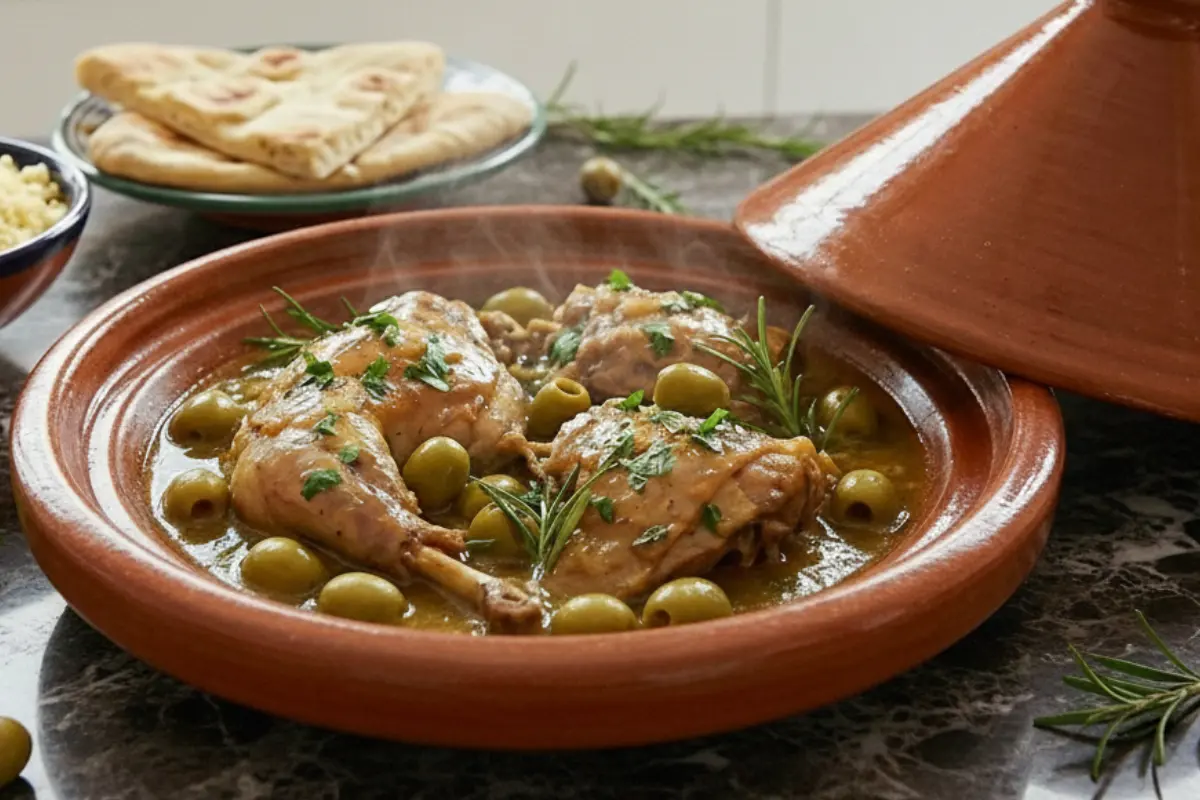
Rabbit Tagine with Rosemary and Green Olives is a cherished dish from Morocco's Atlas Mountain communities, where wild rabbit has been hunted and prepared for generations. This tagine captures the essence of rustic Berber cooking—simple, honest ingredients transformed through slow, careful cooking into something deeply satisfying and flavorful.
Unlike more ornate tagines, this preparation celebrates the natural, lean quality of rabbit meat, enhanced rather than disguised by a few well-chosen flavorings. Fresh rosemary—somewhat uncommon in other Moroccan dishes but abundant in the mountainous regions—provides a distinctive piney aroma that cuts through the richness. Green olives and preserved lemon bring the classic Moroccan tang, while a touch of harissa adds gentle warmth that complements rather than overwhelms the delicate rabbit.
This is countryside cooking at its best: economical, resourceful, and deeply connected to the land. The rabbit is typically marinated with mountain herbs to tenderize and flavor the lean meat, then cooked slowly with root vegetables that grow well in the high altitude. The result is a tagine that feels both ancient and immediate—a taste of traditional Moroccan rural life that translates beautifully to modern kitchens. Whether you're using farmed rabbit or honoring hunting traditions, this dish offers a unique window into the diverse tapestry of Moroccan cuisine beyond the more familiar urban dishes.
About This Recipe
Rabbit Tagine with Rosemary originates from the Berber communities of Morocco's Middle and High Atlas Mountains, where wild rabbits have been hunted for centuries. Unlike the elaborate, spice-forward tagines of imperial cities, this dish reflects mountain practicality—using what grows locally (rosemary thrives in the rocky terrain) and preserving summer harvests (olives, lemons) for winter meals. Historically, rabbit was often caught in communal hunts and prepared in large tagines for village gatherings. The rosemary connection may trace to ancient Roman influence in North Africa, as Romans introduced many Mediterranean herbs to the region. Each valley developed variations: some adding walnuts, others using thyme instead of rosemary, some including wild mushrooms. During French colonization, the dish gained popularity in Moroccan cities as 'gibier' (game), becoming a rustic-chic option in restaurants. Today, it remains a symbol of Berber hospitality and connection to the land, often prepared for family reunions and seasonal celebrations in mountain villages.
Nutritional Info (per serving)
Recipe Tags
Understanding the Ingredients
Whole Rabbit
A young, farmed rabbit (2.5-3 lbs) is ideal for tenderness. If using wild rabbit, it may require longer marination and cooking due to leaner, tougher meat. The rabbit should be cut into 8 pieces: hind legs, front legs, saddle cut into 2-3 pieces, and ribs. The bones add flavor to the sauce. Rabbit is lean, so careful cooking is needed to prevent dryness. The meat has a delicate, slightly gamey flavor that pairs beautifully with robust herbs like rosemary. Farmed rabbit has milder flavor than wild.
Fresh Rosemary
Rosemary is the star herb here—unusual in mainstream Moroccan cooking but common in the Atlas regions where it grows wild. Its piney, resinous flavor stands up to rabbit's gaminess and cuts through the richness of olives and preserved lemon. Use fresh sprigs, some chopped for the marinade and some whole for cooking. Unlike delicate herbs, rosemary can withstand long cooking without losing its character. However, use judiciously as it can overpower; the flavor should be present but not medicinal.
Green Olives (Cracked)
Moroccan cracked green olives preserved in brine are traditional. Their firm texture and slightly bitter, briny flavor balance the rabbit's leanness. Cracked olives absorb the sauce better than pitted ones. Rinse briefly to reduce saltiness. The olives are added toward the end to maintain texture. In some mountain versions, a combination of green and purple olives is used for visual appeal and flavor complexity.
Preserved Lemon and Harissa
Preserved lemon provides the essential Moroccan citrus note, cutting through the herbal richness. Only the peel is used, rinsed and thinly sliced. Harissa—a North African chili paste—adds warmth and depth. Use sparingly; the dish should be aromatic rather than spicy. Some mountain cooks use dried chilies instead. The combination of preserved lemon and harissa creates the classic Moroccan flavor profile that grounds this otherwise herb-forward tagine.
Root Vegetables
Carrots, turnips, and potatoes are common additions that make this a one-pot meal. They're cut into chunks and added in stages according to cooking time. The vegetables absorb the flavorful broth and provide sweetness and substance. In spring versions, fresh fava beans or peas might be added. The vegetables should be tender but not mushy, retaining some texture against the tender rabbit.
Aromatic Base
Onions and garlic form the foundation, but this tagine also often includes celery for additional herbal notes. The onions are cooked until soft but not caramelized, maintaining a lighter sauce suitable for the delicate rabbit. Fresh thyme and bay leaves complement the rosemary. Some versions include a splash of white wine (though untraditional) or vinegar to brighten the flavors, especially with wild rabbit.
Step-by-Step Cooking Guide
Prepare and Marinate the Rabbit
If using whole rabbit, cut into 8 pieces: separate hind legs, front legs, cut saddle into 2-3 pieces, and keep ribs as one piece. Pat all pieces thoroughly dry. In a large bowl, combine chopped rosemary, minced garlic, 2 tablespoons olive oil, 1 teaspoon harissa, preserved lemon peel (chopped), salt, and black pepper. Add rabbit pieces and massage marinade into meat, especially into crevices. Cover and refrigerate for at least 2 hours, preferably overnight. Bring to room temperature 30 minutes before cooking.
Tip: For wild rabbit, marinate 24 hours with a splash of vinegar or wine to help tenderize. Save the liver and kidneys to sauté separately as a cook's treat or add at the end.
Prepare Vegetables and Aromatics
Chop onions into medium dice. Peel and cut carrots and turnips into 1.5-inch chunks. If using potatoes, cut similarly but keep separate as they cook faster. Mince remaining garlic. Rinse preserved lemon peel and slice thinly. Measure olives and rinse if very salty. Chop additional rosemary if needed. Having everything prepped before cooking is essential as the process moves quickly once started.
Tip: Cut vegetables uniformly for even cooking. If using small new potatoes, leave whole. Traditional mountain versions might include Jerusalem artichokes or parsnips when in season.
Brown the Rabbit
Heat 2 tablespoons olive oil in tagine or heavy pot over medium-high heat. Remove rabbit from marinade (reserve marinade), shaking off excess. Brown pieces in batches, starting with meaty hind legs and saddle, about 4-5 minutes per side until golden. Don't crowd the pan. Transfer to plate. Add front legs and ribs, browning similarly. The goal is color, not cooking through. Set all browned rabbit aside.
Tip: Rabbit is lean—don't over-brown or it will dry out. A light golden crust is sufficient. If marinade sticks to pan, deglaze with a splash of water between batches.
Build the Vegetable Base
Reduce heat to medium. Add onions to the pot with a pinch of salt. Cook for 5 minutes until softened but not browned. Add minced garlic, chopped celery if using, and remaining chopped rosemary. Cook for 1 minute until fragrant. Add carrots and turnips, stirring to coat with aromatics. Cook for 3 minutes to lightly sweat the vegetables.
Tip: If bottom of pot has browned bits, add a splash of water to deglaze while cooking onions. The vegetables should sizzle but not brown—this builds flavor without darkening the sauce too much.
Combine and Braise
Return rabbit pieces to pot, nestling them among vegetables. Add reserved marinade, whole rosemary sprigs, bay leaves, and thyme. Pour in enough broth or water to come halfway up the rabbit pieces (about 2-3 cups). Bring to a gentle simmer. Immediately reduce heat to low, cover tightly, and simmer gently for 45 minutes. After 45 minutes, add potato chunks if using. Continue simmering covered for another 20-30 minutes until rabbit is tender but not falling off the bone.
Tip: The liquid should barely bubble. Check occasionally that it's not boiling vigorously. Rabbit is done when a fork inserts easily but meat still clings to bone. Overcooking makes it dry.
Add Final Elements and Finish
Remove rabbit pieces to a plate temporarily. Add green olives and preserved lemon slices to the pot. Increase heat to medium and cook uncovered for 5-7 minutes to reduce sauce slightly and warm olives through. If using, add sautéed rabbit liver/kidneys now. Taste sauce and adjust seasoning—remember olives and preserved lemon are salty. Return rabbit to pot to warm through. Discard rosemary sprigs and bay leaves. Garnish with fresh parsley or cilantro before serving.
Tip: Olives added too early become mushy and bitter. The sauce should be light but flavorful, not thick like other tagines. If too thin, remove solids and reduce; if too thick, add broth.
Common Mistakes to Avoid
❌ Overcooking the Rabbit
Solution: Rabbit goes from tender to dry and stringy quickly. Test early—it should be fork-tender but still moist. Farmed rabbit cooks in 60-75 minutes total; wild may need 90+ minutes. Remove pieces as they finish cooking if needed.
❌ Using Too Much Rosemary
Solution: Rosemary can dominate and become medicinal. Start with 2 tablespoons chopped fresh rosemary total. You can always add more at the end. The flavor should complement, not overwhelm, the rabbit.
❌ Skipping the Marinade
Solution: Rabbit benefits greatly from marination—it tenderizes the lean meat and infuses flavor. Even a 2-hour marinade makes a difference. The acid in harissa and lemon helps break down proteins.
❌ Adding Olives Too Early
Solution: Olives become unpleasantly soft and bitter with prolonged cooking. Add them only during the last 5-10 minutes, just to warm through and flavor the sauce.
❌ Insufficient Liquid During Braising
Solution: Rabbit is lean and can dry out. Ensure enough liquid comes halfway up the meat. Check periodically and add hot water or broth if needed. The steam helps keep the meat moist.
Ingredient Substitutions
Instead of: Rabbit
Use: Chicken thighs (reduce cooking time to 40 minutes) or pheasant. For a non-game option, turkey thighs work well. Adjust cooking times accordingly—poultry generally cooks faster than rabbit.
Instead of: Fresh Rosemary
Use: 2 teaspoons dried rosemary (crushed) plus 1 teaspoon fresh thyme. Or use 3 tablespoons fresh za'atar (oregano-thyme blend) for a different but delicious herbal profile.
Instead of: Preserved Lemon
Use: Zest of 1 lemon plus 1 teaspoon lemon juice added at the end. Or use 2 tablespoons chopped pickled lemon peel. The fermented quality is hard to replicate perfectly.
Instead of: Green Olives
Use: Kalamata olives (pitted) or a mix of green and black olives. Capers can provide similar briny notes if olives are unavailable.
Instead of: Harissa
Use: 1 teaspoon paprika mixed with ¼ teaspoon cayenne and ½ teaspoon ground cumin. Or use 1 chopped fresh chili. The warmth is more important than the specific chili flavor.
Serving Suggestions
Serve with crusty country bread to soak up the light, herb-infused sauce—this is more traditional than couscous for mountain tagines.
Buttered egg noodles or creamy polenta make excellent non-traditional accompaniments that complement the rustic flavors.
A simple green salad with lemon vinaigrette provides fresh contrast to the rich, savory tagine.
Roasted potatoes cooked in the same oven make a perfect side if you want to keep everything in the rustic vein.
A glass of Moroccan Syrah or a light Pinot Noir complements the gamey notes of the rabbit beautifully.
For authentic Berber style, serve with msemen (Moroccan flatbread) and fresh mint tea.
Storage & Reheating Guide
Storage
Cool completely and store in airtight container in refrigerator for up to 3 days. The flavors improve overnight. Freeze for up to 2 months, though vegetables may become soft upon reheating. Store rabbit and sauce together.
Reheating
Reheat gently on stovetop over low heat with a splash of broth or water. Alternatively, reheat covered in 325°F (160°C) oven for 20-25 minutes. Microwave in covered dish, stirring halfway. Rabbit can dry out when reheated—watch carefully.
Tips: The olives may become saltier upon storage. Taste before serving and balance with a squeeze of lemon if needed. Add fresh herbs after reheating. If freezing, slightly undercook the rabbit to prevent drying upon reheating.
Frequently Asked Questions
Recipe by

Similar Recipes


Our Recipe Ebooks
Discover our collection of authentic Moroccan recipe ebooks. Learn traditional cooking methods and create delicious meals at home.

The Moroccan Vegen
The Royal Moroccan Table -Part1
The Royal Moroccan Table -Part2
YouTube Channel
Watch step-by-step cooking videos, learn professional techniques, and get inspired by traditional and modern recipes from around the world.
Latest Video
"Traditional Moroccan Tagine Masterclass"