Introduction
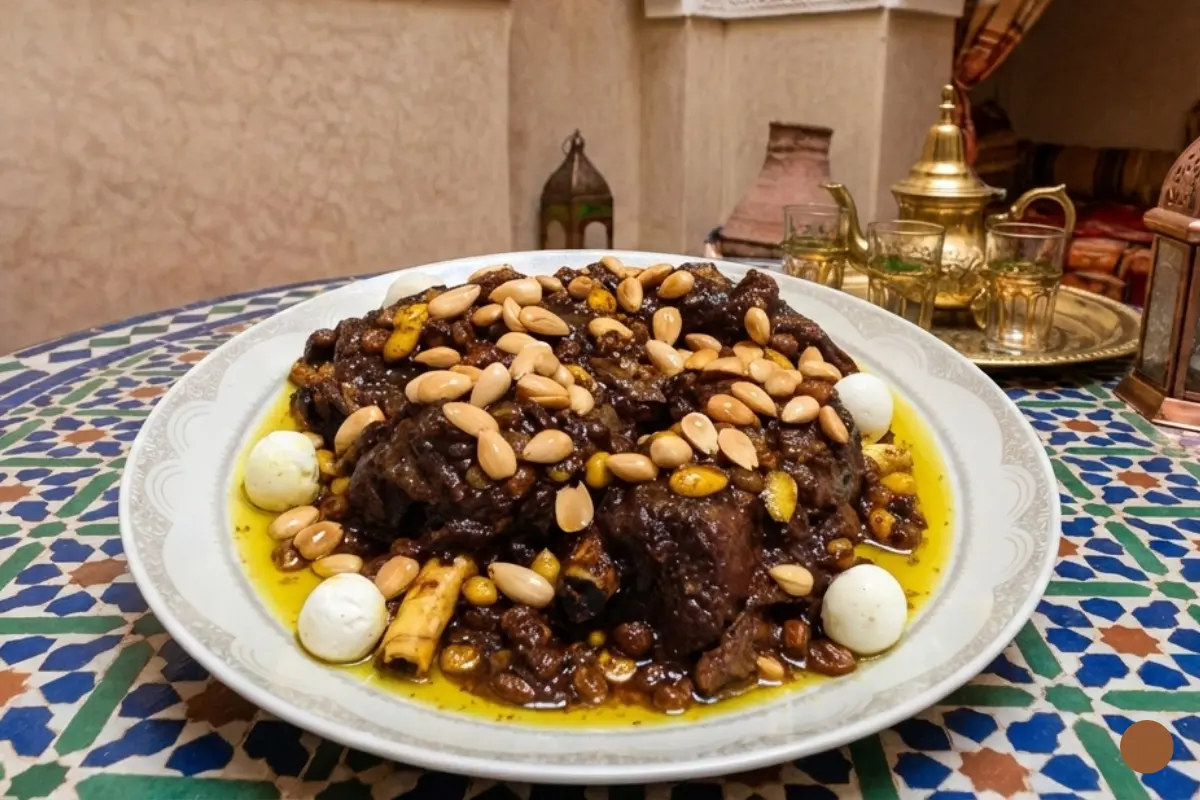
Mrouzia stands as one of Morocco's most magnificent, distinctive, and historically significant dishes - an extraordinary sweet-and-savory lamb tagine that exemplifies the sophisticated culinary artistry of Moroccan palace cuisine while remaining deeply rooted in the country's religious and cultural traditions. The name 'mrouzia' (also spelled m'rouzia, mruziya, or marouziya) likely derives from the Arabic root 'ruzz' meaning rice, as ancient versions of this dish were sometimes served with rice, though the connection is debated by food historians. What is undisputed is that mrouzia represents the pinnacle of Morocco's tradition of marrying sweet and savory flavors - tender, fall-apart lamb is slow-cooked in butter with a lavish amount of honey that caramelizes into an amber glaze, studded with plump golden raisins that burst with concentrated sweetness, topped with toasted almonds that add luxurious crunch, and perfumed with an intoxicating blend of warm spices including ras el hanout, saffron, cinnamon, and ginger that transforms the entire dish into something approaching the sublime.
The flavor profile of mrouzia is unlike anything else in Moroccan cuisine - the initial taste is profoundly sweet from the honey and raisins, but this sweetness is immediately balanced and deepened by the savory, aromatic lamb and the warm, complex spice blend that prevents the dish from becoming cloying. The texture contrast is equally remarkable - silky, tender lamb that falls apart at the touch of a fork, soft raisins that provide bursts of concentrated fruit flavor, and the satisfying crunch of toasted almonds that crown the dish. The honey-butter sauce reduces during cooking into a thick, glossy, amber glaze that coats every piece of lamb with sticky-sweet richness while the spices bloom in the fat, creating layers of flavor that unfold with each bite.
Mrouzia is inseparable from Eid al-Adha, Morocco's most important religious celebration. On the first day of Eid, when families throughout Morocco slaughter a lamb in commemoration of Ibrahim's sacrifice, mrouzia is the traditional and most honored way to prepare the meat. The dish holds such significance that for many Moroccans, Eid without mrouzia would be unthinkable - it is THE Eid dish, prepared on the morning of the first day of the feast and served to family and honored guests. Beyond Eid, mrouzia appears at weddings, births, circumcisions, and any celebration that calls for Morocco's most spectacular cuisine. The dish also has remarkable keeping qualities - the high honey content acts as a preservative, and traditionally prepared mrouzia can last for days without refrigeration, improving in flavor as it sits.
About This Recipe
Mrouzia represents one of the most historically significant and culturally profound dishes in Moroccan cuisine - a preparation whose origins trace back centuries to the royal courts and palaces of Morocco's great dynasties, and whose continued centrality in Moroccan celebration culture speaks to the enduring power of culinary tradition to connect past and present. The dish exemplifies the sophisticated sweet-savory flavor combinations that characterize Moroccan palace cuisine - a culinary tradition developed in the courts of Marrakech, Fes, Meknes, and Rabat where royal cooks competed to create ever more refined and spectacular dishes to honor sultans, their families, and important guests. The deliberate marriage of honey's luxurious sweetness with lamb's savory richness, the lavish use of expensive spices like saffron and ras el hanout, and the abundance of almonds and raisins all signal mrouzia as a dish of celebration, abundance, and honor rather than everyday sustenance. The name 'mrouzia' likely derives from Arabic roots though food historians debate the exact etymology - some connect it to 'ruzz' (rice) as ancient versions may have been served with rice, others to the method of preservation through honey. What is undisputed is that mrouzia represents one of Morocco's most ancient continuously prepared dishes, with recipes appearing in medieval Maghrebi cookbooks and the dish mentioned in historical accounts of Moroccan royal feasts and celebrations spanning centuries. The deep connection between mrouzia and Eid al-Adha - the Feast of the Sacrifice - gives the dish profound religious and cultural significance that extends far beyond the merely culinary. Eid al-Adha commemorates Ibrahim's (Abraham's) willingness to sacrifice his son in obedience to God, and God's provision of a ram for sacrifice instead. Throughout the Muslim world, this holiday is marked by the ritual slaughter of a sheep, goat, or cow, with the meat distributed to family, friends, and those in need. In Morocco, the freshly slaughtered Eid lamb is prepared as mrouzia on the first day of the feast - this has been the tradition for so many generations that the two have become inseparable in Moroccan cultural consciousness. The dish's high honey content was originally not merely for flavor but for preservation - in the days before refrigeration, the honey acted as a natural preservative allowing the mrouzia to last for days or even weeks, which was essential when a whole lamb was slaughtered and needed to feed the family throughout the celebration period. Regional variations of mrouzia reflect Morocco's remarkable culinary diversity. Fassi mrouzia (from Fes, the ancient imperial capital and culinary heartland) is known for being particularly sweet, sometimes using a full cup or more of honey and incorporating additional dried fruits like apricots. Marrakchi versions might emphasize the spice blend more heavily and use slightly less honey. Coastal variations sometimes include preserved lemon for additional complexity. Southern Berber versions may use local wild honey and indigenous spice blends. Yet throughout these variations, the essential character remains - sweet-savory lamb with honey, raisins, almonds, and warm spices, prepared with patience and care worthy of celebration. Today, mrouzia remains one of the most anticipated and beloved dishes in Moroccan celebration culture. The sight and aroma of mrouzia signals Eid al-Adha throughout Moroccan neighborhoods, creating one of the most distinctive and emotionally resonant culinary experiences in Moroccan life. Beyond Eid, the dish appears at weddings as part of the dffa (ceremonial feast), at significant family celebrations, and whenever a Moroccan host wants to demonstrate the highest level of hospitality and honor. International appreciation for mrouzia has grown as global food culture increasingly recognizes the sophistication of Moroccan cuisine - the dish appears on Moroccan restaurant menus worldwide, in cooking classes, and in contemporary cookbooks as an example of Morocco's ability to create complex, unforgettable flavors from simple ingredients through masterful technique and centuries-refined tradition.
Nutritional Info (per serving)
Recipe Tags
Understanding the Ingredients
Lamb
The choice and preparation of lamb is the foundation of extraordinary mrouzia. Bone-in lamb shoulder (about three pounds for six servings) is the ideal cut - it has perfect marbling of fat and connective tissue that breaks down during slow cooking to create the signature meltingly tender texture. The shoulder should be cut into large chunks (about two inches) - not too small or they fall apart during the long cooking. Bone-in lamb neck is equally traditional and even more flavorful due to the rich marrow and connective tissue. Lamb shanks create dramatic presentation with meat that falls off the bone. Some traditional recipes use a combination of shoulder and ribs. The lamb must be fresh, not frozen, for best results. On Eid al-Adha, the dish is traditionally made with the freshly slaughtered sacrifice lamb, which holds profound religious and cultural significance.
Honey
Honey is the defining ingredient that makes mrouzia unique among Moroccan tagines, and the quality and quantity matter enormously. You'll need one-half to three-quarters cup of good quality honey - this seems like a lot but is traditional and essential. The honey caramelizes during cooking, transforming from liquid sweetness into a thick, glossy, amber glaze that coats the lamb and creates the dish's signature appearance and flavor. Moroccan wildflower honey, orange blossom honey, or any quality aromatic honey works beautifully. The honey should be added in the final stage of cooking so it reduces properly without burning. Some traditional recipes use up to one full cup of honey for a very sweet version - adjust to your preference but don't reduce below half a cup or the dish loses its essential character.
Ras El Hanout
Ras el hanout - literally 'head of the shop,' meaning the shopkeeper's best spice blend - is absolutely essential for authentic mrouzia and cannot be substituted or omitted. This complex Moroccan spice mixture typically contains fifteen to thirty different spices including cardamom, clove, cinnamon, nutmeg, mace, allspice, coriander, cumin, ginger, black pepper, white pepper, cayenne, fenugreek, anise, turmeric, saffron, rose petals, and sometimes more exotic ingredients like grains of paradise or cubeb pepper. Each spice vendor has their own secret blend, and no two are exactly alike. For mrouzia, you'll need two to three tablespoons of ras el hanout - a generous amount that creates the dish's characteristic warmth and complexity. Good quality ras el hanout is available at Moroccan or Middle Eastern markets and online.
Saffron
Saffron is non-negotiable for authentic mrouzia - it provides the golden color, luxurious aroma, and subtle floral notes that distinguish this dish from ordinary tagines. Use a very generous pinch (about half a teaspoon) of saffron threads, crushed and dissolved in two tablespoons of warm water before adding to the dish. Moroccan saffron from Taliouine is among the world's finest and most aromatic. While expensive, saffron transforms the entire dish and is worth the investment for this special-occasion recipe. If saffron is absolutely unavailable, the dish can be made without it but will lack the authentic character and appearance.
Raisins
Raisins provide bursts of concentrated sweetness and textural contrast in mrouzia. You'll need one and a half to two cups of raisins - a generous amount that is traditional and essential. Golden raisins (sultanas) are most common and create a beautiful appearance against the amber sauce. Dark raisins work equally well and provide slightly deeper, more caramelized flavor. The raisins should be plump and moist - if very dry, soak them in warm water for fifteen minutes before using, then drain well. The raisins are added in the final stage of cooking so they plump in the sauce without disintegrating.
Almonds
Toasted almonds provide the essential crunchy contrast to the tender lamb and soft raisins. You'll need one cup of whole blanched almonds (skins removed). The almonds must be toasted - either in a dry skillet over medium heat, stirring constantly for five to seven minutes until golden and fragrant, or in a 350°F oven for eight to ten minutes. Toasting is non-negotiable - it intensifies the almond flavor and creates the proper crunch. Some traditional versions use a combination of almonds and walnuts, or add toasted sesame seeds. The almonds are scattered over the finished dish just before serving so they retain their crunch rather than softening in the sauce.
Butter and Oil
The rich sauce base requires generous amounts of fat to carry the spices and create the glossy finish. Use half a cup of butter (one stick) plus quarter cup of olive oil, or three-quarters cup of butter alone for the richest result. Some traditional recipes use smen (Moroccan preserved fermented butter) which adds a distinctive tangy, nutty complexity that is traditional but not essential. The combination of butter and olive oil provides richness while preventing the butter from burning during the initial browning. Don't reduce the fat quantity - it's essential for proper sauce development and authentic flavor.
Additional Spices
Beyond the ras el hanout, mrouzia requires additional specific spices to create its distinctive profile. Ground cinnamon (two teaspoons) is essential and traditional - cinnamon in savory dishes is a hallmark of Moroccan palace cuisine. Ground ginger (one teaspoon) adds warming spice. Black pepper (one teaspoon) provides subtle heat. Some versions include ground nutmeg (half a teaspoon), ground cloves (quarter teaspoon - use sparingly as it's potent), or ground coriander (one teaspoon). All spices should be fresh and aromatic - old spices create flat, disappointing results in this showcase dish.
Step-by-Step Cooking Guide
Prepare and Brown the Lamb
Cut three pounds of bone-in lamb shoulder into large chunks (about two inches) - the pieces should be substantial as they cook for a long time. Pat the lamb pieces completely dry with paper towels - moisture prevents proper browning. Season generously all over with one teaspoon of salt and half a teaspoon of black pepper. In a large, heavy tagine or Dutch oven (at least six-quart capacity), melt half a cup of butter with quarter cup of olive oil over medium-high heat. When the fat is hot and shimmering, add the lamb pieces in batches - don't crowd the pan or they'll steam rather than brown. Brown the lamb on all sides for three to four minutes per side until deeply golden and caramelized. This browning creates tremendous flavor depth through the Maillard reaction and develops fond (browned bits) on the bottom of the pot that will enrich the sauce. Transfer browned lamb to a plate and continue with remaining batches.
Tip: Pat lamb completely dry for proper browning. Don't crowd pan - work in batches. Brown deeply on all sides - creates essential flavor foundation. Scrape up browned bits for the sauce. Use heavy pot with tight lid.
Build the Spiced Base
After removing all browned lamb, reduce heat to medium-low. If the pot seems dry, add one tablespoon of butter. Add one large finely chopped or grated onion to the pot and cook, stirring, for five to six minutes until very soft and beginning to turn golden. Add six minced garlic cloves and cook one minute, stirring constantly, until fragrant. Add your spice blend: two to three tablespoons of ras el hanout (be generous), two teaspoons of ground cinnamon, one teaspoon of ground ginger, one teaspoon of black pepper, half a teaspoon of nutmeg, and one teaspoon of salt. Stir constantly for one to two minutes, allowing the spices to bloom in the hot butter and become intensely aromatic - the kitchen should smell incredible at this point. Scrape up all the browned bits from the bottom of the pot - these are pure concentrated flavor. Crush half a teaspoon of saffron threads and dissolve in two tablespoons of warm water, then add to the pot and stir well.
Tip: Cook onion until very soft and sweet. Bloom spices in butter until intensely aromatic - this step is crucial. Don't burn spices - reduce heat if needed. Saffron dissolved in warm water releases color and flavor better.
Slow-Cook the Lamb
Return all the browned lamb pieces to the pot along with any accumulated juices from the plate. Turn the lamb in the spiced butter mixture to coat every piece thoroughly - each piece should be completely covered with the aromatic spice paste. Add two cups of water (or lamb or chicken stock for richer flavor) - enough to come about halfway up the lamb pieces but not cover them completely. Bring to a boil over medium-high heat, then immediately reduce heat to maintain the gentlest possible simmer - just a bare bubble breaking the surface occasionally. Cover tightly with the lid. Cook for one hour, checking occasionally and turning the lamb pieces gently every twenty minutes to ensure even cooking and flavor distribution. The liquid should barely simmer - vigorous boiling toughens the meat. After one hour, check the lamb - it should be becoming tender but not yet fall-apart. Continue cooking covered for another thirty to forty-five minutes, checking tenderness and turning pieces occasionally. Total cooking time is about one and a half to two hours until the lamb is very tender and nearly falling off the bone.
Tip: Coat lamb thoroughly with spice mixture. Liquid should come halfway up lamb, not cover. Maintain gentlest simmer - vigorous boiling makes meat tough. Turn lamb pieces every 20 minutes for even cooking. Cover tightly throughout.
Add Honey and Reduce Sauce
When the lamb is very tender (about one and a half to two hours of gentle simmering), add half to three-quarters cup of honey - pour it evenly over the lamb pieces. Stir gently to incorporate the honey into the cooking liquid. Increase the heat to medium and cook uncovered for the next phase - this is crucial for developing mrouzia's characteristic thick, glossy, caramelized sauce. The honey will initially thin the sauce, then as it cooks, it will thicken, reduce, and caramelize, creating the signature amber glaze. Cook uncovered, turning the lamb pieces occasionally and basting with the sauce, for twenty to thirty minutes. The sauce should reduce significantly and become thick, glossy, and dark amber in color - it should coat the back of a spoon heavily. Watch carefully during this phase as the honey can burn if the heat is too high - if the sauce threatens to burn, reduce heat slightly. The lamb pieces should be beautifully glazed and glistening.
Tip: Add honey when lamb is very tender. Increase heat and cook UNCOVERED to reduce and caramelize sauce. Turn lamb and baste frequently during reduction. Sauce should become thick, glossy, dark amber - coating spoon heavily. Watch for burning - reduce heat if needed.
Add Raisins and Final Cooking
When the sauce has reduced to a thick, glossy glaze, add one and a half to two cups of raisins (golden or dark). If your raisins are very dry, soak them in warm water for fifteen minutes first, then drain and squeeze dry before adding. Stir the raisins gently into the sauce, distributing them evenly throughout the dish. Continue cooking uncovered for another ten to fifteen minutes, turning the lamb and stirring occasionally, until the raisins have plumped beautifully from absorbing the honey-spice sauce and the entire dish looks gorgeously glazed and glistening. The sauce should be thick enough that it clings to the lamb and raisins rather than pooling at the bottom of the pot. Taste the sauce and adjust seasoning - add salt if needed, though the sweetness should be prominent. If the sauce becomes too thick or threatens to burn, add a few tablespoons of water to loosen. Remove from heat.
Tip: Add raisins when sauce is properly reduced and thick. Plump dry raisins in warm water first if needed. Cook until raisins beautifully plumped and glossy. Sauce should cling to lamb, not pool. Adjust consistency with water if too thick.
Toast Almonds
While the raisins are cooking or just before serving, prepare the toasted almonds that crown the dish. Place one cup of whole blanched almonds (skins removed) in a dry skillet over medium heat. Toast, stirring or shaking the pan constantly and attentively, for five to seven minutes until the almonds are golden brown and smell nutty and fragrant. Watch very carefully - almonds go from perfect to burnt in seconds. Alternatively, toast in a 350°F oven on a baking sheet for eight to ten minutes, stirring halfway through, until golden. The almonds should be deeply golden, not pale - proper toasting intensifies their flavor enormously and creates the right crunch. Remove from heat immediately when done and transfer to a plate to stop the cooking. Some traditional cooks fry the almonds briefly in butter for even richer flavor, but dry toasting is more common and creates excellent results.
Tip: Toast almonds until deeply golden and fragrant - don't undercook. Watch constantly - they burn in seconds. Dry-toasting works perfectly. Remove from heat immediately when done. Can toast ahead and store airtight.
Rest and Assemble
Remove the mrouzia from heat and let it rest for ten to fifteen minutes - this resting allows the sauce to thicken slightly more and the flavors to settle and meld. During resting, the lamb will reabsorb some of the sauce and the entire dish will achieve its final, perfect consistency. If serving in a traditional tagine, transfer the lamb pieces to the tagine, arrange artfully, and pour the honey-raisin sauce over and around them. If serving from the cooking pot, arrange the lamb pieces attractively. The dish should look abundant, glistening, and deeply amber-golden in color. Scatter the toasted almonds generously over the top of the lamb - they should be prominently visible and abundant, providing the essential crunchy contrast. Some cooks arrange the almonds in decorative patterns. Garnish with a light dusting of ground cinnamon if desired.
Tip: Rest 10-15 minutes - allows flavors to settle and sauce to thicken. Transfer to beautiful tagine or serving dish for presentation. Arrange lamb attractively. Scatter almonds abundantly over top just before serving - maintains crunch.
Serve
Serve mrouzia hot or warm (it's also excellent at room temperature, which is traditional). Present the tagine or serving dish at the center of the table in traditional Moroccan communal style. Mrouzia is most authentically served with warm khobz (Moroccan bread) for scooping the meat and mopping up the extraordinary honey-spice sauce, though crusty baguette works beautifully as well. The dish can be served over fluffy couscous for a more substantial meal - the honey-raisin sauce soaks into the couscous magnificently. Some families serve it with plain rice. Provide individual small plates or bread for each person. The eating experience should involve generous portions of the honeyed lamb, plenty of the plump raisins, and ensuring everyone gets their share of the coveted toasted almonds. The sweet-savory flavor is unlike anything else - rich, complex, aromatic, and deeply satisfying.
Tip: Serve hot or warm - also excellent at room temperature. Present in beautiful tagine or serving dish. Serve with warm bread for scooping - essential. Can serve over couscous or rice for complete meal. Ensure everyone gets almonds and raisins.
Common Mistakes to Avoid
❌ Adding Honey Too Early
Solution: Honey must be added only in the final thirty to forty minutes of cooking, after the lamb is already tender. If added too early, the honey can burn during the long cooking or prevent the lamb from tenderizing properly. Always add honey in the final stage, then reduce the sauce uncovered to caramelize properly.
❌ Not Reducing the Sauce Properly
Solution: The sauce must be reduced uncovered after adding honey until it becomes thick, glossy, and dark amber - coating the back of a spoon heavily. Watery sauce is the most common failure with mrouzia. Cook uncovered, baste frequently, and be patient. The reduction creates the dish's essential character.
❌ Insufficient Spicing
Solution: Mrouzia requires generous, bold spicing - two to three tablespoons of ras el hanout plus additional cinnamon and other spices. Timid spicing creates bland, disappointing results. The spices must be fresh and aromatic. Don't reduce the spice quantities - this is a showcase dish that demands full flavor.
❌ Adding Almonds Too Early
Solution: Toasted almonds must be added only as final garnish just before serving. If added during cooking, they absorb moisture and become soft rather than crunchy. The textural contrast of crunchy almonds against tender lamb is essential - preserve it by adding almonds at the last moment.
❌ Cooking at Too High Heat
Solution: During the initial hour and a half of cooking, the lamb must simmer at the gentlest possible heat - just a bare bubble. Vigorous boiling makes the meat tough and causes the sauce to reduce too quickly before the lamb is tender. Only increase heat for the final honey-reduction phase.
❌ Not Toasting Almonds Properly
Solution: Almonds must be toasted until deeply golden brown and intensely fragrant - pale, lightly toasted almonds contribute nothing to the dish. Toast until golden, stirring constantly, and watch carefully to prevent burning. Properly toasted almonds are transformative.
Ingredient Substitutions
Instead of: Lamb Shoulder
Use: Bone-in lamb neck creates even richer, more gelatinous sauce. Lamb shanks provide dramatic presentation. Bone-in chicken thighs work for poultry version (reduce cooking time to 45-60 minutes). Beef short ribs create non-traditional but delicious version.
Instead of: Ras El Hanout
Use: While ras el hanout is ideal and traditional, if absolutely unavailable, make a substitute blend: 1 tbsp ground coriander, 1 tbsp ground cumin, 1 tsp cinnamon, 1/2 tsp cardamom, 1/2 tsp allspice, 1/4 tsp nutmeg, 1/4 tsp clove, 1/4 tsp ginger. Not identical but workable.
Instead of: Honey
Use: Moroccan honey is ideal. Any quality aromatic honey works - orange blossom, wildflower, acacia. Date syrup can create interesting variation with deeper, more caramelized flavor. Don't substitute sugar - completely different character.
Instead of: Golden Raisins
Use: Dark raisins work equally well with slightly deeper flavor. Dried apricots (chopped) create luxurious variation. Dried figs (chopped) add interesting texture. Prunes (pitted and halved) are traditional in some regional versions. Can mix different dried fruits.
Instead of: Blanched Almonds
Use: Almonds with skins work but create less elegant appearance. Walnuts provide different but delicious crunch. Pine nuts create luxurious variation. Pistachios add beautiful color. Toasted sesame seeds can supplement or replace almonds.
Instead of: Butter
Use: Smen (Moroccan preserved butter) creates more authentic, complex flavor. All olive oil makes lighter but still good version. Ghee provides rich, nutty flavor. Combination of butter and olive oil is most common modern approach.
Serving Suggestions
Serve mrouzia as the centerpiece of Eid al-Adha first-day feast - the most traditional and appropriate occasion for this dish.
Present at Moroccan weddings as part of the grand celebration meal, representing abundance and joy.
Include in special family celebrations - births, circumcisions, important anniversaries - any occasion worthy of Morocco's finest cuisine.
Serve with warm Moroccan khobz bread or crusty baguette for scooping lamb and sauce - the traditional way.
Present over fluffy steamed couscous for a complete, substantial meal - the honey-raisin sauce soaks into couscous magnificently.
Accompany with simple Moroccan salads as starters - zaalouk, taktouka, cucumber salad - that provide fresh contrast to the rich sweetness.
Serve with Moroccan mint tea after the meal - the tea's refreshing quality perfectly complements the rich, sweet tagine.
For elegant dinner party, serve as show-stopping main course with the traditional communal presentation.
Leftovers are extraordinary the next day - flavors deepen and meld overnight.
Storage & Reheating Guide
Storage
Mrouzia has remarkable keeping qualities due to the high honey content, which acts as a natural preservative. This was intentionally part of the dish's traditional design - in pre-refrigeration times, mrouzia could last for days or even weeks. Allow to cool completely, then transfer to airtight containers and refrigerate for up to one week - it actually improves in flavor over the first two to three days as spices continue to bloom and flavors meld. The high honey content prevents spoilage. Mrouzia can also be frozen for up to three months - the texture and flavor hold up remarkably well. Thaw overnight in refrigerator before reheating. Store toasted almonds separately in an airtight container at room temperature - they keep crisp for several weeks.
Reheating
To reheat refrigerated mrouzia, place in a pot over low heat and warm gently, stirring occasionally, for fifteen to twenty minutes. Add a few tablespoons of water if the sauce has become too thick - it will have reduced further during storage. Reheat until the lamb is warmed through and the sauce is glossy and fluid. The dish can also be reheated covered in a 325°F oven for twenty-five to thirty minutes. Microwave reheating works for individual portions but can make the lamb slightly less tender. Always add fresh toasted almonds after reheating - don't reheat almonds with the dish or they'll lose their crunch.
Tips: Flavor improves dramatically after 1-2 days - make ahead for best results. The honey preserves the dish - it keeps longer than most tagines. Store almonds separately to maintain crunch. Add fresh toasted almonds when serving reheated mrouzia. Thin sauce with water if too thick after storage.
Frequently Asked Questions
Recipe by

Similar Recipes


Our Recipe Ebooks
Discover our collection of authentic Moroccan recipe ebooks. Learn traditional cooking methods and create delicious meals at home.
The Moroccan Vegen
The Royal Moroccan Table -Part1
The Royal Moroccan Table -Part2
YouTube Channel
Watch step-by-step cooking videos, learn professional techniques, and get inspired by traditional and modern recipes from around the world.
Latest Video
"Traditional Moroccan Tagine Masterclass"