
Introduction
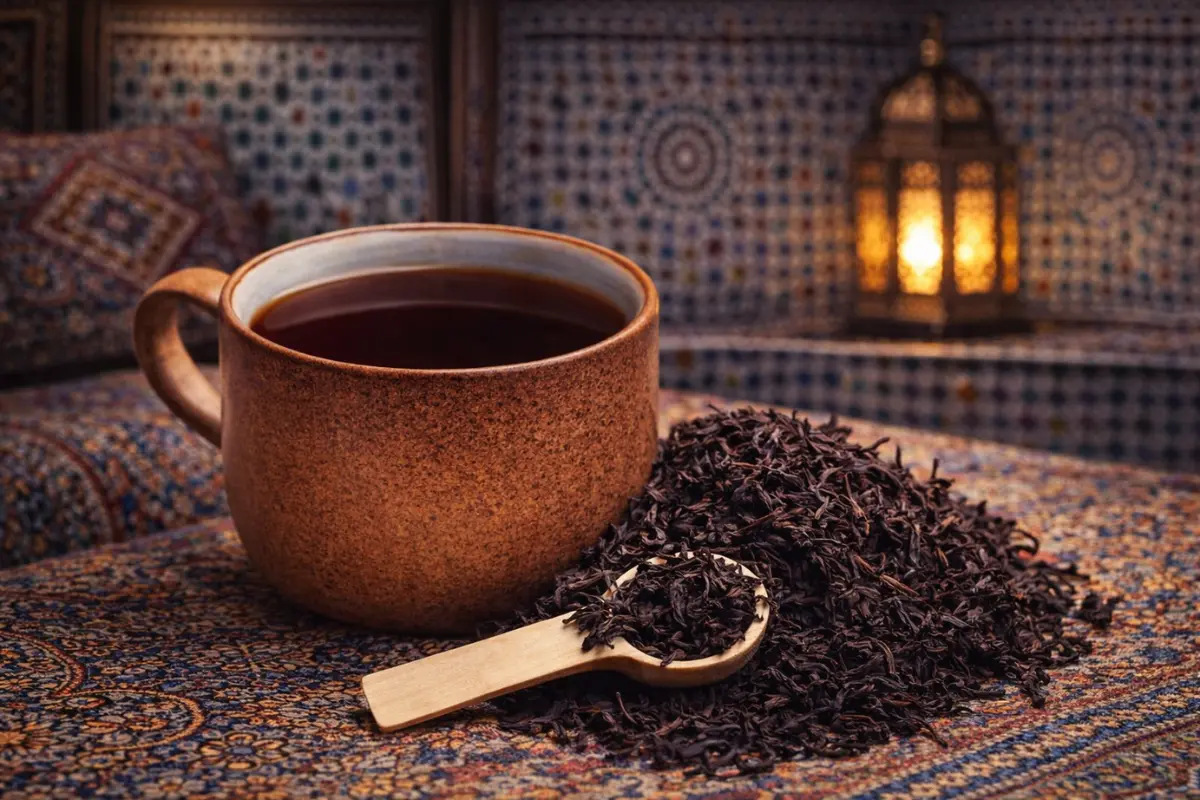
Moroccan Spiced Black Tea represents a less-known but equally magnificent tradition within Morocco's rich tea culture—a robust, full-bodied alternative to the ubiquitous green mint tea. While green tea with mint dominates social occasions, spiced black tea holds its own special place: as a morning energizer in coastal cities like Casablanca and Tangier, as a sophisticated offering in urban cafés, and as a warming companion during the cooler months when mint's cooling properties are less desired.
This tea showcases Morocco's spice blending artistry applied to the tea ceremony. Rather than the straightforward sweetness of mint tea, it offers complexity: the malty depth of Chinese black tea (often Keemun or Yunnan) layered with carefully balanced spices that whisper rather than shout. Each spice is chosen not just for flavor but for its complementary effect on the tea's character—cardamom's citrusy brightness against black tea's earthiness, cinnamon's sweet warmth tempering any astringency, clove's penetrating depth adding intrigue.
Preparing spiced black tea requires a different technique than mint tea: the spices must be given time to infuse their flavors into the water before the tea is added, and the black tea itself demands precise steeping to avoid bitterness. The result is a beverage that feels both familiar and novel—recognizably Moroccan in its spicing, yet distinct in its rich, amber depth. It's a tea for contemplation rather than conversation, for cool mornings rather than hot afternoons, and for those moments when you want both caffeine's wakefulness and spices' comfort in a single cup.
About This Recipe
Moroccan Spiced Black Tea emerged from the cosmopolitan port cities of Morocco—particularly Tangier, Casablanca, and Essaouira—where international trade introduced not just goods but culinary ideas. While green tea arrived from Britain in the 19th century and became national drink, black tea had older connections via trans-Saharan trade and Mediterranean commerce. The spicing reflects Morocco's position at crossroads: cardamom from India/Asia, cinnamon from Sri Lanka/SE Asia, cloves from Indonesia, all blending with local citrus in Moroccan teapots. This tea likely developed among merchant classes and urban elites who had access to diverse spices and appreciated black tea's sophistication. During French and Spanish protectorates, European residents in Moroccan cities often preferred black tea, and local cafés developed spiced versions to accommodate while maintaining Moroccan character. Unlike mint tea which became symbol of national identity, spiced black tea remained regional specialty—more common in north where Spanish influence was strong, in coastal cities with international exposure, and among families with trade connections. Today, it represents Morocco's layered culinary identity: authentically Moroccan in its spicing and preparation ritual, yet distinct from the mint tea stereotype. It's enjoyed by those seeking caffeine without mint's cooling effect, by older generations who remember its popularity mid-20th century, and by a new generation of Moroccans rediscovering lesser-known aspects of their culinary heritage. As global interest in chai and spiced teas grows, this Moroccan counterpart offers different balance—more subtle, more tea-forward, yet unmistakably North African in its spice selection and serving ritual.
Nutritional Info (per serving)
Recipe Tags
Understanding the Ingredients
Chinese Black Tea (Keemun or Yunnan)
Unlike the gunpowder green tea used in mint tea, Moroccan spiced black tea typically uses high-quality Chinese black teas known for their smooth, malty character with hints of cocoa or stone fruit. Keemun (Qimen) is traditional—it has a wine-like complexity without bitterness. Yunnan black (Dianhong) offers honeyed notes. The tea should be whole leaf, not dust or fannings. It's added after spices have infused to prevent over-extraction and bitterness. The quantity is less than in mint tea as black tea is more potent.
Green Cardamom Pods
Cardamom is the signature spice in this blend, providing bright, citrusy, slightly floral notes that cut through black tea's richness. The pods should be green (not bleached white) and lightly crushed just before use to release their seeds' essential oils. Whole pods are preferred over ground cardamom, which can make the tea cloudy. Cardamom also aids digestion, making this tea excellent after meals. The quantity should be subtle—enough to notice but not dominate.
Cinnamon and Cloves
Cinnamon (Cassia) adds sweet warmth that complements black tea's natural sweetness. A small stick is sufficient—too much makes the tea taste like dessert. Cloves contribute penetrating warmth and complexity; just 2-3 whole cloves are enough as they're very potent. These spices are typically added whole and removed after steeping. Some versions also include a single star anise pod for licorice notes, particularly in northern Morocco.
Fresh Ginger (Optional)
A few thin slices of fresh ginger add gentle heat and digestive benefits, particularly in winter versions. Ginger should be added with the spices during the initial infusion. Unlike in ginger-focused teas, here it's a background note—½ inch maximum, sliced thinly. Dried ginger can substitute but lacks the bright, fresh quality.
Orange or Lemon Peel
Dried bitter orange peel (from Moroccan bitter oranges) is traditional, but fresh orange or lemon zest works beautifully. The citrus oils cut through the spices and tea's richness, adding brightness. Only the colored zest should be used, not the white pith which is bitter. The peel is added during the spice infusion to release its oils.
Sugar or Honey
Like most Moroccan teas, this is sweetened, though often less so than mint tea to allow the spices' complexity to shine. Sugar is traditional, added while the tea is hot. Honey can be used but may overpower delicate spice notes. For authenticity, Moroccan sugar cones (loaf sugar) broken into pieces are ideal. The sweetness should support, not mask, the layered flavors.
Step-by-Step Cooking Guide
Prepare Spices and Tea
Lightly crush 8-10 green cardamom pods with the flat side of a knife or in a mortar—just enough to crack them open and release seeds. Break 1 cinnamon stick into 2-3 pieces. Measure 2-3 whole cloves. If using ginger, peel and thinly slice ½ inch piece. Using a vegetable peeler, remove zest from ½ orange or lemon in wide strips, avoiding white pith. Measure 2 tablespoons of whole-leaf black tea.
Tip: Crushing cardamom pods just before use preserves their volatile oils. Use a Y-peeler for perfect zest strips without pith. Have all spices ready before heating water—the process moves quickly.
Infuse Spices in Hot Water
In a saucepan or traditional Moroccan teapot, bring 4 cups (1 liter) of filtered water to a boil. Add all spices (cardamom, cinnamon, cloves, ginger if using) and citrus zest. Reduce heat to lowest setting, cover, and simmer gently for 5-6 minutes. This allows spices to release their flavors into the water without boiling away delicate compounds. The water will become fragrant and lightly colored.
Tip: Gentle simmering, not boiling, extracts flavors optimally. Cover to trap aromatic steam. Taste the spiced water after 5 minutes—it should be clearly spiced but not overwhelming.
Add Black Tea with Precision
After spices have infused, remove pot from heat. Add black tea leaves immediately. Stir once gently, then cover tightly. Let steep for exactly 3-4 minutes—set a timer. Black tea becomes bitter if over-steeped, especially in already-spiced water. The tea will darken to deep amber with reddish notes from the spices.
Tip: Water should be just below boiling when adding tea—about 90°C/194°F. Stirring just once prevents over-agitation that releases tannins. 3 minutes for lighter tea, 4 for stronger.
Strain and Sweeten
Using a fine mesh strainer, strain the tea into a warmed teapot or directly into cups. Press gently on solids but don't mash. Discard spices and tea leaves (compost them). While tea is hot, add sugar—start with 1 teaspoon per cup, stirring until dissolved. Taste and adjust—the sweetness should balance the spices without masking them.
Tip: Strain thoroughly to remove all small particles. A second straining through cheesecloth ensures silky texture. Sweeten in the pot for consistent flavor, or let individuals sweeten their cups.
Aerate by Pouring
If using a teapot, pour the tea into glasses from a height of about 8-10 inches (20-25cm). This traditional Moroccan technique aerates the tea, releasing aromas and creating a slight foam. Pour back and forth between two pots if you want to cool it slightly and increase aeration. The tea should be a clear, deep amber-brown.
Tip: Pouring from height requires practice—start lower until confident. The sound of tea hitting glass is part of the ritual. Aeration softens any slight bitterness from the black tea.
Serve with Traditional Accompaniments
Pour into clear Moroccan tea glasses or heatproof cups. Serve immediately while hot. Traditional accompaniments include: plain almonds (unsalted), sesame cookies (ghriba), or dates. Unlike mint tea which is often served alone, spiced black tea benefits from something plain to complement its complexity.
Tip: Small glasses encourage savoring. The almonds provide protein that balances caffeine. For morning, serve with msemen (Moroccan pancake); for afternoon, with light pastries.
Common Mistakes to Avoid
❌ Adding Tea with Spices from Beginning
Solution: Black tea becomes bitter if steeped as long as spices need. Always infuse spices first (5-6 minutes), then add tea for only 3-4 minutes. This two-stage method gives both components proper extraction time.
❌ Over-Steeping Black Tea
Solution: Black tea releases excessive tannins after 4-5 minutes, creating unpleasant bitterness. Set a timer for 3-4 minutes maximum. The spices will continue to infuse slightly even after straining, so err on shorter side.
❌ Using Ground Spices
Solution: Ground spices make tea cloudy, gritty, and release flavor too quickly (then become bitter). Always use whole spices: cardamom pods, cinnamon sticks, whole cloves. Lightly crush just before using.
❌ Too Many Cloves
Solution: Cloves are extremely potent—2-3 whole cloves per liter is plenty. More makes the tea medicinal and overpowering. They should be a background note, not dominant flavor.
❌ Not Aerating the Tea
Solution: Pouring from height isn't just ceremony—it oxygenates the tea, softening tannins and releasing aromas. Don't just pour carefully from spout; lift the pot and pour with confidence for proper aeration.
Ingredient Substitutions
Instead of: Keemun Black Tea
Use: Assam (more robust), Ceylon (brighter), or Darjeeling (more floral). English Breakfast blend works in a pinch. Avoid highly smoky teas like Lapsang Souchong—they overpower spices.
Instead of: Green Cardamom
Use: Black cardamom (use half amount, smokier flavor) or ¼ teaspoon cardamom seeds (remove from pods). Ground cardamom (½ teaspoon) if necessary but tea will be cloudy.
Instead of: Bitter Orange Peel
Use: Regular orange or tangerine zest, lemon zest, or ½ teaspoon orange blossom water added after straining. Dried Seville orange peel if available.
Instead of: Sugar
Use: Honey (use 25% less as it's sweeter), date syrup (authentic), maple syrup, or coconut sugar. For sugar-free, stevia or monk fruit.
Serving Suggestions
Serve as morning tea instead of coffee—the spices provide gentle wakefulness without jitters.
After lunch as digestive aid—cardamom, cinnamon, and cloves all support digestion.
On rainy or cool days when mint tea feels too cooling—this tea warms from within.
With Moroccan pastries like briouats (stuffed pastries) or chebakia (sesame cookies).
As an after-dinner alternative to mint tea—the spices cleanse the palate beautifully.
For guests who prefer black tea over green—it maintains Moroccan hospitality while accommodating preferences.
Storage & Reheating Guide
Storage
Dry spice blend: mix whole spices (except fresh ginger), store in airtight jar up to 3 months. Brewed tea: refrigerate up to 2 days. Flavor diminishes upon storage.
Reheating
Reheat gently on stovetop until hot but not boiling. Microwave in short bursts. Do not reboil—makes tea bitter. Best consumed fresh.
Tips: For convenience, make spice sachets: place measured spices in reusable tea bags. Keep ready to simmer with water. The black tea should always be added fresh.
Frequently Asked Questions
Recipe by

Similar Recipes


Our Recipe Ebooks
Discover our collection of authentic Moroccan recipe ebooks. Learn traditional cooking methods and create delicious meals at home.
The Moroccan Vegen
The Royal Moroccan Table -Part1
The Royal Moroccan Table -Part2
YouTube Channel
Watch step-by-step cooking videos, learn professional techniques, and get inspired by traditional and modern recipes from around the world.
Latest Video
"Traditional Moroccan Tagine Masterclass"