
60
Prep (min)
45
Cook (min)
8
Servings
Advanced
Level
Introduction
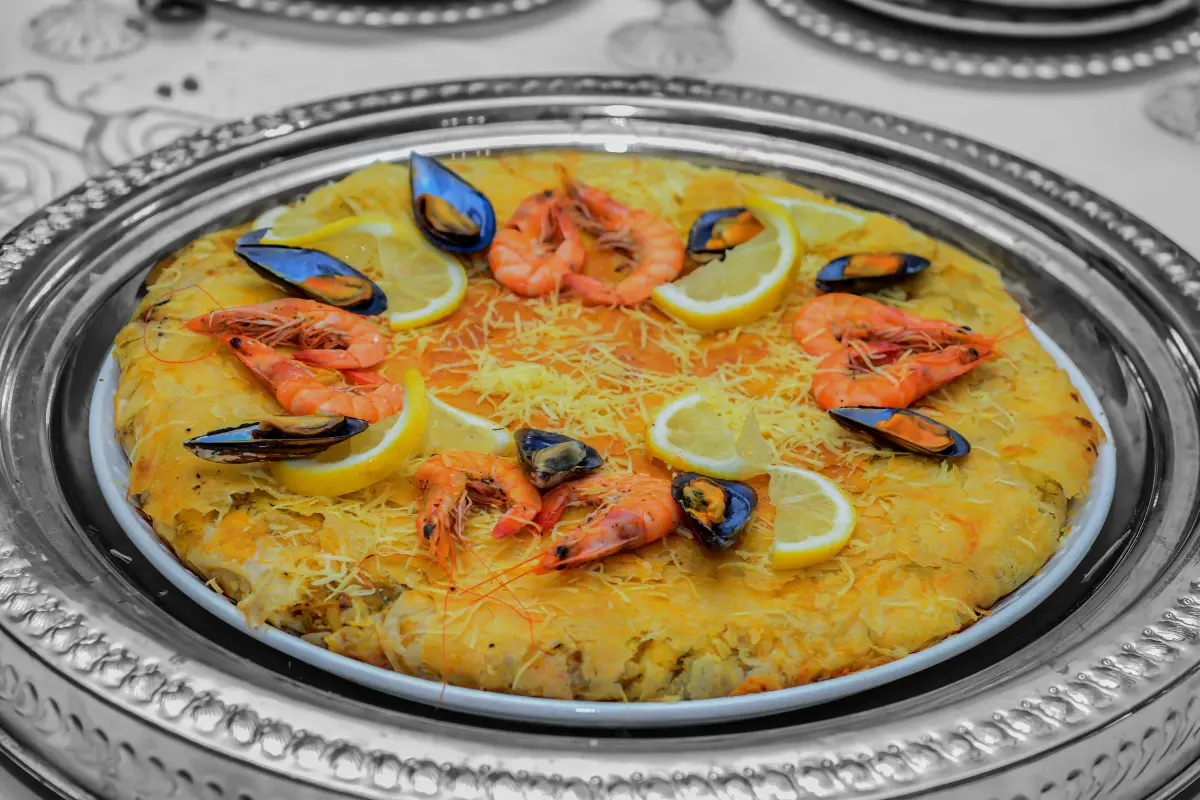
Seafood Bastilla represents the elegant evolution of one of Morocco's most iconic dishes—a daring and beautiful fusion that marries the intricate pastry technique of traditional bastilla with the delicate flavors of the sea. While the classic pigeon or chicken bastilla tells a story of inland Morocco with its sweet-savory spice blend and almonds, the seafood version whispers of coastal sophistication, where the Atlantic meets culinary tradition. This is not simply fish wrapped in pastry; it is a carefully balanced composition where layers of impossibly thin warqa pastry become crisp golden shells encasing a luxurious filling of firm white fish, plump shrimp, and sometimes scallops or calamari, all bound in a velvety, saffron-scented béchamel sauce. The seafood is gently poached or sautéed to perfect tenderness, then mingled with caramelized onions, fresh herbs, and a subtle spice profile that enhances rather than overwhelms the ocean flavors. The assembly is an art form: layer upon layer of pastry brushed with butter, the filling carefully distributed, then more layers, creating a parcel that bakes into shatteringly crisp, flaky perfection. The final presentation is breathtaking—a large, round, golden-brown pie dusted with powdered sugar and cinnamon in the traditional lattice pattern, scattered with toasted almonds. When cut, it reveals its treasures: moist, flavorful seafood in a creamy matrix, steaming gently. This dish represents modern Moroccan cuisine at its finest—respectful of tradition but unafraid to innovate, celebrating local seafood through a classic culinary lens. It has become a star of festive occasions in coastal cities, wedding banquets, and upscale restaurants, where its dramatic presentation and exquisite balance of textures and flavors never fail to impress. Eating seafood bastilla is an experience: the crisp pastry gives way to creamy, savory filling with pops of seafood sweetness, all subtly enhanced by the final sweet-spiced dusting—a harmonious dialogue between land and sea, tradition and innovation.
About This Recipe
Seafood Bastilla is a brilliant chapter in the ongoing story of Moroccan culinary innovation. Its roots lie in the imperial cities of Fez and Meknes, where the original pigeon bastilla (pastilla) was perfected centuries ago as a dish of celebration for sultans and nobility. That classic version, with its intricate layers of warqa pastry, savory-spiced meat, almonds, and eggs, and its signature dusting of cinnamon and sugar, became one of Morocco's most iconic culinary exports. The seafood adaptation is a much more recent invention, born in the late 20th century as Morocco's coastal chefs—particularly in Essaouira, Agadir, and Casablanca—began to ask: 'What if we apply this magnificent technique to the bounty of our Atlantic waters?' This was not merely substitution but thoughtful reinvention. The rich, gamey pigeon was replaced with delicate fish and shellfish; the egg binding was transformed into a luxurious saffron béchamel that echoed the creaminess of traditional versions while complementing seafood; and the spice profile was lightened to let ocean flavors shine. This creation coincided with Morocco's growing culinary confidence on the world stage and the rise of 'Modern Moroccan' cuisine in upscale restaurants. Chefs like Mohamed Fedal and the community at the Institut de Cuisine in Marrakech played roles in refining and popularizing the dish. It quickly moved from restaurant specials to wedding feasts and festive occasions in coastal homes, representing a fusion of deep-rooted pastry tradition with local, seasonal seafood. Today, seafood bastilla stands as a testament to Moroccan cuisine's vitality—its ability to honor centuries of technique while embracing new ingredients and ideas. It is a dish that surprises and delights, challenging preconceptions of what Moroccan food can be, while remaining unmistakably, wonderfully Moroccan in its complexity, balance, and celebration of community through shared food.
Nutrition / serving
Recipe Tags
Understanding the Ingredients
Warqa Pastry (or Phyllo)
The foundation: 12-16 sheets of Moroccan warqa pastry (similar to phyllo but thinner and more delicate). Warqa is traditional and ideal, but high-quality phyllo dough (about 1 lb) is an excellent substitute. The pastry must be kept covered with a damp cloth during assembly to prevent drying. Each layer is brushed generously with melted butter (about 1 cup total) to ensure crisp, golden, flaky results. The assembly creates numerous thin layers that puff and separate during baking.
Seafood Selection
A mix of firm white fish and shellfish: 1 lb firm white fish fillets (sea bass, cod, halibut), cut into 1-inch chunks; 1/2 lb large shrimp, peeled and deveined; optionally 1/2 lb scallops or calamari rings. The seafood should be fresh, patted dry, and seasoned lightly. It is briefly cooked before assembly to ensure it doesn't release too much moisture during baking. The combination provides varied textures and flavors.
Saffron Béchamel Sauce
The luxurious binder: a traditional béchamel enriched with Moroccan flavors. Made from 4 tbsp butter, 1/3 cup flour, 2.5 cups warm milk infused with a large pinch of saffron threads (steeped for 15 minutes). Seasoned with salt, white pepper, and a hint of nutmeg. The sauce should be thick enough to coat the back of a spoon, cooling slightly before mixing with seafood to prevent overcooking.
Aromatics and Herbs
2 large onions, finely chopped and slowly caramelized in butter until golden and sweet. 4 cloves garlic, minced. A generous amount of fresh herbs: 1/2 cup chopped flat-leaf parsley and 1/4 cup chopped cilantro. The herbs provide essential freshness that cuts through the richness. Some versions include a small amount of finely chopped preserved lemon rind for a distinctive tang.
Spice Blend
Lighter than meat bastilla to complement seafood: 1 tsp ground ginger, 1/2 tsp turmeric (for color), 1/4 tsp cayenne or mild chili powder (optional, for subtle heat), 1/2 tsp white pepper. Saffron is the star, used in both the béchamel and sometimes steeped in water to sprinkle over onions. Salt to taste. The spices should whisper, not shout.
Toasted Almonds and Final Dusting
1 cup blanched almonds, toasted until golden, then coarsely chopped or slivered. They are mixed into the filling for crunch. For the iconic finish: 2-3 tbsp powdered sugar mixed with 1 tsp ground cinnamon for dusting the baked bastilla in a decorative lattice pattern. Some add a sprinkle of orange blossom water to the sugar mixture for fragrance.
Butter for Assembly
Approximately 1 cup (2 sticks) unsalted butter, clarified or melted and cooled slightly. Clarified butter (smen) is traditional and has a higher smoke point and rich flavor. Every layer of pastry is brushed generously to ensure crispiness and flavor. This is non-negotiable for authentic texture.
Step-by-Step Cooking Guide
Prepare All Components
20 minIf using frozen warqa/phyllo, thaw overnight in refrigerator. Keep covered. Toast almonds in a dry skillet over medium heat until fragrant and lightly golden, 5-7 minutes. Chop coarsely. Finely chop onions and herbs. Cut fish into 1-inch chunks. Peel and devein shrimp. Pat all seafood very dry. Infuse milk: heat milk until steaming, add saffron, remove from heat, cover, and steep 15 minutes. Clarify butter if using.
Tip: Organization is key. Have all components ready before assembly. Dry seafood thoroughly to prevent a soggy filling.
Cook the Aromatics
25 minIn a large skillet, melt 2 tbsp butter over medium-low heat. Add chopped onions with a pinch of salt. Cook slowly, stirring occasionally, for 20-25 minutes until deeply caramelized, soft, and golden brown—not merely translucent. In the last 2 minutes, add minced garlic and cook until fragrant. Transfer to a large bowl to cool.
Tip: Low and slow for onions is crucial—this builds a sweet, deep flavor base. Do not rush or burn.
Make the Saffron Béchamel
15 minIn a medium saucepan, melt 4 tbsp butter over medium heat. Whisk in flour and cook, stirring constantly, for 2 minutes to form a pale roux (do not brown). Gradually whisk in the warm saffron-infused milk. Continue whisking until the sauce thickens and becomes smooth, about 5-7 minutes. Season with 1 tsp salt, 1/2 tsp white pepper, and a pinch of nutmeg. It should be thick enough to coat the back of a spoon. Remove from heat, transfer to a bowl, and let cool slightly, covering surface with plastic wrap to prevent skin.
Tip: Whisk constantly to avoid lumps. The béchamel will thicken more as it cools. It must be cool enough not to cook the seafood when mixed.
Cook the Seafood
10 minIn the same skillet, add 1 tbsp butter and 1 tbsp olive oil over medium-high heat. Season seafood pieces lightly with salt and pepper. Working in batches to avoid steaming, sauté fish chunks for 1-2 minutes per side until just opaque on the outside but not fully cooked through. Remove. Sauté shrimp for 1-1.5 minutes per side until pink and curled. If using scallops, sear 1 minute per side. Let seafood cool slightly, then mix into the bowl with caramelized onions.
Tip: The seafood will finish cooking in the oven. Searing is just to seal in juices and remove excess moisture. Do not overcook.
Combine the Filling
10 minTo the bowl with onions and seafood, add the chopped herbs, toasted almonds, and all spices (ginger, turmeric, optional cayenne). Gently fold in the slightly cooled saffron béchamel until everything is evenly coated. The mixture should be cohesive but not runny. Taste and adjust seasoning—it should be well-seasoned. Let cool completely before assembly (can be refrigerated for 30 minutes).
Tip: Cool filling is essential to prevent the pastry from becoming soggy during assembly. Be gentle to keep seafood pieces intact.
Assemble the Bastilla (Traditional Method)
25 minPreheat oven to 375°F (190°C). Brush a 12-inch round pie dish or pizza pan with butter. Lay 2 sheets of warqa/phyllo in the dish, letting edges hang over sides, brush generously with melted butter. Repeat, rotating sheets to cover the dish evenly, using 8-10 sheets total to create a solid base with overhang. Spoon all the filling into the center, spreading evenly but leaving a 2-inch border. Fold the overhanging pastry sheets over the filling, one by one, brushing each with butter as you fold, creating a neat package. Place 2-4 more buttered sheets on top to fully enclose, tucking edges underneath. Brush the entire top generously with butter.
Tip: Work quickly but carefully. Keep unused pastry covered with a damp cloth. Butter every layer generously—this creates the flaky layers.
Bake to Golden Perfection
35 minPlace the bastilla in the preheated oven. Bake for 30-35 minutes, until the pastry is deeply golden brown, crisp, and flaky. If the top browns too quickly, tent loosely with foil. The bastilla is done when it feels firm and sounds hollow if tapped lightly. Remove from oven and let rest on a wire rack for 10-15 minutes—this allows the filling to set for cleaner slicing.
Tip: Oven temperatures vary. Watch carefully from the 25-minute mark. A fully golden, crisp top is the goal.
Decorate and Serve
10 minCarefully transfer the bastilla to a serving platter. Mix powdered sugar and cinnamon in a small sieve. Create a lattice pattern on the hot bastilla by placing a criss-cross grid of kitchen string or strips of paper on top, then dusting the sugar-cinnamon mixture over it. Remove the grid to reveal the pattern. Alternatively, dust the entire top lightly and simply. Garnish with a few whole toasted almonds and fresh herb sprigs. Serve immediately while the pastry is crisp.
Tip: The bastilla must be hot for the sugar to adhere slightly. The lattice pattern is traditional and beautiful. Use a sharp, serrated knife for cutting.
Serving Tradition
5 minCut the bastilla into wedges at the table for dramatic presentation. Serve as a magnificent first course or as the main event of a special meal. Accompany with a light, crisp white wine, a simple green salad with citrus dressing to cut the richness, and perhaps a small bowl of harissa for those who desire heat. In Morocco, it is often the star of a multi-course feast.
Tip: The contrast of hot, savory filling and crisp pastry with sweet-spiced topping is the magic. Serve immediately—it does not wait well.
Common Mistakes to Avoid
✗ Soggy Pastry
Fix: Caused by: 1) Filling too wet (seafood not dried, béchamel too thin, onions not cooked down). 2) Assembly with warm filling. 3) Underseasoning leading to excess moisture release. 4) Not brushing enough butter between layers. Ensure filling is cool and thick, seafood is dry, and butter is generous.
✗ Overcooked, Rubbery Seafood
Fix: Seafood cooks quickly. Sauté just until exterior is set, not fully cooked. It will finish in the oven. Fish chunks should be large enough to withstand double cooking. Shrimp should be added at the very end of sautéing. The residual heat from béchamel will also cook it slightly.
✗ Béchamel Too Thin or Lumpy
Fix: The béchamel must be thick enough to bind the filling. Cook the roux for 2 full minutes before adding milk. Add warm (not cold) milk gradually while whisking vigorously. If lumpy, strain through a sieve. If too thin after cooling, chill to thicken before using.
✗ Rushing the Onion Caramelization
Fix: Golden, sweet onions are a flavor cornerstone. Cooking them over high heat merely browns them without developing sweetness. Cook low and slow for at least 20 minutes until they melt into a jammy consistency. This step cannot be hurried.
✗ Pastry Tearing or Drying Out
Fix: Warqa/phyllo is delicate. Keep it covered with a damp (not wet) kitchen towel at all times. Work swiftly. If a sheet tears, patch it with another small buttered piece. Don't worry about perfection—layers will hide small tears.
✗ Underseasoning the Filling
Fix: The pastry and final sugar dusting require a well-seasoned, savory interior to create the signature contrast. Taste the filling before assembly—it should be boldly flavored. Remember, spices mellow when mixed with béchamel and baked.
✗ Incorrect Baking Temperature or Time
Fix: Too low a temperature yields pale, greasy pastry. Too high burns the top before the inside heats through. 375°F (190°C) is ideal. Bake until uniformly deep golden brown, not just pale yellow. The bastilla should feel light and crisp, not heavy or doughy.
Ingredient Substitutions
Instead of: Warqa Pastry
Use: Phyllo dough (fillo) is the most common and accessible substitute. Filo is slightly thicker but works beautifully. Use about 1 lb. For a different texture, brick (ouarka) or even spring roll wrappers can be used in a pinch, but the result will be different.
Instead of: Assorted Seafood
Use: Use what is freshest and most available. A single type of fish works (like all cod or salmon). For a luxury version, use lobster meat. For economy, increase the proportion of firm white fish. Smoked fish (like haddock) can be used in small amounts for depth.
Instead of: Saffron
Use: Saffron is irreplaceable for authentic flavor and color, but in a pinch, use 1/2 tsp turmeric for color and a pinch of smoked paprika for a different depth. The flavor profile will change significantly.
Instead of: Fresh Herbs (Cilantro)
Use: If you dislike cilantro, use all flat-leaf parsley. Fresh dill or tarragon pairs beautifully with seafood, though less traditional.
Instead of: Almonds
Use: Toasted pine nuts, walnuts, or pistachios. For nut-free, omit or use toasted breadcrumbs for some texture, though you'll lose a key traditional element.
Instead of: Dairy Béchamel
Use: For a dairy-free version, make a velouté sauce using fish or vegetable stock thickened with a roux (use olive oil or vegan butter). Coconut milk can work for a different, richer profile.
Serving Suggestions
As a show-stopping starter: Cut into small wedges to begin a Moroccan feast.
Main course centerpiece: Serve a large wedge per person with a simple salad of orange, fennel, and olive.
With sauces: Offer lemon wedges, harissa aioli, or a light tomato-coriander coulis on the side.
Wine pairing: A crisp, aromatic white like Albariño, Vermentino, or a dry Riesling complements the seafood and spices.
Moroccan style: As part of a 'diffa' (feast) with salads like zaalouk and taktouka, followed by a tagine.
For brunch: Serve with a sparkling wine and a fruit salad—unconventional but delightful.
Garnish: A drizzle of saffron oil, microgreens, or edible flowers elevates the presentation for special events.
Leftover idea (rare): Reheat in a hot oven for 10 minutes to recrisp pastry. Best fresh.
Storage & Reheating
Storage
Best served immediately. Leftovers can be cooled completely, wrapped tightly in foil, and refrigerated for up to 2 days. The pastry will soften significantly. Freezing is not recommended as the béchamel sauce may separate and the pastry becomes soggy upon thawing.
Reheating
To restore some crispness: Preheat oven to 375°F (190°C). Place leftover bastilla (unwrapped) on a baking sheet. Heat for 10-15 minutes until warmed through and pastry re-crisps slightly. Avoid the microwave, which will make it soggy.
If you must make ahead, prepare the filling a day in advance and refrigerate. Assemble and bake just before serving. The assembled, unbaked bastilla can be refrigerated for 2-3 hours before baking; add 5-10 minutes to baking time.
Frequently Asked Questions
Recipe by

Abdrahman Idrissi
عبد الرحمن الإدريسي
Pastry & Bread Chef
View all recipes by Abdrahman →
You May Also Like
Our Ebooks

The Moroccan Vegan
$12.56
The Royal Moroccan Table — Part 1
$9.99
The Royal Moroccan Table — Part 2
$9.99
YouTube
Watch step-by-step cooking videos and learn traditional Moroccan techniques.
450+
Subscribers
150+
Videos