
Introduction
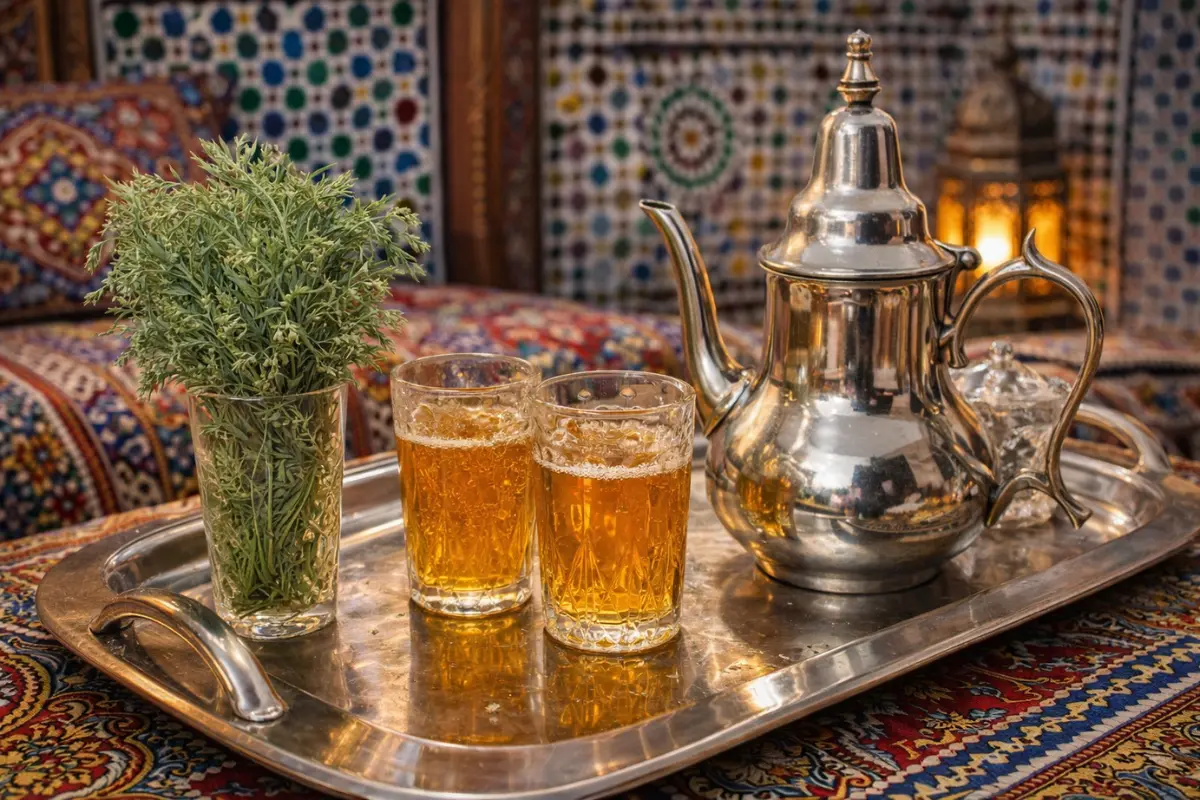
Moroccan Sage Tea, known locally as 'Shība' (from the Arabic word for sage), is one of North Africa's most powerful herbal infusions, revered for centuries for its medicinal properties and distinctive bold flavor. Unlike the more social mint tea, sage tea is primarily consumed as a therapeutic beverage—strong, earthy, and slightly bitter, with a cleansing aftertaste that lingers pleasantly.
Wild sage (Salvia officinalis or Salvia lavandulifolia) grows abundantly in Morocco's Atlas Mountains and arid regions, where it's harvested in late spring when its essential oil content peaks. The tea is traditionally prepared in small quantities due to its potency, often served in tiny glasses rather than cups. It's the go-to remedy for digestive discomfort, sore throats, menstrual cramps, and as a general tonic for fatigue or low spirits.
Drinking Shība is a sensory experience that commands attention: the initial pungent aroma of crushed sage leaves, the deep amber-green color of the infusion, the bold flavor that starts herbal and finishes with subtle camphor notes. In Moroccan households, it's typically prepared by elders who know the precise steeping time to balance efficacy with palatability. While not an everyday social drink, it holds a sacred place in traditional healthcare—a natural pharmacy in a teapot that connects modern Moroccans to ancestral wisdom about the healing power of plants.
About This Recipe
Moroccan Sage Tea (Shība) has ancient roots in Berber (Amazigh) and Arab herbal medicine traditions, with references dating back to the Roman era when North African sage was exported to Rome for medicinal use. The name 'Shība' derives from classical Arabic, connecting it to wider Islamic herbalism that valued sage (Salvia) for its 'healing wisdom' (Salvia comes from Latin 'salvere,' to heal). In Morocco, wild sage grows prolifically in the Atlas and Rif mountains, where indigenous communities developed specific harvesting rituals—picked at midday in dry weather, dried in shade to preserve oils. During the Islamic Golden Age, physicians like Al-Razi and Ibn Al-Baitar documented Moroccan sage's superior potency. The tea became particularly associated with women's health and digestive issues in traditional households. French colonizers noted its use in the early 20th century, with botanists documenting unique Moroccan sage varieties. Today, it remains a bridge between past and present: rural elders still harvest it wild following moon cycles, urban Moroccans purchase it from traditional herbalists (attarine), and diaspora communities seek it out as a taste of ancestral healing wisdom. Its continued use represents both cultural preservation and practical acknowledgment of nature's pharmacy in a rapidly modernizing society.
Nutritional Info (per serving)
Recipe Tags
Understanding the Ingredients
Wild Sage Leaves (Shība)
Authentic Moroccan sage tea uses wild-harvested sage (Salvia species native to North Africa), which has more intense flavor and higher concentration of medicinal compounds than cultivated varieties. The leaves are smaller, grayer, and more aromatic. Dried whole leaves are preferred over crushed or powdered, as they release flavor more gradually and create clearer infusion. Wild Moroccan sage contains higher levels of thujone (which gives its characteristic camphor notes) and rosmarinic acid. Quality is determined by strong aroma and visible tiny hairs on dried leaves.
Dried Mint (Optional)
A small amount of dried mint is sometimes added to soften sage's intensity and add digestive benefits. This is more common in northern regions. The mint should be added sparingly—too much conflicts with sage's dominance. Usually 1-2 small mint leaves per serving, or about one-fifth the amount of sage. Fresh mint can be used but may make the tea cloudy.
Honey (Strongly Recommended)
Due to sage tea's natural bitterness and medicinal potency, honey is almost always added—not just as sweetener but as therapeutic partner. Mountain or thyme honey complements the herbal notes perfectly. The honey should be added while the tea is hot to dissolve properly and blend flavors. For medicinal purposes, local raw honey is preferred for its enzymes and antimicrobial properties. Sugar is rarely used as it doesn't balance the bitterness as effectively.
Lemon
A squeeze of fresh lemon juice or a thin slice is traditional, especially when the tea is taken for sore throats or colds. The acidity cuts through sage's oiliness and enhances the tea's antimicrobial properties. Lemon should be added after straining to preserve its vitamin C and fresh flavor. Some add a strip of lemon zest during steeping for more subtle citrus notes.
Water Quality
Since sage tea has few ingredients, water quality significantly affects the taste. Spring water or filtered water is ideal. The water should be brought to a full rolling boil to properly extract sage's tough leaves and medicinal compounds. In Sahara regions, well water with high mineral content is traditional and adds characteristic notes.
Step-by-Step Cooking Guide
Prepare Sage Leaves
Measure 2 tablespoons of dried wild sage leaves (about 8-10 whole leaves). Gently crush them between your palms to break the surface and release essential oils—do not pulverize into powder. If using fresh sage, use 6 tablespoons (about 15-20 medium leaves), lightly bruised. Remove any thick stems as they can make the tea overly bitter. If adding mint, include ½ teaspoon dried mint leaves now.
Tip: Crushing is essential but gentle—you want to hear the leaves crackle slightly. Fresh sage yields a greener, more pungent tea but is less concentrated than dried. Wild sage is more potent than cultivated—adjust amount accordingly.
Boil Water and Warm Teapot
Bring 4 cups (1 liter) of filtered water to a full rolling boil. While water heats, warm your teapot (clay is traditional) by swirling a little hot water inside, then discarding. This prevents thermal shock and helps maintain brewing temperature. For authentic preparation, use a small Moroccan teapot (berrad) or small saucepan.
Tip: Sage requires fully boiling water (100°C/212°F) for proper extraction of its tough leaves and medicinal compounds. Don't use water that has cooled. The pot warming step is crucial for clay pots to prevent cracking.
Steep with Precision Timing
Place prepared sage leaves in warmed pot. Pour boiling water directly over leaves. Immediately cover with lid. Steep for exactly 5-7 minutes—set a timer. For medicinal tea, steep 7-10 minutes. Do not stir during steeping. The tea will turn deep amber with green undertones and release a strong herbal aroma. Over-steeping (beyond 10 minutes) makes it unpleasantly bitter and astringent.
Tip: Covering traps volatile oils. 5 minutes yields aromatic, drinkable tea; 7 minutes maximizes medicinal properties; beyond 10 becomes too bitter for most palates. Taste at 5 minutes to decide.
Strain and Add Honey
Using a fine mesh strainer, pour the tea into cups or a small serving pitcher. Discard the sage leaves (compost them). While tea is still very hot, add 1-2 teaspoons of honey per cup, stirring until completely dissolved. Taste—sage tea should be pleasantly strong with honey balancing the bitterness. For a less sweet version, add honey to individual cups.
Tip: Strain carefully to avoid leaves in cups. Honey must be added while tea is hot to dissolve properly and blend flavors. Raw honey retains more benefits if added after tea cools slightly (to about 60°C/140°F).
Add Lemon and Serve
Add a thin slice of lemon or a squeeze of fresh juice to each cup. For presentation, float a small fresh sage leaf on top. Serve immediately in small glasses (Moroccan tea glasses or espresso cups). Sage tea is traditionally consumed in small quantities due to its potency—about ½ to ¾ cup per serving.
Tip: Lemon enhances flavor and medicinal properties. The small serving size is intentional—sage tea is potent. Serve with a glass of water on the side as the tea can be drying.
Second Steeping (Traditional Economy)
Moroccan tradition values economy: add another 2 cups boiling water to the used sage leaves. Steep for 10-15 minutes. This yields a milder, still-beneficial tea that's often consumed later in the day or given to children. The second steep has less bitterness and more subtle herbal notes.
Tip: Second steep is perfect for those new to sage tea or with sensitivity to strong herbs. It retains digestive benefits with gentler flavor. Some add fresh mint to second steep for variation.
Common Mistakes to Avoid
❌ Using Too Many Sage Leaves
Solution: Sage is potent—more isn't better. 2 tablespoons dried sage per liter is standard. Excessive leaves create overly bitter, astringent tea that can cause digestive discomfort. Start with less, increase only if needed for medicinal effect.
❌ Steeping Too Long
Solution: Beyond 10 minutes, sage releases excessive tannins and bitter compounds. Set a timer for 5-7 minutes maximum for drinking tea, 7-10 for medicinal. Taste at 5 minutes. Over-steeped sage tea is unpleasantly bitter and can cause nausea.
❌ Not Adding Honey
Solution: Sage tea's natural bitterness needs balancing. Honey not only sweetens but adds its own therapeutic properties. If avoiding sweeteners, try steeping for only 3-4 minutes or blending with milder herbs like mint or verbena.
❌ Using Powdered Sage
Solution: Powdered sage creates cloudy, gritty tea with unbalanced flavor release. Always use whole or large broken leaves. Powdered herbs also lose volatile oils faster during storage.
❌ Serving in Large Quantities
Solution: Sage tea is medicinal and potent. Traditional servings are ½ to ¾ cup. Drinking large mugs can lead to side effects like dry mouth or digestive upset. Respect its potency with small servings.
Ingredient Substitutions
Instead of: Wild Moroccan Sage
Use: Cultivated garden sage (Salvia officinalis). Use same amount but expect milder flavor. Greek or Dalmatian sage varieties have higher quality. Avoid pineapple or other flavored sage varieties—they change character completely.
Instead of: Honey
Use: Date syrup (adds Moroccan authenticity), maple syrup, or stevia for sugar-free. Brown sugar works but lacks honey's medicinal synergy. Agave syrup is neutral but doesn't complement sage well.
Instead of: Fresh Lemon
Use: Orange slice (sweeter, less acidic) or a drop of lemon essential oil (food grade). Preserved lemon rind (tiny piece) adds interesting Moroccan twist but is salty.
Instead of: Dried Mint
Use: Fresh mint (use 2-3 leaves), lemon verbena, or lemon balm. For different profile, try thyme (½ amount) but this creates a different tea entirely.
Serving Suggestions
Serve after heavy, fatty meals to aid digestion—this is its most traditional use in Morocco.
During cold/flu season, serve with extra honey and lemon as a soothing throat remedy.
Accompany with plain toasted almonds or unsalted nuts—the fat complements sage's cleansing effect.
Serve in tiny decorative glasses as part of a Moroccan herbal tea tasting with mint and verbena teas.
For menstrual discomfort, serve warm with extra honey and a pinch of ginger.
Pair with mild, creamy foods like yogurt or labneh to balance sage's intensity.
Storage & Reheating Guide
Storage
Dried sage: store in airtight glass jar in cool, dark place up to 1 year. Brewed tea: refrigerate up to 2 days in glass container. Flavor changes upon storage—best consumed fresh.
Reheating
Reheat gently on stovetop until warm (not boiling). Microwave in short bursts. Do not reboil—it makes tea bitter and destroys delicate compounds. Add fresh lemon after reheating.
Tips: For medicinal use, always brew fresh. The volatile oils degrade quickly. If storing brewed tea, don't add lemon or honey until serving. Freezing not recommended.
Frequently Asked Questions
Recipe by

Similar Recipes


Our Recipe Ebooks
Discover our collection of authentic Moroccan recipe ebooks. Learn traditional cooking methods and create delicious meals at home.

The Moroccan Vegen
The Royal Moroccan Table -Part1
The Royal Moroccan Table -Part2
YouTube Channel
Watch step-by-step cooking videos, learn professional techniques, and get inspired by traditional and modern recipes from around the world.
Latest Video
"Traditional Moroccan Tagine Masterclass"