
15
Prep (min)
60
Cook (min)
6
Servings
Easy
Level
Introduction
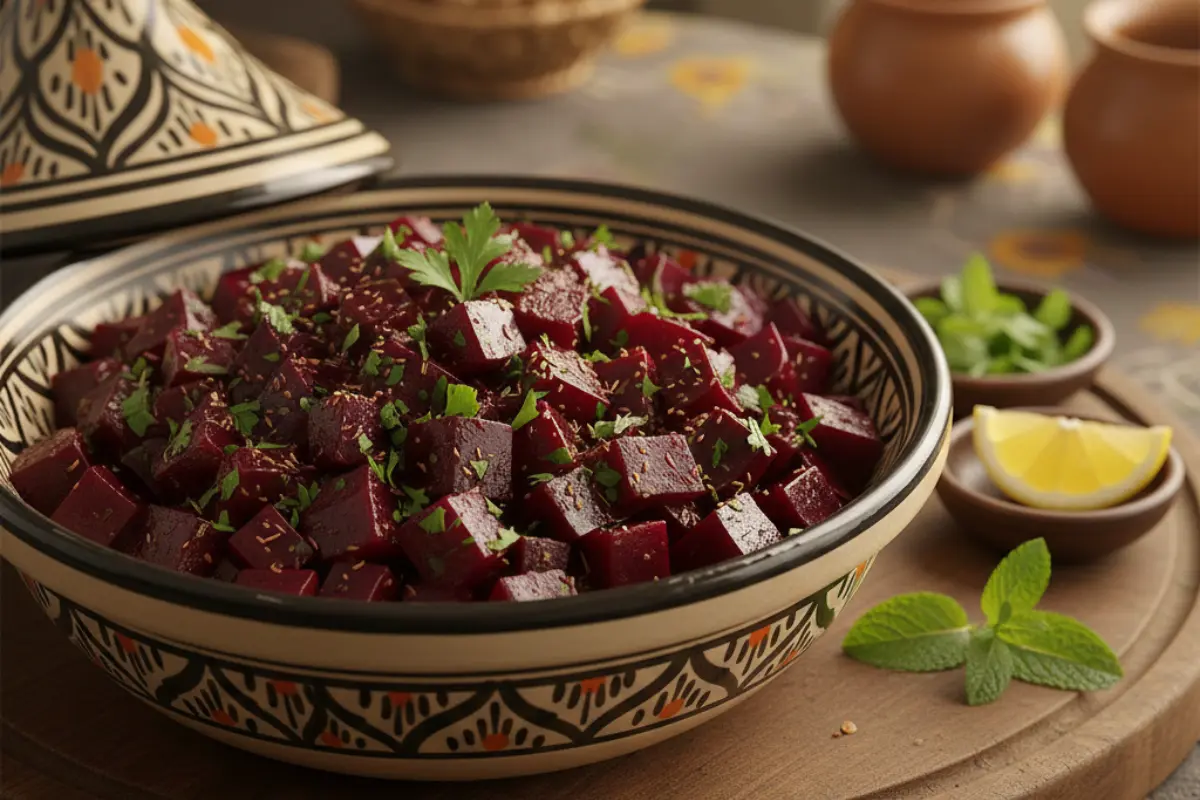
Moroccan beetroot salad, or salade de betterave, is a jewel among Morocco's extensive array of salads and mezze dishes. With its stunning deep magenta color, earthy-sweet flavor, and refreshing citrus dressing, this salad exemplifies the Moroccan talent for transforming humble vegetables into something special through thoughtful seasoning and balanced flavors. Beets are roasted or boiled until tender, then dressed while still warm with a simple but perfectly calibrated mixture of olive oil, lemon juice or vinegar, cumin, garlic, and fresh herbs - typically cilantro or parsley. The result is a salad that's simultaneously earthy and bright, sweet and tangy, substantial yet refreshing - a perfect representation of Moroccan culinary balance.
In Morocco, this beetroot salad appears as part of the traditional spread of salads that begins nearly every meal - from everyday family dinners to elaborate celebrations. These salads, collectively called 'chouwaya' or 'kemia,' are served in small bowls or plates arranged across the table, offering variety, color, and a way to stimulate appetite before the main course. Beetroot salad contributes its distinctive jewel tone to this rainbow of dishes, sitting alongside zaalouk (eggplant), taktouka (peppers and tomatoes), carrot salad, cucumber and tomato salad, and others. The salads are meant to be eaten with fresh bread, each person tearing off pieces to scoop and enjoy the different flavors. Beyond its role in traditional meals, beetroot salad has become popular as a healthy side dish, lunch component, or light meal when served with bread and cheese.
What makes this salad particularly appealing is its simplicity, health benefits, and make-ahead friendliness. Beets are naturally sweet, earthy, and loaded with nutrients - vitamins, minerals, antioxidants, and fiber. The preparation is straightforward with no complex techniques required. The salad actually improves when made ahead, as the beets continue to absorb the dressing flavors. It's naturally vegetarian, vegan, and gluten-free, making it suitable for various dietary preferences. The vibrant color makes any table more beautiful and appetizing. Most importantly, the balance of flavors - earthy beets, bright lemon, warm cumin, pungent garlic, fresh herbs - creates something far greater than the sum of simple ingredients.
About This Recipe
Beetroot salad holds a distinctive place in Moroccan cuisine as one of the many vibrant salads that grace Moroccan tables as part of the traditional mezze spread. While beets themselves are not native to Morocco - they originated in the Mediterranean region and were cultivated by ancient Greeks and Romans - they found welcoming soil in Morocco's diverse agricultural regions, particularly the cooler, more temperate areas of the north and the fertile plains. The vegetable likely arrived in Morocco through multiple routes: via Roman North African cultivation traditions that predated the Arab conquest, through medieval trade with Europe, and later through increased contact during the French protectorate period when French culinary influences reinforced the popularity of certain vegetables including beets, carrots, and potatoes. In Moroccan markets today, beets are sold year-round, though they're at their peak in cooler months, piled in colorful pyramids alongside other root vegetables. The Moroccan approach to beetroot differs from European preparations in characteristic ways. Where European cuisines might dress beets with cream, butter, or vinaigrette and serve them warm, or pickle them with sugar and vinegar, Moroccan cooks apply their signature flavor profile: olive oil, lemon or vinegar, cumin, garlic, and fresh herbs. This treatment transforms the humble beet into something distinctly Moroccan, recognizable as part of the country's culinary tradition. The emphasis on cumin as the signature spice is particularly telling - cumin's warm, earthy character complements beets' natural earthiness while adding complexity that elevates the simple vegetable. The practice of serving multiple salads at the beginning of meals reflects both Moroccan hospitality (showing abundance and variety) and practical wisdom (vegetables and salads stimulate appetite and aid digestion). Each family develops their preferred salad repertoire, but beetroot salad appears frequently for its beautiful color, nutritional value, ease of preparation, and ability to be made ahead. During Ramadan, when elaborate iftar meals break the daily fast, beetroot salad often appears among the array of salads, valued for being refreshing, healthy, and visually appealing. In modern Morocco, as health consciousness grows and international culinary influences blend with traditional foodways, beetroot salad has gained new appreciation. Urban restaurants serving nouvelle Moroccan cuisine present it artfully, perhaps adding goat cheese or walnuts. Health-focused cafés highlight its nutritional benefits. Home cooks continue making it the traditional way, though conveniences like pre-cooked beets sometimes replace the traditional roasting or boiling. The salad has also traveled with Moroccan diaspora communities, becoming a way to share Moroccan flavors with international friends and a taste of home for those far from Morocco. More than just a beet preparation, this salad exemplifies Moroccan culinary principles: taking simple, humble ingredients and transforming them through thoughtful seasoning and balanced flavors into something special, colorful, and delicious.
Nutrition / serving
Recipe Tags
Understanding the Ingredients
Beets
The star ingredient is fresh beets - you need about two pounds (roughly four to five medium beets) for six servings. Choose firm beets with smooth skin, no soft spots, and fresh-looking greens if still attached (though you'll trim these off). Both red beets and golden beets work beautifully, and using a combination creates lovely color contrast. Red beets are more common and traditional, with their deep magenta color and earthy-sweet flavor. Golden beets are slightly milder and won't stain everything purple. Avoid pre-cooked or canned beets if possible - fresh beets roasted or boiled have far superior flavor and texture. The beets can be roasted (which concentrates sweetness and creates richer flavor) or boiled (which is quicker and creates more delicate flavor).
Olive Oil
Good quality olive oil is essential for the dressing - you need about one-quarter cup. Extra virgin olive oil provides the best flavor, with its fruity, peppery notes complementing the earthy beets. The olive oil carries the flavors of garlic and cumin while adding richness and healthy fats. In Morocco, local olive oil from regions like Meknes, Fez, or the Atlas Mountains would be used. The oil should be flavorful but not overpowering - you want it to enhance, not dominate, the beets.
Lemon Juice or Vinegar
Acidity is crucial for balancing the beets' natural sweetness and cutting through the olive oil's richness. Fresh lemon juice (from two to three lemons, about one-quarter cup) is most traditional and provides bright, clean acidity. Alternatively, white wine vinegar, red wine vinegar, or apple cider vinegar work well - use about three tablespoons as vinegar is more concentrated than lemon juice. The acid also helps preserve the beets' vibrant color. Fresh lemon juice provides the most authentic Moroccan flavor, but vinegar creates a slightly sharper, more European-influenced dressing.
Garlic
Fresh garlic adds pungent depth to the dressing. You need two to three cloves, minced or pressed very fine. The garlic should be raw for sharp, assertive flavor, though some cooks briefly cook it in olive oil to mellow it. The amount is adjustable based on preference - Moroccan cuisine tends toward generous garlic use, but adjust to taste. The garlic is essential for authentic flavor but shouldn't overpower the delicate beets.
Ground Cumin
Cumin is the signature spice in Moroccan beetroot salad, providing warm, earthy, slightly nutty notes that complement the beets' earthiness while adding complexity. You need about one teaspoon of ground cumin. Some cooks toast whole cumin seeds and grind them fresh for more aromatic flavor - this extra step elevates the salad significantly. The cumin should be present but balanced - it should enhance rather than dominate. This spice is what makes the salad distinctly Moroccan rather than simply dressed beets.
Fresh Herbs
Fresh herbs provide brightness and freshness that balance the earthy beets. Cilantro is most traditional (about one-half cup chopped), though parsley works equally well for those who dislike cilantro's distinctive flavor. Some cooks use a combination of both. Fresh mint is occasionally added for aromatic freshness. The herbs should be fresh, never dried - they add essential bright, green notes that lift the entire salad. Chop them just before adding to preserve maximum flavor and color.
Salt and Pepper
Proper seasoning with salt and black pepper is essential. The beets need generous salt to bring out their sweetness and balance all flavors. Start with about one teaspoon of salt and adjust to taste. Freshly ground black pepper (about one-half teaspoon) adds subtle heat and complexity. Some cooks add a pinch of cayenne or hot paprika for additional warmth. Season boldly - underseasoned beet salad tastes flat and one-dimensional.
Optional Additions
While the basic salad is perfect as is, common variations include: orange segments or orange juice for sweet-tart complexity; toasted walnuts or almonds for crunch; crumbled feta or goat cheese for creamy richness (though this makes it non-vegan); Greek yogurt or labneh dolloped on top; pomegranate seeds for jewel-like sweetness and texture; red onion slices for sharp bite; or a pinch of cinnamon for warm sweetness. These additions are not traditional but create delicious variations.
Step-by-Step Cooking Guide
Prepare and Cook the Beets
60 minFirst, clean the beets thoroughly under running water, scrubbing to remove any dirt. Trim off the greens and root tails, leaving about one inch of stem attached (this prevents too much color bleeding during cooking). You have two cooking options: ROASTING (recommended for best flavor): Preheat oven to 400°F (200°C). Wrap each beet individually in aluminum foil. Place on a baking sheet and roast for fifty to seventy minutes (depending on size) until tender when pierced with a knife. BOILING (quicker): Place trimmed beets in a large pot, cover with cold water by two inches, add a pinch of salt. Bring to boil, reduce to simmer, cover, and cook forty to fifty minutes until tender. Whether roasted or boiled, the beets are done when a knife slides in easily with no resistance. Larger beets take longer than smaller ones.
Tip: Roasting concentrates flavor and creates richer, sweeter beets. Boiling is faster and creates more delicate flavor. Don't peel before cooking - skin protects beets and comes off easily after. Test doneness with knife - should slide in effortlessly.
Cool and Peel the Beets
15 minOnce the beets are cooked and tender, remove from oven or drain if boiled. Let cool until you can handle them comfortably - about ten to fifteen minutes. They should still be warm but not burning hot. While still warm, peel the beets: the skin should slip off very easily when rubbed with your fingers or a paper towel. If any stubborn spots remain, use a paring knife to scrape them away. Work over a cutting board or plate to catch the juice - beet juice stains everything, so consider wearing gloves or be prepared for temporarily pink hands. The warm beets will absorb the dressing better than completely cold beets, so don't let them cool completely before proceeding.
Tip: Peel while still warm - skin slips off easily. Beet juice stains - wear gloves or accept pink hands. Work over a plate to contain mess. Don't cool completely - warm beets absorb dressing better.
Cut the Beets
5 minOnce peeled, cut the warm beets into your desired shape. The most common preparations are: CUBES - cut into half-inch to three-quarter-inch cubes for rustic, chunky salad; SLICES - cut into quarter-inch thick rounds or half-moons for elegant presentation; or WEDGES - cut into six to eight wedges each for a more casual look. The size and shape is entirely preference - cubes are traditional and easy to eat with bread, slices are beautiful for plating, wedges are simple and rustic. Whatever cut you choose, try to keep pieces relatively uniform in size for even coating with dressing. Place the cut beets in a serving bowl.
Tip: Cut while still warm for easier cutting. Uniform size ensures even coating with dressing. Cubes are traditional and practical for eating with bread. Shape choice is personal preference.
Make the Dressing
5 minIn a small bowl, whisk together the dressing ingredients: one-quarter cup extra virgin olive oil, one-quarter cup fresh lemon juice (or three tablespoons vinegar), two to three minced garlic cloves, one teaspoon ground cumin (or freshly toasted and ground cumin seeds), one teaspoon salt, and one-half teaspoon black pepper. Whisk vigorously until the dressing emulsifies and becomes slightly creamy. Taste and adjust - it should be well-balanced between oil and acid, with noticeable cumin and garlic, and proper salt. The dressing should be boldly flavored since the mild beets will mellow it. If using toasted cumin seeds, toast them in a dry skillet over medium heat for one to two minutes until fragrant, then grind in a spice grinder or mortar and pestle before adding to the dressing.
Tip: Whisk dressing well to emulsify. Taste and adjust - should be boldly flavored to season mild beets. Toasting cumin seeds fresh creates superior flavor. Balance oil and acid to preference.
Dress the Beets
5 minPour the dressing over the still-warm cut beets. Toss gently but thoroughly to coat all pieces evenly with the dressing. The warm beets will absorb the flavors beautifully, especially the garlic and cumin. Make sure every piece is glistening with dressing. Add half a cup of chopped fresh cilantro (or parsley, or a combination). Toss again gently to distribute the herbs throughout. Taste and adjust seasoning - you may need more salt, lemon juice, or cumin. The salad should be well-seasoned, with balanced flavors of earthy beets, bright citrus, warm cumin, and fresh herbs. Don't be timid with seasoning - beets can handle bold flavors.
Tip: Dress while beets are still warm - they absorb flavors better. Coat thoroughly and evenly. Taste and adjust boldly - proper seasoning is crucial. Fresh herbs should be distributed throughout.
Rest and Serve
30 minLet the salad rest at room temperature for at least thirty minutes before serving, or cover and refrigerate for several hours or overnight. The resting time allows the beets to fully absorb the dressing flavors and the tastes to meld together. The salad actually improves with time - it's even better the next day. Before serving, taste again and adjust seasoning if needed - you may want to add a splash more lemon juice or olive oil, or additional fresh herbs. Serve at cool room temperature or cold, garnished with additional fresh herbs on top. The salad can be served as part of a mezze spread, as a side dish to grilled meats or fish, or as a light lunch with bread and cheese.
Tip: Rest at least 30 minutes for flavors to meld - overnight is even better. Taste before serving and refresh with herbs or lemon if needed. Serve cool or room temperature. Makes a beautiful presentation.
Common Mistakes to Avoid
✗ Peeling Beets Before Cooking
Fix: Never peel beets before cooking - this causes them to bleed color and flavor into the cooking water or dry out in the oven. Always cook beets with skin on, then peel after cooking when the skin slips off easily.
✗ Overcooking or Undercooking
Fix: Overcooked beets become mushy and lose texture; undercooked beets are hard and unpleasant. Test with a knife - it should slide in with absolutely no resistance when beets are done. Cooking time varies by size, so test individual beets.
✗ Dressing Cold Beets
Fix: Cold beets don't absorb dressing flavors well, resulting in bland beets with dressing sitting on the surface. Always dress beets while still warm (but not burning hot) so they absorb the garlic, cumin, and citrus flavors deeply.
✗ Under-Seasoning
Fix: Beets are mild and sweet - they need generous seasoning to taste good. Don't be timid with salt, cumin, garlic, or lemon juice. Taste and adjust boldly. Underseasoned beet salad tastes flat and one-dimensional.
✗ Adding Herbs Too Early
Fix: If fresh herbs are added while beets are very hot, they wilt and turn brown, losing their fresh flavor and color. Add herbs once beets have cooled slightly from cooking temperature, or add some when dressing and save some for garnishing before serving.
✗ Not Resting the Salad
Fix: Serving immediately after dressing doesn't give flavors time to meld and beets time to absorb seasonings. Always rest at least thirty minutes, preferably several hours or overnight. The salad improves dramatically with time.
Ingredient Substitutions
Instead of: Fresh Beets
Use: In an emergency, pre-cooked vacuum-sealed beets from the grocery store can substitute, though fresh roasted beets have far superior flavor. Canned beets are not recommended - they're mushy and have metallic flavor. Golden beets can replace red beets for less staining.
Instead of: Lemon Juice
Use: White wine vinegar, red wine vinegar, or apple cider vinegar work well - use about three tablespoons as vinegar is more concentrated. Orange juice can partially replace lemon for sweeter, more mellow acidity. Lime juice works but changes flavor profile.
Instead of: Fresh Cilantro
Use: Fresh parsley is the best substitute and is equally traditional. Fresh mint creates different but delicious flavor. Combination of parsley and mint works beautifully. Dried herbs don't work well in this fresh application.
Instead of: Ground Cumin
Use: For best flavor, toast whole cumin seeds and grind fresh. Ground coriander can substitute for different but pleasant flavor. Caraway seeds (toasted and ground) create interesting variation. Omitting cumin removes authentic Moroccan character.
Serving Suggestions
Serve as part of traditional Moroccan mezze spread alongside other salads like zaalouk, taktouka, and carrot salad.
Present in small bowls or plates with Moroccan bread for scooping - the traditional way to enjoy it.
Serve as a side dish to grilled meats, lamb tagine, chicken dishes, or grilled fish for color and freshness.
Include in a lunch spread with hummus, cheese, olives, and crusty bread for light, healthy meal.
Pile on top of mixed greens for a hearty salad, adding goat cheese, walnuts, and balsamic for modern twist.
Serve alongside couscous dishes for color contrast and complementary flavors.
Present as part of a buffet or potluck - the vibrant color makes any spread more beautiful.
Pair with labneh or Greek yogurt for creamy contrast to the earthy beets.
Storage & Reheating
Storage
Moroccan beetroot salad stores exceptionally well and actually improves with time. Store in an airtight container in the refrigerator for up to five to seven days. The beets continue to absorb the dressing flavors, becoming more delicious each day. The salad may release some liquid as it sits - this is normal. Before serving leftovers, drain excess liquid if desired, taste, and refresh with a squeeze of lemon juice, a drizzle of olive oil, or additional fresh herbs. The salad can be made up to three days ahead for convenience, making it perfect for meal prep or entertaining.
Reheating
This salad is meant to be served cold or at cool room temperature - it should never be reheated. Remove from refrigerator about thirty minutes before serving if you prefer it less cold, or serve straight from the fridge in hot weather. The flavors are best at cool room temperature, which allows the olive oil to be liquid and aromatic rather than congealed. If the olive oil has solidified in the refrigerator, letting the salad sit at room temperature for twenty to thirty minutes will bring it back to proper consistency.
Makes excellent meal prep - tastes better after a day or two. Store up to one week refrigerated. Refresh with lemon, oil, or fresh herbs before serving. Drain excess liquid if needed. Remove from fridge 30 minutes before serving for best flavor and texture.
Frequently Asked Questions
Recipe by

Samira Tazi
سميرة تازي
Salad & Meze Specialist
View all recipes by Samira →
You May Also Like
Our Ebooks

The Moroccan Vegan
$12.56

The Royal Moroccan Table — Part 1
$9.99

The Royal Moroccan Table — Part 2
$9.99
YouTube
Watch step-by-step cooking videos and learn traditional Moroccan techniques.
450+
Subscribers
150+
Videos