
Introduction
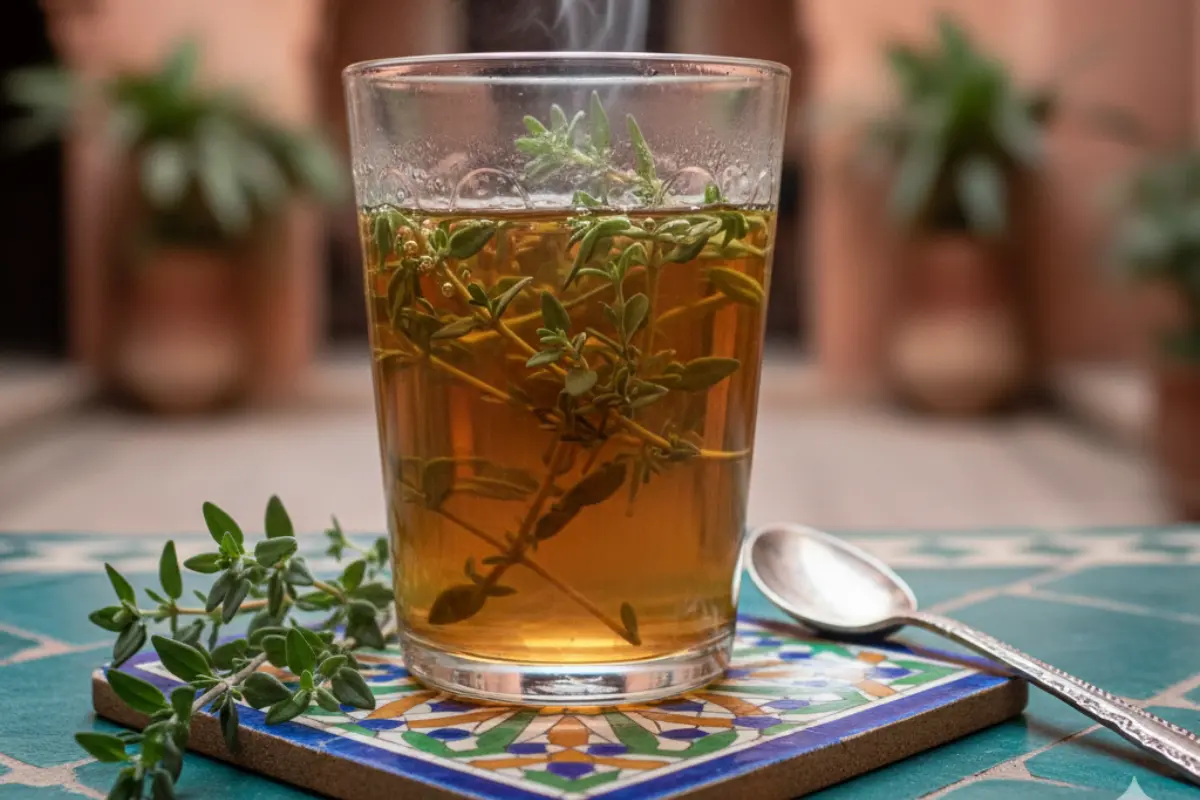
Flio Tea, made from wild thyme (Thymus vulgaris), is one of Morocco's most treasured herbal infusions, deeply rooted in Berber medicinal traditions and mountain village life. Unlike its more famous cousin mint tea, Flio tea is primarily consumed for its therapeutic properties, though its complex aroma—earthy, slightly floral, with peppery notes—makes it a delightful beverage in its own right.
Known locally as 'Za'atar Barri' (wild za'atar) or simply 'Flio,' this wild thyme grows abundantly in Morocco's Atlas Mountains and arid plains, where it's harvested in spring and early summer, then dried for year-round use. The tea is traditionally prepared in clay teapots over charcoal fires, allowing the woody stems and tiny leaves to release their essential oils slowly. It's commonly served after heavy meals to aid digestion, during cold seasons to soothe respiratory discomfort, or as a general wellness tonic.
Drinking Flio tea is a sensory journey: first the crisp, clean scent reminiscent of mountain air and Mediterranean hillsides, then the layered flavor that starts slightly pungent and finishes with subtle sweetness. In Moroccan households, it's often the tea offered to someone feeling unwell, to new mothers, or to elders—a gesture of care that connects modern life to ancient herbal wisdom. Whether enjoyed for health or pleasure, Flio tea offers a taste of Morocco's wild landscapes and traditional healing knowledge.
About This Recipe
Flio Tea's history is intertwined with Berber (Amazigh) herbal medicine, one of the world's oldest continuous healing traditions. Wild thyme has grown in North Africa's mountains and plains for millennia, and indigenous communities discovered its medicinal properties through observation and experimentation. The name 'Flio' likely derives from the Berber word for thyme or aromatic herbs. Historical records from the Islamic Golden Age show Arab physicians like Ibn Sina (Avicenna) documenting thyme's uses, knowledge that merged with existing Berber practices. In rural Morocco, Flio remained primarily a medicinal drink rather than social beverage, prepared by women as part of household healthcare. During French colonization, European botanists documented Morocco's wild thyme varieties, noting their exceptional potency. Today, Flio bridges traditional and modern: older generations still harvest it wild during spring, drying it for family use, while younger urban Moroccans purchase it from herbalists (attarine) as part of renewed interest in natural remedies. Its continued popularity represents both cultural preservation and practical wisdom—a simple, effective herbal remedy that connects Moroccans to their land and ancestors' knowledge.
Nutritional Info (per serving)
Recipe Tags
Understanding the Ingredients
Wild Thyme (Flio)
True Moroccan Flio refers specifically to wild thyme (Thymus vulgaris) harvested from mountainous regions, not cultivated garden thyme. It has smaller leaves, more intense aroma, and higher concentration of essential oils like thymol. The plant includes stems, leaves, and sometimes tiny purple flowers. Dried Flio should be whole, not powdered, with visible flowers indicating quality. The wild variety has more complex flavor than cultivated thyme—more aromatic, slightly minty, with peppery undertones. If unavailable, high-quality dried thyme can substitute but will lack the wild character.
Dried Verbena (Louiza) - Optional
Often blended with Flio, verbena adds citrus notes that complement thyme's earthiness. This combination is traditional in many regions, creating a balanced infusion that's both medicinal and refreshing. Use about one-third verbena to two-thirds thyme. The verbena should be whole leaves, not crushed. This blend is particularly popular for digestive issues, as both herbs are carminative.
Wild Sage (Salvia) - Optional
In some mountain communities, a few leaves of wild sage are added for their antimicrobial properties and distinctive flavor. Sage adds depth and slightly bitter notes that balance thyme's pungency. Use sparingly—one small leaf per cup maximum, as sage can dominate. This addition is more common in medicinal preparations than everyday tea.
Honey or Natural Sweeteners
Flio tea is traditionally consumed with honey, which complements its herbal notes and adds its own therapeutic properties. Mountain honey, particularly thyme honey (miel de thym), creates beautiful synergy. Sugar is less common but acceptable. Many prefer it unsweetened when consumed for specific medicinal purposes. The sweetness should be minimal, allowing the thyme's character to shine.
Lemon
A thin slice of lemon or a squeeze of fresh juice is often added, especially when the tea is taken for colds or sore throats. The vitamin C and acidity brighten the herbal flavors and enhance the tea's medicinal effects. The lemon should be added after steeping to preserve its fresh qualities.
Step-by-Step Cooking Guide
Prepare the Wild Thyme
Measure 4-5 tablespoons of dried wild thyme (Flio). If using whole sprigs, gently crush them between your palms to release oils—don't pulverize. Check for any thick woody stems and remove them (though thin stems are fine and contribute flavor). If blending with verbena or sage, add now (1-2 tbsp verbena or 1 small sage leaf). For traditional preparation, use a clay teapot, but any non-reactive pot works.
Tip: Crushing dried herbs increases surface area for better extraction but maintain leaf structure. If using fresh wild thyme, triple the quantity (12-15 tbsp) as fresh is less concentrated. Fresh should be lightly bruised.
Heat Water to Proper Temperature
Bring 1 liter (4 cups) of filtered water to a rolling boil. Unlike delicate green tea, wild thyme benefits from fully boiling water to extract its essential oils and medicinal compounds. However, if using a clay teapot, warm it first with a little hot water to prevent thermal shock. Pour out warming water before adding herbs.
Tip: Mineral-rich spring water enhances flavor. If using tap water, let it boil for a full minute to evaporate chlorine. The boiling water helps sterilize any wild-harvested herbs.
Steep with Lid On
Place herbs in teapot. Pour boiling water directly over them. Immediately cover with lid. Let steep for 7-10 minutes—longer than most herbal teas, as thyme needs time to release its full flavor and medicinal properties. The water will turn golden-amber with greenish tint. For stronger medicinal tea, steep up to 15 minutes.
Tip: Covering is essential to trap volatile oils that would otherwise evaporate with steam. Don't stir during steeping. The longer steep releases more thymol, the active compound with antimicrobial properties.
Strain and Sweeten (Optional)
Using a fine mesh strainer, pour the tea into cups or a serving pitcher, catching the herbs. If sweetening, add honey to individual cups (1-2 teaspoons per cup) or to the pitcher, stirring until dissolved. Taste before adding—many prefer Flio tea unsweetened to appreciate its complex herbal notes.
Tip: Honey dissolves better in hot liquid. For medicinal use, honey is preferred over sugar for its own therapeutic properties. Thyme honey if available creates perfect harmony.
Add Lemon and Serve
Add a thin slice of lemon to each cup or a squeeze of fresh juice. The lemon not only enhances flavor but also increases the bioavailability of some compounds. Serve immediately while hot. Traditional Moroccan presentation includes leaving a few thyme flowers floating in the cup as visual appeal.
Tip: Add lemon after straining to prevent bitterness from the peel steeping too long. For respiratory benefits, add lemon and inhale the steam before drinking.
Second Infusion (Traditional Practice)
Unlike most teas, Flio can be reinfused. Add another liter of boiling water to the same herbs in the pot. Steep for 10-15 minutes—this second infusion will be milder but still flavorful, often preferred by those who find the first brew too strong. The second steep extracts different compounds, making it a common practice in herbal medicine.
Tip: The second infusion is traditionally consumed later in the day or shared with additional guests. It's considered gentler and suitable for children or sensitive stomachs.
Common Mistakes to Avoid
❌ Using Water That's Not Hot Enough
Solution: Thyme needs boiling water (100°C/212°F) for proper extraction. Unlike delicate teas, its tough leaves and stems require high temperature to release essential oils. Don't use water that has cooled below boiling.
❌ Steeping Too Briefly
Solution: Under-steeped Flio tea tastes weak and watery with minimal medicinal benefit. Minimum steeping is 7 minutes; 10-12 is ideal for full flavor extraction. For therapeutic use, steep 15 minutes covered.
❌ Using Powdered Thyme
Solution: Powdered thyme creates cloudy, bitter tea with sediment. Always use whole or slightly crushed leaves and flowers. Powdered herbs release too quickly and contain less volatile oils.
❌ Adding Lemon During Steeping
Solution: Lemon peel becomes bitter when steeped in hot water. Always add lemon after straining, either as a slice in the cup or a squeeze of juice. The fresh citrus complements rather than overwhelms.
❌ Over-Sweetening
Solution: Flio's delicate herbal complexity is easily masked by sugar. Use honey sparingly—start with ½ teaspoon per cup. Many traditionalists drink it unsweetened to appreciate its medicinal qualities fully.
Ingredient Substitutions
Instead of: Wild Thyme (Flio)
Use: High-quality dried culinary thyme (Thymus vulgaris). Spanish or French thyme works better than English varieties. Lebanese za'atar (the herb, not the spice mix) is actually a type of wild oregano-thyme hybrid that can substitute.
Instead of: Dried Verbena
Use: Lemon balm (melissa) or lemon grass. Both add citrus notes. For different profile, use mint (though this changes the tea's character significantly).
Instead of: Honey
Use: Date syrup (adds Moroccan authenticity), maple syrup, or stevia for sugar-free. White sugar works but lacks synergy with thyme's medicinal properties.
Instead of: Fresh Lemon
Use: Orange slice (less acidic) or a drop of lemon essential oil (food grade). Preserved lemon rind (tiny piece) adds Moroccan twist but is saltier.
Serving Suggestions
Serve after heavy meals like couscous or tagine to aid digestion—this is its most traditional use.
During cold and flu season, serve with extra honey and lemon as a soothing respiratory tonic.
Accompany with plain, unsalted nuts or dried figs for a healthy snack that complements the herbal notes.
Serve in small glasses rather than large mugs to appreciate the aroma with each sip, Moroccan-style.
For morning wellness ritual, drink unsweetened before breakfast to stimulate digestion.
Pair with mild cheeses like fresh goat cheese or ricotta—the thyme complements dairy beautifully.
Storage & Reheating Guide
Storage
Dried wild thyme: store in airtight glass jar in cool, dark place up to 1 year. Brewed tea: refrigerate up to 2 days in covered container. Flavor diminishes after 24 hours.
Reheating
Reheat gently on stovetop until warm, not boiling. Microwave in short bursts. Do not reboil as it destroys delicate compounds. Better to make fresh each time.
Tips: For medicinal use, brew fresh. The volatile oils degrade quickly. If storing brewed tea, don't add lemon or honey until serving. Freezing not recommended—texture and flavor suffer.
Frequently Asked Questions
Recipe by

Similar Recipes


Our Recipe Ebooks
Discover our collection of authentic Moroccan recipe ebooks. Learn traditional cooking methods and create delicious meals at home.

The Moroccan Vegen

The Royal Moroccan Table -Part1

The Royal Moroccan Table -Part2
YouTube Channel
Watch step-by-step cooking videos, learn professional techniques, and get inspired by traditional and modern recipes from around the world.
Latest Video
"Traditional Moroccan Tagine Masterclass"