
Introduction
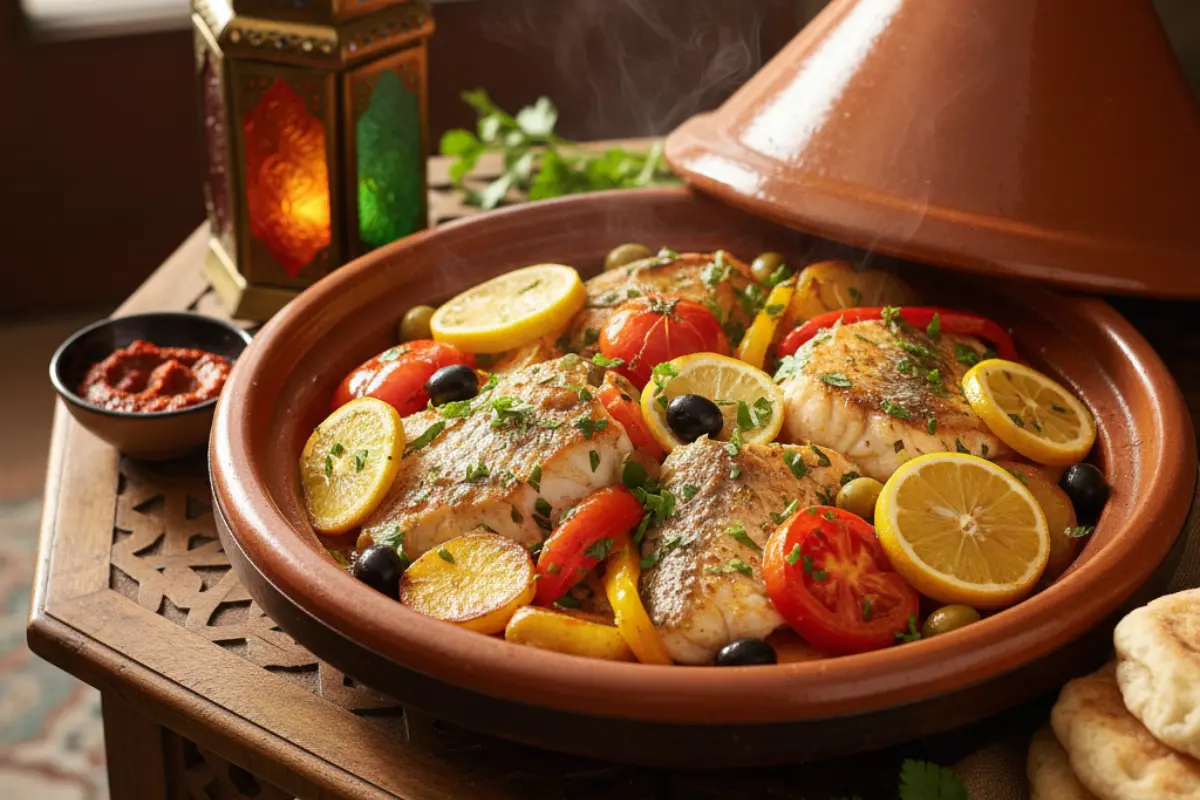
Fish tagine, or tagine hout, represents the vibrant coastal cuisine of Morocco where the Atlantic Ocean and Mediterranean Sea meet the country's shores. Unlike the slow-braised meat tagines of the interior, fish tagines are lighter, quicker, and celebrate the fresh seafood that defines Morocco's coastal cities - Essaouira, Agadir, Casablanca, Tangier, and Al Hoceima. This particular version combines firm white fish with potatoes, colorful bell peppers, tomatoes, and olives, all bathed in a fragrant chermoula-based sauce that infuses every element with the bright, bold flavors of cilantro, garlic, cumin, and paprika. The result is a dish that's simultaneously comforting and refreshing, substantial yet light, perfect for family dinners or special occasions.
The foundation of great fish tagine is chermoula - Morocco's iconic green marinade and sauce made from fresh herbs, garlic, spices, lemon juice, and olive oil. Chermoula to Moroccan fish dishes is what pesto is to Italian cuisine or chimichurri to Argentinian - an essential, transformative flavor agent that elevates simple ingredients to extraordinary heights. In this tagine, chermoula serves multiple purposes: it marinates the fish, infusing it with flavor and helping it stay moist during cooking; it flavors the sauce in which the vegetables simmer; and it ties all the elements together into a harmonious whole. The combination of fresh cilantro and parsley creates bright, herbaceous notes, while cumin and paprika add warm earthiness, garlic provides pungency, and preserved lemon contributes distinctive tangy complexity.
What makes fish tagine particularly appealing is its versatility and accessibility. It comes together relatively quickly compared to meat tagines - about one hour from start to finish. It's naturally healthy, being light in calories while rich in protein, vegetables, and healthy fats from olive oil. It works for both weeknight dinners and entertaining. The recipe is forgiving - you can use whatever firm white fish is freshest and most affordable, adjust vegetables based on what's available, and modify spice levels to taste. Whether you have an authentic tagine pot or just a regular skillet with a lid, you can create this flavorful dish that brings the essence of Morocco's coastal cuisine to your table.
About This Recipe
Fish tagine represents the vibrant coastal cuisine of Morocco, where centuries of Mediterranean and Atlantic influences have created a rich seafood tradition distinct from the meat-focused tagines of the interior. Morocco's extensive coastline - over 2,000 miles touching both the Atlantic Ocean and Mediterranean Sea - has sustained fishing communities since ancient times, with Phoenicians, Romans, and later Arab and Berber populations all contributing to the evolution of Moroccan seafood cookery. The coastal cities of Essaouira, Agadir, Casablanca, Tangier, Safi, and Al Hoceima each developed their own fish tagine traditions based on local catches, available vegetables, and regional spice preferences. Unlike the slow-braised meat tagines that emerged from inland Berber cooking traditions requiring hours of gentle cooking to tenderize tough cuts, fish tagines evolved as quicker preparations celebrating the delicate nature of fresh seafood. The earthenware tagine pot proved equally valuable for fish, providing gentle, even heat that cooked seafood through without drying it out, while the conical lid trapped moisture and returned condensation to the dish. Chermoula - the iconic Moroccan marinade of herbs, garlic, spices, and citrus - became inseparable from fish cookery, with every coastal family developing their signature blend. The word 'chermoula' likely derives from Arabic words meaning 'to marinate' or 'to massage,' referencing how the paste is rubbed into fish. Some scholars trace chermoula's origins to Moorish Spain, others to ancient Berber herb pastes, while influences from Arab spice trading and Mediterranean herb traditions clearly contributed. What's certain is that by the time European travelers documented Moroccan cuisine in the 19th and early 20th centuries, chermoula was already firmly established as the essential preparation for Moroccan fish. The addition of potatoes and peppers to fish tagine represents more modern evolution - potatoes arrived in Morocco via European contact, while bell peppers came from the Americas. These ingredients were enthusiastically adopted, transforming fish tagine into a complete one-pot meal perfect for family dinners. Today, fish tagine holds special status in Moroccan coastal cuisine as both everyday fare and celebration food. Fishing families eat it regularly, using the day's catch. Restaurants showcase it to tourists as quintessentially Moroccan yet lighter than meat tagines. During religious holidays and family gatherings, elaborate fish tagines demonstrate hospitality and culinary skill. The dish perfectly encapsulates Moroccan culinary philosophy: fresh ingredients treated simply but intensely flavored, healthy but satisfying, traditional but adaptable, family-oriented but elegant enough for guests. As Moroccan cuisine gains global recognition, fish tagine introduces international audiences to Morocco's coastal heritage and the brilliant, bold flavors of chermoula. More than just a recipe, fish tagine represents the meeting of land and sea in Moroccan culture, the skillful balance of bold spices with delicate protein, and the enduring wisdom of cooking traditions passed through generations of coastal communities.
Nutritional Info (per serving)
Recipe Tags
Understanding the Ingredients
White Fish Fillets
The star of this tagine is firm white fish - you need about two pounds of fillets for six servings. The best choices are fish that hold their shape during cooking: cod, halibut, sea bass, grouper, monkfish, or haddock all work beautifully. In Morocco, common choices include sea bass (loup de mer), grouper (mérou), or any fresh catch of the day. The fish should be firm-fleshed - avoid delicate fish like sole or tilapia that might fall apart. Choose thick fillets (at least one inch thick if possible) as they're easier to handle and less likely to overcook. The fish can have skin on or off - skin helps hold it together during cooking. Fresh fish is always preferable, but good quality frozen fish works well too if properly thawed.
Chermoula Marinade
Chermoula is the soul of Moroccan fish dishes. To make it, you need: large bunches of fresh cilantro and parsley (about one cup each, packed), six to eight garlic cloves, one to two teaspoons ground cumin, one to two teaspoons paprika (sweet or smoked), half a teaspoon cayenne pepper or hot paprika for heat, one teaspoon salt, juice of one to two lemons, and one-half cup olive oil. Some versions add preserved lemon for extra tanginess, or a pinch of saffron for luxury. The herbs must be fresh - dried won't work. Everything is blended or pounded together into a thick, fragrant green paste. Chermoula keeps for several days refrigerated, and many cooks make extra to use on grilled fish, vegetables, or as a condiment.
Potatoes
Potatoes add heartiness and help make the tagine a complete meal. You need about one and a half pounds of potatoes (about four medium). Waxy or all-purpose potatoes like Yukon Gold work best as they hold their shape during cooking. Russets can become too soft and mealy. The potatoes should be peeled and cut into thick slices (about half-inch thick) or chunks. They're often parboiled or fried briefly before adding to the tagine to ensure they cook through properly and develop golden color. The potatoes absorb the flavorful sauce while providing satisfying substance to the dish.
Bell Peppers
Sweet bell peppers add color, sweetness, and Mediterranean character. Use a mix of colors - red, yellow, orange, or green - for visual appeal and varied sweetness. You need about three to four medium peppers total. The peppers should be cored, seeded, and cut into thick strips or chunks. Red and yellow peppers are sweeter than green. Some cooks roast the peppers first for deeper flavor, but this is optional. The peppers soften during cooking while maintaining some texture, adding sweet contrast to the savory sauce.
Tomatoes
Tomatoes provide acidity, sweetness, and body to the sauce. You can use fresh tomatoes (about one pound, chopped) when they're in season and flavorful, or canned tomatoes for year-round consistency. One 14-ounce can of diced tomatoes works perfectly. Some recipes add tomato paste (two tablespoons) for concentrated flavor and color. The tomatoes break down during cooking, creating a rich sauce that coats the fish and vegetables. In summer, ripe, fresh tomatoes are ideal; in winter, quality canned tomatoes often taste better than pale fresh ones.
Aromatics and Additional Vegetables
The aromatic base includes onions (one to two large, sliced or chopped) that cook down and sweeten, adding depth to the sauce. Carrots (two medium, sliced) are sometimes included for sweetness and color - they're optional but traditional. Green olives (about half a cup) - preferably Moroccan green olives or other Mediterranean varieties - add briny, savory notes. Preserved lemon (one small, quartered, pulp removed) is the quintessential Moroccan ingredient that adds unique tangy, fermented complexity - it's optional but highly recommended for authentic flavor.
Olive Oil
Good quality olive oil is essential in Moroccan cooking, used both in the chermoula and for cooking the vegetables. You'll need about one-half cup total. Extra virgin olive oil provides the best flavor, though you can use regular olive oil for cooking and reserve extra virgin for drizzling at the end. The oil carries flavors, creates richness, and is fundamental to the dish's Mediterranean character.
Step-by-Step Cooking Guide
Prepare the Chermoula
Make the chermoula marinade first. In a food processor or blender, combine one cup packed fresh cilantro leaves and stems, one cup packed fresh parsley leaves and stems, six to eight peeled garlic cloves, two teaspoons ground cumin, two teaspoons paprika (sweet or smoked), half a teaspoon cayenne or hot paprika, one teaspoon salt, juice of one to two lemons, and half a cup olive oil. If using preserved lemon, add one quarter of it (pulp removed). Blend until you have a thick, slightly chunky green paste. Taste and adjust seasoning - it should be boldly flavored, aromatic, and well-balanced between herby freshness, garlic pungency, warm spices, and citrus brightness. Set aside about one-third of the chermoula in a small bowl to add at the end for fresh flavor. The remaining two-thirds will be used for marinating the fish and flavoring the tagine.
Tip: Chermoula should be thick paste consistency, not thin sauce. Reserve some for finishing - this adds bright fresh flavor. Can be made day ahead and refrigerated. Taste and adjust boldly - this flavors the entire dish.
Marinate the Fish
Pat the two pounds of fish fillets dry with paper towels. Cut into large pieces - about three to four ounces each, or leave whole if fillets are already appropriately sized. Place in a shallow dish. Take about half of the chermoula (reserving the other half for the tagine and the third you already set aside for finishing) and rub it all over the fish pieces, coating them generously on all sides. Cover and refrigerate for at least thirty minutes, or up to four hours. The chermoula will infuse the fish with flavor and help keep it moist during cooking. Don't marinate longer than four hours as the acid in the lemon can start to 'cook' the fish and change its texture.
Tip: Don't skip marinating - it's crucial for flavor. Thirty minutes minimum, four hours maximum. Handle fish gently to avoid breaking. Room temperature fish cooks more evenly - remove from fridge 15 minutes before cooking.
Prepare the Vegetables
While the fish marinates, prepare all vegetables. Peel one and a half pounds of potatoes and cut into half-inch thick slices or chunks. Core and seed three to four bell peppers and cut into thick strips. Chop one pound of fresh tomatoes or have your can of diced tomatoes ready. Slice one to two onions. Slice two carrots if using. If using preserved lemon, quarter it and remove the pulp, leaving just the rind. Pit and rinse half a cup of green olives if needed. Having everything prepared and ready makes the cooking process smooth and organized.
Tip: Cut vegetables uniformly for even cooking. Keep potatoes in water until ready to use to prevent browning. Prep everything before you start cooking - it moves quickly once you begin.
Prepare the Potatoes
This step is optional but recommended for best results. You can either parboil or pan-fry the potatoes before adding them to the tagine. To parboil: place potato slices in a pot of salted water, bring to boil, and cook for five minutes until just beginning to soften but not fully cooked. Drain well. To pan-fry (traditional method): heat three tablespoons olive oil in a large skillet over medium-high heat. Add potato slices in a single layer (work in batches) and cook for three to four minutes per side until golden but not fully cooked. This pre-cooking ensures the potatoes cook through properly in the tagine and adds nice color. If you're short on time, you can skip this and add raw potatoes directly to the tagine, but they'll need longer cooking time.
Tip: Parboiling is easier and uses less oil. Pan-frying creates better color and flavor. Either method ensures potatoes cook through. Can skip entirely but increase tagine cooking time.
Build the Tagine Base
Heat three tablespoons of olive oil in a tagine pot, large deep skillet, or wide braising pan over medium heat. Add the sliced onions and cook for five to six minutes, stirring occasionally, until softened and beginning to turn golden. Add the sliced carrots (if using) and cook for another three minutes. Add the remaining chermoula (remember you reserved some for marinating fish and some for finishing), stirring to coat the vegetables. Cook for two minutes, stirring constantly, until the chermoula is very fragrant. Add the chopped tomatoes (or canned tomatoes with their juices) and two tablespoons of tomato paste if using. Stir well, scraping up any bits from the bottom of the pan. Add one cup of water or fish stock. Bring to a simmer and cook for five minutes, allowing the sauce to come together and the tomatoes to break down slightly. Season with salt and black pepper to taste.
Tip: The chermoula should be fragrant but not burned - stir constantly. The sauce should be flavorful and slightly thick. Adjust consistency with water as needed. Taste and season well - this is your sauce base.
Add Vegetables and Simmer
To the simmering sauce, add the prepared potatoes (whether parboiled, fried, or raw), the bell pepper strips, the green olives, and the preserved lemon quarters (if using). Stir gently to combine, making sure the vegetables are coated with sauce. If using raw potatoes, arrange them in an even layer so they cook uniformly. Add another half to one cup of water if the mixture seems dry - you want enough liquid to gently braise the vegetables, but not so much that it's soupy. Bring back to a simmer, then reduce heat to medium-low. Cover (with tagine lid or regular lid) and cook for fifteen to twenty minutes until the potatoes are almost tender when pierced with a knife and the peppers have softened. Stir occasionally and check liquid levels, adding more water if needed.
Tip: Potatoes should be almost but not quite tender - they'll finish cooking with the fish. Maintain enough liquid for gentle braising. Stir gently to avoid breaking vegetables. Taste sauce and adjust seasoning.
Add the Fish
Once the vegetables are almost tender, it's time to add the fish. Gently nestle the marinated fish pieces into the vegetables, arranging them in a single layer if possible. Spoon some of the sauce and vegetables over the fish. If there's any chermoula left from marinating, add it to the tagine. Cover and cook over medium-low heat for ten to fifteen minutes, depending on the thickness of your fish. The fish is done when it flakes easily with a fork and is opaque throughout. Be gentle and avoid stirring vigorously once the fish is added - you want the pieces to stay intact. If the sauce seems too thick or is reducing too much, add a splash of water. If it seems too thin, leave the lid off for the last few minutes.
Tip: Add fish gently to avoid breaking. Don't overcook - fish cooks quickly. Ten minutes for one-inch thick fillets, fifteen for thicker. Fish should be opaque and flake easily. Gentle heat prevents breaking apart.
Finish and Serve
Once the fish is cooked through, remove the tagine from heat. Gently stir in the reserved fresh chermoula (the portion you set aside at the beginning) for a burst of bright, fresh flavor. Taste the sauce one final time and adjust seasoning with salt, black pepper, or a squeeze of lemon juice if needed. Let the tagine rest for five minutes to allow flavors to settle. Garnish with additional fresh cilantro or parsley if desired. Serve the tagine directly from the pot if using traditional tagine, or transfer to a serving platter. The dish should be aromatic, colorful, and inviting, with tender fish, flavorful vegetables, and a rich, herb-infused sauce. Serve with crusty bread for soaking up the delicious sauce, or with Moroccan rice or couscous for a complete meal.
Tip: Fresh chermoula at the end adds brightness. Let rest briefly before serving. Serve with plenty of bread for soaking up sauce. Best served immediately while hot. Garnish generously with fresh herbs.
Common Mistakes to Avoid
❌ Overcooking the Fish
Solution: Fish cooks quickly and becomes dry, tough, and falls apart if overcooked. Add fish only when vegetables are almost tender, cook gently over medium-low heat, and remove from heat as soon as fish is opaque and flakes easily - usually ten to fifteen minutes maximum.
❌ Using Delicate Fish
Solution: Delicate fish like tilapia, sole, or flounder fall apart easily during cooking, creating a messy tagine. Always use firm white fish - cod, halibut, sea bass, grouper, or monkfish - that can withstand gentle braising without disintegrating.
❌ Not Marinating the Fish
Solution: Skipping the chermoula marinade results in bland fish that lacks flavor. Always marinate the fish for at least thirty minutes - this infuses flavor throughout and helps keep it moist during cooking. The marinade is essential, not optional.
❌ Too Much or Too Little Liquid
Solution: Too much liquid creates a soupy stew rather than a tagine; too little causes burning and dry vegetables. Maintain enough liquid to gently braise - about one to two cups total - adjusting as needed during cooking. The sauce should coat everything nicely without drowning it.
❌ Adding Raw Potatoes Without Adjusting Time
Solution: If you skip parboiling or frying the potatoes and add them raw, they need significantly more cooking time. Either pre-cook potatoes as directed, or add them to the tagine twenty to twenty-five minutes before adding fish, ensuring they cook through.
❌ Stirring Too Vigorously After Adding Fish
Solution: Once fish is added, vigorous stirring breaks it apart. Spoon sauce over fish gently, avoid stirring, and handle with care. The fish should remain in neat pieces for beautiful presentation and better texture.
Ingredient Substitutions
Instead of: White Fish Fillets
Use: Any firm white fish works - cod, halibut, sea bass, grouper, monkfish, haddock, or mahi-mahi. Salmon or tuna can be used for different flavor but aren't traditional. Shrimp or mixed seafood also works beautifully in this preparation.
Instead of: Fresh Herbs for Chermoula
Use: Fresh herbs are essential for authentic chermoula - dried won't work well. If cilantro is unavailable or disliked, use all parsley. Fresh mint can replace some parsley for different but interesting flavor. No good dried substitutes exist for this application.
Instead of: Preserved Lemon
Use: If unavailable, use fresh lemon zest and juice plus a pinch of salt for similar citrus notes, though the unique fermented flavor can't be replicated. Preserved lemon adds authentic Moroccan character but tagine works without it.
Instead of: Bell Peppers
Use: Any color bell peppers work. Can substitute with other sweet peppers, or use a mix of peppers and zucchini. Roasted red peppers (jarred) can be added near the end for ease and smoky flavor.
Instead of: Green Olives
Use: Kalamata or other Mediterranean olives work, though green olives are more traditional. Can omit entirely if necessary, though they add authentic briny notes. Capers can substitute for similar salty-briny element.
Serving Suggestions
Serve directly from tagine pot with plenty of crusty bread for soaking up the delicious chermoula sauce.
Accompany with Moroccan white rice or fluffy couscous for a complete, satisfying meal.
Serve alongside simple Moroccan salads - sliced cucumber and tomato, grated carrot with orange blossom water, or mixed green salad.
Pair with roasted vegetables like eggplant or zucchini for additional Mediterranean flavors.
Offer harissa paste on the side for those who want additional heat and complexity.
Garnish generously with fresh cilantro, parsley, and lemon wedges for brightness.
Serve with Moroccan olives and pickled vegetables as appetizers before the tagine.
Complete the meal with Moroccan mint tea and fresh fruit or light dessert like orange slices with cinnamon.
Storage & Reheating Guide
Storage
Fish tagine is best eaten fresh, as fish texture can deteriorate with storage. However, leftovers can be refrigerated in an airtight container for up to two days. The fish may become softer and more delicate, so handle gently. The sauce and vegetables actually improve in flavor overnight as they continue to absorb the chermoula flavors. Do not freeze fish tagine as the fish texture becomes unpleasant when frozen and thawed. If you want to prep ahead, you can make the vegetable base a day in advance and refrigerate, then add fresh fish when ready to serve.
Reheating
Reheat gently to avoid overcooking the fish further. The best method is on the stovetop: place in a covered pan over low heat with a splash of water or stock to prevent drying, heating for eight to ten minutes until warmed through. Stir very gently. Microwave reheating works but requires care - use medium power, cover, and heat in one-minute intervals, checking frequently. The fish will be more delicate after storage, so handle with extreme care. Add a squeeze of fresh lemon juice and fresh herbs when serving to refresh flavors.
Tips: Best eaten fresh - plan portions accordingly. Vegetables reheat better than fish. Make-ahead option: prepare sauce and vegetables, refrigerate, add fresh fish when serving. Gentle reheating prevents fish from becoming dry or falling apart. Fresh herbs and lemon brighten reheated tagine.
Frequently Asked Questions
Recipe by

Similar Recipes


Our Recipe Ebooks
Discover our collection of authentic Moroccan recipe ebooks. Learn traditional cooking methods and create delicious meals at home.

The Moroccan Vegen

The Royal Moroccan Table -Part1
The Royal Moroccan Table -Part2
YouTube Channel
Watch step-by-step cooking videos, learn professional techniques, and get inspired by traditional and modern recipes from around the world.
Latest Video
"Traditional Moroccan Tagine Masterclass"