
Introduction
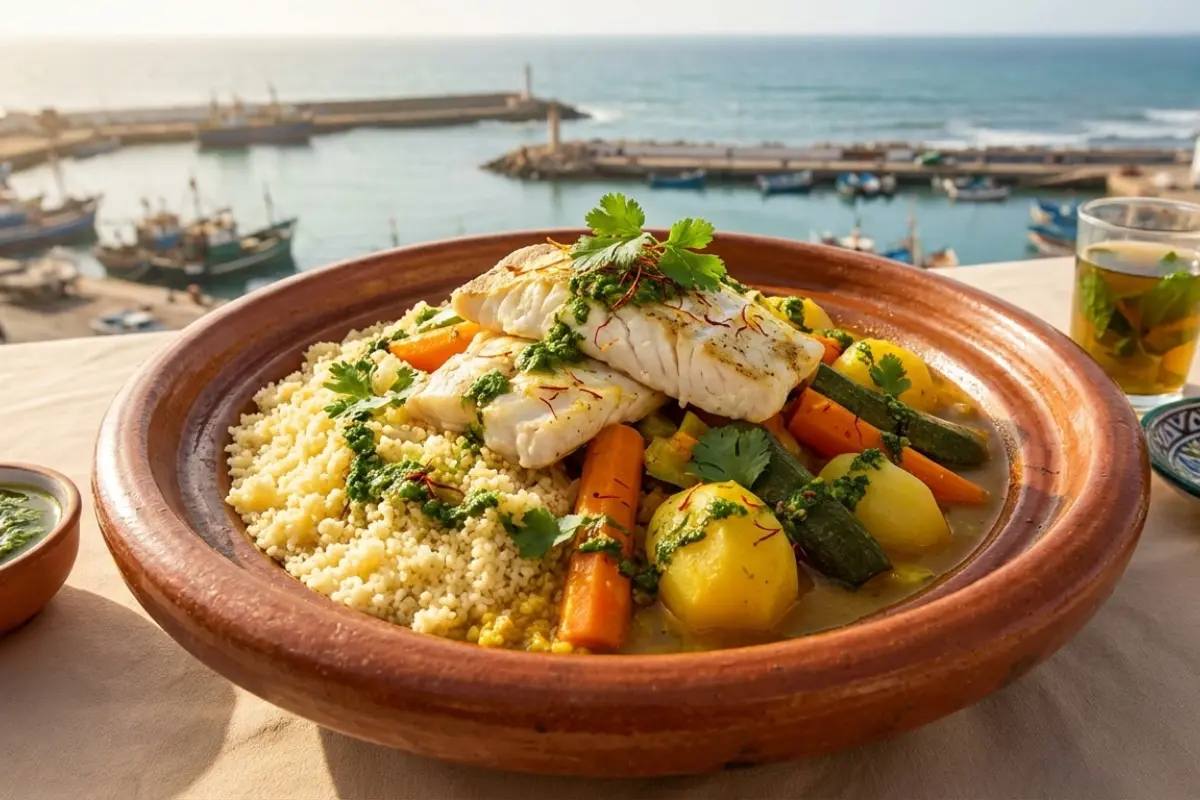
Moroccan couscous with fish (couscous au poisson or couscous bel hout) represents one of the most celebrated dishes of Morocco's coastal cuisine, combining the country's most iconic staple grain with the abundant fresh seafood harvested from its Atlantic and Mediterranean shores. While meat-based couscous dishes are more widely known internationally, fish couscous holds a special and beloved place in Moroccan culinary tradition, particularly in coastal cities like Essaouira, Casablanca, Agadir, Tangier, and Safi where fishing has shaped both economy and culture for centuries. The dish showcases the beautiful marriage of two distinct Moroccan culinary traditions - the elaborate, ceremonial preparation of couscous with its multiple steamings and careful seasoning, and the coastal technique of marinating fish in chermoula (Morocco's iconic herb and spice marinade) before cooking it to perfection.
What makes this dish extraordinary is the layering of flavors and techniques. The fish - traditionally firm white fish like sea bass, grouper, or hake, though any good fresh fish works - is first marinated in chermoula, a vibrant mixture of cilantro, parsley, garlic, cumin, paprika, lemon juice, and olive oil that is one of Morocco's most important culinary contributions. This marinade tenderizes the fish, infuses it with complex flavors, and protects it during cooking. The couscous is prepared in the traditional way - steamed multiple times over the aromatic broth until each grain is perfectly tender, light, and fluffy. The broth itself is a fragrant, golden liquid infused with saffron, preserved lemon, vegetables, and the cooking juices from the fish, creating a deeply flavorful sauce that ties everything together.
Fish couscous is particularly significant during Friday lunches, the most important family meal of the Moroccan week, and during celebrations and religious holidays. In coastal Morocco, it represents the ultimate expression of regional identity and pride - using the finest local fish in a preparation that honors both the seafood and the grain. The dish is typically served in the traditional couscous manner: the steamed grain mounded in a large communal serving dish with vegetables arranged artfully on top, fish fillets placed over the couscous, and the golden saffron broth served alongside for each person to add as desired. This generous, communal presentation embodies the Moroccan spirit of hospitality and abundance.
About This Recipe
Couscous with fish represents the magnificent convergence of Morocco's two great culinary traditions - the inland Berber heritage of couscous and the maritime culture of its extensive Atlantic and Mediterranean coastlines. Couscous, considered Morocco's national dish and a UNESCO-recognized intangible cultural heritage, has been the staple food of North African Berber communities for at least a millennium, traditionally prepared with lamb, chicken, or simply vegetables in landlocked regions. The innovation of fish couscous emerged naturally in Morocco's coastal cities, where fishing communities adapted this beloved national dish to celebrate the abundant seafood harvested from Morocco's remarkably productive waters. The country's 2,000-mile coastline, where cold Atlantic currents meet Mediterranean waters, produces extraordinary variety and quality of seafood that has shaped coastal culture and cuisine for thousands of years. Essaouira, once the crucial port city known as Mogador, became famous for its fish couscous, with generations of coastal families developing their own variations passed down through generations. Casablanca, Agadir, Tangier, Safi, and Al Hoceima each developed their own coastal couscous traditions reflecting local fish varieties and regional spice preferences. The use of chermoula - Morocco's iconic herb and spice marinade - to season the fish before cooking is the essential element that makes fish couscous distinctly Moroccan rather than simply seafood with grain. Chermoula itself represents centuries of culinary development, combining Berber herb traditions, Arab spice influence, and the citrus elements introduced through Mediterranean trade. The addition of saffron to the broth elevates fish couscous to a special-occasion dish - Morocco's Taliouine region produces some of the world's finest saffron, and its use in this dish connects home cooking to the country's agricultural heritage. Preserved lemon, another Moroccan signature ingredient, adds the characteristic tangy depth that appears throughout Moroccan seafood cooking. Traditionally, fish couscous appears on Friday lunch tables - the most important family meal of the week in Morocco - as a lighter, more elegant alternative to meat-based couscous. The preparation is a family affair, with different family members responsible for different components: the broth building, the couscous steaming, the fish marinating and cooking, and the final assembly that brings everything together on the communal serving platter. This collaborative, ceremonial aspect of preparing fish couscous reinforces its role as more than just food - it's a social and cultural ritual that connects Moroccans to family, place, and tradition. Today, fish couscous remains one of Morocco's most celebrated dishes, featured in coastal restaurants, home kitchens, and at celebrations throughout the country. As global appreciation for Moroccan cuisine has grown, fish couscous has become an ambassador for the sophistication and diversity of Moroccan cooking, demonstrating that this ancient cuisine extends far beyond the tagines and couscous with meat that first gained international recognition.
Nutritional Info (per serving)
Recipe Tags
Understanding the Ingredients
Fish
The choice of fish is crucial for this dish. Firm white fish that holds its shape during cooking is essential - falling-apart delicate fish will disintegrate into the broth. The best choices are sea bass (loup de mer), grouper (mérou), hake (merlu), sea bream (daurade), monkfish (lotte), or any firm white fish local to your area. You'll need about two to two and a half pounds of fish - either whole fish cleaned and cut into large portions, or thick fish steaks or fillets. Whole fish on the bone provides more flavor to the broth but requires more careful handling. Fish steaks (thick cross-sections through the bone) hold together beautifully during cooking. Whatever fish you choose, it must be impeccably fresh - the success of this dish depends entirely on fish quality. Fresh fish should smell like clean ocean, have bright clear eyes if whole, firm flesh that springs back when pressed, and bright red gills.
Chermoula Marinade
Chermoula is Morocco's essential herb and spice marinade used throughout the country's seafood cooking. For this recipe, you'll need a generous amount to both marinate the fish and add flavor to the broth. The basic chermoula components are: fresh cilantro (one large bunch, finely chopped), fresh parsley (one bunch, finely chopped), garlic (six to eight cloves, minced or crushed to a paste), ground cumin (two teaspoons), paprika (one tablespoon), fresh lemon juice (from two lemons, about one-third cup), olive oil (quarter cup), salt (one teaspoon), and optionally cayenne pepper (quarter teaspoon) for heat, and turmeric (half a teaspoon) for color. The chermoula should be bright green, aromatic, and slightly thick - it should coat the fish generously. Some versions include preserved lemon rind for additional complexity.
Couscous
Traditional Moroccan couscous is made from durum wheat semolina and requires proper handling for perfect results. You'll need about three cups of medium-grain couscous for six servings. Traditional Moroccan couscous is steamed - not simply soaked in boiling water, which creates a different texture. The grain is steamed in a couscoussier (special steamer) or a fine-mesh strainer set over a pot of simmering broth, repeated two or three times with seasoning between steamings. This multiple-steaming process creates couscous that's perfectly fluffy, with each grain separate and tender. Between steamings, the couscous is broken up, seasoned with salt and olive oil, and allowed to absorb flavors. Good quality traditional Moroccan couscous is available in specialty stores.
Vegetables for Broth
The broth vegetables both flavor the liquid and serve as accompaniments to the couscous. Traditional choices include onions (two large, sliced), tomatoes (two to three ripe, quartered), zucchini (two medium, cut into large chunks), carrots (three medium, cut into large chunks), turnips (one to two, cut into chunks), cabbage (quarter head, cut into wedges), and sometimes potatoes (two medium, cut into chunks). The vegetables should be cut into large, substantial pieces that won't disintegrate during the long cooking. They're added to the broth at different stages based on cooking time - root vegetables early, delicate vegetables later.
Aromatic Broth
The broth is the soul of fish couscous, providing flavor for both the couscous steaming and the final dish. It's built from olive oil (quarter cup), sautéed onions and garlic, tomatoes, and the characteristic Moroccan spice blend. Saffron threads (generous pinch, dissolved in warm water) are essential and provide the golden color and distinctive aroma. Preserved lemon (one, rinsed, chopped) adds the characteristic tangy Moroccan flavor. Additional spices include ground ginger (one teaspoon), turmeric (half a teaspoon), black pepper, and salt. Fresh cilantro and parsley bundles simmer in the broth. The broth should be golden, aromatic, and well-seasoned.
Saffron
Saffron is a signature ingredient in Moroccan fish couscous and should not be omitted for authentic results. A generous pinch (about quarter teaspoon) of saffron threads should be lightly crushed and dissolved in two tablespoons of warm water before adding to the broth. This releases the saffron's golden color and distinctive, luxurious aroma into the liquid. Moroccan saffron from the Taliouine region is some of the world's finest and most aromatic. If saffron is unavailable or cost-prohibitive, increase turmeric slightly for color, though the distinctive flavor will be absent.
Step-by-Step Cooking Guide
Prepare Chermoula and Marinate Fish
Begin by making the chermoula marinade. In a bowl, combine one large bunch of finely chopped fresh cilantro, one bunch of finely chopped fresh parsley, six to eight minced garlic cloves, two teaspoons ground cumin, one tablespoon paprika, half a teaspoon turmeric, quarter teaspoon cayenne (optional), one teaspoon salt, juice of two lemons (about one-third cup), and quarter cup of olive oil. Mix everything together thoroughly until you have a vibrant, fragrant, thick green marinade. Taste and adjust seasoning - it should be bold, herby, and bright with lemon. Prepare your fish: clean if whole and cut into large serving portions (thick steaks or large fillets). Pat fish completely dry with paper towels. Place fish in a bowl or dish and coat thoroughly with two-thirds of the chermoula, turning to coat all sides and pressing the marinade into any crevices. Reserve the remaining one-third of chermoula for the broth. Cover and refrigerate fish for at least thirty minutes and up to four hours - longer marinating develops deeper flavor.
Tip: Chop herbs very finely for best texture. Chermoula should be thick and coat well. Reserve one-third of chermoula for broth - this links all the flavors. Marinate fish at least 30 minutes. Pat fish dry before marinating for better adhesion.
Build the Aromatic Broth
In the bottom pot of a couscoussier or a large pot over medium heat, heat quarter cup of olive oil. Add two large sliced onions and sauté for six to eight minutes until very soft and beginning to caramelize. Add six cloves of minced garlic and cook one minute until fragrant. Add the reserved one-third of chermoula and stir for one to two minutes. Add two to three quartered tomatoes and cook for three to four minutes, stirring, until they begin to break down. Add the spice blend: one teaspoon ground ginger, half a teaspoon turmeric, one teaspoon paprika, half a teaspoon cumin, one teaspoon salt, and half a teaspoon black pepper. Stir for one minute. Crush a generous pinch of saffron threads, dissolve in two tablespoons warm water, and add to the pot. Add one preserved lemon (rinsed, chopped, pulp discarded) if using. Add the sliced carrots and turnips (they need longest cooking). Pour in eight to ten cups of water to create the broth. Add a bundle of cilantro and parsley stems tied with string. Bring to a boil, then reduce to a vigorous simmer.
Tip: Sauté onions well for sweet base. Adding reserved chermoula to broth links all dish flavors beautifully. Saffron dissolved in warm water releases color and flavor better. Add hardest vegetables first as they need longest cooking.
First Steaming of Couscous
While the broth begins simmering, prepare the couscous for its first steaming. Place three cups of dry couscous in a large shallow bowl. Sprinkle with half a teaspoon of salt and two tablespoons of olive oil. Using your hands, work the oil and salt into the grain, rubbing between your palms to coat every grain and break up any clumps. The couscous should feel lightly oiled and smell fragrant. Add half a cup of cold water and mix well with your hands, breaking up any lumps that form. Let the couscous sit for five minutes to absorb the water. When the broth is simmering, line the couscoussier basket or strainer with a damp cheesecloth (optional but prevents small grains from falling through). Place the couscous in the basket loosely - don't pack it down. Set over the simmering broth, making sure the basket doesn't touch the liquid. Steam uncovered (important - no lid) for fifteen to twenty minutes until you see steam rising through the grain throughout and the top grains look dry and begin to look cooked.
Tip: Work oil into couscous thoroughly - prevents clumping. Add water gradually and break up lumps. Don't pack couscous in steamer - steam needs to circulate. Steam uncovered - lid traps moisture and makes couscous gummy. Steam until steam rises through entire surface.
Second Steaming and Seasoning
After the first steaming, carefully transfer the hot couscous back to your large shallow bowl - it will be partially cooked and slightly clumped. Working quickly while still hot, break up all clumps with your hands or a fork, aerating the grain thoroughly. Sprinkle with half a teaspoon of salt and two tablespoons of olive oil (or a tablespoon of butter for richer flavor). Gradually add three-quarters cup of cold water, mixing and breaking up lumps as you add the water. The couscous will absorb the water and season. Let rest five minutes. Meanwhile, check the broth and add the zucchini and cabbage chunks to the simmering broth - they need about twenty to thirty minutes. Return the couscous to the steamer basket and steam again uncovered for fifteen to twenty minutes. The couscous will become more tender, fluffy, and each grain more separate. After the second steaming, remove from heat and repeat the breaking-up process, adding one final tablespoon of butter or olive oil and adjusting salt. The couscous should now be very fluffy and each grain separate - if still not tender enough, do a third steaming.
Tip: Break up clumps immediately while hot - easier than when cool. Work oil or butter in thoroughly with hands. Add water gradually to prevent waterlogging. Add zucchini and cabbage to broth now - timing is crucial. Two steamings usually sufficient; three creates very fluffy couscous.
Cook the Fish
About twenty to twenty-five minutes before serving, cook the marinated fish. You have two options for the most authentic approach. Option one (traditional): Add the marinated fish pieces directly to the simmering vegetable broth, nestle them among the vegetables, and simmer gently for ten to fifteen minutes until fish is cooked through and flakes easily when tested with a fork. The fish will flavor the broth while absorbing its aromas. This creates the most integrated flavors. Option two (pan-seared): For better presentation and crispy exterior, heat two tablespoons of olive oil in a wide skillet over medium-high heat. Add fish pieces carefully and sear for three to four minutes per side until golden and cooked through. This creates better texture and appearance but doesn't infuse the broth as much. Either method works - many traditional cooks use the broth method for everyday cooking and the searing method for special occasions. The fish is done when it flakes easily and is opaque throughout.
Tip: Don't overcook fish - it becomes dry and falls apart. Test with fork - should flake easily. If cooking in broth, handle gently to keep pieces intact. Searing creates better presentation for special occasions.
Assemble and Serve
To serve in traditional Moroccan style, mound the hot, fluffy couscous in a large, deep serving dish or traditional gsaa (wooden serving bowl) - pile it generously and create a mound with a well in the center. Arrange the cooked vegetables (carrots, turnips, zucchini, cabbage) artfully over and around the couscous. Place the fish pieces on top of the vegetables with care. Taste the broth and adjust seasoning - add salt, more cumin, or a squeeze of lemon juice as needed. Drizzle several ladlefuls of the hot, golden saffron broth over the entire dish, soaking the couscous - it should be moist but not swimming. Pour remaining broth into a large serving bowl or pitcher to bring to the table. Drizzle the entire dish with good olive oil. Garnish generously with fresh cilantro and parsley, and preserved lemon strips if desired. Serve immediately, bringing extra broth to the table for guests to add as desired.
Tip: Serve immediately - couscous and fish don't wait well. Drizzle broth over couscous so it absorbs flavor. Bring extra broth to table - guests have different preferences for moistness. Traditional presentation in communal dish is beautiful and creates convivial atmosphere.
Common Mistakes to Avoid
❌ Using Low-Quality or Old Fish
Solution: This dish rises and falls on fish quality. Fresh fish is absolutely non-negotiable - it should smell like clean ocean, have firm flesh, and be purchased the day of cooking from a trusted source. Old or poor quality fish creates disappointing results regardless of technique. When in doubt, choose a different dish rather than compromising on fish freshness.
❌ Soaking Instead of Steaming Couscous
Solution: Simply pouring boiling water over couscous creates a completely different texture - it becomes soft and clumped rather than light and fluffy. Traditional steaming creates the perfect texture where each grain is tender, separate, and flavored by the steam rising from the spiced broth. Take the time to steam properly - it makes enormous difference.
❌ Not Breaking Up Couscous Between Steamings
Solution: After each steaming, couscous must be spread out and every clump broken up while still hot. This aeration step is crucial - it prevents gummy, clumped couscous and allows seasoning to distribute evenly. Work quickly and thoroughly with your hands or a fork, ensuring every lump is broken before the next steaming.
❌ Overcooking the Fish
Solution: Fish cooks much faster than meat and becomes dry, tough, and flavorless when overcooked. Whether cooking in broth or pan-searing, watch carefully and test frequently with a fork. The fish is done when it just flakes - this happens quickly. Remove from heat immediately and serve promptly.
❌ Under-Seasoned Broth
Solution: The broth flavors both the couscous and serves as sauce - it must be well-seasoned and flavorful. Taste the broth frequently during cooking and add salt, cumin, or saffron as needed. The broth should be golden, aromatic, and delicious on its own. Under-seasoned broth creates a disappointing, bland dish.
❌ Skipping the Chermoula Marinade
Solution: Chermoula is what makes this dish distinctly Moroccan and deeply flavored. Without it, the fish tastes plain and the dish loses its essential character. Always prepare and use chermoula - marinate fish for at least thirty minutes and add some to the broth for connected, unified flavors throughout.
Ingredient Substitutions
Instead of: Sea Bass or Grouper
Use: Any firm white fish works beautifully - hake, sea bream, monkfish, cod, halibut, or snapper. Avoid delicate fish like tilapia or sole that fall apart during cooking. The fish must be fresh and firm enough to hold its shape when steamed or pan-seared.
Instead of: Traditional Steamed Couscous
Use: If a couscoussier is unavailable, use a fine-mesh strainer or metal colander set over a pot of simmering broth - this works nearly as well. For very quick version, use instant couscous (just pour boiling broth over and let absorb) - texture will be different but still good.
Instead of: Preserved Lemon
Use: Zest of two fresh lemons plus a tablespoon of lemon juice added near end of cooking provides some of the citrus character. Flavor differs but still delicious. Preserved lemon is worth seeking out for authentic taste.
Instead of: Saffron
Use: While saffron is essential for authentic color and flavor, you can increase turmeric slightly for golden color without the distinctive saffron aroma. The dish will taste different without saffron but still be delicious.
Instead of: Traditional Vegetables
Use: Fennel (quartered) works beautifully with fish. Sweet peppers, green beans, or peas are delicious additions. Use seasonal vegetables available locally - any vegetable that holds its shape during cooking works.
Serving Suggestions
Serve couscous with fish in traditional Moroccan style on a large communal platter, with everyone gathering around to share.
Bring extra broth to the table in a pitcher - each person adds desired amount to moisten their portion.
Include harissa paste on the side for those wanting additional heat and complexity.
Accompany with fresh Moroccan salads - tomato salad, carrot salad, or zaalouk for fresh contrast.
Serve with crusty bread or traditional khobz for soaking up extra broth.
Present as Friday family lunch centerpiece - the most important and celebrated meal of the Moroccan week.
Offer fresh lemon wedges on the side - squeezing over fish and couscous brightens all flavors beautifully.
Accompany with fresh mint tea after the meal for traditional Moroccan hospitality experience.
Storage & Reheating Guide
Storage
Couscous with fish is best enjoyed freshly made, as both fish and couscous lose quality when stored together. If you have leftovers, store components separately: transfer couscous to an airtight container and refrigerate for up to two days. Store fish and vegetables with broth in a separate airtight container for up to one day only - fish deteriorates quickly. Broth alone can be refrigerated for up to three days. For advance preparation, make the broth and vegetables a day ahead, prepare chermoula up to two days ahead, and steam couscous and cook fish on the day of serving.
Reheating
To reheat couscous, place in a heatproof bowl over a pot of simmering water (like a double boiler) and steam gently for ten to fifteen minutes, breaking up any clumps that formed during storage. Alternatively, sprinkle with a few tablespoons of water, cover with damp paper towel, and microwave briefly. Add a drizzle of olive oil after reheating to restore richness. Reheat fish very gently in warm (not hot) broth for just a few minutes - don't boil or fish becomes rubbery. Reheat broth separately and add to each serving.
Tips: Store components separately for best results. Fish deteriorates quickly - consume within one day. Couscous reheats better than fish. Broth keeps longest - up to three days. Best strategy is to make broth and couscous ahead, cook fresh fish on day of serving.
Frequently Asked Questions
Recipe by

Similar Recipes


Our Recipe Ebooks
Discover our collection of authentic Moroccan recipe ebooks. Learn traditional cooking methods and create delicious meals at home.

The Moroccan Vegen

The Royal Moroccan Table -Part1
The Royal Moroccan Table -Part2
YouTube Channel
Watch step-by-step cooking videos, learn professional techniques, and get inspired by traditional and modern recipes from around the world.
Latest Video
"Traditional Moroccan Tagine Masterclass"