
Introduction
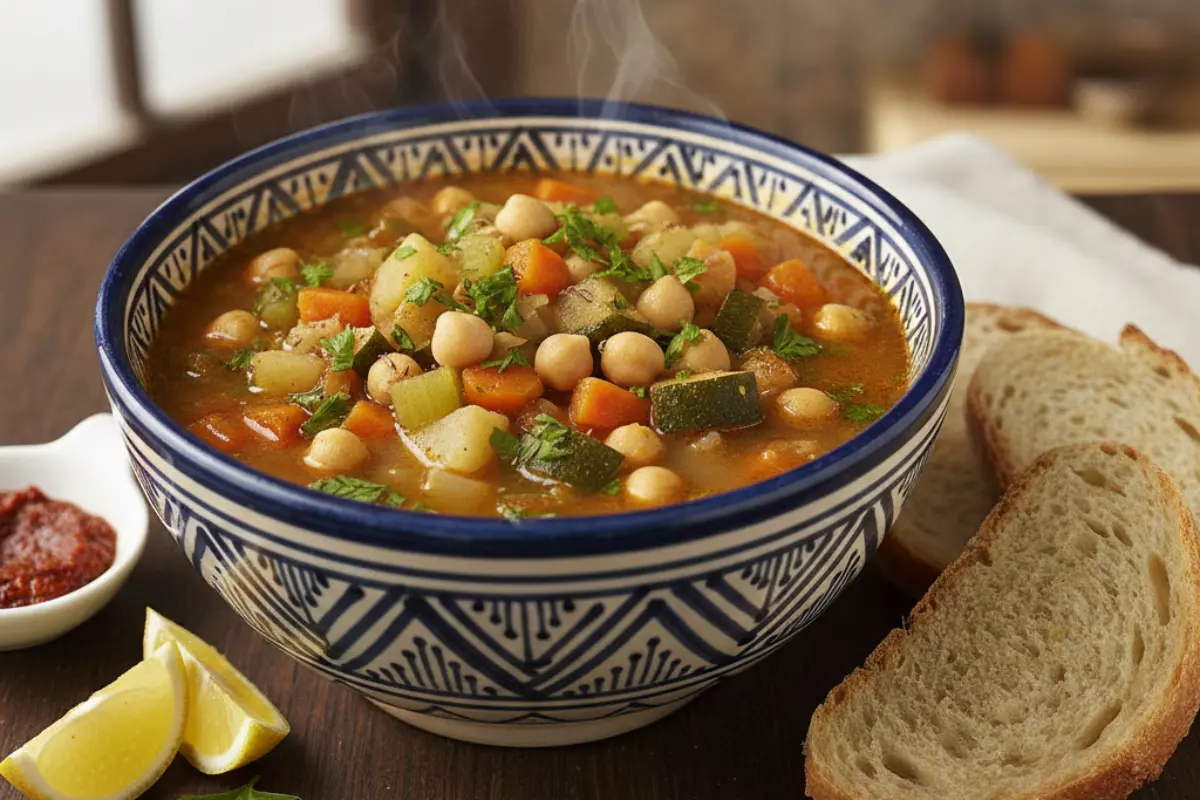
Chorba Khodra, often referred to as North African Vegetable Soup, is a vibrant and hearty dish popular in countries like Algeria and Morocco [citation:1]. This comforting soup is traditionally enjoyed during Ramadan but is also a staple in households throughout the year [citation:1]. The name itself reveals its essence: 'Chorba' meaning soup and 'Khodra' meaning vegetables [citation:1]. It is known for its rich, deep flavors, which result from a diverse array of fresh vegetables and fragrant spices like cumin and coriander. The addition of chickpeas makes it substantial and satisfying, embodying the harmony of North African home cooking [citation:1].
About This Recipe
Chorba Khodra is a vibrant and hearty dish popular in North Africa, particularly Algeria [citation:1]. This comforting soup is traditionally enjoyed during Ramadan but is also a staple in households throughout the year. It is known for its rich flavors, resulting from a diverse array of vegetables and fragrant spices [citation:1]. The vegetables used are native to the Mediterranean region, and the use of spices like coriander and cumin reflects the ancient spice trade routes that influenced North African cooking [citation:1].
Nutritional Info (per serving)
Recipe Tags
Understanding the Ingredients
Aromatic Base
The soup starts with a soffritto of onion and garlic, sautéed in olive oil until translucent. This forms the flavor foundation [citation:1].
Vegetable Medley
A colorful mix of vegetables native to the Mediterranean. Common choices include tomatoes, carrots, celery, zucchini, potatoes, and turnips [citation:1]. Their sizes should be uniform for even cooking.
Chickpeas
Chickpeas are a key component, adding a nutty flavor and hearty texture. They are prevalent in Middle Eastern and North African cuisine and contribute to the soup's protein content [citation:1].
Spices
The spice profile reflects the ancient trade routes that influenced North African cooking. Ground coriander and cumin are essential, providing warmth and earthiness [citation:1].
Fresh Herbs and Finish
Fresh parsley is used both during cooking and as a garnish, adding a burst of freshness. A squeeze of lemon juice just before serving brightens all the flavors, and a side of harissa paste is often offered for those who desire heat [citation:1].
Step-by-Step Cooking Guide
Sauté the Aromatics
Heat 2 tablespoons of olive oil in a large pot over medium heat. Add 1 large chopped onion and sauté for 5-7 minutes until it becomes soft and translucent [citation:1].
Tip: Do not brown the onions, as this can alter the soup's light color and flavor profile.
Bloom the Spices
Add 3-4 minced garlic cloves, 1 teaspoon of ground cumin, and 1 teaspoon of ground coriander to the pot [citation:1]. Stir well and cook for about a minute until the spices become fragrant.
Tip: Blooming the spices in the oil releases their essential oils, deepening their flavor.
Add Vegetables and Liquid
Add the prepared vegetables: 3 chopped carrots, 2 chopped celery stalks, 2 diced potatoes, and 2 diced zucchini. Pour in 8 cups of vegetable broth or water and add 1 can (400g) of drained and rinsed chickpeas [citation:1].
Tip: Feel free to substitute with other seasonal vegetables like turnips or green beans.
Simmer the Soup
Bring the soup to a gentle boil, then reduce the heat to low. Cover the pot and let it simmer for 30 to 40 minutes, until all the vegetables are completely tender [citation:1].
Tip: A gentle simmer allows the flavors to meld beautifully without the vegetables falling apart.
Add Final Touches
Stir in a handful of fresh chopped parsley and let the soup cook for an additional 5 minutes [citation:1]. Season with salt and pepper to taste.
Tip: Adding herbs at the end preserves their fresh color and flavor.
Serve
Ladle the warm soup into bowls. Garnish with an extra sprinkle of fresh parsley. Serve with crusty bread, lemon wedges, and a side of harissa paste [citation:1].
Tip: A squeeze of fresh lemon juice just before eating brightens all the flavors beautifully.
Common Mistakes to Avoid
❌ Cutting Vegetables Too Large
Solution: Dice vegetables into uniform, bite-sized pieces to ensure they all cook in the same amount of time.
❌ Adding Herbs Too Early
Solution: Add fresh herbs at the very end of cooking to preserve their vibrant color and flavor. If added too early, they will turn dark and lose their brightness.
❌ Skipping the Lemon
Solution: The lemon juice is essential for brightening the soup and balancing the earthy spices. Do not skip it.
Ingredient Substitutions
Instead of: Fresh Tomatoes
Use: 1 can (400g) of crushed tomatoes can be used, especially when fresh tomatoes are not in season.
Instead of: Vegetable Broth
Use: Chicken broth can be used for a non-vegetarian version. Water with a vegetable bouillon cube also works well.
Serving Suggestions
Serve as a starter during Ramadan to break the fast [citation:1].
Pair with crusty bread or over a bed of steamed couscous for a more complete meal [citation:1].
Offer lemon wedges and a side of harissa paste for guests to customize their bowl [citation:1].
Storage & Reheating Guide
Storage
Cool completely and store in an airtight container in the refrigerator for up to 4 days. The flavors deepen and improve overnight [citation:1].
Reheating
Reheat gently on the stovetop over medium-low heat. Add a splash of water or broth to restore the desired consistency, as the soup will have thickened upon standing [citation:1].
Frequently Asked Questions
Recipe by

Similar Recipes


Our Recipe Ebooks
Discover our collection of authentic Moroccan recipe ebooks. Learn traditional cooking methods and create delicious meals at home.
The Moroccan Vegen
The Royal Moroccan Table -Part1
The Royal Moroccan Table -Part2
YouTube Channel
Watch step-by-step cooking videos, learn professional techniques, and get inspired by traditional and modern recipes from around the world.
Latest Video
"Traditional Moroccan Tagine Masterclass"