
Introduction
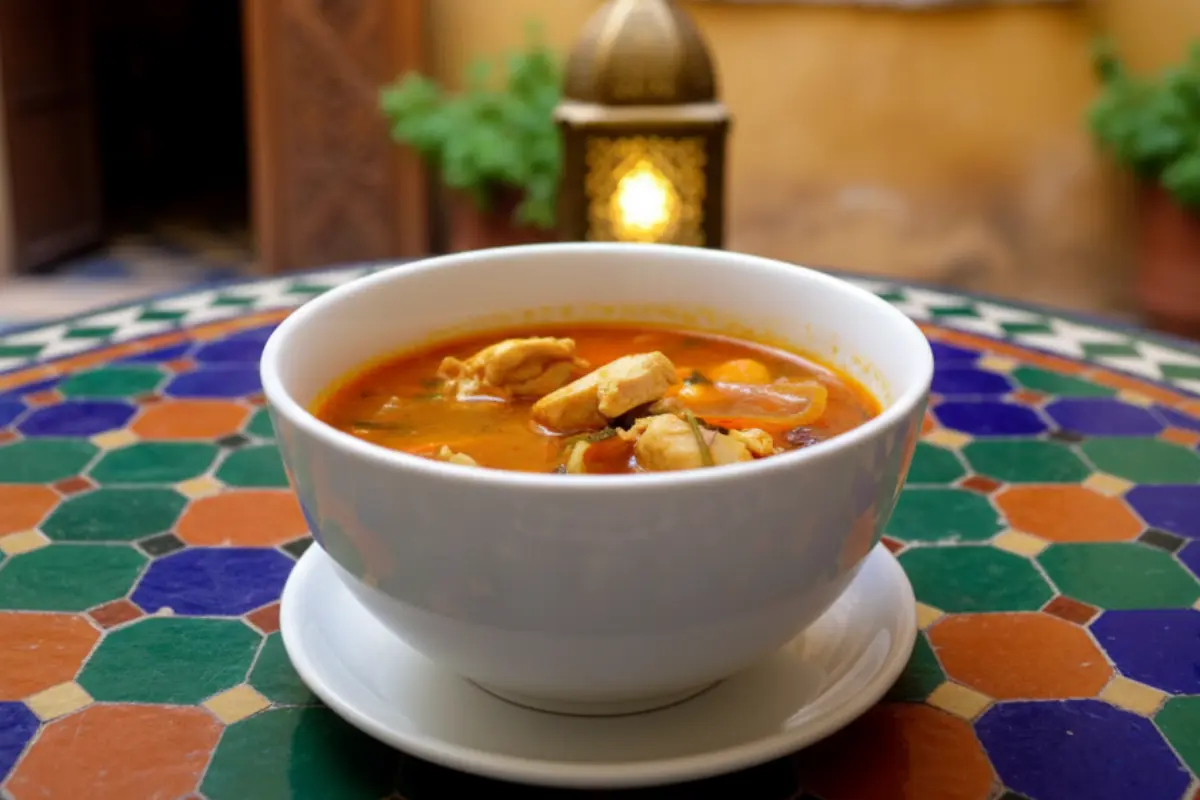
Chorba Djaj (شوربة الدجاج) is Morocco's comforting answer to chicken soup—a fragrant, soul-warming broth that has been soothing families for generations. Unlike the clearer chicken noodle soups of other traditions, Moroccan chorba djaj is a symphony of warm spices and fresh herbs, each spoonful carrying the essence of ginger, turmeric, and cinnamon alongside tender chicken and vegetables [citation:4].
This soup holds a special place in Moroccan households, particularly during Ramadan when it often appears on the iftar table alongside harira and chebakia [citation:7]. It's the soup that mothers prepare for children with colds, that families share on chilly winter evenings, and that welcomes guests as the first course of a festive meal. The word 'chorba' itself derives from the Arabic root relating to 'drinking,' capturing how this nourishing broth is meant to be savored slowly [citation:1].
What distinguishes chorba djaj from other chicken soups is its sophisticated yet simple spice profile. Ginger provides gentle warmth without heat, turmeric adds golden color and earthy depth, while a whisper of cinnamon lends an unexpected but essential sweetness that complements the chicken beautifully [citation:4]. Fresh cilantro and parsley stirred in at the end add brightness, and a squeeze of lemon just before serving lifts all the flavors into perfect balance [citation:7].
Whether served with rice that plumps in the golden broth, or with toasted vermicelli noodles (shaariya) that add delicate texture, chorba djaj is more than sustenance—it's a taste of Moroccan hospitality and the comforting rhythm of family life. Simple enough for a weeknight meal yet special enough for celebration, this soup deserves a permanent place in every kitchen.
About This Recipe
Chorba Djaj (شوربة الدجاج) is part of the vast family of 'chorba' soups found across North Africa and the Middle East, each region developing its own variation based on local ingredients and preferences. The word 'chorba' itself derives from the Arabic word for 'drink,' reflecting how these soups have long been used to nourish and hydrate, particularly during Ramadan when they help break the fast gently [citation:1][citation:7]. In Morocco, chorba djaj evolved as a lighter counterpart to the more famous harira. While harira is a meal in itself—thick with tomatoes, chickpeas, lentils, and meat—chorba djaj is more subtle, allowing the flavor of chicken to shine through a delicately spiced broth [citation:7]. This reflects the Moroccan talent for creating profound depth from simple ingredients through careful spicing and technique. The soup's spice profile—ginger, turmeric, cinnamon—is distinctly Moroccan, drawing on the country's position at the crossroads of trade routes that brought exotic spices from the East [citation:4][citation:7]. Saffron, when used, connects the dish to Morocco's luxury ingredient tradition, while fresh cilantro and parsley ground it in the country's abundant fresh produce. Throughout Moroccan history, chorba djaj has been more than just food. It's the soup prepared for neighbors who are ill, for new mothers needing gentle nourishment, and for children on cold days [citation:7]. During Ramadan, it appears on countless tables as a comforting start to the evening meal, valued for its ability to gently awaken the digestive system after a day of fasting [citation:7]. Today, this humble soup continues to evolve while remaining deeply traditional. Some families add chickpeas, others use different vegetables depending on the season, and regional variations exist throughout the country. In the northern cities, you might find it with more cinnamon; in coastal areas, perhaps a hint of seafood stock. Yet the soul of the dish remains unchanged: simple, nourishing, and made with love—a taste of Moroccan hospitality in every golden spoonful.
Nutritional Info (per serving)
Recipe Tags
Understanding the Ingredients
Chicken
Bone-in chicken pieces (legs, thighs, or a whole chicken cut up) are essential for a richly flavored broth. The bones release collagen and gelatin during simmering, giving the soup body and depth [citation:7]. Skin can be left on for added richness, though some prefer to remove it for a lighter broth. For convenience, boneless chicken breast can be used, but the broth will be less flavorful. Chicken wings are particularly good for broth-making due to their high collagen content [citation:3].
Aromatic Vegetables
Onion and garlic form the flavor foundation, softened in oil until translucent before adding liquid. Carrots add sweetness and color, while celery contributes subtle savory notes [citation:1][citation:2][citation:4]. Zucchini is a distinctive Moroccan addition—it's added later in cooking to maintain its texture, providing freshness and a gentle vegetable sweetness [citation:1][citation:4]. All vegetables should be diced into small, uniform pieces (about 1/4 inch) for even cooking.
Rice or Vermicelli
Two traditional versions exist: with rice (roz) or with fine vermicelli noodles (shaariya). Rice is added directly to the broth, where it cooks and releases starch, slightly thickening the soup [citation:4][citation:5]. Vermicelli is typically toasted lightly in butter before being added to the broth, which gives it a nutty flavor and prevents it from becoming mushy [citation:7]. The choice is regional and personal—both are authentic.
Spices
The Moroccan spice palette for this soup is warm and aromatic without being hot. Ground ginger is essential, providing gentle warmth [citation:4][citation:5]. Turmeric adds golden color and earthy depth. Cinnamon, used sparingly, contributes a subtle sweetness that harmonizes with the chicken [citation:4][citation:7]. A pinch of cayenne or black pepper adds mild heat. Some recipes include saffron threads for floral notes and a luxurious golden hue [citation:1][citation:4]. Salt and white or black pepper season to taste.
Fresh Herbs and Lemon
Fresh cilantro and parsley are indispensable—they're stirred in at the end of cooking, providing bright, fresh contrast to the warm spices [citation:1][citation:4][citation:7]. The quantities are generous; this isn't just garnish but an integral flavor component. Lemon wedges served alongside are non-negotiable—a squeeze of fresh lemon juice just before eating transforms the soup, its acidity cutting through the richness and awakening all the flavors [citation:7].
Step-by-Step Cooking Guide
Prepare Ingredients
Finely chop 1 large onion. Crush or mince 3-4 garlic cloves. Peel and dice 2 carrots and 2 celery stalks into small, uniform pieces (about 1/4 inch). Dice 1 large zucchini into similar-sized pieces and set aside separately. Chop 1/2 cup fresh parsley and 1/2 cup fresh cilantro. If using rice, rinse 1/2 cup uncooked rice under cold water until water runs clear and drain. If using vermicelli, break 1 cup of fine vermicelli noodles into 1-inch pieces.
Tip: Prepare all ingredients before starting to cook—the process moves quickly once the pot is on the heat. Keep zucchini separate as it's added later. Uniform dice ensures even cooking.
Sauté Aromatics
In a large, heavy-bottomed pot or Dutch oven, heat 2 tablespoons olive oil or butter over medium heat [citation:1][citation:4][citation:7]. Add the chopped onion and cook, stirring occasionally, for 5-7 minutes until softened and translucent but not browned. Add the garlic and cook for 1 minute until fragrant.
Tip: Sweating the onions slowly builds flavor. If they start to brown, reduce heat slightly. The goal is sweet, soft onions, not caramelized ones.
Add Chicken and Brown Lightly
Add 500-600g bone-in chicken pieces (about 4-6 pieces) to the pot. Cook for 3-4 minutes per side, turning occasionally, until the chicken is lightly golden but not cooked through [citation:7]. This browning step adds depth to the final broth.
Tip: Don't crowd the pan—if necessary, brown in batches. The chicken should develop a light golden color, not a dark crust. This step builds flavor foundation.
Add Spices and Vegetables
Add 1 teaspoon ground ginger, 1 teaspoon turmeric, 1/2 teaspoon ground cinnamon, 1/4 teaspoon cayenne or black pepper (to taste), and 1-2 teaspoons salt (adjust later) [citation:4][citation:7]. Stir to coat the chicken and onions, cooking for 1 minute until fragrant. Add the diced carrots and celery, stirring to combine with the spices.
Tip: Blooming the spices in the oil (toasting them briefly) releases their essential oils and deepens their flavor significantly. Don't rush this step.
Add Liquid and Simmer
Pour in 2 liters (8 cups) of water or chicken broth [citation:4][citation:7]. Add a few saffron threads if using. Bring to a boil, then immediately reduce heat to low, cover, and simmer gently for 30 minutes, or until the chicken is cooked through and tender [citation:3][citation:5][citation:7].
Tip: The soup should maintain a gentle simmer, not a rolling boil. Skim any foam that rises to the surface during the first 10 minutes for a clearer broth.
Remove Chicken and Shred
Using tongs or a slotted spoon, carefully remove the chicken pieces from the pot and transfer to a cutting board [citation:5][citation:7]. Let cool slightly until easy to handle. Remove and discard skin and bones, then shred the meat into bite-sized pieces. Set aside.
Tip: The chicken should be tender enough to shred easily. If it resists shredding, return to the pot and simmer longer. Reserve the shredded meat for later addition.
Add Rice or Prepare Vermicelli
For rice version: Add the rinsed rice to the simmering broth and cook for 15 minutes. For vermicelli version: In a small skillet, heat 1 tablespoon butter or oil over medium heat. Add the broken vermicelli and toast, stirring constantly, until golden brown (about 2-3 minutes) [citation:7]. Add the toasted noodles to the broth and cook for 5-8 minutes until tender.
Tip: Watch vermicelli carefully—it burns quickly. The rice will continue to absorb liquid and may thicken the soup; add more hot water if needed.
Add Zucchini and Herbs
Add the diced zucchini to the pot [citation:1][citation:2][citation:4]. Stir in half the chopped parsley and cilantro. Return the shredded chicken to the pot. Simmer for 5-10 minutes until the zucchini is tender but not falling apart [citation:1][citation:4].
Tip: Zucchini cooks quickly—add it near the end to maintain its texture and fresh flavor. Overcooked zucchini becomes mushy.
Adjust Seasoning and Serve
Taste the soup and adjust seasoning with additional salt and pepper as needed [citation:1][citation:2]. The flavors should be balanced—warm from the spices, savory from the chicken, and bright from the herbs. Ladle into bowls, garnish with the remaining fresh herbs, and serve immediately with lemon wedges on the side [citation:7].
Tip: The lemon is essential—each person should squeeze fresh lemon juice into their bowl just before eating. This brightens all the flavors and is the signature finishing touch.
Common Mistakes to Avoid
❌ Using Only Boneless, Skinless Chicken
Solution: Boneless chicken breast produces a weak, thin broth. Always use bone-in pieces—the bones and connective tissue release collagen and flavor during simmering, creating a rich, satisfying soup [citation:7].
❌ Skipping the Lemon
Solution: Lemon juice is not optional—it's essential to Moroccan chorba djaj. Without it, the soup tastes flat and the spices don't brighten. Always serve with fresh lemon wedges [citation:7].
❌ Adding All Vegetables at Once
Solution: Zucchini should be added later in cooking, not with the carrots and celery. It cooks much faster and becomes mushy if simmered for the full duration [citation:1][citation:2][citation:4].
❌ Overcooking the Vermicelli
Solution: Vermicelli continues to soften even after cooking and can become mushy. Cook until just tender (5-8 minutes) and serve immediately. If making ahead, consider cooking noodles separately and adding to individual bowls [citation:7].
❌ Not Skimming the Broth
Solution: Foam and impurities rise to the surface during the first 10-15 minutes of simmering. Skimming them off results in a clearer, more pleasant-looking soup. Neglecting this step yields cloudy broth.
Ingredient Substitutions
Instead of: Bone-in Chicken Pieces
Use: A whole chicken (about 1.5 kg) cut into 8 pieces. Turkey can also be used [citation:1]. For a quicker version, use boneless thighs, but add extra chicken wings or backs to the broth for flavor.
Instead of: Rice
Use: Vermicelli noodles (shaariya) as described, or orzo pasta. For a lower-carb version, omit the starch entirely or add extra vegetables.
Instead of: Fresh Cilantro
Use: Increase parsley and add a small amount of fresh mint. For those who dislike cilantro, use all parsley with a few mint leaves.
Instead of: Zucchini
Use: Yellow squash, or omit entirely. In winter, diced potato can be added with the carrots for a heartier soup.
Serving Suggestions
Serve as a starter during Ramadan to break the fast, often alongside harira and chebakia [citation:7].
Pair with crusty Moroccan bread (khobz) for dipping—essential for soaking up every last drop.
Offer lemon wedges, fresh herbs, and a small bowl of cumin for guests to customize their soup.
For a complete light meal, serve with a simple Moroccan salad of tomatoes, cucumbers, and olives.
During illness, serve piping hot with extra garlic and ginger for their immune-boosting properties [citation:7].
Leftovers can be thinned with water or stock and reheated gently—flavors often improve overnight.
Storage & Reheating Guide
Storage
Cool completely and store in airtight containers in refrigerator up to 4 days. Store noodles separately if possible to prevent them from absorbing too much liquid and becoming mushy [citation:7]. Freeze for up to 2 months in portion-sized containers, preferably without rice or noodles.
Reheating
Reheat gently on stovetop over medium-low heat, adding water or stock to achieve desired consistency. The soup will have thickened during storage. Stir occasionally. Microwave in covered container with splash of liquid, stirring halfway.
Tips: If freezing, cook rice or noodles separately and add after thawing and reheating. The chicken and broth freeze beautifully. Add fresh herbs and lemon after reheating for brightness.
Frequently Asked Questions
Recipe by

Similar Recipes


Our Recipe Ebooks
Discover our collection of authentic Moroccan recipe ebooks. Learn traditional cooking methods and create delicious meals at home.
The Moroccan Vegen
The Royal Moroccan Table -Part1
The Royal Moroccan Table -Part2
YouTube Channel
Watch step-by-step cooking videos, learn professional techniques, and get inspired by traditional and modern recipes from around the world.
Latest Video
"Traditional Moroccan Tagine Masterclass"