
Introduction
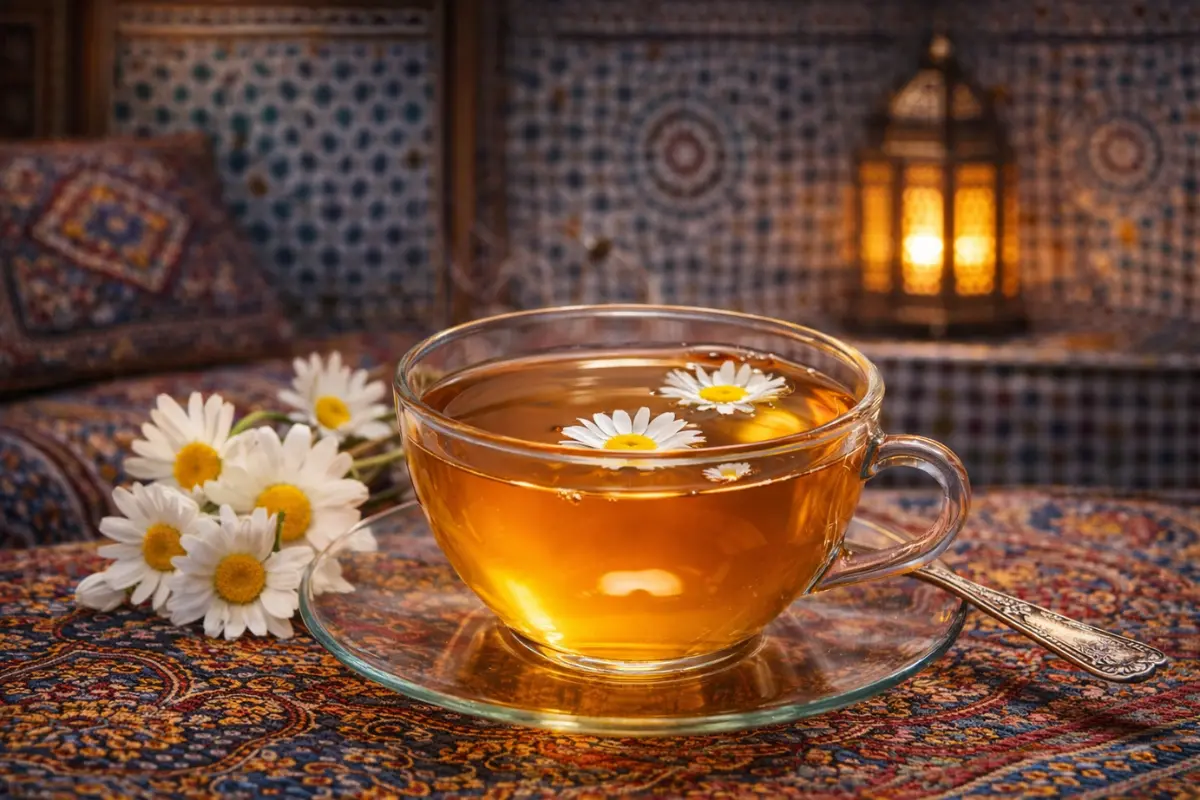
Chamomile & Orange Blossom Tea represents the softer, gentler side of Moroccan herbal traditions—a delicate infusion designed not for medicinal intensity but for serene comfort and peaceful transition into sleep. This elegant pairing combines the well-known calming properties of chamomile with the subtle, dreamlike fragrance of orange blossoms, creating a tea that feels like a lullaby in a cup.
In Morocco, where orange trees perfume entire neighborhoods during spring blossoming, orange blossom water (ma zhar) is a cherished ingredient in both cuisine and wellness. When combined with gentle chamomile flowers—often wild-harvested from Morocco's coastal plains—the result is a tea that embodies relaxation itself. Unlike stronger herbal teas meant to treat specific ailments, this infusion is about creating atmosphere, easing the mind, and honoring the body's need for rest.
Traditionally served in the evening, particularly in households with children or those experiencing stress, this tea transforms the simple act of drinking into a mindfulness ritual. The preparation is intentionally gentle: water heated just enough to release the flowers' essence without scalding them, steeping time carefully monitored to avoid bitterness. Each sip carries the golden warmth of chamomile followed by the ethereal whisper of orange blossoms—a perfect balance that has comforted generations of Moroccans at day's end.
About This Recipe
Chamomile & Orange Blossom Tea embodies the gentle, feminine side of Moroccan herbal tradition, often prepared by mothers and grandmothers for family wellbeing. While Morocco has stronger medicinal teas (like sage or za'atar), this infusion represents comfort and nurture. Chamomile has grown wild in Morocco's coastal regions for centuries, while orange trees were introduced during Islamic expansion, flourishing particularly in the Souss Valley and around Fez. The combination likely emerged in domestic spaces rather than herbalist shops—women experimenting with garden and foraged ingredients to create soothing beverages. Orange blossom water production became refined in Fez's historic distilleries, where the distillation process (taqtiir) was perfected. The tea gained particular popularity during the French Protectorate when European influence brought appreciation for gentler, non-medicinal infusions. Today, it represents both continuity and adaptation: older generations remember it as childhood bedtime tea, while younger Moroccans appreciate it as a natural relaxation aid in stressful modern life. Its popularity has grown internationally as part of the global interest in herbal wellness, yet it remains essentially Moroccan in its perfect balance of local chamomile and the iconic orange blossom fragrance that defines so much of Moroccan sensory culture.
Nutritional Info (per serving)
Recipe Tags
Understanding the Ingredients
Chamomile Flowers
Moroccan chamomile (Matricaria chamomilla) is typically wild-harvested and prized for its high bisabolol content, which gives it superior calming properties. The flowers should be whole, not crushed, with visible yellow centers and white petals intact. Quality chamomile has a sweet, apple-like aroma. Egyptian chamomile is also excellent and commonly available. Avoid chamomile that looks brown or dusty—it's old and lost potency. The flowers expand dramatically when steeped, so don't be alarmed by their small dry volume.
Orange Blossom Water (Ma Zhar)
This is the distilled essence of bitter orange blossoms (Citrus aurantium), not orange flower water which is sometimes different. Authentic Moroccan orange blossom water should be clear with intense floral aroma. It's potent—a few drops are enough. Quality is determined by purity: it should contain only water and orange blossom essence, no alcohol or artificial flavors. The best comes from Fez or the Souss valley where orange groves are abundant. Store in dark glass to preserve fragrance.
Lemon Verbena (Optional)
A few leaves of dried lemon verbena (louiza) complement both chamomile and orange blossom beautifully, adding a gentle citrus note that bridges the flavors. It should be added sparingly—too much overwhelms the delicate balance. Use whole leaves, not crushed. This addition is common in coastal regions where verbena grows wild alongside chamomile.
Honey (Optional)
While this tea is lovely unsweetened, a teaspoon of light honey (acacia or orange blossom honey) enhances the floral notes without masking them. The honey should be added after steeping to preserve its beneficial properties. For a truly authentic touch, use Moroccan orange blossom honey if available—it creates beautiful synergy with the orange blossom water.
Fresh Mint Sprig (Optional Garnish)
A single small mint leaf or tiny sprig can be added as garnish for visual appeal and a whisper of freshness. It should not be steeped with the tea, as mint's stronger flavor would dominate. This is purely decorative and for a faint aromatic hint when sipping.
Step-by-Step Cooking Guide
Prepare Chamomile and Warm Vessel
Measure 3-4 tablespoons of dried chamomile flowers (about ¼ cup). Gently inspect them—they should be whole with no stems or debris. If using lemon verbena, add 4-5 whole leaves now. Warm your teapot (porcelain or glass is ideal for this delicate tea) by swirling hot water inside for 30 seconds, then discarding. This maintains optimal brewing temperature.
Tip: Don't crush chamomile flowers—their delicate structure releases flavor perfectly when whole. Warming the vessel is especially important for glass or porcelain pots. Use clear glass to watch the flowers bloom beautifully.
Heat Water to Perfect Temperature
Bring 4 cups (1 liter) of filtered water to just below boiling—around 90°C/194°F. Chamomile is delicate; boiling water can damage its subtle compounds and create bitterness. Watch for steam and small bubbles forming at the bottom and sides. If using a kettle, stop just before it clicks off. The ideal temperature is when you see consistent steam but no rolling boil.
Tip: Temperature is crucial—too hot makes tea bitter, too cool yields weak infusion. Use a thermometer if unsure. Let boiled water sit 1 minute off heat before using. Spring water enhances the delicate flavors.
Steep Gently
Place chamomile (and verbena if using) in warmed pot. Pour hot water over flowers. Immediately cover with lid. Let steep for 5-7 minutes—no longer. Chamomile releases its benefits quickly; over-steeping makes it bitter. The flowers will float to the top, then slowly sink as they hydrate. The water will turn pale golden yellow.
Tip: Covering traps volatile aromatic compounds. Set a timer—5 minutes for subtle tea, 7 for stronger. Don't stir during steeping. The floating then sinking of flowers is part of the visual pleasure.
Add Orange Blossom Water
After steeping, strain tea into cups or a serving pitcher using a fine mesh strainer. While tea is still warm (not hot), add orange blossom water—½ to 1 teaspoon total for the pot, or ¼ teaspoon per cup. Stir gently to distribute. The fragrance will immediately fill the air. Taste—the orange blossom should be present but not perfume-like.
Tip: Add orange blossom water after straining to preserve its delicate aroma. Start with less—you can always add more. It should whisper, not shout. If tea is too hot when adding, some fragrance evaporates.
Sweeten if Desired and Garnish
If using honey, add now—1 teaspoon per cup maximum. Stir until dissolved. Taste—the tea should be subtly sweet, allowing the floral notes to shine. For garnish, float a fresh chamomile flower or tiny mint leaf on each cup if available. Alternatively, add a thin slice of orange peel (without white pith) for visual appeal.
Tip: Add honey when tea has cooled to drinking temperature to preserve its enzymes. The garnish is optional but transforms the experience. A single edible flower like pansy or violet makes it special for guests.
Serve for Maximum Relaxation
Pour into clear glasses or cups to appreciate the beautiful golden color. Serve while warm, not hot. This tea is best enjoyed slowly, in a quiet setting. Traditional Moroccan practice: serve 30-60 minutes before bedtime to allow relaxation to set in. Accompany with a date or almond for gentle nourishment.
Tip: The ideal drinking temperature is warm, not hot—it encourages slow sipping. Create a ritual: dim lights, comfortable seating, perhaps soft music. The experience matters as much as the tea itself.
Common Mistakes to Avoid
❌ Using Boiling Water
Solution: Boiling water scalds chamomile, releasing bitter compounds and destroying delicate aromatics. Heat water to 90°C/194°F—just below boiling. Let boiled water rest 1 minute before using.
❌ Over-Steeping
Solution: Chamomile becomes increasingly bitter after 7 minutes. Set a timer for 5-7 minutes maximum. The flowers release their goodness quickly; longer doesn't mean better. Taste at 5 minutes.
❌ Too Much Orange Blossom Water
Solution: Orange blossom water is potent—it should enhance, not dominate. Start with ¼ teaspoon per cup. It should be a background floral note, not taste like perfume. You can always add more but can't remove.
❌ Using Old or Low-Quality Chamomile
Solution: Chamomile loses potency and develops musty flavor with age. Use within 6-12 months of harvest. Quality chamomile smells sweet like apples. Brown, dusty flowers yield disappointing tea.
❌ Adding Orange Blossom Water During Steeping
Solution: The heat evaporates orange blossom water's delicate volatile compounds. Always add after steeping and straining. Adding to the pot rather than cups ensures even distribution.
Ingredient Substitutions
Instead of: Chamomile Flowers
Use: Chamomile tea bags (2 bags = 1 tbsp loose). For different profile, try linden flowers (tilleul) or lemon balm. Avoid chamomile blends with other herbs unless you know what's in them.
Instead of: Orange Blossom Water
Use: Rose water (use half amount), 1 teaspoon orange zest (added during steeping), or 1 drop food-grade orange blossom essential oil. Vanilla extract (¼ tsp) creates different but complementary flavor.
Instead of: Lemon Verbena
Use: Lemon balm, lemon grass (1 small piece), or omit. A pinch of lemon zest works but add after straining to prevent bitterness.
Instead of: Honey
Use: Maple syrup, agave, or stevia for sugar-free. White sugar works but lacks honey's floral compatibility. For authenticity, try orange blossom honey if available.
Serving Suggestions
Serve 30-60 minutes before bedtime as part of a relaxing evening routine.
Accompany with a single date or two almonds—the gentle sweetness and protein enhance relaxation.
For afternoon calm, serve with plain butter cookies or delicate Moroccan fekkas.
Create a spa experience: serve after a warm bath with a calming essential oil diffuser in the background.
For guests, present in clear glass teapot so everyone can watch the chamomile flowers dance as you pour.
During stressful periods, make a ritual: same time each evening, comfortable chair, perhaps with journal or light reading.
Storage & Reheating Guide
Storage
Dried chamomile: store in airtight glass jar in cool, dark place up to 1 year. Brewed tea: refrigerate up to 2 days. Orange blossom water: store in dark glass bottle, lasts years.
Reheating
Reheat gently on stovetop until warm (not hot). Microwave in short bursts. Do not reboil. Best consumed fresh—flavors diminish upon reheating.
Tips: For convenience, make chamomile concentrate: steep 1 cup flowers in 2 cups water, strain, refrigerate. Dilute with hot water and add orange blossom water when serving. Add honey fresh each time.
Frequently Asked Questions
Recipe by

Similar Recipes


Our Recipe Ebooks
Discover our collection of authentic Moroccan recipe ebooks. Learn traditional cooking methods and create delicious meals at home.
The Moroccan Vegen
The Royal Moroccan Table -Part1
The Royal Moroccan Table -Part2
YouTube Channel
Watch step-by-step cooking videos, learn professional techniques, and get inspired by traditional and modern recipes from around the world.
Latest Video
"Traditional Moroccan Tagine Masterclass"