
Introduction
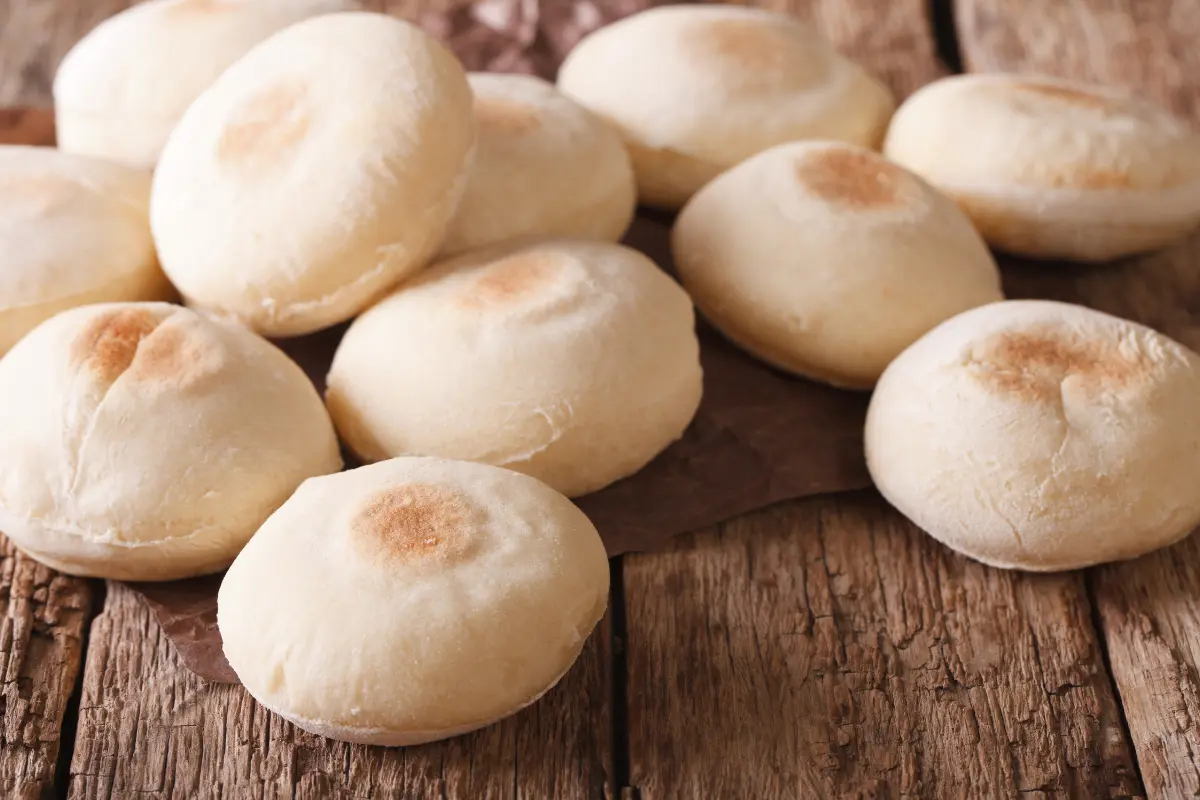
Batbout represents Morocco's answer to pocket bread—a soft, slightly chewy, delightfully pillowy bread that puffs up magically on the griddle, creating a perfect pocket for stuffing with an infinite variety of fillings. Unlike its Middle Eastern cousin pita which is baked at high heat in an oven, batbout is cooked on a stovetop griddle or in a heavy pan, resulting in a thicker, softer texture with gentle golden spots rather than dramatic ballooning. The name itself evokes its character—'batbout' likely derives from the sound the dough makes when slapped onto the hot surface, or perhaps from the Berber word for 'swelling' or 'puffing up.' This bread occupies a special place in Moroccan daily life: it's the vehicle for street food like grilled meats and merguez sausages, the wrapper for hearty sandwiches (called 'm'hammer'), the perfect companion to tagines and salads when no spoon is available, and a quick breakfast when stuffed with eggs or cheese. Making batbout is a rhythmic, almost meditative process—kneading the simple dough until it becomes silky and elastic, forming perfect rounds that rest under cloth like sleeping moons, then watching them transform on the griddle as steam expands them into puffy pillows. The best batbout has just the right balance: soft enough to yield easily when bitten but with enough chew to hold substantial fillings without tearing; thin enough to cook through but thick enough to provide substance; flavorful enough to enjoy plain but neutral enough to complement any filling. While commercial versions exist, homemade batbout has a particular tenderness and freshness that cannot be replicated. In Moroccan homes, batbout-making is often a family activity—children help shape the rounds, elders watch the griddle, and everyone enjoys the first warm bread off the heat, often simply brushed with butter or dipped in olive oil and honey. This bread embodies Moroccan culinary pragmatism and creativity: simple ingredients transformed through technique into something versatile and beloved, equally at home in a humble kitchen or a festive table.
About This Recipe
Batbout's story is one of culinary adaptation and everyday ingenuity. Its origins are humble and practical, emerging from Morocco's bread-making traditions that date back millennia. While the exact historical timeline is unclear, food historians believe batbout developed as a stovetop adaptation of oven-baked breads, allowing households without traditional clay ovens (ferran) to still enjoy pocket bread. The technique of cooking bread on a hot surface predates modern ovens, with evidence of griddle-cooked flatbreads across North Africa and the Mediterranean for thousands of years. What makes batbout distinctly Moroccan is its specific texture—softer and thicker than Middle Eastern pita—and its role in the country's street food culture. The name 'batbout' is onomatopoeic, imitating the sound of dough hitting the hot griddle, or possibly derived from the Berber word 'tabout' meaning 'to swell'—perfectly describing its puffing transformation. Throughout Morocco's history, batbout served as versatile sustenance: for nomadic Berber tribes, it was portable food that could be cooked quickly over campfires; for urban workers, it became the perfect street food wrapper; for families, it was economical bread that required no special oven. Each region developed slight variations: in the north, batbout might be smaller and thinner; in the Sahara, it might incorporate local grains; in coastal cities, it might be stuffed with fish. The bread's golden age coincided with the rise of Moroccan street food culture in the 20th century, particularly in cities like Casablanca, Marrakech, and Fez. Street vendors would set up griddles, cooking batbout fresh to order, then stuffing them with sizzling meats, grilled vegetables, or simple combinations of eggs and potatoes. This created a new eating style—portable, affordable, and deeply satisfying. In homes, batbout-making became a weekly ritual for many families, often prepared on Friday mornings to enjoy after prayers. The knowledge passed from mother to daughter included not just the recipe but the sensory cues: the exact feel of properly kneaded dough, the sound of the correct sizzle on the griddle, the visual cue of perfect golden spots. As Morocco modernized and women entered the workforce, commercial bakeries began producing batbout, but many families maintained the tradition of homemade versions for special occasions or simply because nothing compares to bread fresh off the griddle. The bread traveled with Moroccan diaspora communities to Europe, where it became a taste of home and eventually found new audiences appreciating its versatility and deliciousness. Today, batbout stands at a crossroads between tradition and innovation: while traditional recipes remain unchanged, creative fillings reflect contemporary tastes, from chicken tikka to halloumi and roasted vegetables. It appears in Moroccan restaurants worldwide, in food blogs celebrating global street food, and in home kitchens where its satisfying puff never fails to delight. UNESCO's recognition of Moroccan food culture includes bread-making traditions like batbout, acknowledging their role in social cohesion and cultural identity. More than just bread, batbout represents Moroccan resourcefulness—transforming simple flour, water, and yeast through skill and heat into something that sustains, delights, and connects generations.
Nutritional Info (per serving)
Recipe Tags
Understanding the Ingredients
Bread Flour
500g (about 4 cups) of bread flour or strong white flour is ideal. Bread flour has higher protein content (12-14%) than all-purpose flour, which develops more gluten and gives batbout its characteristic chew and ability to form sturdy pockets. If unavailable, all-purpose flour works but may yield slightly less chewy results. Some traditional recipes use a mix of fine semolina and flour for distinctive texture. The flour should be fresh and not self-rising.
Instant Yeast
7g (2¼ teaspoons) of instant yeast (also called rapid-rise or bread machine yeast). This type doesn't require proofing in water first—can be mixed directly with dry ingredients. Active dry yeast works too (same amount) but should be dissolved in the warm water with a pinch of sugar first. Fresh yeast (20g) can be used if available—it provides excellent flavor but is less common.
Warm Water
Approximately 300ml (1¼ cups) of warm water (105-115°F / 40-46°C). The temperature is crucial—too hot kills yeast, too cold slows activation. The exact amount varies with flour absorption—add gradually until dough forms. Some recipes use slightly warm milk instead or in combination for softer, richer bread.
Sugar & Salt
1 tablespoon sugar feeds the yeast and promotes browning, though traditional versions may use less or none. 1½ teaspoons salt is essential for flavor and gluten development—add after initial mixing to avoid direct contact with yeast which can inhibit it. Some add a pinch of baking powder for extra puff, though not traditional.
Olive Oil
2 tablespoons olive oil (or vegetable oil) enriches dough, making it more pliable and tender, and helps prevent sticking. Added after initial mixing. Extra oil for brushing cooked batbout keeps them soft.
Semolina or Flour for Dusting
Fine semolina (smida) or extra flour for dusting work surface and preventing sticking during shaping. Semolina gives traditional texture and prevents excessive sticking. Don't use cornmeal as it burns at batbout cooking temperature.
Step-by-Step Cooking Guide
Mix Dry Ingredients
In large mixing bowl, whisk together 500g bread flour, 2¼ teaspoons instant yeast, 1 tablespoon sugar, and 1½ teaspoons salt. If using active dry yeast, dissolve in ¼ cup warm water with pinch of sugar first, let foam 5-10 minutes, then add with remaining water. Ensure salt and yeast don't directly contact initially.
Tip: Whisking aerates flour and evenly distributes yeast and salt. If kitchen is cold, warm bowl slightly.
Form Dough
Make well in center of dry ingredients. Pour in 1¼ cups warm water and 2 tablespoons olive oil. Using wooden spoon or hands, mix until shaggy mass forms and no dry flour remains. If dough seems dry, add more water 1 tablespoon at a time (up to ¼ cup). If too sticky, add flour 1 tablespoon at a time. Dough should be soft and slightly tacky but not sticky.
Tip: Different flours absorb differently. Add water gradually—better slightly sticky than too dry.
Knead to Smooth Elasticity
Turn dough onto lightly floured surface. Knead vigorously for 10-12 minutes using heel of hand: push dough away, fold back, rotate quarter turn, repeat. Alternatively, use stand mixer with dough hook 8-10 minutes on medium speed. Proper kneading develops gluten—dough should become smooth, elastic, and pass windowpane test: stretch small piece thin enough to see light through without tearing.
Tip: Kneading is crucial for pocket formation. If dough sticks, flour hands lightly but avoid adding too much flour.
First Rise
Shape kneaded dough into smooth ball. Lightly oil clean bowl, place dough in bowl, turn to coat with oil. Cover with damp kitchen towel or plastic wrap. Let rise in warm, draft-free place 1-1½ hours until doubled in size. Ideal temperature: 75-80°F (24-27°C). For slower rise (better flavor), refrigerate 8-24 hours, then bring to room temperature 1 hour before shaping.
Tip: Test readiness: finger pressed into dough leaves indentation that doesn't spring back fully.
Divide and Shape
Punch down risen dough gently to release air. Turn onto lightly floured surface. Divide into 8 equal pieces (about 100g each). Roll each into smooth ball by cupping hand over dough and making circular motions on surface. Cover balls with damp towel, let rest 10 minutes—this relaxes gluten for easier rolling.
Tip: Use kitchen scale for even portions. Keep unworked balls covered to prevent drying.
Roll into Rounds
Lightly flour surface and rolling pin. Take one dough ball, flatten slightly with palm. Roll into circle 5-6 inches diameter and ¼ inch thick. Don't roll too thin or pockets won't form properly. Keep thickness even. Place rolled rounds on baking sheet dusted with semolina or flour, not touching. Cover with towel. Repeat with remaining balls.
Tip: If dough resists rolling, let rest 2-3 minutes. Aim for uniform thickness for even cooking.
Second Rise
Cover rolled rounds with damp towel or plastic wrap. Let rise 20-30 minutes until slightly puffy but not doubled. They should feel light and airy. Meanwhile, preheat griddle or heavy skillet (cast iron ideal) over medium heat. No oil needed—dry cooking surface.
Tip: Don't overproof or they'll deflate during cooking. They should look relaxed and plump.
Cook on Griddle
Heat griddle over medium heat 5 minutes until hot but not smoking (water droplets should sizzle and evaporate quickly). Place one dough round on hot surface. Cook 1-2 minutes until bottom develops golden brown spots and top begins to bubble slightly. Flip with spatula. Cook second side 1-2 minutes until golden spots appear and bread puffs up like pillow. Press gently with spatula to encourage puffing if needed. Some may puff dramatically, others modestly—both fine.
Tip: Adjust heat as needed—too hot burns outside before cooking inside, too slow dries out bread.
Steam and Keep Soft
As batbout come off griddle, immediately place in clean kitchen towel-lined basket or wrap in cloth napkin. This traps steam and keeps them soft and pliable. For best pocket formation, while still hot, gently separate at seam with knife if not fully split, or wait until cooled. Brush with melted butter or olive oil if desired for extra softness and shine.
Tip: The towel-wrapping is crucial for soft texture. Don't stack hot batbout directly on each other—they'll steam and become soggy.
Serve and Store
Serve warm or at room temperature. To serve, cut partially open if not fully pocketed, fill with desired ingredients. Store completely cooled batbout in airtight plastic bag at room temperature up to 2 days. For longer storage, freeze up to 3 months. Reheat in toaster, oven, or briefly on griddle.
Tip: Best eaten day made. Refresh day-old batbout by sprinkling with water and warming in oven 5 minutes.
Common Mistakes to Avoid
❌ Kneading Insufficiently
Solution: Under-kneaded dough doesn't develop enough gluten, resulting in batbout that don't puff properly and tear easily. Knead at least 10 minutes by hand until smooth, elastic, and passing windowpane test. Proper gluten development is essential for pocket formation.
❌ Rolling Too Thin
Solution: Batbout should be about ¼ inch thick before cooking. Rolling too thin (like tortilla thickness) prevents proper steam pocket formation—they'll cook through but remain flat. Maintain proper thickness for characteristic puff.
❌ Griddle Too Hot or Too Cool
Solution: Perfect griddle temperature is medium heat. Too hot burns outside before inside cooks and steam can form pocket. Too cool dries out bread without proper browning or puffing. Test with one batbout first—adjust heat as needed.
❌ Overproofing Second Rise
Solution: Second rise should be 20-30 minutes until slightly puffy, not doubled. Overproofed rounds collapse when placed on hot griddle and won't puff properly. Watch closely—they should look relaxed and light, not over-inflated.
❌ Not Covering During Resting
Solution: Uncovered dough balls and rounds dry out, forming crust that prevents proper rising and causes cracking during rolling. Always keep dough covered with damp towel or plastic wrap when not actively working with it.
❌ Stacking Hot Batbout Without Towel
Solution: Hot batbout stacked directly on each other trap steam between them, creating soggy spots. Always wrap in cloth towel immediately after cooking—this keeps them soft without sogginess.
❌ Using Cold Surface for Rolling
Solution: Marble or cold countertop can chill dough, making it harder to roll and affecting rise. Use wooden board or room temperature surface. If dough contracts while rolling, let rest 2-3 minutes before continuing.
Ingredient Substitutions
Instead of: Bread Flour
Use: All-purpose flour works but may yield slightly less chewy texture. For half-whole-wheat version, use up to 50% whole wheat flour mixed with bread flour—add extra water as whole wheat absorbs more.
Instead of: Instant Yeast
Use: Active dry yeast: same amount dissolved in ¼ cup warm water with pinch sugar, let foam 5-10 minutes. Fresh yeast: 20g crumbled into warm water. Sourdough starter: 150g active starter, reduce water by 75g and flour by 75g.
Instead of: Sugar
Use: Honey or maple syrup same amount. For sugar-free, omit—yeast will still work but browning may be less. Some traditional recipes use no sweetener.
Instead of: Olive Oil
Use: Any neutral oil (vegetable, sunflower), melted butter, or ghee. For dairy-free, use oil. Some recipes use milk instead of part of water for richer flavor.
Serving Suggestions
Stuff with grilled meats: kefta (spiced meatballs), merguez sausage, chicken shawarma, or lamb.
Make sandwiches with omelet, potato chips, and harissa (Moroccan street food style).
Fill with zaalouk, hummus, or other dips plus fresh vegetables for vegetarian meal.
Serve alongside tagines, soups, or stews for soaking up sauces.
Brush with melted butter and honey or sprinkle with sugar for sweet breakfast.
Use as pizza base: top with tomato sauce, cheese, and toppings, bake until melted.
Cut into wedges, toast until crisp, serve with dips instead of pita chips.
Stuff with tuna salad, egg salad, or chicken salad for lunch sandwiches.
Serve with Moroccan salads (takttouka, carrot salad) as part of mezze spread.
Fill with French fries, processed cheese, and ketchup for 'msemen' style street food.
Storage & Reheating Guide
Storage
Cool completely before storing. Room temperature: in paper bag or bread box up to 2 days (best freshness day 1). Refrigerator: airtight container up to 5 days but may dry out. Freezer: individually wrap in plastic, then freezer bag up to 3 months. Do not refrigerate unless necessary—accelerates staling.
Reheating
To refresh: sprinkle with few drops water, wrap in foil, warm in 300°F oven 5-10 minutes. Or toast lightly in toaster or dry skillet 30-60 seconds per side. Microwave: wrap in damp paper towel, heat 10-15 seconds—can become rubbery if overdone. Frozen: thaw at room temperature 1-2 hours, then refresh as above.
Tips: Batbout stale faster than commercial bread due to no preservatives. Freeze extras immediately if not eating same day. Refresh just before serving—once refreshed, eat within hours.
Frequently Asked Questions
Recipe by

Similar Recipes


Our Recipe Ebooks
Discover our collection of authentic Moroccan recipe ebooks. Learn traditional cooking methods and create delicious meals at home.

The Moroccan Vegen
The Royal Moroccan Table -Part1
The Royal Moroccan Table -Part2
YouTube Channel
Watch step-by-step cooking videos, learn professional techniques, and get inspired by traditional and modern recipes from around the world.
Latest Video
"Traditional Moroccan Tagine Masterclass"